
Memory Foam vs Hybrid vs Latex: Choosing a Mattress Without the Jargon
Compare memory foam vs hybrid vs latex mattresses to understand comfort, support, durability, and key differences before choosing the right mattress for your sleep needs.

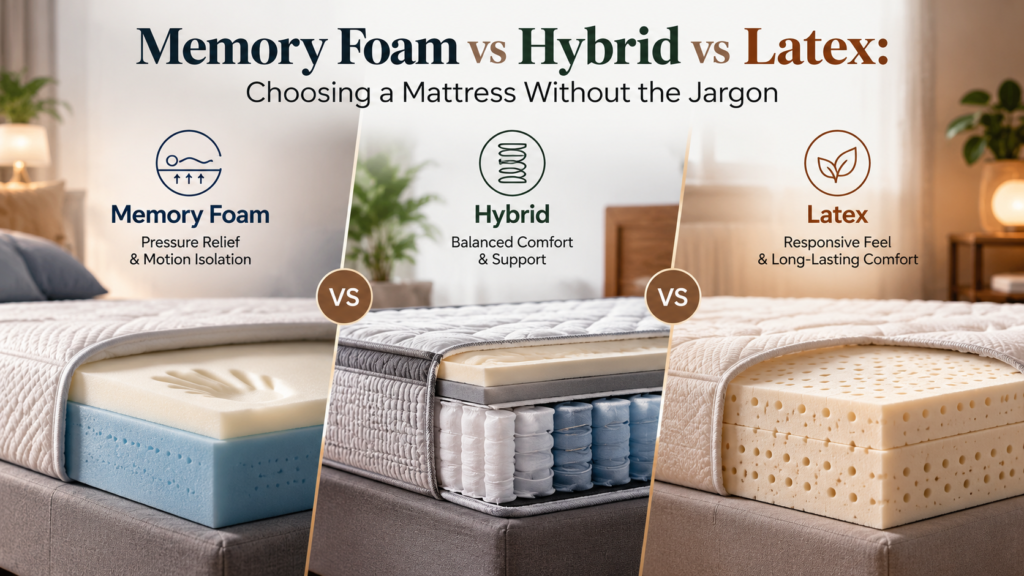
Choosing a mattress is not just about deciding whether you prefer a soft or firm bed. The material underneath you affects how much pressure your shoulders and hips experience, whether you feel your partner moving, how easily you change sleeping positions, and how warm the bed feels overnight. For example, a queen mattress measures 60 × 80 inches, giving two adults just 30 inches of width each if they divide the surface equally. In a shared bed, motion isolation and usable sleeping space can matter as much as cushioning. The comparison of Memory Foam vs Hybrid vs Latex comes down to three different approaches to comfort.
Memory foam moulds closely around the body, hybrid mattresses combine foam with a spring system, and latex offers a more buoyant, responsive feel. None is automatically the best choice for everyone. Your sleeping position, body weight, sensitivity to heat, budget, and preference for a mattress that hugs or gently pushes back all influence the decision.
Instead of getting caught up in technical descriptions, focus on how each mattress behaves during an ordinary night’s sleep and what to check before spending your money.
1. Memory Foam: Best for Pressure Relief and Minimal Movement
Memory foam responds to body heat and pressure, gradually moulding around your shape. Instead of pushing back immediately, it creates a close, cushioned sensation that many people describe as sinking into the mattress.
This can be particularly useful for side sleepers, whose shoulders and hips press more firmly into the bed. Memory foam can help distribute that pressure across a wider area. It also absorbs movement well, making it a popular choice for couples who wake easily when the other person turns over.
The trade-off is responsiveness. If you frequently switch between sleeping positions, the close-fitting foam may feel restrictive. Traditional memory foam can also retain heat, although some models use gel infusions, ventilated layers, or specialised covers to address this issue.
- Choose memory foam if: You prefer a cushioned, body-hugging feel, need good motion isolation, or primarily sleep on your side.
- Think twice if: You sleep particularly hot or prefer a mattress that feels springy and makes movement easy.
2. Hybrid: Best for a Balance of Cushioning and Support
A hybrid mattress combines a coil support system with comfort layers made from materials such as memory foam, latex, or other foams. Think of it as combining the cushioning of foam with the responsiveness of a traditional spring mattress.
The coils provide support and bounce, while the upper layers cushion the body. Many hybrids use individually wrapped pocketed coils, which can help reduce movement transfer while allowing air to circulate through the support core. Reinforced edges on some models also make it easier to sit on the side of the bed or use more of the sleeping surface.
However, not every hybrid feels the same. One with thick memory foam layers may feel soft and contouring, while a latex hybrid can feel springier. Coil construction, comfort-layer thickness, and firmness all influence the result.
- Choose a hybrid if: You want a middle ground between cushioning and bounce, change sleeping positions often, or prefer a more traditional mattress feel.
- Think twice if: You have a strict budget, need a lightweight mattress, or are especially sensitive to movement and noise.
3. Latex: Best for Responsiveness and Long-Term Use
Latex mattresses offer a different experience from memory foam. Rather than slowly moulding around the body, latex responds quickly when you move. The result is a buoyant surface that cushions you without the same deep, sinking sensation.
Latex can provide pressure relief while making it easier to change positions during the night. It also tends to resist heat buildup better than traditional memory foam, although the mattress cover and overall construction still influence temperature. Quality latex can be durable, but lifespan depends on the material, manufacturing, and how the mattress is used.
One important detail is that not every mattress marketed as latex is made entirely from it. Some use latex only in the comfort layer, while others combine it with foam or coils. Natural, synthetic, and blended latex also differ in composition and price.
- Choose latex if: You prefer a responsive, buoyant feel, dislike sinking into foam, or want a mattress designed for long-term use.
- Think twice if: You want deep body contouring, are highly sensitive to movement, or find latex models outside your budget.
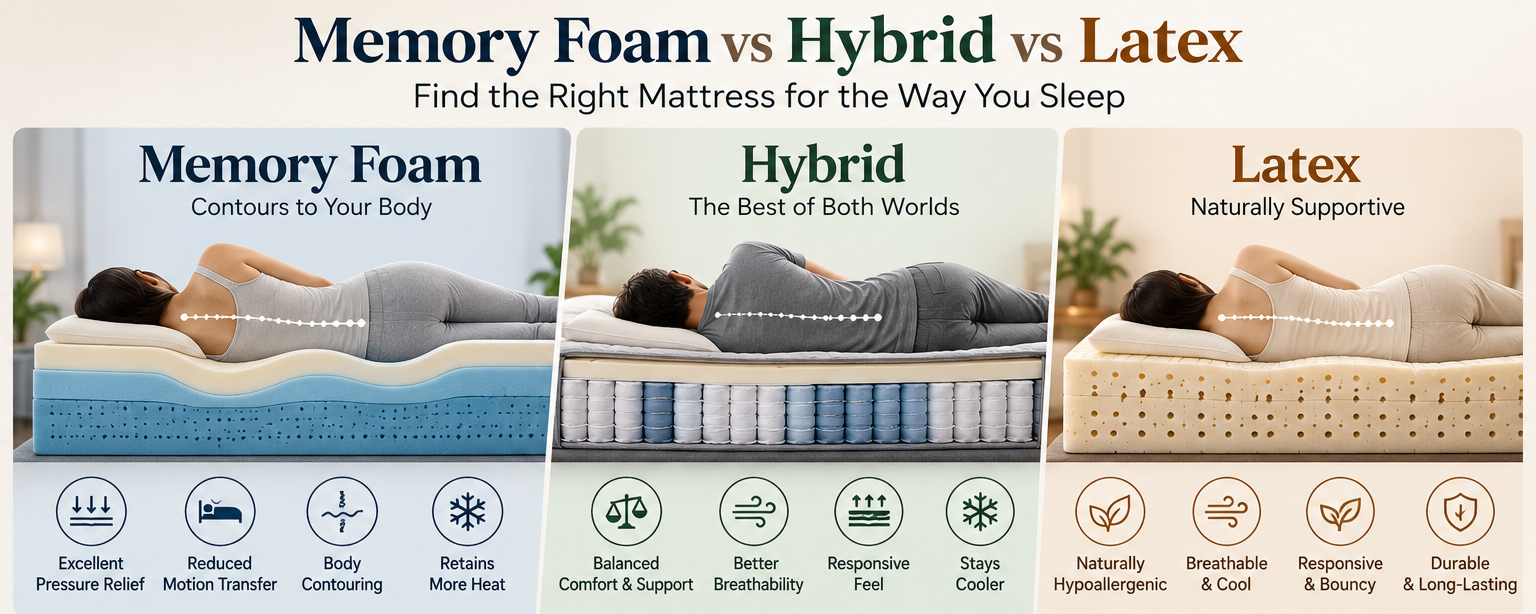
Memory Foam vs Hybrid vs Latex: At a Glance
| Feature | Memory foam | Hybrid | Latex |
|---|---|---|---|
| Feel | Close and cushioning | Balanced and responsive | Buoyant and springy |
| Pressure relief | Generally very good | Depends on comfort layers | Good, with less deep contouring |
| Motion isolation | Usually excellent | Varies by coil and foam design | Moderate, depending on construction |
| Temperature | Can retain heat | Often better airflow | Generally good temperature regulation |
| Ease of movement | Can feel restrictive | Usually easy | Very easy |
| Edge support | Often moderate | Often strong | Varies by design |
| Price | Available across budgets | Often mid-range to premium | Often more expensive, especially natural latex |
These are general tendencies, not guarantees. The firmness and construction of an individual mattress can change how it performs.
How to Choose the Right Mattress for Your Sleeping Style
When comparing Memory Foam vs Hybrid vs Latex, start with how you sleep rather than the material’s marketing claims.
- Side sleepers: Look for sufficient cushioning around the shoulders and hips. Memory foam is a useful starting point, while a softer hybrid or latex model may also work.
- Back sleepers: Prioritise balanced support that allows your hips to settle without sinking excessively. Medium-firm models are worth testing, but comfort depends on body weight and personal preference.
- Stomach sleepers: Consider a firmer surface that limits excessive sinking around the midsection.
- Combination sleepers: If you turn frequently, hybrid or latex mattresses may feel easier to move on than deeply contouring memory foam.
- Couples: If one person’s movements regularly disturb the other, memory foam is a strong starting point. Hybrids with pocketed coils and substantial comfort layers can also perform well.
Budget matters, too. Compare the total price for your mattress size, trial period, warranty, delivery arrangements, and return fees. If possible, test the mattress in person or choose a retailer with a clearly explained trial policy.
Final Verdict
The choice between Memory Foam vs Hybrid vs Latex becomes easier when you focus on the feel you want rather than technical terminology. Memory foam suits sleepers who value contouring and motion isolation, hybrids offer a blend of cushioning and bounce, and latex appeals to those who prefer a responsive surface with good durability potential.
Before making a purchase, compare firmness, construction, temperature regulation, and return terms. The right mattress is the one that supports your sleeping style comfortably night after night, not simply the one with the most impressive specifications.
Frequently Asked Questions
1. Is memory foam better than a hybrid mattress?
Neither is universally better. Memory foam generally excels at contouring and absorbing movement, while hybrids often provide more bounce, airflow, and edge support. The better option depends on your sleeping habits.
2. Does a latex mattress last longer than memory foam?
Quality latex is generally considered durable, but lifespan depends on material quality, construction, usage, and maintenance. Check the manufacturer’s warranty and care instructions before buying.
3. Which mattress is best for hot sleepers?
Latex and many hybrid mattresses are worth considering because their construction can allow better airflow. However, a hybrid with thick memory foam layers may still retain heat, so examine the complete design.
Also Read: JustFit App Review: Can a 10-Minute Workout App Deliver Results?