
Golf for Beginners: Clubs, Clothes, and Course Etiquette
Learn golf for beginners with a practical guide to choosing golf clubs, wearing the right clothes, understanding course etiquette, and preparing for your first round.

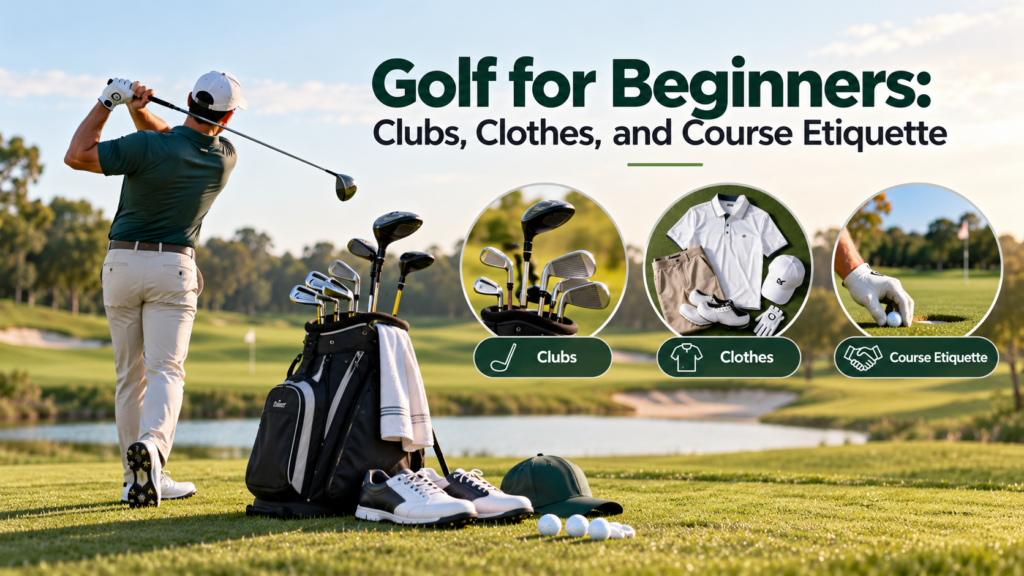
Golf can look intimidating when you are new to the game. There are different clubs for different shots, rules about where to stand, dress expectations that vary between courses, and a pace of play to maintain. But you do not need expensive equipment or a perfect swing to get started. According to the National Golf Foundation, 48.1 million Americans participated in golf on or off the course in 2025, including 3.3 million first-time on-course players. These figures show that newcomers continue to find their way into the sport. For anyone exploring golf for beginners, the smartest approach is to understand the essentials before investing in a complete set or booking a full round.
1. Start With the Right Golf Clubs
Buying a full set immediately can be an expensive mistake. Beginners usually benefit more from a small, forgiving selection of clubs that helps them learn consistent contact.
Here are the essential clubs to understand in golf for beginners:
- Driver: Designed for long tee shots, particularly on par-four and par-five holes. Its large head and long shaft can be difficult to control initially, so practise before relying on it during a round.
- Fairway wood or hybrid: Useful for longer shots from the fairway or tee. Hybrids are often easier for beginners to launch than long irons.
- Irons: Clubs numbered 6 through 9 are useful for approach shots and learning distance control. Higher-numbered irons generally produce higher shots.
- Wedges: A pitching wedge helps with shorter approach shots, while a sand wedge is useful around bunkers and for certain short-game shots.
- Putter: Used on the green to roll the ball into the hole. Since putting accounts for a substantial part of a round, practising it early is worthwhile.
What should your first set include?
A beginner-friendly half-set might contain a driver or fairway wood, a hybrid, a few irons, a pitching wedge, a sand wedge and a putter. You can add clubs as your technique develops. The Rules of Golf allow a maximum of 14 clubs during a round, but you do not need that many.
Look for clubs labelled as game-improvement or designed for forgiveness. If possible, borrow clubs, rent them at a driving range, or try a beginner set before purchasing. The correct shaft length, flex and grip size matter, so a basic fitting can be more useful than choosing clubs based on brand reputation alone.
2. Wear Comfortable Clothes That Meet the Course Dress Code
Golf clothing should allow you to rotate your shoulders, bend comfortably and walk for several hours. You do not need a designer outfit, but ordinary gym clothes may not meet every course’s requirements.
- Polo shirt: A collared polo is a safe choice at many traditional courses. Some venues allow collarless performance shirts, so check the policy first.
- Golf trousers or shorts: Choose lightweight, breathable trousers or tailored shorts that allow unrestricted movement. Some private clubs have specific rules about shorts.
- Golf shoes: Spiked or spikeless golf shoes provide grip during the swing. Comfortable athletic shoes may be acceptable at practice facilities, but confirm before arriving.
- Glove: Most right-handed golfers wear a glove on the left hand; left-handed golfers typically wear one on the right. A glove can improve grip and reduce blisters.
- Weather protection: Carry a cap, sunscreen and water for sunny conditions. A lightweight waterproof jacket is useful when rain is possible.
Avoid buying an entire golf wardrobe before your first session. Start with comfortable, course-appropriate clothing and invest in specialist items as you play more often.
3. Learn the Basic Rules Before Your First Round
In golf for beginners, you do not have to memorise the complete rulebook, but understanding a few fundamentals makes your first game less stressful.
- Teeing area: Start each hole from the designated teeing area, keeping your ball within its permitted boundaries.
- Play the ball as it lies: Generally, play the ball from where it comes to rest unless a rule allows relief.
- Out of bounds and penalty areas: White stakes commonly mark out of bounds, while red or yellow stakes usually identify penalty areas. The available options depend on the applicable rule and course markings.
- Bunkers: These are prepared areas of sand. Special rules apply to touching the sand with your club before a stroke.
- Putting green: Once on the green, use your putter and take care not to damage the surface.
Keep score honestly, ask your playing partners when you are unsure, and check any local rules printed on the scorecard. If you are playing socially, there is no need to let scoring distract you from learning.
4. Understand Course Etiquette
Good etiquette matters as much as technique. It protects other players, keeps the round moving and helps maintain the course.
- Respect other players’ shots: Stay quiet and still while someone prepares to swing. Stand where you are visible but outside their line of sight and swing path.
- Keep up with the group ahead: Do not focus only on the group behind you. Be ready when it is your turn, limit unnecessary practice swings and move towards your next shot promptly. The USGA recommends playing efficiently rather than rushing.
- Take care of the course: Repair ball marks on greens, replace or fill divots according to the course’s guidance, and rake bunkers after playing from them. Avoid walking through another player’s putting line.
- Prioritise safety: Never hit until the landing area is clear. If your ball travels towards people, shout “Fore!” immediately.
- Arrive prepared: Reach the course early enough to check in, warm up and find your starting tee. The USGA recommends being at the tee about 10 minutes before your scheduled start.
These habits are central to golf for beginners because other players do not expect you to be skilled immediately; they do expect you to be considerate and safe.
5. Practise Before Booking a Full Round
A driving range is an excellent place to learn how to grip the club, stand to the ball and make contact without the pressure of other groups waiting behind you. Start with short irons and half-swings before attempting powerful drives.
Spend time on the putting green, too. Practise short putts from three to six feet, then work on longer putts to develop distance control. A beginner lesson can help correct grip, posture and alignment before poor habits become difficult to change.
When you are ready for the course, consider a par-three course or a shorter beginner-friendly layout. These provide opportunities to practise approach shots and putting without the distance demands of a championship course.
6. Know What to Pack for Your First Round
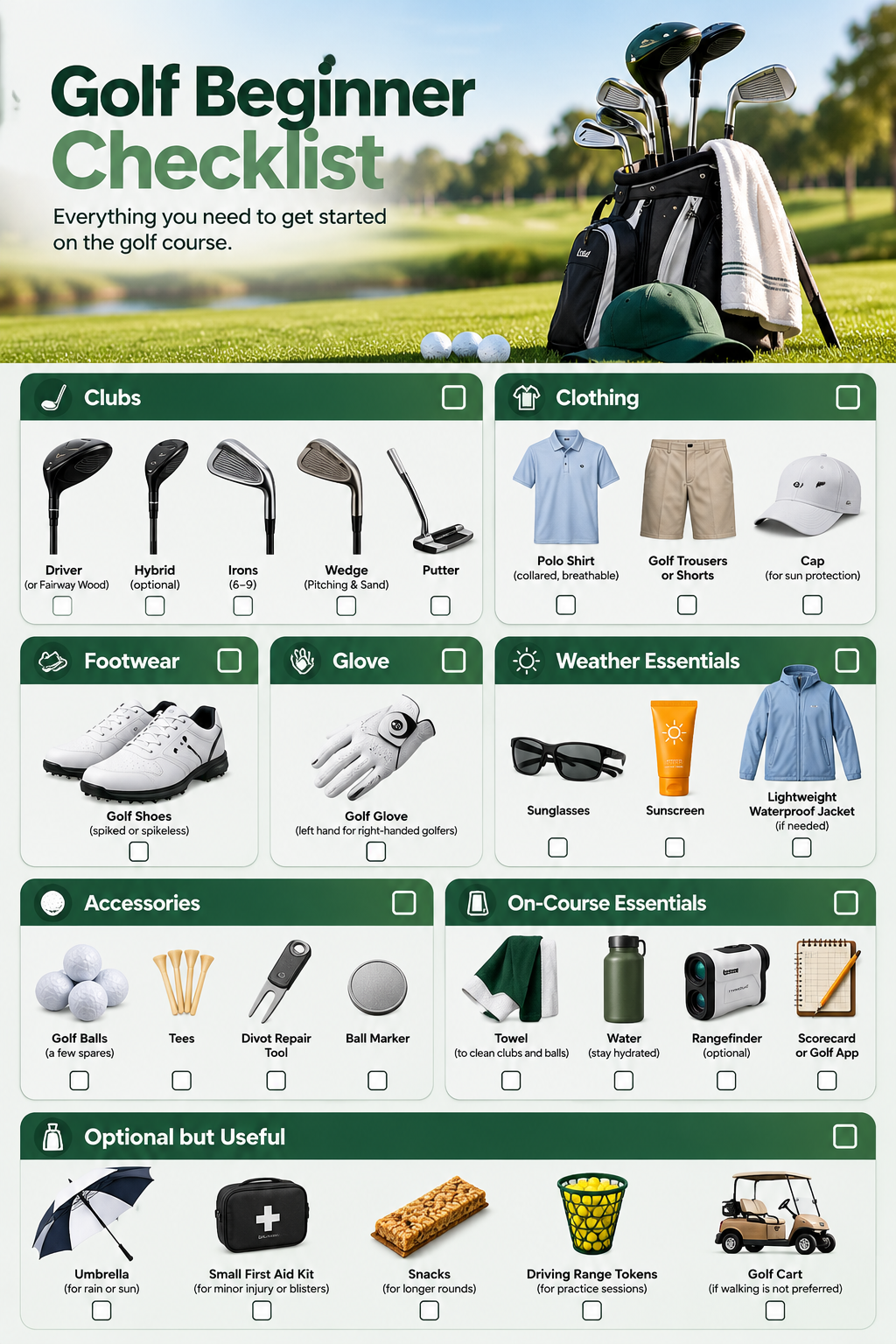
A little preparation prevents avoidable frustration. Use this checklist before leaving home:
- Golf clubs and balls, including a few spare balls
- Tees, a golf glove and a ball marker
- A divot repair tool, if available
- Water, sunscreen and a cap
- Comfortable golf shoes and weather-appropriate clothing
- A towel and a scorecard or scoring app
Ask whether the course provides rental clubs, carts or practice balls. Also confirm the dress code, tee time and expected pace of play.
Golf for Beginners: Golf Clubs, Clothing and Etiquette at a Glance
| Essential | What beginners should choose | Why it matters |
|---|---|---|
| Clubs | Forgiving half-set or beginner set | Easier learning and lower initial cost |
| Golf shoes | Comfortable spikeless or spiked shoes | Better traction and stability |
| Clothing | Breathable polo and suitable trousers or shorts | Comfort and compliance with course rules |
| Practice | Driving range and putting green | Builds contact and distance control |
| Etiquette | Keep pace, protect greens and respect others | Makes the round enjoyable for everyone |
| First course | Short or beginner-friendly layout | Less pressure while learning |
Golf for Beginners: FAQs
1. How much should a beginner spend on golf clubs?
There is no fixed amount. A used set or entry-level package can keep initial costs manageable. Try clubs first and prioritise suitable fit and condition over premium branding.
2. Can I play golf without golf shoes?
Some driving ranges and courses allow ordinary athletic shoes, but policies vary. Golf shoes generally provide better traction, especially during a full swing or in wet conditions.
3. What is the most important golf etiquette rule?
Safety comes first: never hit when someone could be in danger. After that, maintain a reasonable pace, avoid distracting other players and leave the course in good condition.
Also Read: FitVille Shoes Review: Wide-Fit Footwear for Problem Feet Tested