
How to Save for Travel Without Touching Your Emergency Fund
Learn how to save for travel without touching your emergency fund with practical budgeting tips, monthly savings strategies, and smarter ways to fund your next holiday.

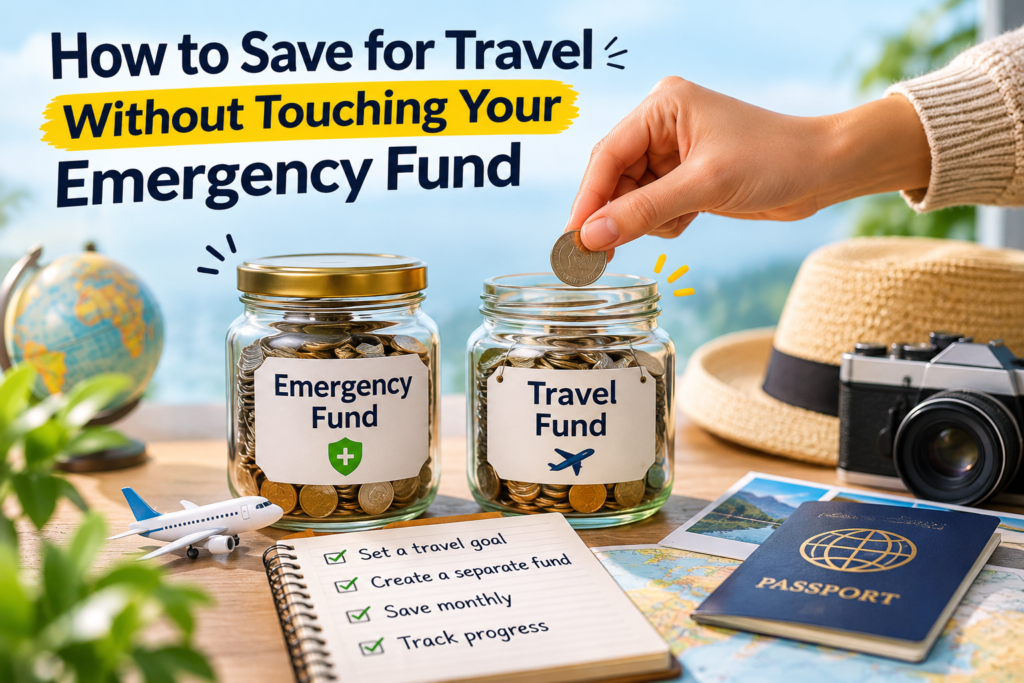
A memorable holiday should not come at the cost of financial security. Yet, when flights become cheaper or a limited-time hotel deal appears, it is tempting to dip into savings that were meant for unexpected expenses. The distinction matters: according to the Federal Reserve’s 2025 Report on the Economic Well-Being of U.S. Households, only 55% of adults had set aside enough money to cover three months of expenses, while 63% said they could cover a hypothetical $400 emergency using cash or its equivalent. These figures highlight why keeping emergency savings protected is important, even when travel feels like a worthwhile expense. The practical solution is to build a separate travel fund with a clear target, a realistic timeline and regular contributions. Learning how to save for travel without touching your emergency fund means planning your holiday around money you can genuinely afford to spend, rather than relying on financial protection you may need later.
Set a Realistic Travel Budget Before Booking
Start with the destination, duration and number of people travelling. Then estimate the complete cost instead of focusing only on flight tickets or hotel prices.
Your travel budget should account for:
- Flights, trains or other transportation
- Hotel accommodation and local transfers
- Meals, sightseeing and activities
- Travel insurance and visa expenses, if applicable
- Shopping, tips and miscellaneous spending
- A small contingency for travel-related surprises
For example, a seven-day international holiday might cost $2,800 when flights, accommodation, meals and activities are included. Adding a 10% buffer brings the savings target to $3,080.
This calculation gives you a specific goal. It also helps you decide whether the trip fits your current financial situation or whether you should choose a less expensive destination.
Keep Your Emergency Fund Completely Separate
Your emergency fund exists for situations you cannot comfortably plan for, such as losing your job, unexpected medical bills, urgent home repairs or essential vehicle repairs.
A travel expense is different because it is usually planned and optional. Using emergency savings for a holiday can leave you financially exposed when an actual emergency occurs.
Maintain separate accounts or savings buckets for different purposes:
- Emergency savings: For genuine financial emergencies.
- Travel savings: For flights, hotels and holiday expenses.
- Short-term savings: For upcoming purchases and planned personal expenses.
Keeping these accounts separate makes it easier to see how much you can spend without confusing available travel money with money that should remain untouched.
Calculate How Much You Need to Save Each Month
Once you know your travel budget and departure date, divide the target into manageable monthly contributions.
For instance, if your holiday will cost $3,000, you can spread the savings over 12 months instead of trying to arrange the entire amount shortly before departure.
| Travel savings target | Time available | Monthly savings required |
|---|---|---|
| $1,200 | 6 months | $200 |
| $2,400 | 12 months | $200 |
| $3,000 | 12 months | $250 |
| $4,800 | 18 months | $267 |
| $6,000 | 24 months | $250 |
The important thing is consistency. A manageable monthly contribution is generally more sustainable than setting an ambitious target that forces you to borrow or compromise on essential expenses.
If the required contribution feels too high, extend the timeline, reduce the trip budget or consider a more affordable destination.
Automate Your Travel Savings
One of the easiest ways to maintain a travel savings habit is to automate it.
Set up a recurring transfer from your checking account to a dedicated travel savings account shortly after payday. This makes saving part of your monthly financial routine rather than something you do only when money is left over.
You can also:
- Transfer a fixed percentage of your monthly income.
- Increase contributions whenever your salary increases.
- Direct a portion of bonuses or tax refunds towards travel.
- Use automatic round-up savings if your bank offers the feature.
A separate high-yield savings account may also help your travel money earn interest while remaining accessible. Compare account fees, withdrawal conditions and interest rates before choosing one.
Reduce Everyday Expenses Without Making Life Miserable
Travel savings do not always require a second job or major lifestyle changes. Small adjustments to regular spending can gradually create room in your budget.
Review your last two or three months of bank and credit card statements. Look for subscriptions you rarely use, frequent food deliveries, impulse purchases and services that have become more expensive. For example, reducing discretionary spending by $40 per week creates approximately $2,080 over a year.
The goal is not to eliminate every enjoyable expense. It is to identify spending that matters less to you than the upcoming trip and redirect that money towards your travel fund.
Use Extra Income and Travel Rewards Strategically
Occasional additional income can shorten the time needed to reach your savings target. Freelance projects, overtime payments, selling unused belongings and seasonal work can all contribute to your travel budget.
Credit card rewards and airline points may also reduce certain travel costs, provided you already use these products responsibly and pay balances in full. Do not increase spending simply to earn rewards, and account for annual fees, redemption restrictions and blackout dates.
Treat these benefits as supplements rather than the foundation of your savings plan. Your holiday should remain affordable even without them.
Know When to Delay the Trip
Sometimes the numbers make the decision for you. If saving for a holiday means missing bill payments, carrying high-interest credit card debt or reducing emergency savings, the trip may need to wait.
A useful rule is to book only when you can cover the expected expenses with your dedicated travel savings. Avoid assuming that future income, credit limits or emergency funds will fill the gap.
You can still keep the travel goal alive by adjusting the destination, shortening the stay or choosing dates with lower accommodation and airfare costs.
Make Travel a Planned Financial Goal
Travelling should be something you can enjoy without worrying about what happens when you return home. A separate savings account, realistic monthly targets and consistent contributions make it easier to save for travel without touching your emergency fund.
You do not need to save everything at once or sacrifice every small pleasure to afford a holiday. Start with a destination, calculate what it will realistically cost and build a savings routine around your income. When the trip is funded before you leave, you can enjoy the experience knowing your financial safety net is still there.
Save for Travel Without Touching Your Emergency Fund: FAQs
1. How much should I save for a vacation?
It depends on your destination, travel duration, accommodation preferences and activities. Estimate the full cost, add a 10% buffer and divide the total by the number of months before departure.
2. Should I use my emergency fund for a planned holiday?
No. Emergency savings should remain available for unexpected financial difficulties. Planned travel should be funded through a separate savings account.
3. Where should I keep my travel savings?
A separate savings account is a practical option. Consider a high-yield savings account if it offers competitive interest, suitable withdrawal access and no unnecessary fees.
Also Read: Hidden Bank Fees You’re Probably Paying and How to Stop