
How to Switch Careers into Tech in 12 Months Using Online Courses
Thinking about switching careers into tech within a year? This guide breaks down how to choose the right tech path, build a focused 12-month learning plan, gain practical experience through projects, and use online courses strategically without wasting…

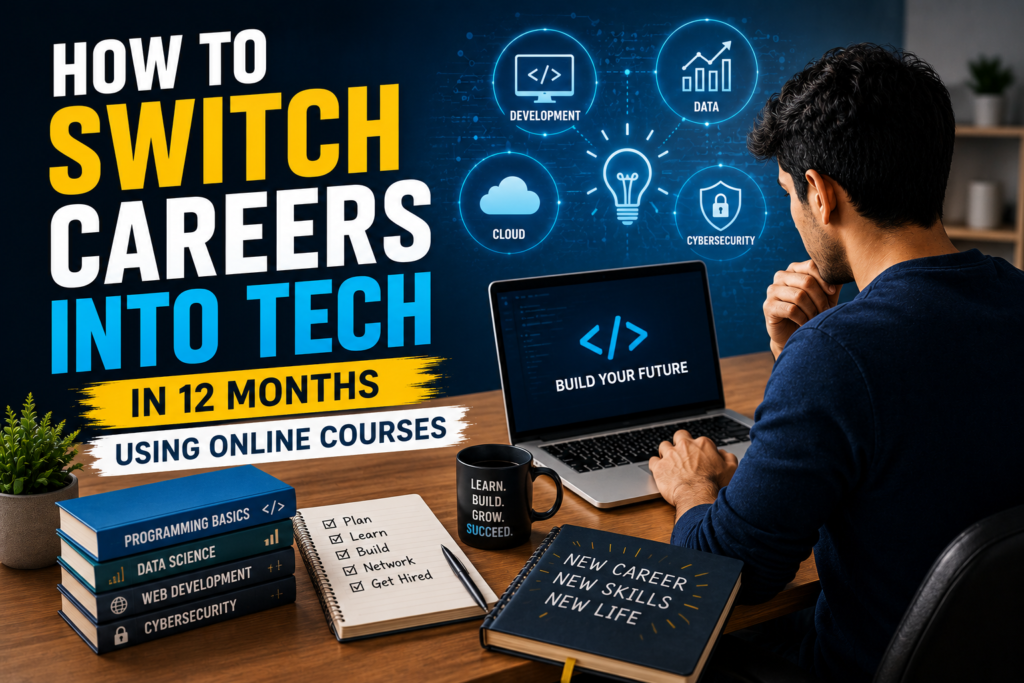
The idea of changing careers once meant returning to university, earning another degree, and spending years building experience before landing a new job. Today, that path looks very different. If you’re researching how to switch careers into tech in 12 months using online courses, you’re following a route that thousands of professionals have already taken successfully. According to the World Economic Forum’s Future of Jobs Report, technology roles such as software developers, cybersecurity specialists, AI engineers, cloud professionals, and data analysts are expected to remain among the fastest-growing occupations over the next decade. At the same time, employers are increasingly hiring based on demonstrable skills rather than academic qualifications alone.
However, the biggest misconception about online learning is that completing a few courses is enough to secure a tech job. Recruiters rarely hire someone because they own twenty certificates. Instead, they look for candidates who understand real-world problems, can build practical solutions, communicate effectively, and demonstrate continuous learning. This guide explains how to switch careers into tech in 12 months using online courses through a structured roadmap that manages education, projects, networking, and interview preparation.
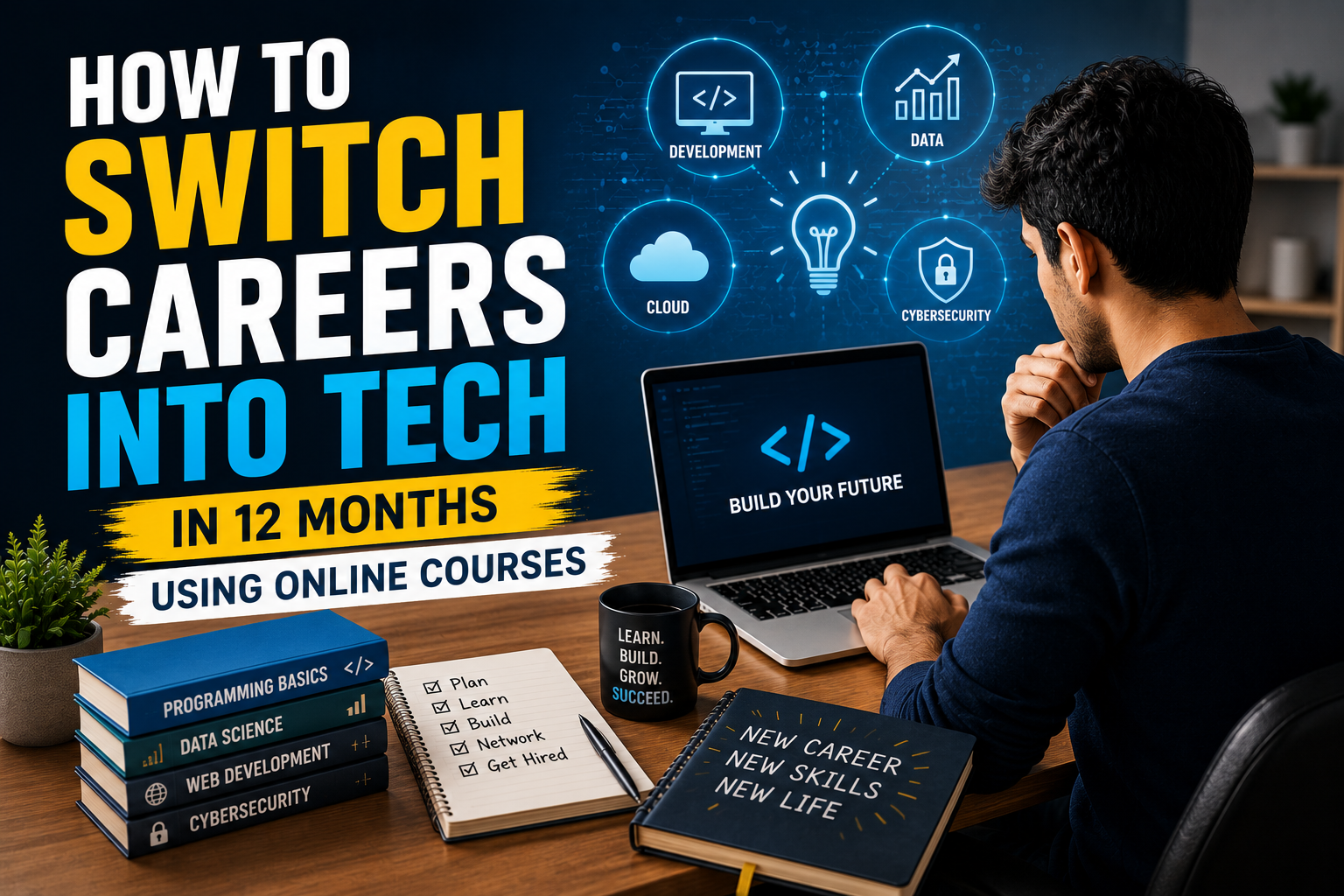
Start With a Career Goal, Not a Programming Language
One of the biggest mistakes career changers make is beginning with a programming language instead of deciding what they actually want to become.
- Technology is a broad industry, and every role needs a different combination of technical and interpersonal skills.
- Someone interested in designing user experiences does not need the same learning path as someone planning to become a cloud engineer or cybersecurity analyst.
- Spend time researching different career paths before purchasing your first course.
- Read job descriptions, browse LinkedIn profiles of professionals already working in those roles, and compare salary expectations, growth opportunities, and required skills.
- A clear destination helps eliminate unnecessary learning and allows you to concentrate on subjects that directly improve your employability.
Popular Tech Career Paths
| Career Path | Core Skills | Beginner Friendly |
|---|---|---|
| Software Development | HTML, CSS, JavaScript, Git, React | Yes |
| Data Analytics | Excel, SQL, Power BI, Python | Yes |
| Cybersecurity | Networking, Linux, Security Fundamentals | Moderate |
| UX/UI Design | Figma, Research, Prototyping | Yes |
| Cloud Computing | AWS, Azure, Docker | Moderate |
| AI & Machine Learning | Python, Statistics, Machine Learning | Moderate |
Build Strong Foundations Before Chasing Advanced Skills
Once you’ve selected your career path, resist the temptation to jump toward advanced tutorials. Many learners start building artificial intelligence projects before understanding basic programming concepts, or they attempt cloud certifications without knowing networking fundamentals. This often leads to frustration and inconsistent progress.
Building a strong foundation now will save countless hours of confusion later.
Turn Every Lesson Into a Practical Project
The fastest way to learn technology is by building something with every new concept you study. Observing tutorials creates familiarity, but solving problems creates understanding. After finishing each module, challenge yourself to apply it in a small project rather than immediately moving to the next lesson.
For Example:
- If you’re learning web development, build a responsive portfolio website or a simple expense tracker.
- Data analytics learners can download publicly available datasets and create dashboards that answer real business questions.
- UX designers can redesign an existing mobile application while documenting every design decision.
Employers consistently value practical work because it demonstrates that you can convert knowledge into results.
Develop a Portfolio That Tells Your Story
Understanding how to switch careers into tech in 12 months using online courses goes beyond completing coursework. Your portfolio becomes the strongest evidence of your capabilities because it allows recruiters to evaluate your thinking process instead of simply reading your résumé.
- Rather than uploading dozens of unfinished projects, focus on four or five polished pieces of work.
- Explain the business problem, the technologies you used, the challenges you encountered, and how you solved them.
- Adding screenshots, GitHub repositories, live demos, or design case studies makes your work more credible and easier for hiring managers to evaluate.
- Small details like clear documentation, consistent formatting, and thoughtful explanations commonly leave a stronger impression than highly complicated projects with poor presentation.
Learn the Tools Employers Expect You to Know
Technical knowledge alone is rarely enough to succeed in modern workplaces. Companies expect new hires to collaborate using professional tools that improve productivity and communication. Becoming familiar with these tools before your first job can give you a significant advantage during interviews.
Networking Can Accelerate Your Career More Than Another Course
Many successful career changers receive their first interview because someone noticed their work, not because they submitted hundreds of online applications.
- Building relationships within the technology community exposes you to technology trends, coaching opportunities, and hidden job openings that never reach public job boards.
- Start participating in LinkedIn discussions, take part in virtual technology conferences, participate in open-source projects, and join developer communities on Discord or GitHub.
- Sharing your learning path publicly may feel uncomfortable initially, but it demonstrates curiosity, consistency, and genuine interest in your field.
Recruiters increasingly appreciate candidates who actively engage with professional communities rather than learning in isolation.
Prepare for Interviews Before You Feel Ready
Many learners postpone job applications because they believe they need one more course or another certification. Unfortunately, that mindset often delays career transitions by several months.
- Interview preparation should begin while you’re still learning because it reveals knowledge gaps that ordinary studying may overlook.
- Practice explaining your projects in simple language, solve technical interview questions regularly, and participate in mock interviews with colleagues or advisors.
- Employers frequently evaluate communication skills alongside technical knowledge, particularly for entry-level positions where teamwork and flexibility carry just as much as coding ability.
A Realistic 12-Month Roadmap
| Timeline | Primary Objective |
|---|---|
| Months 1–3 | Choose a specialization and complete beginner-level courses |
| Months 4–6 | Build hands-on projects and strengthen technical understanding |
| Months 7–9 | Develop a professional portfolio and optimize LinkedIn |
| Months 10–12 | Prepare for interviews, network actively, and apply consistently |
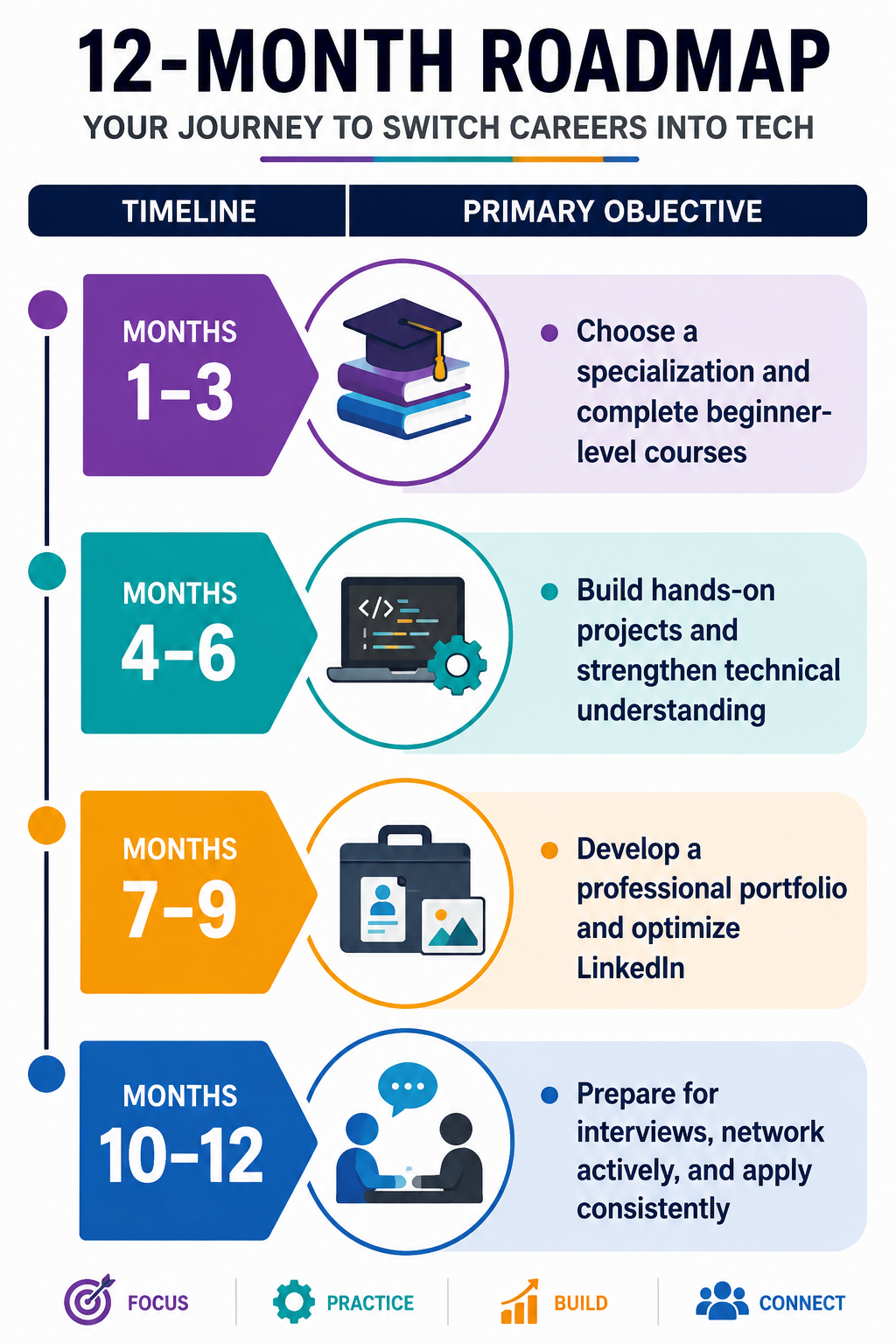
This roadmap is flexible rather than rigid. Some learners may progress faster, while others might spend additional time strengthening particular skills. Consistency matters far more than speed.
Final Thoughts
Successfully learning how to switch careers into tech in 12 months using online courses requires much more than watching video lessons or collecting certificates. It demands discipline, structured learning, practical experience, networking, and the confidence to apply for opportunities before you feel completely prepared. Technology rewards curiosity and continuous improvement, making it one of the few industries where motivated professionals from entirely different backgrounds can build successful careers.
If you remain focused on one specialization, consistently build projects, actively engage with the professional community, and keep refining your portfolio, how to switch careers into tech in 12 months using online courses becomes an achievable objective rather than an unrealistic ambition. Every experienced engineer, analyst, designer, or cybersecurity professional once started exactly where you are today, with curiosity, commitment, and the willingness to keep learning.
Frequently Asked Questions
1. Can I switch to a tech career without a computer science degree?
2. Which e-learning platforms are best for learning tech skills?
Coursera, Udemy, edX, LinkedIn Learning, freeCodeCamp, Codecademy, and Google Career Certificates are among the most trusted platforms for structured online learning.
3. Are certifications enough to get hired?
No. Certifications strengthen your profile, but recruiters usually place greater value on real projects, portfolios, and demonstrated problem-solving skills.
Also Read: How to Learn a Language with iTalki: A Beginner’s Roadmap