
Best Storage Solutions for Small Spaces: Testing the Popular Picks
Discover the best storage solutions for small spaces, from under-bed boxes and rolling carts to vertical shelves and multifunctional furniture.

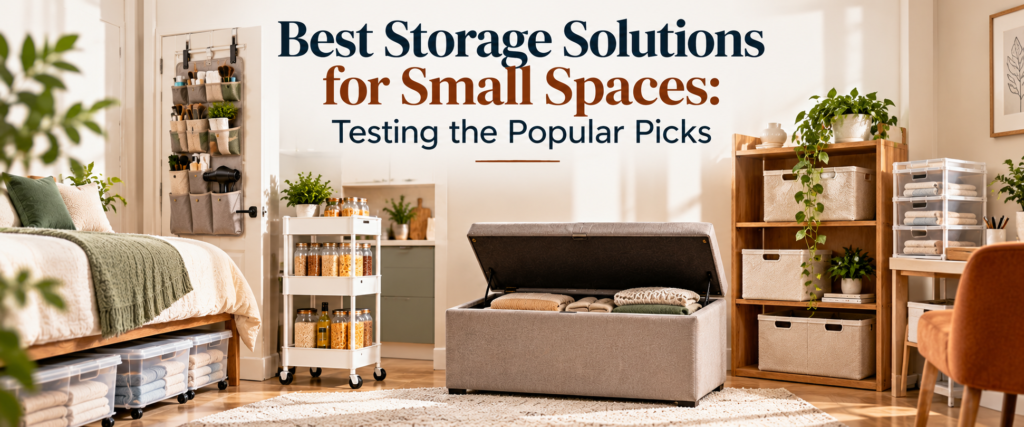
Small homes rarely run out of space all at once. It happens gradually: extra bedding fills the wardrobe, kitchen counters collect appliances, shoes gather near the entrance, and everyday essentials compete for room on already crowded shelves. The best storage solutions for small spaces address these specific problems without making a room harder to move around in. Under-bed containers, over-the-door organisers, slim rolling carts, vertical shelving, and multifunctional furniture are popular choices because they use overlooked areas or make existing furniture work harder. Recent small-apartment storage guides consistently highlight these approaches, particularly for homes with limited closets and floor space.
But popularity alone does not make an organiser worth buying. A container that cannot slide beneath your bed, a trolley that blocks a cabinet, or a shelf that is difficult to reach can create more frustration than it solves. Here is a practical comparison of popular storage options, including what each does well, where it falls short, and what to check before spending money.
Best Storage Solutions for Small Spaces
Here’s a list of the best storage solutions for small spaces:
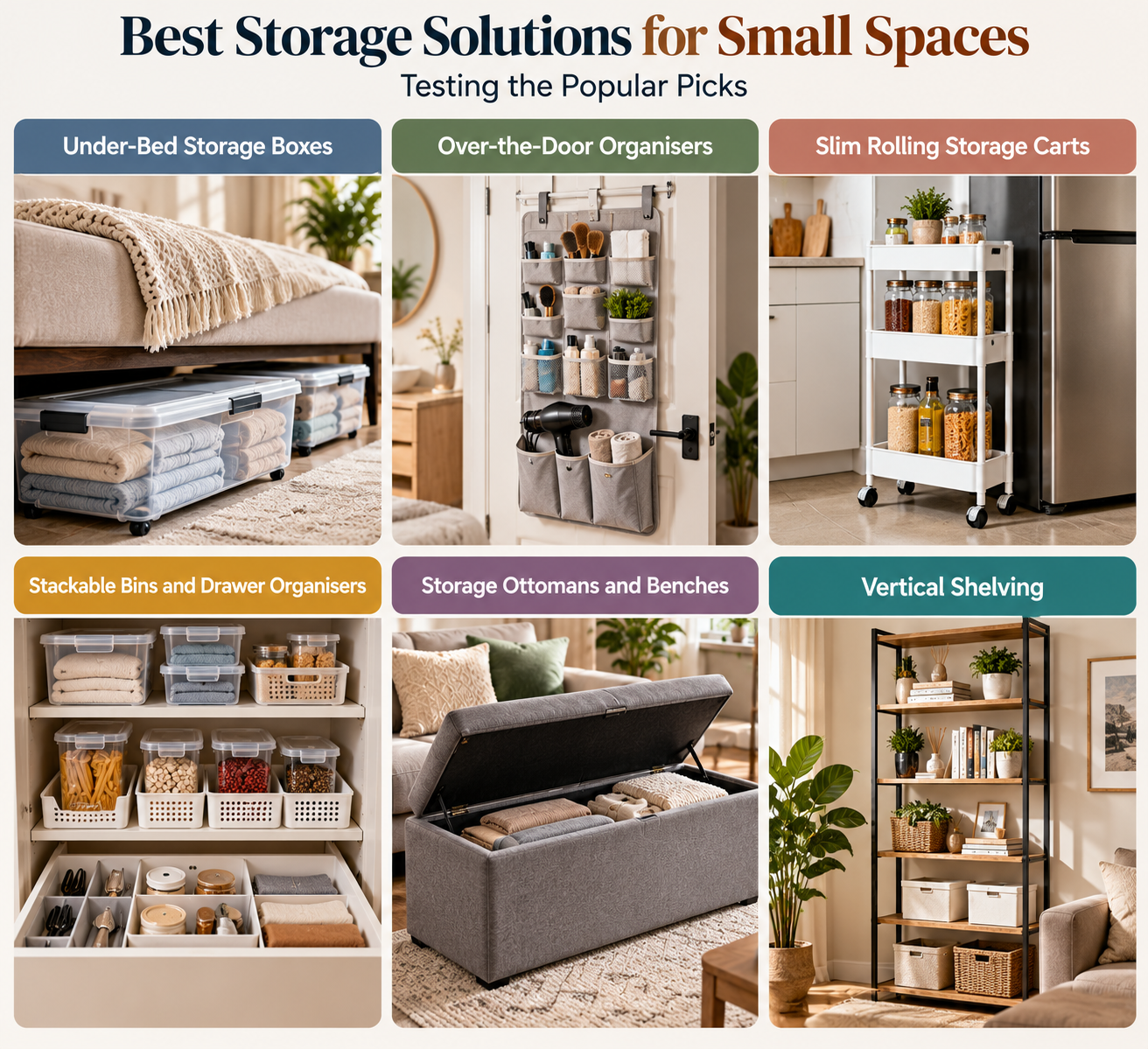
1. Under-Bed Storage Boxes: Best for Bedrooms
The space beneath a bed is useful for belongings you do not need every morning. Rolling boxes, lidded plastic containers, and zippered fabric bags can hold spare bedsheets, blankets, seasonal clothes, and footwear without taking up wardrobe space.
What works: Flat containers with wheels are easier to access than boxes that must be dragged across the floor. Transparent lids also help you find stored items without opening several containers.
What to watch: Measure the clearance between the floor and the lowest part of the bed frame, including any crossbars. Check the container’s external height, not just its advertised capacity. In humid rooms, make sure stored textiles are completely dry before packing them away.
Verdict: A strong first purchase for bedrooms with unused under-bed clearance. Choose rigid boxes for frequent access and fabric bags when the available gap is particularly low.
2. Over-the-Door Organisers: Best for Renters
Doors offer storage space without requiring another cabinet. Hanging pocket organisers suit toiletries, accessories, cleaning supplies, stationery, and small household items. Metal racks with hooks or baskets can be more appropriate for heavier items, provided the door and mounting system support the load.
What works: These organisers are generally easy to install and can be moved when you change homes. Transparent pockets make small belongings easier to locate, while hooks are convenient for bags, robes, and towels.
What to watch: Measure the door thickness and check whether the hooks interfere with the frame. The door must still close fully, and the organiser should not obstruct switches, handles, or nearby walkways. Respect the manufacturer’s load limit.
Verdict: Excellent for lightweight, frequently used items, especially when drilling is not an option. Avoid placing heavy bottles or fragile objects in flimsy fabric pockets.
3. Slim Rolling Storage Carts: Best for Narrow Gaps
A narrow trolley can turn the gap beside a refrigerator, washing machine, vanity, or bathroom cabinet into useful storage. Three-tier and four-tier versions commonly hold cleaning products, toiletries, pantry packets, or laundry supplies.
What works: Wheels allow you to pull the entire unit forward when you need something at the back. Open baskets provide quick access, while raised sides help prevent smaller items from slipping out.
What to watch: Measure the narrowest part of the gap and account for skirting boards, handles, pipes, and the trolley’s wheels. Check stability when loaded and ensure that the floor is flat enough for safe movement. A trolley that fits but cannot be pulled out properly is not a practical solution.
Verdict: Particularly useful in kitchens and utility areas where a full cabinet would be too wide. Keep frequently used items on the upper shelves and heavier products on lower levels.
4. Stackable Bins and Drawer Organisers: Best for Cupboards
Sometimes the problem is not a lack of storage but poor use of existing cupboards. Stackable bins, shelf dividers, drawer trays, and modular boxes separate belongings into manageable groups.
What works: Dividers stop small items from spreading across drawers, while stackable bins create additional levels inside suitable cabinets. Labelling each container makes shared household storage easier to maintain.
What to watch: Measure the internal width, depth, and height of the cupboard. Account for hinges, drawer runners, and shelves that cannot be adjusted. Avoid stacking heavy containers above shoulder height, and do not overload shelves that are not designed for substantial weight.
Verdict: One of the most affordable upgrades because it improves existing storage rather than adding another piece of furniture.
5. Storage Ottomans and Benches: Best for Living Rooms and Entryways
A storage ottoman combines a seat or footrest with a concealed compartment. A storage bench can also provide a convenient place to sit while putting on shoes, with room underneath or inside for everyday belongings.
What works: These pieces are especially valuable when they replace furniture you already need. An ottoman can hold throws, board games, or cushions while keeping the living room tidy. An entryway bench can organise shoes and bags near the door.
What to watch: Check the internal storage dimensions, lid mechanism, ventilation, and weight capacity. A large bench may hold plenty but leave insufficient room to open its lid or walk past it comfortably.
Verdict: Best when the furniture serves two genuine purposes. If the room already feels crowded, choose a compact piece that replaces a separate seat or table rather than adding another item.
6. Vertical Shelving: Best for Using Wall Height
Tall bookcases, freestanding shelf units, and wall-mounted shelves create storage without spreading across the entire floor. They can accommodate books, baskets, kitchen supplies, decorative objects, and frequently used household items.
What works: Vertical storage makes use of height that short cabinets leave unused. Closed boxes on lower shelves can conceal clutter, while open shelves keep daily essentials accessible.
What to watch: Check shelf depth, load limits, ceiling clearance, and whether the unit needs to be anchored to the wall. Wall-mounted shelves require suitable fixings for the wall material and intended load. In narrow rooms, avoid deep units that reduce walking space.
Verdict: A good long-term option when floor space is limited, but wall height is available.
Quick Comparison: Which Storage Solution Should You Choose?
| Storage option | Best use | Main advantage | Main limitation |
|---|---|---|---|
| Under-bed boxes | Bedding and seasonal clothes | Uses hidden space | Requires adequate clearance |
| Door organisers | Accessories and lightweight supplies | Little or no floor space needed | Door compatibility and load limits |
| Slim rolling carts | Kitchens, bathrooms, utility gaps | Mobile and easy to access | Needs a clear rolling path |
| Stackable bins | Cupboards and drawers | Affordable and modular | Incorrect sizing wastes space |
| Storage ottomans | Living rooms and entryways | Combines storage with seating | Occupies floor space |
| Vertical shelving | Books, baskets, household items | Uses wall height | May require anchoring |
What Makes a Storage Product Worth Buying?
When comparing storage solutions for small spaces, judge them on four practical factors: usable capacity, accessibility, durability, and the space they consume. Advertised volume means little if the lid cannot open fully or you must move three other items to reach the one you need.
Before ordering, measure the intended location and compare the product’s complete dimensions. Consider how often you will access the contents, whether the material suits the room, and whether assembly or wall mounting is required. For rented homes, portable organisers and freestanding furniture are often easier to manage than permanent installations.
Also, avoid buying organisers before sorting your belongings. Remove unused items first, group what remains by purpose, and then purchase only the containers or shelves needed. This prevents spending money on storage for things you no longer use.
Storage Solutions for Small Spaces: FAQs
1. How can I add storage without drilling holes?
Try freestanding shelves, rolling carts, lidded boxes, storage ottomans, and over-the-door organisers. Check the product’s stability and door compatibility before installation.
2. How do I organise a small kitchen efficiently?
Use shelf risers, drawer dividers, stackable containers, and narrow rolling carts where measurements permit. Keep frequently used cooking essentials accessible and avoid blocking ventilation or appliance access.
3. Should I buy storage furniture or separate organisers?
Choose storage furniture when it can replace an existing seat, table, or bench. Separate organisers usually make more sense when you already have cupboards or drawers that need better organisation.
Also Read: How to Start Working Out After Years Off: A 4-Week On-Ramp