
How Game Keys Get So Cheap: The Grey Market Explained
Game Keys can sometimes appear online for dramatically less than the price shown on Steam, PlayStation, Xbox or an official publisher store. Let's find out how to find an authentic one among

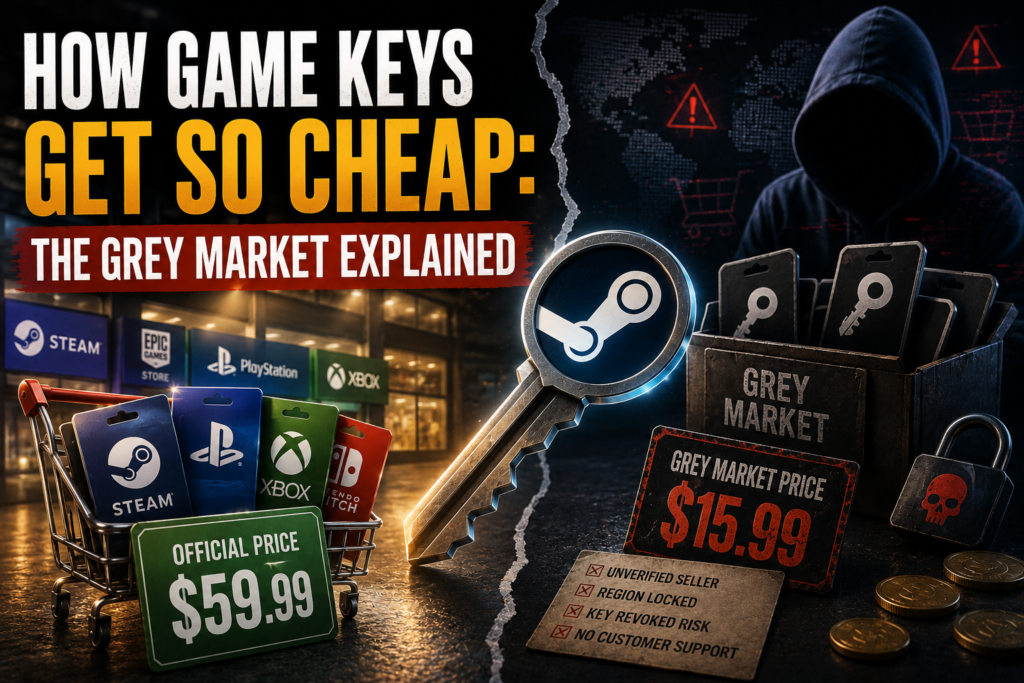
Game Keys can sometimes appear online for dramatically less than the price shown on Steam, PlayStation, Xbox or an official publisher store. A $60 PC game might be listed for $35, $20 or even less, which naturally raises the question: if the game is legitimately available to download, where did the cheap key come from?
The answer is that not every discounted key has the same origin. Some come from legitimate regional promotions, publisher-authorized retailers, bundles or temporary discounts. Others move through what is commonly called the grey market, where marketplaces connect buyers with third-party sellers whose supply chain may be difficult to verify. That distinction matters because a cheap key can carry risks that aren’t obvious at checkout, including regional restrictions, revoked licenses or uncertain sourcing.
The grey market exists partly because digital keys are unusually easy to resell. Unlike a physical game, a key can cross borders instantly and can be sold without the seller maintaining inventory in the traditional sense.
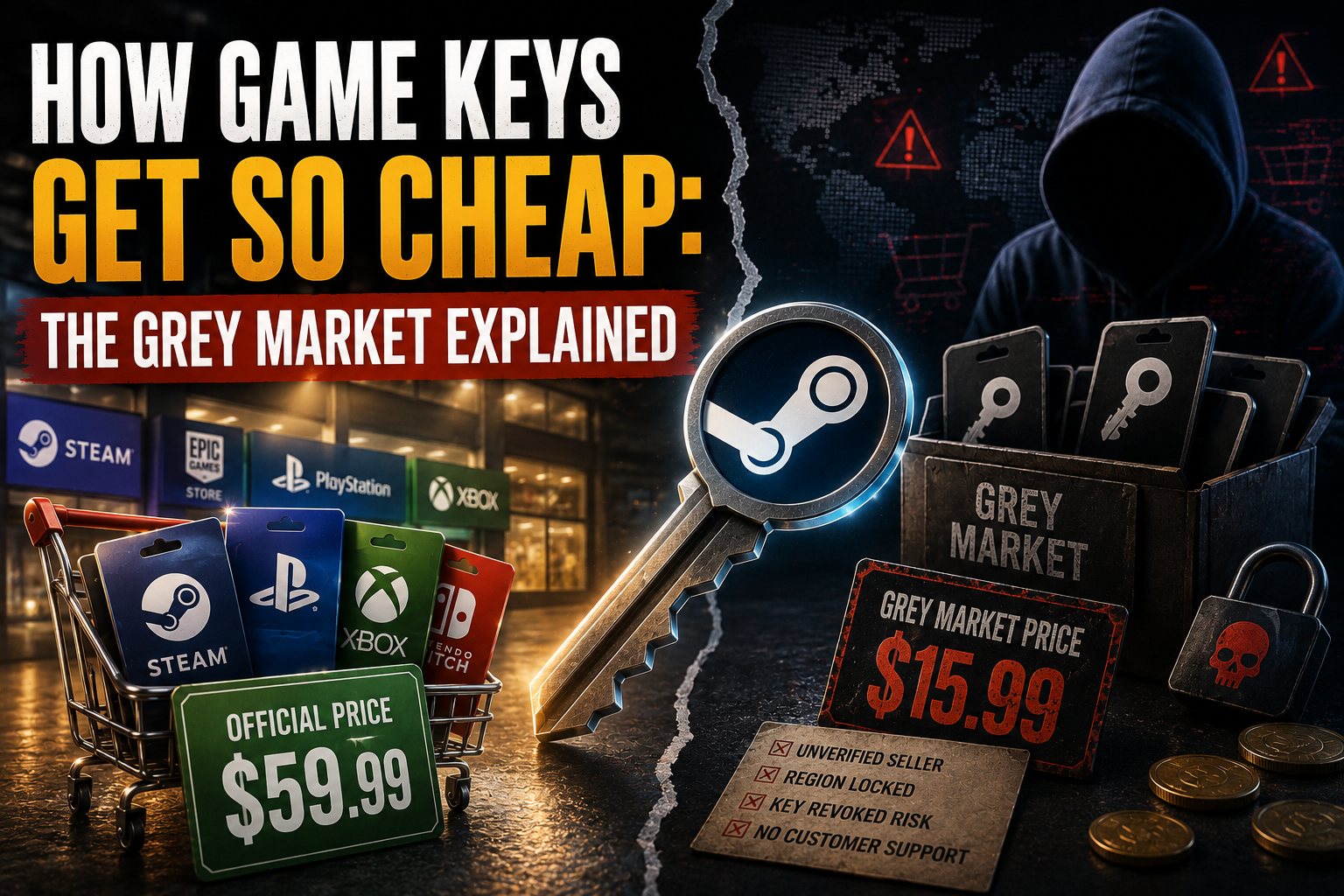
Where Cheap Keys Actually Come From
There isn’t one single grey-market supply chain.
Some keys originate from legitimate promotions. A publisher may sell a game cheaply in one country, distribute keys through a bundle or provide keys to a retailer as part of a marketing campaign. Regional price differences can then create an opportunity for resellers to buy where prices are lower and sell where prices are higher.
Other keys may come from legitimate retail overstock, giveaways or promotional distributions. Developers can also issue Steam keys to external stores and partners. Valve’s Steamworks documentation explicitly allows developers to sell Steam Keys through other stores, although Valve reviews unusually large requests and can reject requests when key distribution appears inconsistent with sales on Steam.
The problem is that a buyer on a third-party marketplace may not know which of these sources applies to a particular key.
The Difference Between Authorized and Grey-Market Sellers
An authorized retailer has a commercial relationship with the publisher or distributor that allows it to sell the game. A grey-market marketplace generally operates differently: individual or third-party sellers list keys, and the marketplace facilitates the transaction.
That doesn’t mean every key sold through a grey-market marketplace is fraudulent. Some may work perfectly and remain valid indefinitely. The issue is traceability.
With an authorized retailer, there is generally a clearer chain from publisher to distributor to customer. With an unknown third-party seller, that chain can be much harder to establish.
| Source of Key | Why It May Be Cheap | Main Consideration |
|---|---|---|
| Official sale | Publisher discount | Lowest risk |
| Authorized retailer | Competitive pricing/promotions | Generally reliable |
| Bundle | Bulk promotional deal | Check included titles |
| Regional pricing | Lower local price | Region restrictions |
| Marketplace reseller | Seller competition | Source may be unclear |
| Promotional key | Marketing distribution | May have restrictions |
| Fraudulently obtained key | Illegitimate acquisition | Revocation risk |
How Regional Pricing Creates Cheap Keys
One of the less obvious reasons for price differences is regional pricing.
Publishers frequently adjust game prices according to local purchasing power, taxes and market conditions. A game that costs significantly less in one country can therefore create an incentive for resellers to move keys into another market.
But regional restrictions can prevent that from working. A key intended for one country or region may not activate on an account elsewhere.
This is why a price that looks unbelievably low deserves a closer look at the product listing. “Global,” “EU,” “US”, and other regional labels can have important consequences for activation.
Why Some Keys Can Be Revoked
A key isn’t necessarily permanently safe simply because it activated successfully.
If a publisher discovers that keys were obtained improperly, for example, through payment fraud or unauthorized distribution, it may invalidate them. That can leave the customer without access to a game they believed they had purchased legitimately.
Steam’s terms also make clear that purchases involve authorization of the payment method used.
This is one reason buying from an unfamiliar seller can be different from buying during an official Steam sale. The immediate transaction may work, but problems with the underlying key can emerge later.
Why Grey-Market Prices Can Beat Official Sales
There are several reasons a third-party listing can undercut an official store.
A reseller may have purchased keys during a regional promotion and be operating on a smaller margin. A seller may have acquired keys as part of a bundle and be selling individual titles separately. Currency differences can also create opportunities.
Then there is simple competition. Marketplaces can have dozens of sellers listing the same product, pushing prices downward as sellers compete for visibility.
But extremely low prices should make buyers more cautious rather than automatically excited. If an expensive new release is consistently being sold for a tiny fraction of its official price, the discount needs an explanation.
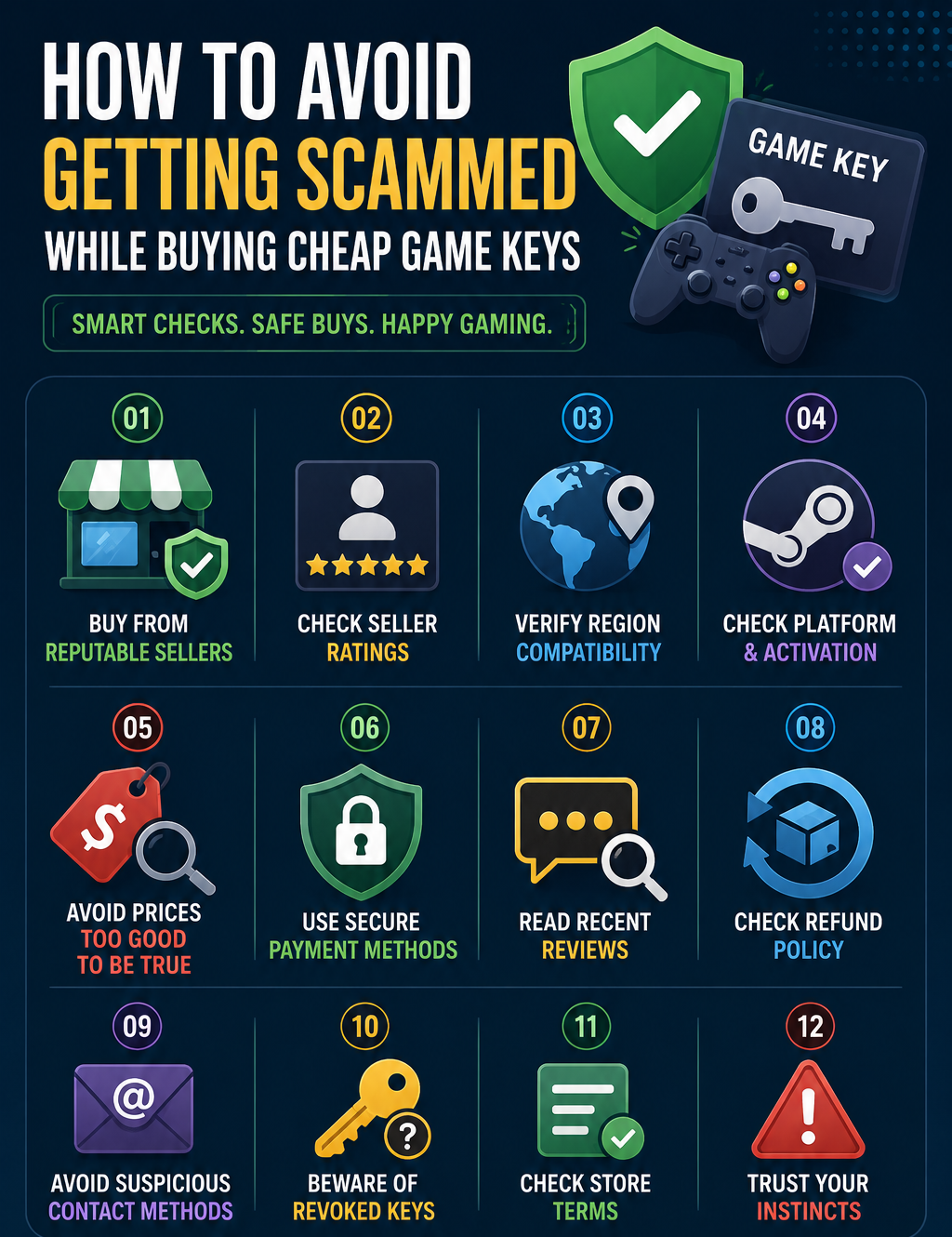
How to Check a Cheap Key Before Buying
The first thing to investigate is who is actually selling the key. A marketplace’s reputation alone doesn’t tell you whether a particular seller is trustworthy.
Look at the seller’s history, number of transactions and recent feedback.
- Pay attention to complaints about invalid keys, activation restrictions and refunds rather than focusing only on the overall rating.
Next, check the activation region and platform.
- A Steam key is not necessarily a Steam key that works everywhere.
Also examine the refund policy.
- Digital keys can create a particularly difficult refund situation because once a code has been revealed, some sellers may treat it as redeemed even if the buyer encounters an activation problem.
For expensive purchases, compare the third-party price with authorized retailers. If the difference is only a few dollars, the potential savings may not justify the additional uncertainty.
Are Grey-Market Keys Illegal?
The answer isn’t as simple as saying that every grey-market key is illegal.
A key can be legitimately obtained but resold through a channel the publisher did not intend. Another key could have been obtained through fraud. Those are very different situations.
For consumers, the practical issue is less about attaching one legal label to every marketplace and more about understanding where the key came from and what protections you have if something goes wrong.
How to Find Cheap Games?
You don’t need to rely on grey-market sellers to get substantial discounts.
Major PC storefronts regularly run seasonal sales, while authorized retailers offer their own promotions. Bundles can also provide significant value, particularly when you already want several of the included games.
Price comparison is more useful than chasing the lowest number. Check the game’s official price, recent sale history and authorized retailers before considering an unfamiliar marketplace.
A $40 game purchased for $25 from a reliable seller may be a better deal than a $10 key with uncertain provenance.
FAQs on Game Keys
1. Can a cheap game key stop working?
Yes. A publisher or platform can potentially revoke an improperly obtained or fraudulent key. Successful activation doesn’t necessarily prove that the original transaction was legitimate.
2. Are grey-market game keys always scams?
No. Some keys sold through third-party marketplaces may be completely legitimate. The concern is that buyers often have less visibility into the key’s original source.
3. Why do regional keys cost less?
Publishers may set different prices in different markets. Resellers can attempt to take advantage of these differences, although regional activation restrictions can prevent a key from working outside its intended market.
Ultimately, cheap keys aren’t automatically bad deals. The important distinction is between a genuine discount and an unexplained discount. Understanding the supply chain, checking regional restrictions and evaluating the seller can help you save money without turning a bargain game into an expensive headache.
Also Read: VPN Speed Explained: Why Your Connection Slows and How to Fix It