
How to Build Credit from Zero: A 12-Month Plan for the US
How to build credit from zero starts with one important reality: you do not need to borrow a large amount of money to establish a credit history.

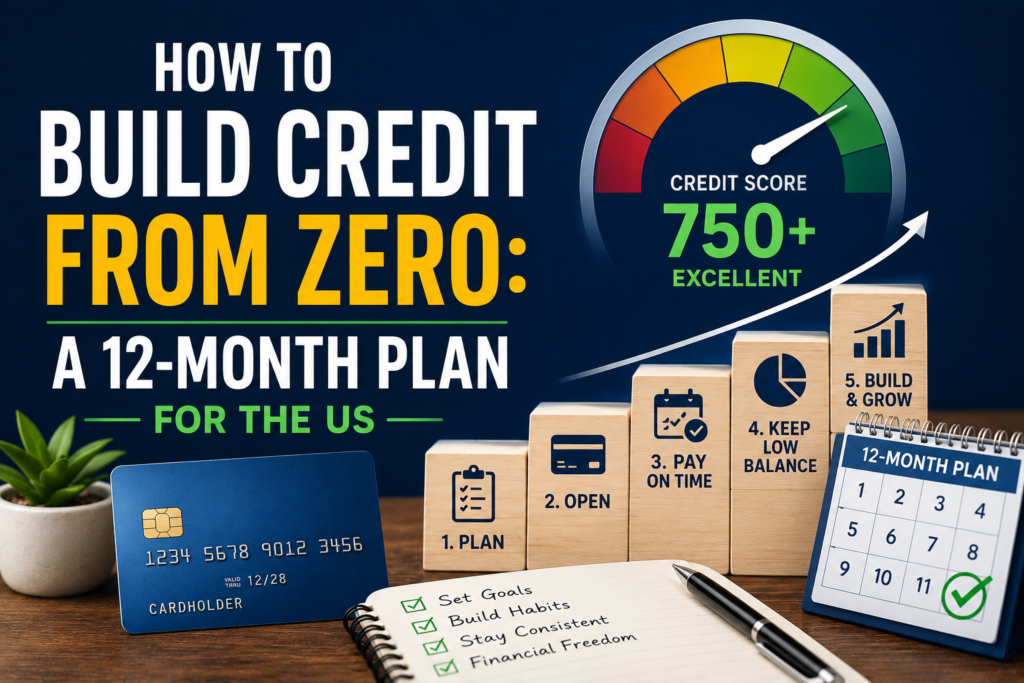
How to build credit from zero starts with one important reality: you do not need to borrow a large amount of money to establish a credit history. You need a small number of accounts that report to the major credit bureaus and a consistent record of paying them on time. A FICO Score generally cannot be generated until you have at least one account that has been open for six months and has reported within the previous six months.
For someone starting with no US credit history, the first year is about creating reliable financial behavior rather than chasing a particular score. FICO says payment history accounts for 35% of a typical score, amounts owed for 30%, length of credit history for 15%, and new credit and credit mix for 10% each. That makes the strategy fairly clear: open credit carefully, keep balances manageable and never miss payments.
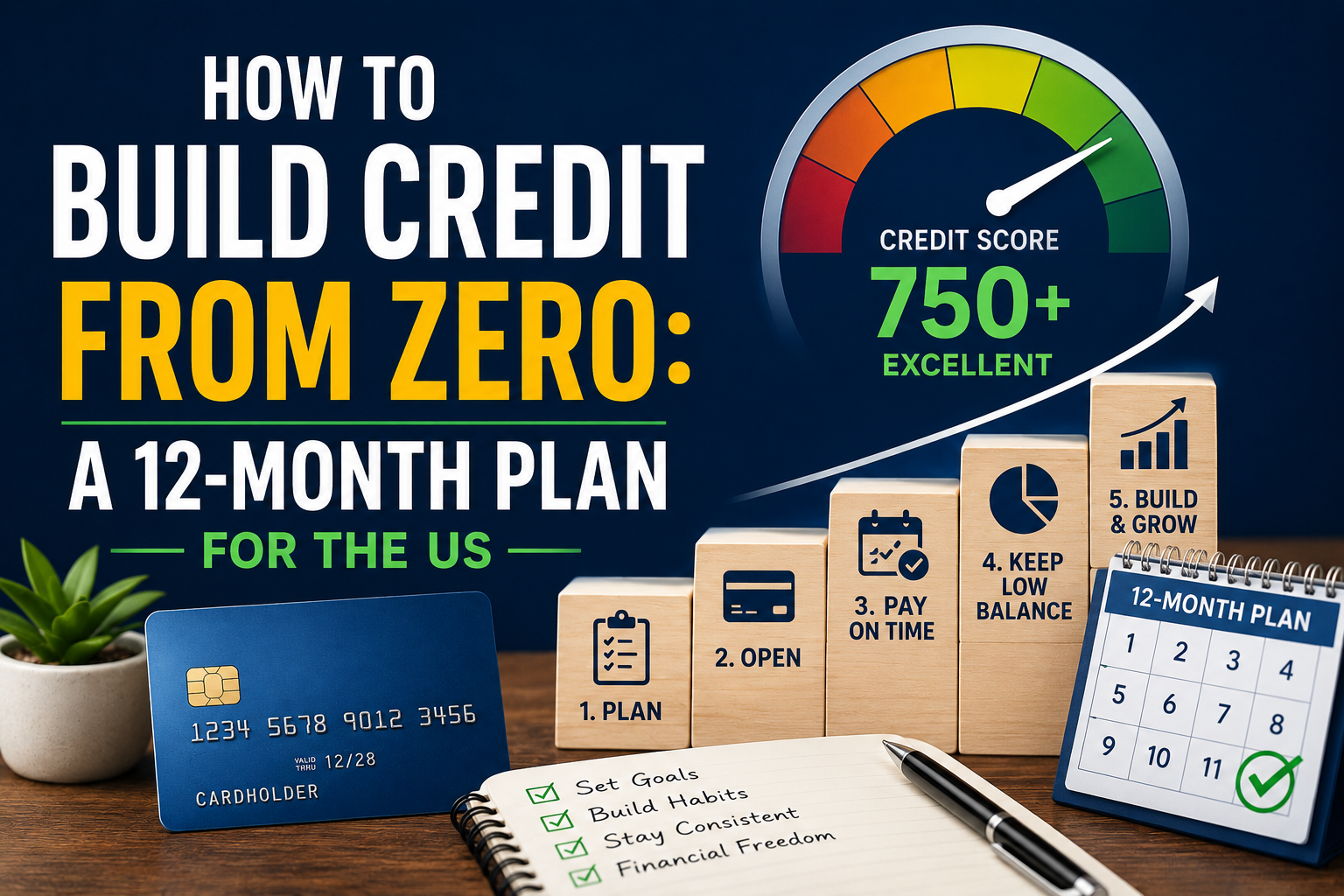
Month 1: Check What Actually Exists
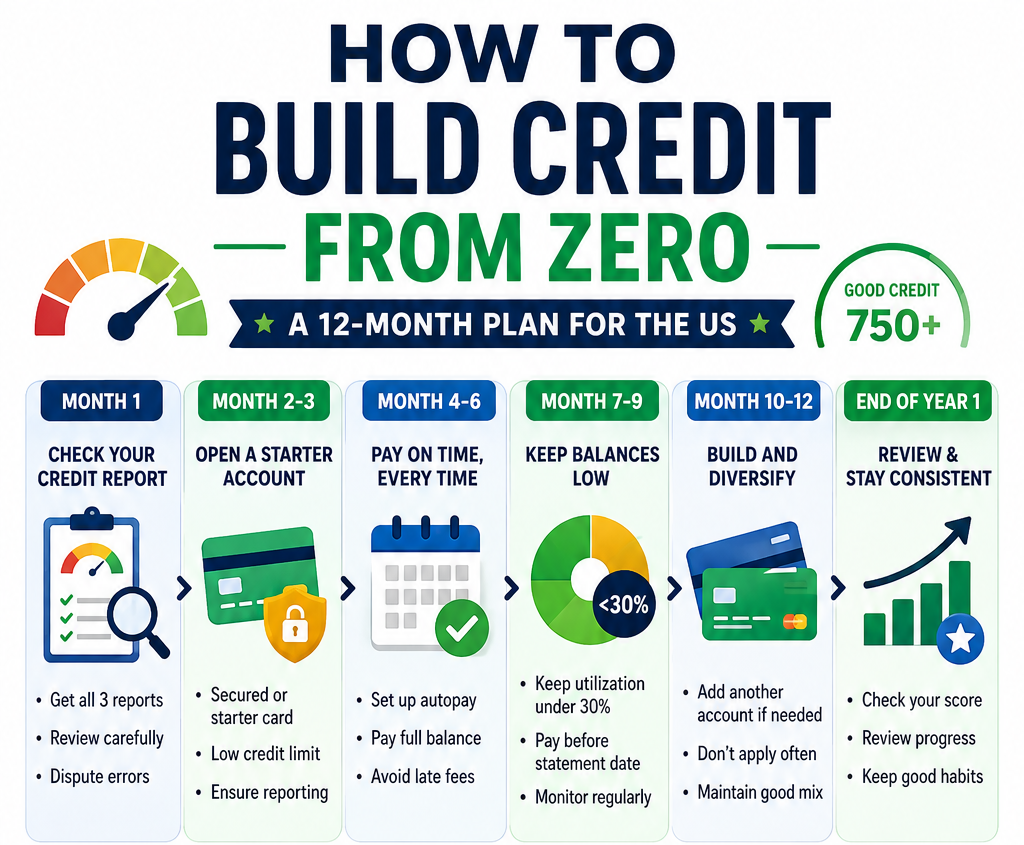
Before applying for anything, check your credit reports. Even if you believe you have “no credit,” there could be an existing account, an incorrectly reported debt or information belonging to someone else with a similar identity.
In the US, you can obtain reports from Equifax, Experian and TransUnion through AnnualCreditReport.com. Checking your own report does not hurt your score.
If you find an error, dispute it with the credit reporting company and the business that supplied the information. Do not pay a company simply because it promises to create a credit history quickly.
Months 2-3: Open One Starter Account
For many people starting from zero, a secured credit card is one of the most straightforward options. You provide a refundable cash deposit, which generally establishes the card’s credit limit. The account can then report your payment activity to the credit bureaus. The CFPB specifically lists secured cards among the products that can help establish credit.
Another possibility is a conventional starter credit card designed for applicants with limited or no history. Compare annual fees, security deposits, APR and whether the issuer reports to all three major bureaus.
Do not apply for five cards at once. Multiple applications can create hard inquiries, and opening several accounts quickly can be particularly unhelpful when your credit history is thin.
Months 4-6: Build a Perfect Payment Routine
Now the goal is boring, and that’s exactly what you want.
Put one or two predictable expenses on the card, such as a streaming subscription, phone bill or grocery purchase. Keep the spending within your normal budget and pay the statement balance in full by the due date.
Autopay can help prevent an accidental missed payment, but don’t treat it as a substitute for checking your account. Make sure enough cash is available before the automatic payment is processed.
| Timeline | Main action | What to avoid |
|---|---|---|
| Month 1 | Check all credit reports | Paying for unnecessary “credit repair” |
| Months 2-3 | Open one starter/secured card | Multiple applications |
| Months 4-6 | Pay every statement on time | Carrying unaffordable balances |
| Months 7-9 | Review reports and utilization | Closing your oldest account unnecessarily |
| Months 10-12 | Evaluate whether another account is useful | Applying simply to increase your score |
| End of Year 1 | Review overall credit profile | Chasing a specific score |
Months 7-9: Watch Your Utilization
Paying on time is essential, but the amount reported on your revolving accounts matters too. FICO considers how much of your available revolving credit you’re using as part of the amounts-owed category.
Suppose your card has a $500 limit. A $400 reported balance represents 80% utilization, even if you intend to pay it in full a few days later. Because card issuers generally report around the statement cycle, the balance appearing on your report isn’t necessarily your current balance.
You don’t need to manufacture purchases just to “use” your card. The practical approach is to spend normally and pay the balance down before the statement closes if a high balance would otherwise be reported.
Months 10-12: Decide Whether You Need More Credit
By this stage, you may have enough history to generate a FICO Score, provided the account and reporting requirements are met.
Don’t automatically open another account because you’ve reached six months. Ask whether you actually need it. A second card can increase your available credit and eventually broaden your profile, but it also creates another account to manage.
Credit mix is only 10% of a FICO Score, so taking out an auto loan or personal loan purely to diversify your credit profile usually makes little financial sense. FICO itself says you don’t need one of every account type.
The Credit Habits That Matter Most
If you’re wondering how to build credit from zero without getting trapped in debt, focus on four habits.
- Pay every account on time. Payment history is the largest FICO category at 35%.
- Don’t spend for the sake of building credit. A $1,000 purchase you don’t need does nothing useful if it creates interest charges or debt you cannot comfortably repay.
- Keep older accounts in good standing. Length of credit history accounts for 15% of a FICO Score, and closing an older card can affect the age and available credit of your profile.
- Apply selectively. New credit represents 10% of the FICO calculation, and multiple applications in a short period can create hard inquiries and reduce the average age of your accounts.
What Doesn’t Build Credit
Using a debit card or paying entirely with cash generally does not establish a traditional credit history because you’re not borrowing and repaying credit. The CFPB also warns that prepaid cards don’t build credit, and payday loans generally don’t help establish a positive credit history.
This is why simply having a bank account for years does not automatically produce a strong credit score.
FAQs on How to Build Credit From Zero
1. How long does it take to get a credit score from zero?
A FICO Score generally requires at least six months of qualifying credit history and recent reporting. Building a genuinely strong profile takes longer and depends on your payment record and overall credit management.
2. Is a secured credit card good for beginners?
It can be. A secured card requires a cash deposit and can help establish a credit history when the issuer reports the account to the credit bureaus.
3. Does checking my credit score hurt it?
Checking your own credit report is a soft inquiry and does not hurt your score. You can also obtain your reports through AnnualCreditReport.com without affecting your credit.
The most effective approach to how to build credit from zero is surprisingly uneventful: start with one manageable account, pay it on time every month, keep your balances under control and give the history time to accumulate. A year of consistent behavior is far more valuable than trying to create a complicated credit profile overnight.