
How to Choose a Mattress for Back Pain: Firmness, Position, and Fit
Learn How to Choose a Mattress for Back Pain with practical guidance on firmness, sleeping position, spinal alignment, pressure relief, and finding the right mattress fit.

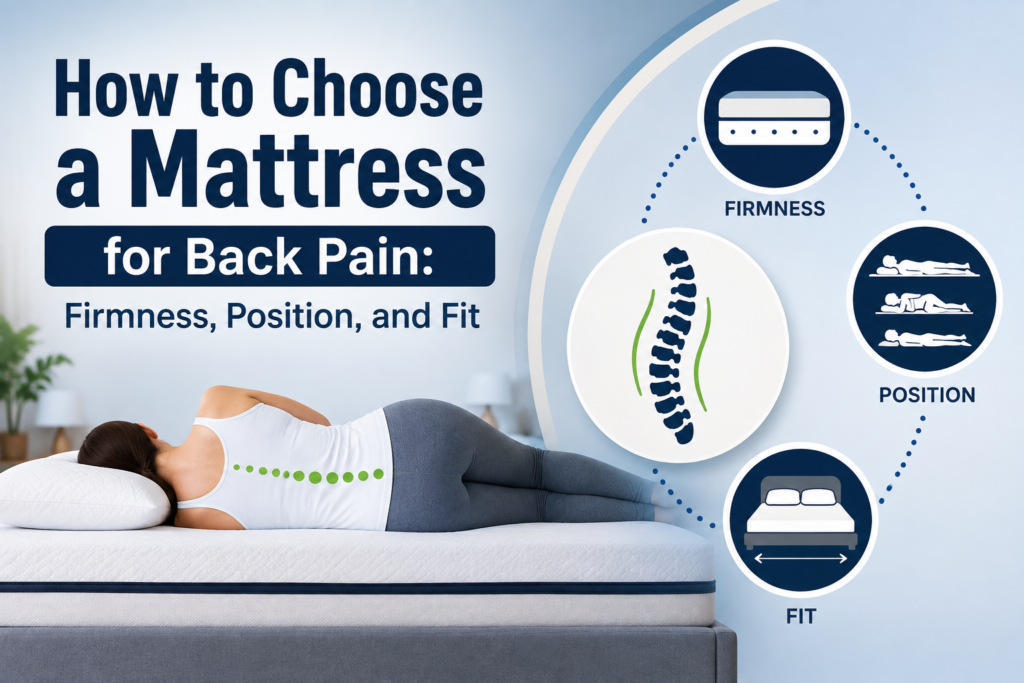
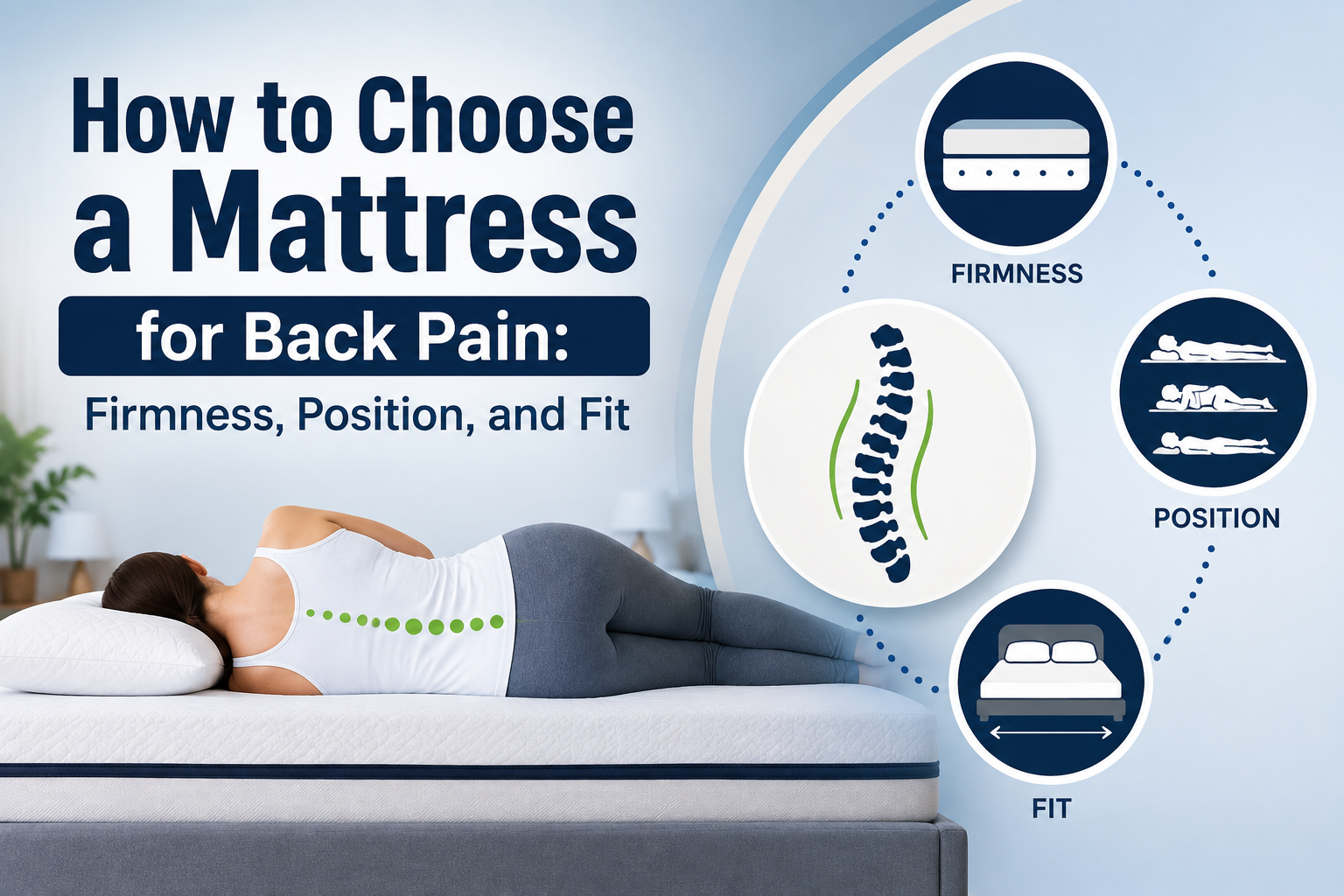
If you are trying to understand how to choose a mattress for back pain, the first thing to forget is the old advice that a very firm mattress is automatically better. Current evidence points in a different direction. A 2026 review of 47 studies found that medium-firm mattresses were the most consistently supported option for adults with nonspecific low back pain and morning stiffness, with benefits linked to pressure distribution, sleep quality and reduced pain. A landmark randomized trial involving 313 adults with chronic nonspecific low back pain also found better outcomes with medium-firm mattresses than with firm mattresses after 90 days.
That does not mean everyone should buy the same mattress. Your sleeping position, body weight, the amount your shoulders and hips sink, and whether you move around at night all change what “supportive” actually feels like.
Start With Medium-Firm, Not Extra-Firm
Firmness and support are not the same thing.
A mattress can feel hard but still fail to support your body properly. Conversely, a softer mattress can provide good support if its underlying structure prevents excessive sinking.
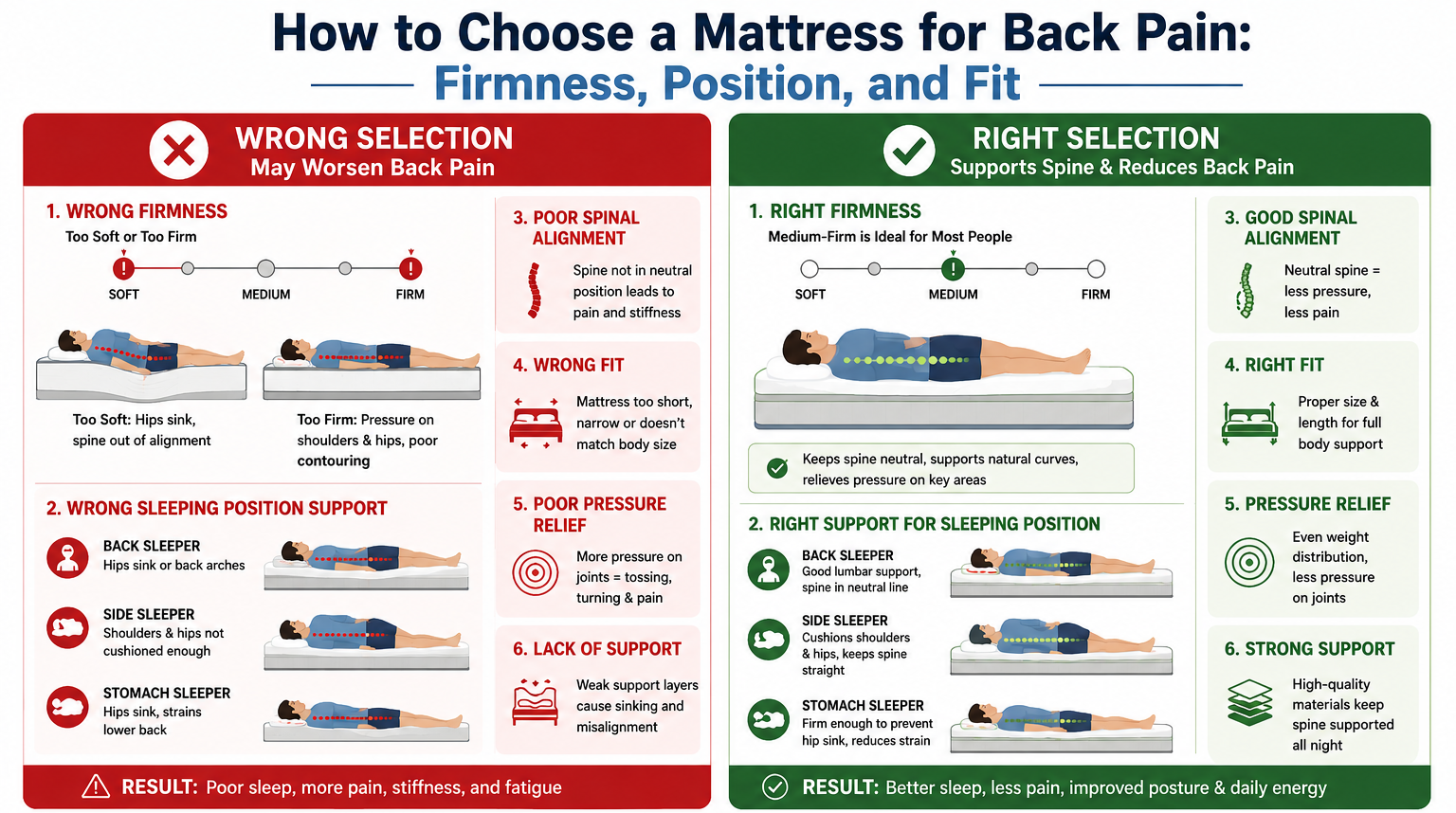
For most people with nonspecific low back pain, medium-firm is the sensible starting point. A systematic review found medium-firm mattresses consistently performed better than softer or harder alternatives for comfort, spinal alignment and sleep quality.
A useful way to think about firmness is:
| Mattress feel | Usually suits | Potential problem |
|---|---|---|
| Soft | Lighter side sleepers | Hips may sink too deeply |
| Medium-soft | Side sleepers needing more cushioning | May lack support for some sleepers |
| Medium-firm | Most back-pain sufferers | Best starting point, not universal |
| Firm | Stomach/back sleepers who prefer stability | Can create pressure points |
| Extra-firm | Specific preferences/body types | Often unnecessarily hard |
Don’t automatically choose the firmest option because your back hurts. The clinical evidence does not support that shortcut.
Your Sleeping Position Changes the Answer
If You Sleep on Your Back
Back sleepers generally need a surface that keeps the pelvis from sinking too deeply while still cushioning the lower back.
Medium-firm is a good starting point. Lie flat and check whether your lower back feels supported without being pushed upward.
One practical test: have someone look at your body from the side while you are lying naturally. Your spine should appear reasonably neutral rather than forming a pronounced curve because your hips have dropped into the mattress.
If You Sleep on Your Side
Side sleepers have a different problem. Your shoulders and hips need enough cushioning to sink into the mattress while your spine remains relatively straight.
If a mattress is too firm, you may feel pressure around the shoulder and hip. If it is too soft, your waist and pelvis can sink excessively.
This is where a medium to medium-firm mattress with good pressure relief can make more sense than simply buying a hard mattress.
If You Sleep on Your Stomach
Stomach sleepers generally need stronger resistance to sinking around the pelvis. A mattress that allows the hips to drop too far can leave the lower back in an uncomfortable position.
A firmer feel may therefore work better, but comfort and spinal alignment still matter more than the label on the mattress.
Don’t Ignore Your Body Weight
Two people can lie on the same mattress and experience completely different firmness.
A heavier sleeper will compress the comfort layers more deeply than a lighter sleeper. That means a mattress advertised as medium-firm can feel considerably softer to one person.
This is why testing the mattress or using a meaningful home trial is more useful than choosing purely from an online firmness score.
Novilla, for example, currently lists several mattresses across medium-soft, medium, and medium-firm feels, with different constructions and thicknesses. Its comparison guide also separates firmness from pressure relief and edge support.
Look at Construction, Not Just the Firmness Label
The same “medium-firm” label can describe very different mattresses.
Memory foam can provide substantial pressure relief and contouring. Hybrid mattresses combine foam comfort layers with pocketed springs, often providing more bounce and airflow. Latex tends to feel more responsive and less “sinking” than traditional memory foam.
For back pain, don’t obsess over whether foam or springs are theoretically better. Focus on whether the mattress gives you stable support underneath and enough cushioning on top.
EGOHOME’s current Black mattress range, for instance, includes medium-firm options designed around cushioning and underlying support, illustrating why construction matters alongside the firmness rating.
The 10-Minute Mattress Test
When shopping in a store, don’t sit on the edge for 30 seconds and decide.
Lie down in your normal sleeping position for at least 10-15 minutes.
Check three things:
- Pressure: Are your shoulders, hips or ribs uncomfortable?
- Alignment: Does your body feel twisted or bent?
- Movement: Can you turn without fighting the mattress?
If you wake up with more stiffness than usual after several nights, don’t assume you simply need to “get used to it.”
Your Pillow Can Undo a Good Mattress
A mattress is only one part of your sleeping surface.
Side sleepers often need enough pillow height to fill the space between the head and mattress. A pillow that is too low can leave the neck tilted downward; one that is too high can push it upward.
Back sleepers generally need less height, while stomach sleepers often do better with a relatively thin pillow.
So when testing a mattress, use a pillow similar to the one you normally sleep on.
Check the Trial Period Before Buying
A showroom test cannot reproduce eight hours of sleep.
A proper home trial gives you time to discover whether you wake with less stiffness, whether pressure points develop during the night and whether the mattress remains comfortable after several weeks.
When comparing mattresses through retailers such as Walmart or Kohl’s, check the current trial, return, delivery and warranty conditions rather than assuming they are identical across brands.
When a Mattress Isn’t the Real Problem
A mattress can contribute to discomfort, but persistent back pain should not automatically be treated as a mattress-shopping problem.
If pain travels down your leg, causes numbness or weakness, follows a significant injury, or comes with other concerning symptoms, seek medical evaluation rather than trying progressively firmer mattresses.
A mattress change is most useful when the problem is genuinely related to the sleeping surface or sleep comfort, not when it is being used to self-treat an undiagnosed condition.
A Simple Formula on How to Choose a Mattress for Back Pain
If you want a practical starting point for how to choose a mattress for back pain, use this sequence:
Start medium-firm → match it to your sleeping position → account for your body weight → test pressure points → check spinal alignment → use your own pillow → buy only with a reasonable return policy.
That approach is more reliable than chasing a particular material, brand or firmness number.
The strongest evidence currently favours medium-firm mattresses for nonspecific low back pain, but there is no single mattress that works for everyone. The goal is not to find the hardest surface or the most expensive model. It is to find the surface that keeps you supported without creating new pressure points.
FAQs on How to Choose a Mattress for Back Pain
1. Is a firm mattress better for back pain?
Not necessarily. A randomized trial of 313 adults found medium-firm mattresses produced better outcomes than firm mattresses for chronic nonspecific low back pain.
2. What firmness is best for back pain?
Medium-firm is the best-supported general starting point, although sleeping position, body weight and individual comfort can change the ideal choice.
3. Is memory foam good for back pain?
It can be. The important issue is whether the mattress provides adequate underlying support while relieving pressure. Material alone does not determine whether a mattress will work for your back.