
Home Workouts vs. Gym Workouts: Which Is Better for Your Goals?
Compare home workouts vs. gym training for weight loss, muscle building, fitness, cost, and convenience. Find the right workout routine for your goals.

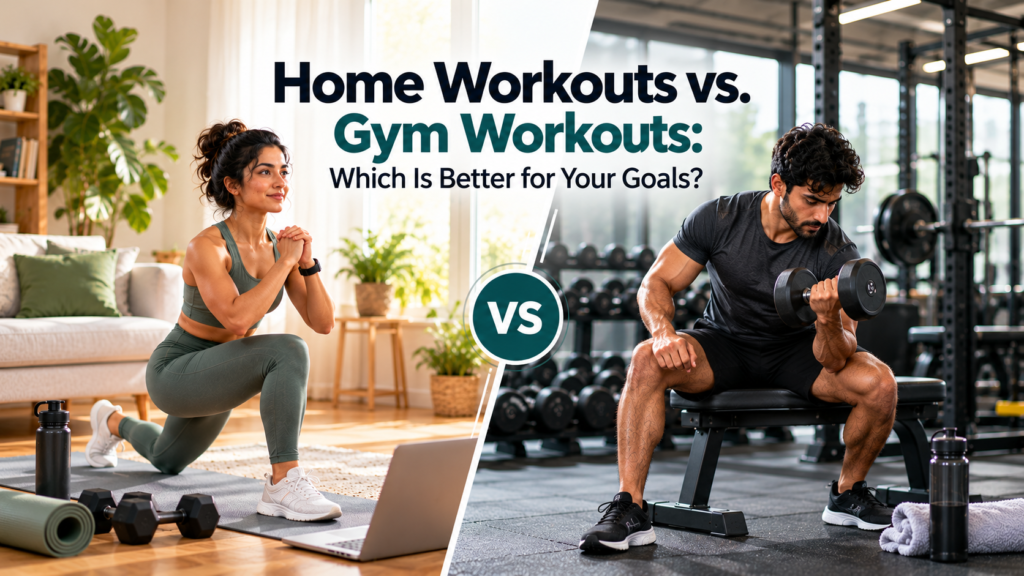
The debate around home workouts vs. gym training often comes down to one question: where will you get better results? The answer depends less on the location and more on the quality of your training, the equipment available, and how consistently you exercise. It is suggested that you get at least 150 minutes of moderate-intensity aerobic activity each week, plus muscle-strengthening activities on at least two days. You can meet these recommendations through brisk walking, bodyweight exercises, resistance bands, free weights, or gym machines.
Home workouts offer convenience and lower ongoing costs, while gyms provide equipment, dedicated training space, and access to professional guidance. Neither automatically guarantees better fitness. Someone who follows a structured home routine can make meaningful progress, just as a gym member can struggle if workouts are inconsistent. The smarter choice is the one that supports your specific goal and fits your everyday life.
1. Home Workouts vs. Gym: Which Is Better for Weight Loss?
Weight loss depends on maintaining an appropriate calorie deficit over time, alongside habits that support health and activity. Both home and gym workouts can contribute to that process.
At home, you can combine brisk walking, dance workouts, bodyweight circuits, and strength exercises without commuting. This makes it easier to fit movement into a busy schedule. However, home sessions still need enough intensity and consistency to challenge your fitness level.
Gyms offer treadmills, stationary bikes, rowing machines, and other equipment that makes it easier to vary cardio sessions. You can also combine cardio with resistance training in one visit.
Which should you choose? Choose home workouts if convenience helps you exercise regularly. Choose a gym if you enjoy equipment variety or find a dedicated exercise environment more motivating. Neither setting guarantees faster fat loss.
2. Building Muscle: Where Do You Get Better Results?
Muscle growth requires resistance training that challenges your muscles and progresses as your strength improves. You do not necessarily need a gym membership to begin.
Home training can start with squats, push-ups, lunges, glute bridges, resistance bands, and adjustable dumbbells. These exercises can build strength when the difficulty increases appropriately. The limitation is equipment: as you become stronger, you may need heavier weights or more challenging variations.
A gym generally offers more options for progressive resistance, including barbells, dumbbells, cable machines, and weight machines. This can make it easier to train specific muscle groups and increase loads in small increments.
For beginners, home training can be enough to establish strength and technique. For people pursuing substantial muscle growth, a well-equipped gym may offer greater flexibility. Still, the quality of your programme matters more than the building in which you train.
3. Cost Comparison: Home Equipment vs. Gym Membership
The financial difference becomes clearer when you calculate the total cost over several months rather than comparing one purchase with one monthly fee.
Home workouts may require little more than comfortable clothing and a mat. Resistance bands or adjustable dumbbells are optional starting investments. A gym membership, by contrast, can involve monthly dues, joining fees, transport, and sometimes additional coaching costs.
| Factor | Home workouts | Gym workouts |
|---|---|---|
| Starting cost | Low with bodyweight exercise | Membership or entry fees |
| Equipment | Optional personal purchases | Shared machines and weights |
| Travel | No commute required | Travel time and transport |
| Coaching | Apps or online instruction | Trainers may be available at extra cost |
| Exercise variety | Depends on space and equipment | Usually broader equipment selection |
| Long-term expense | Often lower, depending on purchases | Recurring membership costs |
Home training is usually the more economical starting point, but the difference depends on your purchases and local membership prices. If you buy extensive equipment, home workouts can become expensive too.
4. Motivation, Consistency, and Time
A workout plan only works when you can follow it repeatedly. This is where personal preferences matter more than generic fitness advice.
- Home exercise eliminates travel and lets you train around work, childcare, or other commitments.
- You can complete a 20-minute session between meetings or exercise early in the morning without waiting for equipment.
- The downside is that household distractions can interrupt training, and some people find it difficult to stay accountable alone.
A gym provides a dedicated space where exercise becomes the main activity.
- Group classes, familiar routines, and seeing other people train can help some members stay motivated.
- However, crowded equipment areas and commuting can make sessions less convenient.
If you regularly skip the gym because getting there feels like a chore, home training may be the better option. If your home environment makes concentration difficult, a gym may help you establish a more reliable routine.

5. Equipment, Coaching, and Workout Variety
Home workouts can be surprisingly versatile. Bodyweight training, yoga, Pilates, resistance bands, and dumbbells cover many fitness needs. Apps such as Verv can also help organise guided sessions and walking or running activities.
However, exercise demonstrations and programmes are not a substitute for personalised coaching when you need technique corrections or have specific training requirements. Beginners may benefit from professional guidance, particularly when learning unfamiliar lifts.
Gyms typically provide a wider selection of equipment, and some offer trainers who can demonstrate exercises, adjust programmes, and help you develop sound technique. Availability and coaching fees vary.
When comparing home workouts vs. gym training, consider the equipment required for your actual goal. You may not need a gym for general fitness, but access to heavier weights can become valuable as your strength increases.
6. How to Choose Based on Your Fitness Goal
Your ideal training environment should support the result you want without making exercise unnecessarily difficult to maintain.
- Weight management: Either setting works. Choose the option that helps you maintain regular activity and sustainable eating habits.
- Muscle growth: Home training can work with sufficient resistance, while gyms offer more equipment for progressive overload.
- General fitness: Walking, bodyweight exercise, resistance bands, and gym sessions can all contribute.
- Busy schedules: Home workouts reduce travel time and make short sessions easier to organise.
- Learning proper technique: Consider qualified coaching, whether at a gym or through suitable professional instruction.
You can also combine both options. Train at home during busy weekdays and use a gym when you want heavier weights or equipment you do not own. Your routine does not need to follow a strict either-or approach.
FAQs
1. Are home workouts as effective as gym workouts?
They can be, depending on your programme, intensity, equipment, and consistency. Home training is effective for many general fitness goals, while gyms offer more resistance and equipment choices.
2. Can I build muscle without going to the gym?
Yes. Bodyweight exercises, resistance bands, and dumbbells can build muscle when the training challenges you and becomes progressively harder. More advanced goals may require heavier resistance.
3. Which is cheaper: home workouts or a gym membership?
Home workouts are often cheaper, especially when you use bodyweight exercises. Gym costs depend on membership prices, travel, and whether you pay for coaching or additional services.
Final Verdict
There is no universal winner in the home workouts vs. gym debate. Home training offers flexibility, privacy, and lower entry costs. Gyms provide equipment variety, dedicated space, and opportunities for coaching.
Start with the environment that makes exercise easiest to maintain. Set a realistic schedule, track your progress, and increase the challenge as your fitness improves. If your goals or circumstances change, you can always switch or combine both approaches. Consistency and a suitable training plan will matter far more than where you exercise.
Also Read: Kovo Credit Builder Review: How Does It Work?