
The Immigrant’s Guide to Sending Money Home: Country-by-Country Costs
Explore this guide to sending money home, compare international transfer costs by country, understand exchange rates and fees, and find ways to save on remittances.


For millions of immigrants, sending money home is more than a financial transaction. It helps pay school fees, cover medical expenses, support parents, manage household bills, and fund important family milestones. But transfer fees and unfavorable exchange rates can make a meaningful difference to how much loved ones actually receive. This guide to sending money home explains how international transfer costs differ across popular destinations, which fees to look for, and how to choose a service based on the amount your family receives, not just the advertised transfer fee.
According to the World Bank’s Remittance Prices Worldwide report, the global average cost of sending money internationally stood at 6.36% in the third quarter of 2025. Digital transfers were cheaper on average, at around 4.59%, while Sub-Saharan Africa remained the most expensive receiving region, with an average cost of 8.46%. These figures show why comparing transfer services matters, especially for people who send money regularly.
What Does It Really Cost to Send Money Home?
The cost of a remittance is not simply the fee displayed on the transfer screen. Three factors determine the real expense:
- Transfer fee: A fixed charge or percentage applied to the amount you send.
- Exchange-rate margin: The difference between the provider’s exchange rate and a relevant market rate. A transfer advertised as “fee-free” may still cost more because of this margin.
- Receiving charges: The recipient’s bank or cash-pickup provider may deduct a fee, depending on the service and destination.
For example, if you send $500 and the combined transfer fee and exchange-rate loss equal 5%, the total cost is approximately $25. Your family receives the equivalent of about $475 in value, before any additional receiving charges. The precise amount depends on the quoted rate and how the provider calculates its fees.
Country-by-Country Remittance Costs
There is no single price for sending money to a country. Costs change according to the country you send from, the destination, the amount, the payment method, and whether the recipient chooses a bank deposit, mobile wallet, or cash pickup.
The table below offers a practical comparison of common remittance destinations. These are cost considerations, not fixed country-specific rates. Check the World Bank’s Remittance Prices Worldwide comparison tool for current provider-level prices before sending.
| Destination | What can affect the cost | What to compare |
|---|---|---|
| India | Pricing varies by sending country, provider, and payout method. | Exchange rate, bank deposit fees, transfer limits, and delivery time. |
| Philippines | Bank deposits and mobile-wallet transfers may have different pricing. | Wallet availability, cash-pickup fees, and the final amount in pesos. |
| Mexico | Competition among providers can result in different rates and fees. | The amount received in pesos, payment method, and pickup location. |
| Bangladesh | Payout options and eligibility for regulated remittance incentives may affect the recipient’s final amount. | Applicable fees, exchange rate, documentation, and official eligibility rules. |
| Pakistan | Transfer costs depend on the corridor, provider, and delivery method. | Recipient-bank deductions, transfer limits, and exchange-rate margin. |
| Nigeria | Costs and payout options can vary considerably by corridor. | Available receiving channels, local currency payout terms, and the net amount received. |
| Kenya | Mobile-money services can be convenient, but fees and limits differ by provider. | Wallet charges, transaction limits, conversion rate, and withdrawal costs. |
| Nepal | Provider availability and permitted transfer channels depend on the sending country. | Regulatory requirements, payout options, and the final amount in Nepalese rupees. |
The World Bank’s global average of 6.36% is a useful benchmark, but it should not be treated as the expected price for every destination. Some corridors are considerably cheaper, while others cost much more. The most useful comparison is between services that support the same sending country, destination, transfer amount, and payout method.
How to Compare Transfer Providers Properly
When using a guide to sending money, compare the total value delivered rather than relying on promotional claims.
Check the amount your recipient gets.
- Enter the same amount and destination into at least two or three reputable providers.
- Compare the final payout shown before confirming the transaction.
Look beyond “zero transfer fees.
- A provider may charge no upfront fee but offer a weaker exchange rate.
- Calculate the difference in the recipient’s currency to understand the real cost.
Match the payment method.
- Funding a transfer with a bank account, debit card, credit card, or cash can lead to different fees.
- Card issuers may also apply additional charges.
Consider speed and convenience.
- A bank deposit arriving the next day may be suitable for routine family support, while urgent medical expenses may justify a faster service, provided the recipient can access the funds.
Verify limits and regulations.
- Identity checks, transfer limits, reporting requirements, and permitted payment channels differ across countries.
- Use regulated providers and confirm the rules that apply to your location and destination.
Country-Specific Factors Immigrants Should Know
Beyond the headline cost, local banking rules and payment systems can affect your transfer.
For India, confirm the beneficiary’s bank details, applicable transfer limits, and the exchange rate offered by your provider. If you send money from the United States, United Kingdom, UAE, Canada, or Australia, compare quotes separately because pricing varies by corridor.
For the Philippines and Kenya, if your family uses a mobile wallet, check whether the transfer service supports direct wallet deposits and whether cash withdrawals incur an extra fee.
For Mexico, check the recipient’s cash-pickup location and opening hours if you choose cash delivery. A low-cost transfer is less useful if collecting it requires a long trip.
For Nigeria and Bangladesh, confirm the available payout currencies, documentation requirements, and any applicable government rules before sending. Never assume that a service available in another country will offer the same options in your destination.
For reliable comparisons, use the World Bank’s Remittance Prices Worldwide database, which tracks prices across international sending and receiving corridors. Its data is periodically updated, so check the date and obtain a fresh quote before making a transaction.
Practical Ways to Reduce Remittance Costs
Small savings can add up when you send money every month. If you transfer $500 monthly, a two-percentage-point reduction in total costs saves approximately $10 per transfer, or $120 over a year.
- Compare before every transfer: Exchange rates and promotional offers change, so a provider that was cheapest last month may not be cheapest today.
- Choose the right frequency: If fees include a fixed charge, sending a larger amount less often may reduce costs per dollar. Only do this if your family can comfortably wait and the money remains secure.
- Watch exchange-rate movements: Compare the quoted rate with a reliable reference rate, but remember that rates can change before a transfer is completed.
- Use referral offers carefully: Discounts can be useful, but check the standard price after the promotion ends.
- Avoid informal channels: Unlicensed brokers and strangers offering unusually favorable rates can expose your money and personal information to fraud.
Protect Your Money Before You Send It
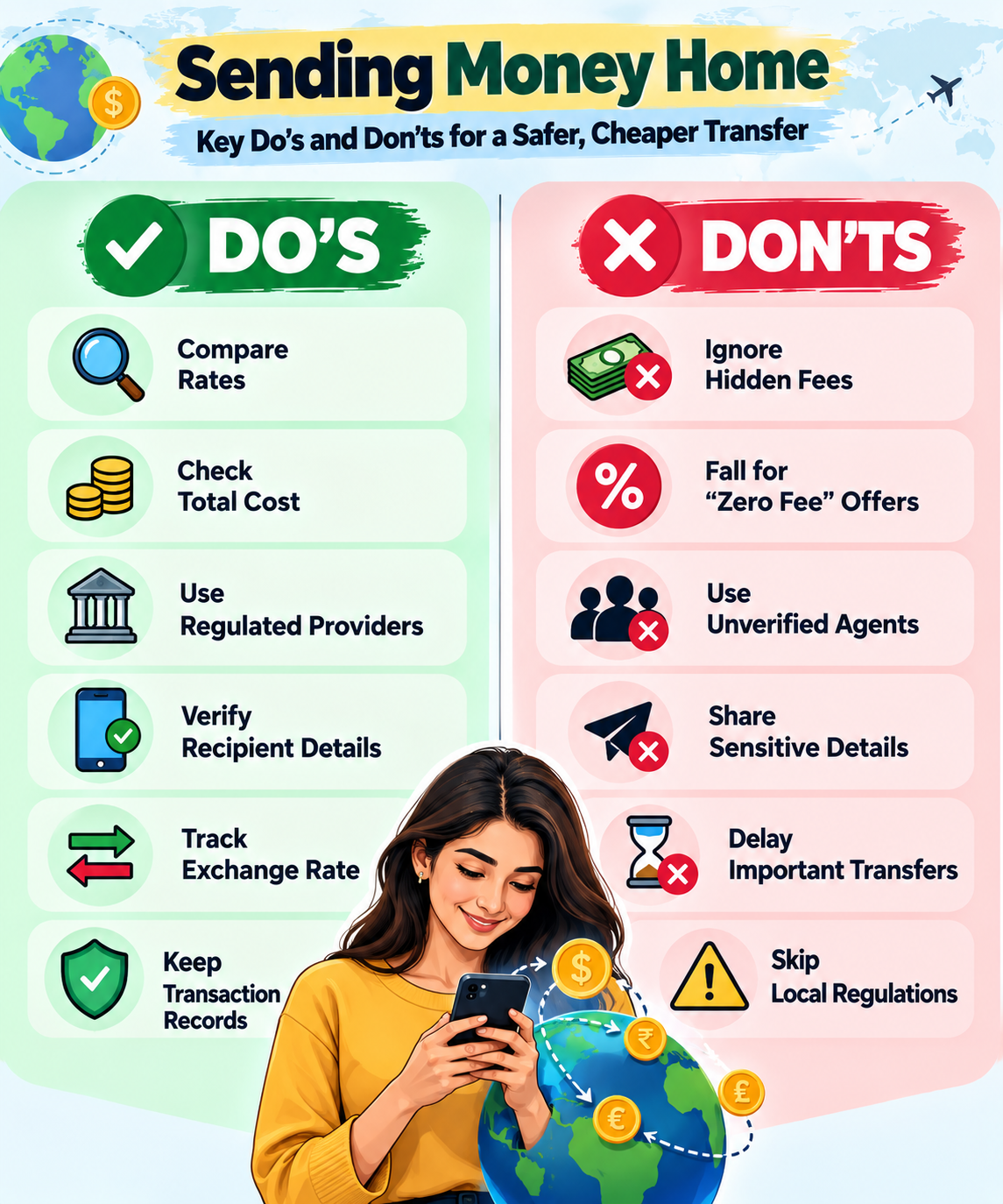
Use a regulated transfer provider, verify its official website or app, and double-check the recipient’s name and account details. Be cautious of unsolicited messages offering special rates or asking you to transfer funds to a personal account. Keep the transaction receipt and reference number until the recipient confirms the money has arrived.
If a transfer is delayed, contact the provider through its official support channel rather than paying an unexpected “release fee” to someone claiming to be an intermediary.
Guide to Sending Money: Final Thoughts
Sending money home is an ongoing responsibility for many immigrants, and unnecessary transfer costs can quietly reduce the support their families receive. A reliable guide to sending money should help you compare the full cost, understand exchange-rate margins, check country-specific rules, and select a delivery method that works for your recipient.
Before your next transfer, compare at least three providers using the same amount and payout method. Focus on the final amount received, not just the advertised fee. That simple habit can help you make every transfer count.
Guide to Sending Money: Frequently Asked Questions
1. What is the cheapest way to send money internationally?
There is no universally cheapest service. Compare the transfer fee, exchange rate, payment method, and recipient payout charges for your exact corridor.
2. Are digital money transfers cheaper than banks?
They are often cheaper on average. The World Bank reported an average digital remittance cost of 4.59% in Q3 2025, compared with a global average of 6.36%. Individual quotes can differ substantially.
3. How can I calculate the true cost of a transfer?
Compare the total amount deducted from your payment with the value your recipient receives, accounting for the exchange rate and any additional charges. Check the final quote before confirming.
Also Read: Traveloka Review: Is It Worth Using for Booking Flights and Hotels?