
First Credit Card Guide: What to Get, Use, and Never Do
Getting your first credit card? Learn which card to choose, how to use it responsibly, build credit history and avoid costly mistakes.

Getting your first credit card can be an important step towards building a financial history, but choosing the wrong card or misunderstanding how interest works can make that first experience expensive. According to the Federal Reserve’s 2025 Report on the Economic Well-Being of U.S. Households, published in May 2026, 82% of U.S. adults had a credit card, while 45% of cardholders had carried a balance at least once during the previous year. Among adults aged 18-29, card ownership was lower at 65%. These figures show why understanding credit before applying matters. This practical first credit card guide explains not just which card to get, but how to compare fees, manage payments, build credit history and avoid habits that turn a useful payment tool into expensive debt.
Choose a Card That Matches Your Credit History
Your first card does not need to offer luxury travel rewards or a large credit limit. It needs affordable terms, manageable fees and a reporting history that helps you establish credit.
If you have never borrowed money, you may have a limited or nonexistent credit file. In that situation, consider these options:
- Student credit cards: Designed for eligible college students, these often have relatively modest credit limits and straightforward rewards. You may need to provide proof of enrollment and meet income requirements.
- Secured credit cards: These require a refundable cash deposit, which usually determines your credit limit. For example, a $300 deposit may provide a $300 credit limit. Your payments can help establish credit if the issuer reports account activity to the major credit bureaus.
- Entry-level unsecured cards: Some issuers offer basic cards to applicants with limited credit histories. Compare their annual fees, interest rates and eligibility requirements before applying.
Before choosing, confirm that the issuer reports payments to Equifax, Experian and TransUnion. A card that does not report your activity to the major credit bureaus may not help you build the credit history you want.
Understand the Costs Before You Apply
A credit card’s advertised rewards or introductory offer can distract from its actual cost. Read the pricing and terms section before submitting an application.
Pay particular attention to:
- Annual fee: The amount charged simply for keeping the account open.
- APR: The annual percentage rate used to express the cost of borrowing.
- Late payment fee: A charge that may apply when you miss the payment deadline.
- Foreign transaction fee: A fee that may apply when making purchases in another currency.
- Cash advance fee: A charge for withdrawing cash using your credit card, often alongside immediate interest.
For a first card, a no-annual-fee option with clear terms is often easier to manage. Rewards are useful only when their value exceeds the fees and costs involved.
Learn How to Use Your Card Without Paying Interest
The simplest way to use a credit card responsibly is to spend only what you already have available in your bank account.
Suppose you use your card for $150 in groceries, $50 in fuel and $40 for an online purchase. Your statement balance becomes $240. If your card offers a grace period and you pay the full statement balance by the due date, you can generally avoid interest on those purchases. A grace period is not guaranteed on every card, so check your agreement. It generally applies to purchases, not cash advances.
Set up automatic payment for at least the minimum amount to protect against missed payments. Then aim to pay the full statement balance every month.
Keep Your Credit Utilization Low
Credit utilization measures how much of your available credit you are using. It is calculated by dividing your outstanding balance by your total credit limit.
For example, if your card has a $500 limit and your reported balance is $100, your utilization is 20%.
| Credit limit | Reported balance | Utilization |
|---|---|---|
| $300 | $30 | 10% |
| $500 | $100 | 20% |
| $500 | $200 | 40% |
| $1,000 | $250 | 25% |
| $1,000 | $500 | 50% |
Lower utilization is generally better for credit scores. The CFPB notes that many experts recommend staying below 30%, while consumers with the highest scores often use less than 10%. You do not need to carry debt to build a credit score.
What You Should Never Do With Your First Credit Card
Some mistakes are easy to make because the consequences do not appear immediately.
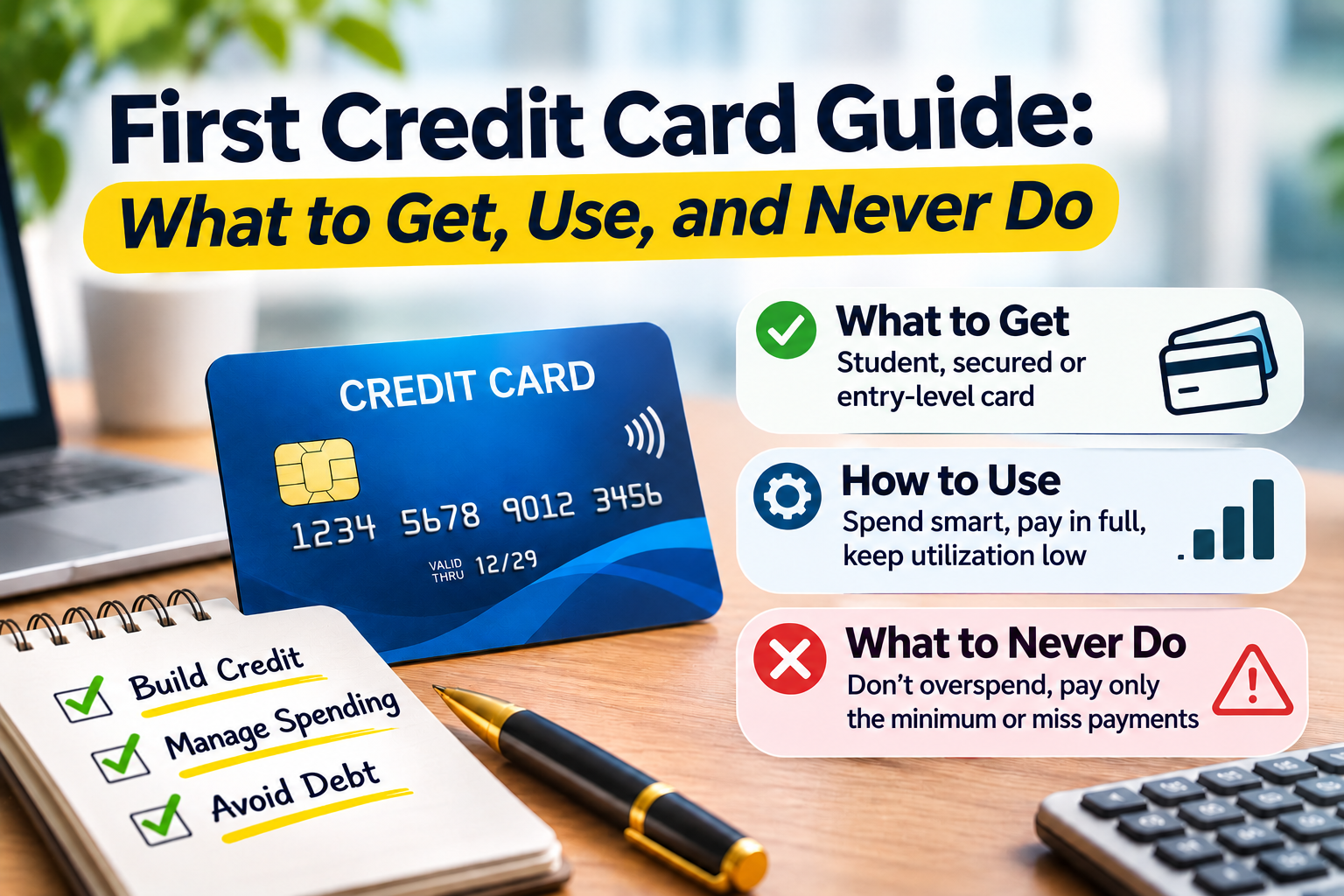
- Never treat your credit limit as extra income. A $1,000 limit does not mean you can afford to spend $1,000. Every purchase still needs to be repaid.
- Never pay only the minimum as a regular habit. Minimum payments keep your account from becoming past due when paid on time, but they can leave you paying interest for a long time.
- Never withdraw cash without understanding the charges. Cash advances often have separate fees and start accruing interest immediately, without the usual purchase grace period.
- Never miss a payment. Even one missed payment can result in fees and damage to your credit history if it becomes delinquent.
- Never apply for several cards at once. Multiple applications in a short period can create several hard inquiries and make managing accounts more difficult.
- Never ignore your statements. Check every transaction, including small recurring payments, to identify mistakes or unauthorised purchases early.
Build Good Habits From Your First Billing Cycle
A simple routine can make credit card management much easier. Choose a payment reminder, review your statement every month and track your spending against your regular budget.
You should also check your credit reports periodically. In the United States, you can access free reports from the three nationwide credit bureaus through AnnualCreditReport.com. Look for incorrect account information, unfamiliar applications or payments that have been reported inaccurately.
If you are following this first credit card guide, remember that building credit is a gradual process. Consistent payments and responsible borrowing matter much more than collecting rewards or increasing your credit limit.
Start Small, Stay Consistent
Your first credit card should make everyday payments easier and help you establish a reliable credit history, not encourage spending beyond your means. Choose a card with manageable fees, use it for purchases you can afford and pay the full statement balance on time.
The most valuable lesson from this first credit card guide is simple: good credit is built through consistent financial habits, not through how much you borrow.
First Credit Card Guide: Frequently Asked Questions
1. What is the best first credit card for someone with no credit history?
A secured credit card or an eligible student credit card can be a practical starting point. Compare fees and confirm that the issuer reports payments to the major credit bureaus.
2. What credit limit should I start with?
There is no ideal starting limit for everyone. A modest limit that fits your budget can make it easier to control spending while establishing a payment history.
3. Should I carry a balance to build credit?
No. Carrying a balance is not necessary to build credit. Paying your statement balance in full and on time can help establish a positive payment history without unnecessary interest costs.
Also Read: Hidden Bank Fees You’re Probably Paying and How to Stop