
Best Outdoor Furniture That Survives Real Weather: Materials Guide
Outdoor furniture looks impressive in a showroom, but a terrace exposed to intense sunlight, a balcony facing coastal winds, or a garden that gets soaked during the monsoon puts every material to the test. Choosing the best outdoor furniture means understanding how its frame, surface finish, cushions, and fasteners respond to moisture, ultraviolet (UV) radiation, heat, and humidity. These factors influence fading, corrosion, cracking, mould growth, and long-term structural stability.
The challenge is that weather resistance is not a single product feature. A teak table can withstand rain yet gradually turn silver-grey. A metal chair may have a durable frame but develop rust where its coating gets scratched. Synthetic wicker can handle wet conditions, but its performance depends on the quality of the weave and the frame beneath it. The right purchase starts with your local climate and how much maintenance you are willing to do.
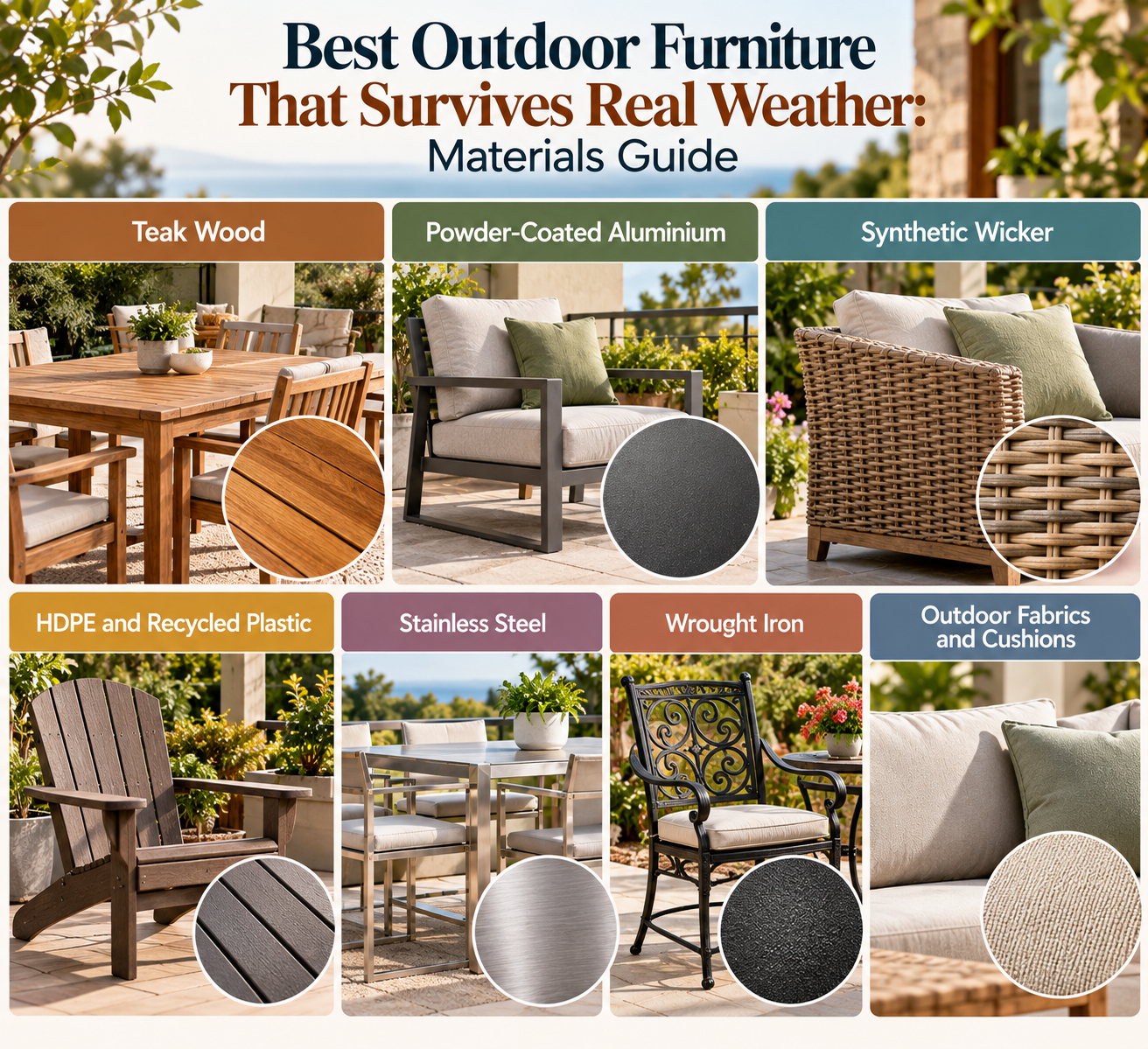
1. Teak Wood: Best for Natural Beauty and Long-Term Use
Teak is a popular choice for outdoor dining tables, benches, loungers, and premium garden seating. Its natural oils help it resist moisture and decay, making it more suitable for outdoor exposure than many untreated woods.
- What it handles well: Humidity, rain, and everyday temperature changes, provided the furniture is properly constructed and maintained.
- What to consider: Teak is relatively expensive and heavy. When left untreated, it gradually develops a silver-grey patina. If you prefer its original golden-brown appearance, periodic cleaning and suitable teak treatments may be necessary.
- Buying tip: Check the wood grade, joinery, drainage, and hardware. A teak label alone does not guarantee consistent quality or responsible sourcing. Look for credible sustainability certification where available.
Best for homeowners who value natural materials and are comfortable paying more upfront.
2. Powder-Coated Aluminium: Best for Rain and Low Maintenance
Aluminium furniture offers a useful combination of light weight, strength, and corrosion resistance. A powder-coated finish adds colour and protects the surface, making it a practical option for balconies, patios, and outdoor dining areas.
- What it handles well: Rain, humidity, and frequent repositioning. Aluminium does not rust like ordinary iron or steel, although its coating and fittings can still deteriorate.
- What to consider: The finish matters. Scratches, poor coating quality, and neglected joints can reduce durability. Metal surfaces may also become hot in direct sunlight, so shade and cushions improve comfort.
- Buying tip: Inspect welds, joints, underside coating, and the quality of the fasteners. For coastal locations, choose corrosion-resistant hardware and rinse away salt deposits regularly.
For buyers who want the best outdoor furniture with relatively little routine upkeep, powder-coated aluminium is often a sensible starting point.
3. Synthetic Wicker: Best for Comfortable Lounge Seating
Synthetic wicker recreates the woven appearance of natural rattan using plastic resin strands. It is commonly used for outdoor sofas, lounge chairs, and conversation sets.
- What it handles well: Rain and humidity when the weave is designed for outdoor use, and the frame resists corrosion.
- What to consider: Not all synthetic wicker is equally durable. Low-quality strands can fade, crack, or become brittle after prolonged sun exposure. Water can also collect in poorly designed frames or cushion bases.
- Buying tip: Look for UV-stabilised polyethylene (PE) or high-density polyethylene (HDPE) strands over a corrosion-resistant aluminium frame. Ask whether the cushions have removable covers and quick-drying filling.
Natural rattan and indoor wicker are different: they generally need protection from prolonged rain and moisture. Do not assume every woven chair is suitable for year-round outdoor use.
4. HDPE and Recycled Plastic: Best for Easy Care
High-density polyethylene (HDPE) furniture and recycled plastic lumber are useful alternatives to wood. They are available in dining chairs, benches, picnic tables, and loungers, often with finishes designed to resemble painted wood.
- What they handle well: Moisture, routine cleaning, and outdoor use when made with UV-stabilised material.
- What to consider: Basic plastic furniture can fade or become brittle in strong sunlight. Heavier recycled-plastic lumber may be more stable, but it can cost more and weigh more than moulded plastic.
- Buying tip: Check the UV-resistance claims, weight capacity, frame construction, and whether the product is made from outdoor-grade HDPE rather than unspecified plastic.
This category suits households that prefer simple cleaning and do not want to oil or seal furniture regularly.
5. Stainless Steel and Wrought Iron: Best for Different Structural Needs
Stainless steel provides a clean, modern appearance and good corrosion resistance. Marine-grade 316 stainless steel is especially useful in coastal settings, although it costs more than many alternatives.
Wrought iron is heavy and can remain stable in windy areas. However, ordinary iron is vulnerable to rust if its protective coating chips or wears away.
- Buying tip: For stainless steel, confirm the grade rather than relying on a generic “stainless” description. For wrought iron, inspect coating quality and ask about rust protection and touch-up requirements. Keep drainage points clear so water does not sit in joints.
Choose these materials when their weight, appearance, or structural characteristics suit the location and when their maintenance requirements are realistic for you.
6. Outdoor Fabrics and Cushions: The Detail That Often Fails First
A durable frame cannot compensate for cushions that stay wet for days or fabric that fades after one summer. Outdoor textiles need to withstand sunlight, moisture, frequent use, and cleaning.
Solution-dyed acrylic and other outdoor-rated fabrics are worth considering because colour is incorporated into the fibres during manufacturing. Performance still varies by product, so check the manufacturer’s UV and mildew-resistance specifications.
Look for removable covers, washable fabric, quick-drying foam, and cushion designs that allow water to drain rather than collect. Water-resistant fabric does not automatically mean waterproof cushioning.
- Buying tip: If your outdoor area receives heavy rain, choose cushions you can bring indoors easily. A breathable cover and proper drying are more useful than leaving damp cushions under a waterproof sheet.
Which Material Performs Best in Different Weather?
| Material | Sun and UV | Rain and humidity | Maintenance | Best suited for |
|---|---|---|---|---|
| Teak | Good | Very good | Periodic cleaning; oil if desired | Natural, premium outdoor seating |
| Powder-coated aluminium | Good with quality coating | Very good | Low; inspect coating | Balconies, patios, coastal areas |
| Synthetic PE/HDPE wicker | Good if UV-stabilised | Good with suitable frame | Low | Lounge sets and conversation areas |
| HDPE or recycled plastic | Good if UV-stabilised | Very good | Very low | Benches, dining chairs, everyday use |
| Stainless steel | Good | Very good; grade matters | Low; clean salt deposits | Modern and coastal settings |
| Wrought iron | Good with intact coating | Fair to good; rust risk | Regular coating checks | Heavy, stable garden furniture |
| Outdoor-rated fabric | Depends on UV rating | Depends on fabric and filling | Regular cleaning and drying | Cushions and upholstered seating |
These are general comparisons, not guarantees. Construction quality, exposure, drainage, and maintenance can change how long a particular product lasts.
What to Check Before Buying Outdoor Furniture Online
Before deciding which best outdoor furniture option suits your home, examine the complete product rather than relying on its headline material.
- Frame and joints: Look for solid construction, secure joints, and drainage openings where appropriate.
- Finish and hardware: Check coating quality, corrosion protection, and the availability of replacement fittings.
- Weather specifications: Look for explicit UV-resistance and outdoor-use claims. “Weatherproof” without supporting details is not enough.
- Dimensions and weight: Measure the available space, access route, and storage area. Lightweight furniture is easier to move but may need securing in windy locations.
- Cushions and covers: Confirm whether these are included, removable, washable, and suitable for outdoor exposure.
- Warranty and spare parts: Check what the warranty covers, especially finishes, frames, fabric, and moving components.
If you live in a coastal or monsoon-prone area, prioritise corrosion-resistant frames, UV-stable materials, and cushions that dry quickly. In a dry, sunny location, UV protection and surface temperature deserve more attention.
How to Make Outdoor Furniture Last Longer
Even the best outdoor furniture benefits from routine care. Clean dirt and bird droppings before they damage surfaces, tighten loose fittings, and inspect metal coatings for scratches. Dry cushions thoroughly after rain, and store them indoors during prolonged wet weather.
Use breathable furniture covers that fit properly rather than wrapping damp furniture tightly. Avoid dragging heavy pieces across tiles, and follow the manufacturer’s instructions for wood oils, protective coatings, and cleaning products.
During severe storms, move lightweight furniture to a sheltered location or secure it appropriately. Weather resistance does not mean immunity to high winds, standing water, or extreme conditions.
FAQs
1. What is the most weather-resistant material for outdoor furniture?
There is no universal winner. Powder-coated aluminium is a strong low-maintenance choice, teak offers natural weather resistance, and outdoor-grade HDPE performs well with minimal upkeep. Your climate and the product’s construction determine the best fit.
2. Is wooden outdoor furniture better than metal?
Not necessarily. Teak offers natural warmth and can age beautifully, while aluminium is lighter and usually requires less maintenance. Choose based on appearance, exposure, budget, and willingness to care for the material.
3. Can synthetic wicker stay outside in the rain?
Quality UV-stabilised synthetic wicker can handle outdoor exposure, but the frame, joints, and cushions matter too. Remove or dry cushions after heavy rain and check the manufacturer’s care guidance.