

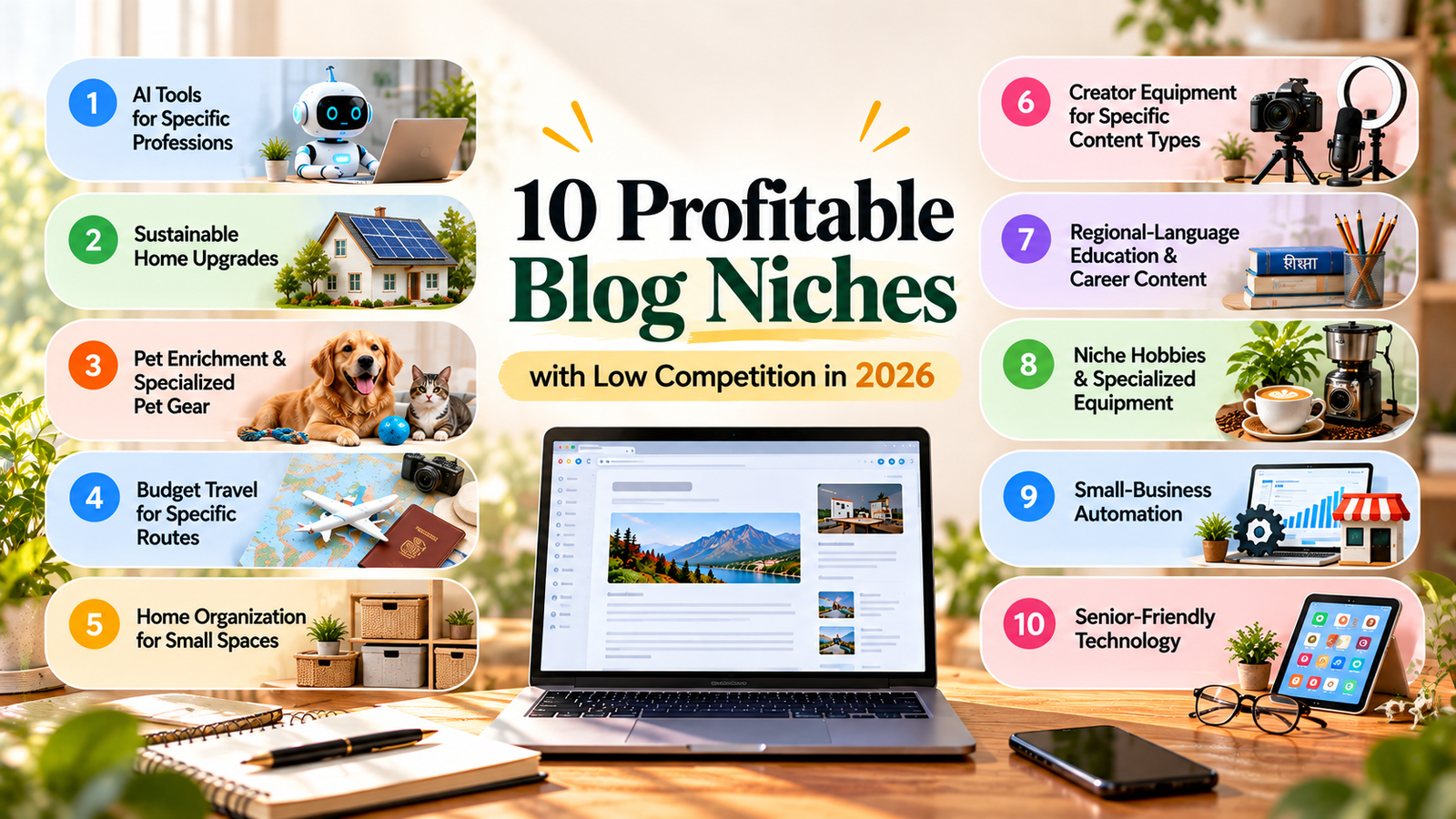
10 Profitable Blog Niches with Low Competition in 2026
Blogging in 2026 is less about choosing a massive subject and more about owning a narrow problem. Finance, travel, fitness and technology have huge search demand, but they are crowded by publishers with years of authority. Current niche research points toward micro-niches where specific intent, buyer demand and practical expertise leave more room for smaller sites. Google also emphasizes people-first content and warns against mass-producing generic pages simply to attract search traffic. That is why blog niches with low competition can be attractive for new publishers.
The aim is not to find a topic nobody covers. It is to find a defined audience with unanswered questions, products or services to buy, and enough related subjects to build authority.
What Makes a Blog Niche Profitable?
Search volume alone is not enough. Look for recurring questions, commercial intent, enough subtopics for a content cluster, and multiple monetization options. Affiliate sales are useful, but focused blogs can also earn from ads, sponsorships, digital products, consulting or leads.
1. AI Tools for Specific Professions
Instead of targeting the crowded “AI tools” category, focus on AI solutions for recruiters, real estate agents, teachers, marketers, accountants, or other professions. Create tool comparisons, workflow guides, tutorials, and practical use cases. SaaS affiliate programs also create strong monetization potential.
2. Sustainable Home Upgrades
Focus on practical sustainability rather than broad environmental topics. Cover energy-saving devices, balcony solar, smart thermostats, water-saving products, composting, and low-waste home solutions. Product-focused content gives this niche clear affiliate and sponsorship opportunities.
3. Pet Enrichment & Specialized Pet Gear
General pet content is competitive, but specific problems such as indoor-pet enrichment, senior pets, apartment living, pet travel, and interactive toys offer narrower opportunities. Product comparisons and buying guides can attract readers with strong purchase intent.
4. Budget Travel for Specific Routes
Rather than competing for broad destination keywords, target specific routes, cities, traveler types, or fixed budgets. Detailed transport comparisons, itineraries, hotel guides, and local costs can capture highly specific searches. Hotels, activities, insurance, and travel products provide several monetization options.
5. Home Organization for Small Spaces
Small apartments, studio homes, dorms, and compact kitchens create highly specific organization problems. Focus on storage solutions, space-saving furniture, renter-friendly ideas, and room-specific guides. Product recommendations make this a natural affiliate niche.
6. Creator Equipment for Specific Content Types
Avoid broad keywords like “best cameras” and target equipment for food creators, podcasters, beauty creators, travel vloggers, or product reviewers. Micro-niche equipment guides can combine tutorials with product comparisons. Cameras, microphones, lighting, tripods, and accessories offer strong commercial intent.
7. Regional-Language Education & Career Content
Localized education and career information can serve audiences that broad English-language websites often overlook. Focus on scholarships, exams, career paths, software tutorials, and skill development in a specific language or region. Local relevance can become the site’s biggest competitive advantage.
8. Niche Hobbies & Specialized Equipment
Hobbies such as home coffee, aquariums, balcony gardening, pickleball, model building, or specialty cooking have dedicated audiences willing to buy equipment. Go deeper than the hobby itself by covering beginner setups, product comparisons, maintenance, and upgrades. This creates both informational and commercial content opportunities.
9. Small-Business Automation
Create content around automation for specific businesses such as salons, restaurants, agencies, clinics, or freelancers. Cover CRM, appointment reminders, invoicing, customer support, lead management, and follow-ups. SaaS affiliate programs, software sponsorships, and consulting can all become revenue streams.
10. Senior-Friendly Technology
Focus on technology that solves everyday problems for older adults and their families, including smartphones, tablets, accessibility settings, video calling, security, and emergency devices. Simple tutorials and easy-to-understand product comparisons can build trust. Hardware affiliates and sponsored reviews provide natural monetization opportunities.
Quick Comparison
| Niche | Competition | Monetization | Best Content |
|---|---|---|---|
| AI for professions | Medium-Low | SaaS, consulting | Workflows |
| Sustainable home | Low-Medium | Affiliates, sponsors | Cost guides |
| Pet enrichment | Medium | Affiliates, ads | Gear guides |
| Route-specific travel | Low-Medium | Travel affiliates | Itineraries |
| Small-space organization | Low-Medium | Product affiliates | Solutions |
| Creator gear | Medium | Product affiliates | Comparisons |
| Regional-language education | Low | Ads, courses | Local guides |
| Niche hobbies | Low-Medium | Affiliates | Equipment |
| Small-business automation | Low-Medium | SaaS, consulting | Tutorials |
| Senior-friendly tech | Low-Medium | Product affiliates | How-to guides |
How to Pick the Right One
The best blog niches with low competition are not necessarily those with the lowest keyword difficulty. A niche can be easy to rank for and still be commercially weak.
Before committing, check 20-30 long-tail searches. Review the quality and freshness of ranking pages, identify content gaps, and confirm that readers have products or services to buy. For example, a small-business automation blog could cover appointment software, CRM tools, review requests, invoicing and WhatsApp workflows. That creates topical depth without becoming a general business blog.
Google recommends a clear site purpose and first-hand expertise where appropriate.
FAQs
1. What are the best blog niches with low competition in 2026?
Specialized AI tools, niche travel, regional-language education, automation, sustainable home products and hobby equipment are strong starting points.
2. Can a low-competition blog make money?
Yes. A smaller audience that buys software, products, travel or services can be more valuable than a larger audience with no purchasing intent.
3. Should I cover multiple niches?
Start with one tightly related subject. Build depth first, then expand into adjacent topics once the site has a clear audience.
4. How many articles do I need?
There is no magic number. Google says it does not use a preferred word count. Prioritize useful, original coverage over publishing large numbers of thin articles.
Also Read: VPN Speed Explained: Why Your Connection Slows and How to Fix It