
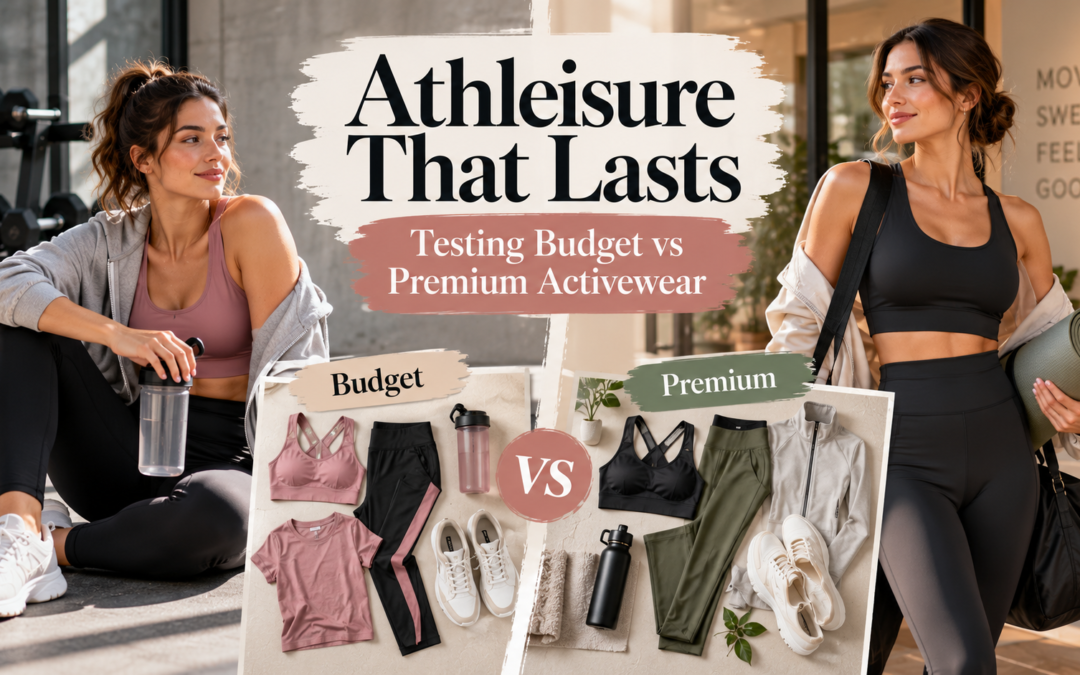
Athleisure That Lasts: Testing Budget vs Premium Activewear
Buying activewear is easy; finding pieces that still fit, stretch and feel comfortable after months of workouts is harder. The real difference between budget and premium activewear often becomes clear after repeated washing, not in the changing room. A pair of leggings may feel supportive on day one but become loose at the knees, while a more expensive sports bra may retain its shape and support for longer. For shoppers comparing budget vs premium activewear, the useful question is whether the higher price delivers better performance over time. Fabric composition, seam construction, waistband recovery, opacity, sweat management and care requirements all influence how long a garment remains wearable. Price alone does not guarantee quality, and a well-made budget item can outperform a poorly constructed expensive one.
This comparison looks at the practical differences between budget and premium athleisure, from gym leggings and sports bras to running tops, joggers and everyday matching sets. Rather than treating a luxury label as proof of durability, it focuses on what to inspect, how to test garments fairly and when spending more actually makes sense.
Budget vs Premium Activewear: What Actually Lasts?
1. Leggings: stretch recovery matters more than softness
Budget leggings can feel impressively soft when new, but the important test is how well they recover after repeated squats, lunges and washes. Look for fabric that returns to its original shape without sagging around the knees or seat. A dense knit, secure waistband and well-finished gusset are useful signs of thoughtful construction.
Premium leggings may offer a smoother feel, more consistent compression and better resistance to pilling. However, not every expensive pair is designed for intense training. Some softer, lightweight styles are better suited to yoga, Pilates or everyday wear than high-impact workouts.
Verdict: Buy budget leggings for occasional exercise or casual styling if they pass the opacity and movement tests. Consider premium options for frequent training where reliable fit and compression are essential.
2. Sports bras: support is worth prioritising
Sports bras are one category where fit should take precedence over appearance. The underband should sit securely without digging in, straps should stay in place, and the garment should provide support appropriate to the activity.
A low-cost bra may work well for walking, stretching or light yoga. Running, jumping and high-impact training demand more dependable support, with suitable coverage and secure construction. A premium price does not automatically guarantee the right fit, so test movement and check the return policy before removing tags.
Verdict: Spend according to impact level, not brand prestige. A properly fitted mid-range sports bra can be a better purchase than an expensive one that shifts during exercise.
3. Tops and T-shirts: budget options can be excellent
For workout tops, the difference between budget and premium is often less dramatic than it is for supportive garments. Polyester-based performance fabrics can wick moisture and dry quickly at a relatively accessible price. Nylon blends may feel smoother, but the overall knit, fit and finishing still matter.
Premium tops may offer lighter construction, better ventilation panels or more carefully placed seams. Those details become useful during long runs or intense sessions. For strength training, walking and general gym use, a simple, breathable top may be all you need.
Verdict: Budget tops are often a sensible place to save. Check that the fabric does not cling uncomfortably when damp and that seams do not rub under the arms.
4. Joggers and matching sets: versatility changes the value
Athleisure is not limited to the gym. Joggers, zip-up jackets and coordinated sets often double as travel outfits, weekend clothing and work-from-home staples. Here, fabric feel, pocket placement, waistband comfort and resistance to pilling can matter more than technical performance features.
Premium sets may have cleaner finishing and a more consistent fit between matching pieces. Budget sets can still look polished if the colours coordinate and the fabric drapes well. Avoid choosing a set solely because it photographs well; thin fabric and loose cuffs can quickly make it look worn.
Verdict: Budget matching sets are suitable for casual use, while premium joggers or jackets may be worthwhile if they will be worn several times every week.
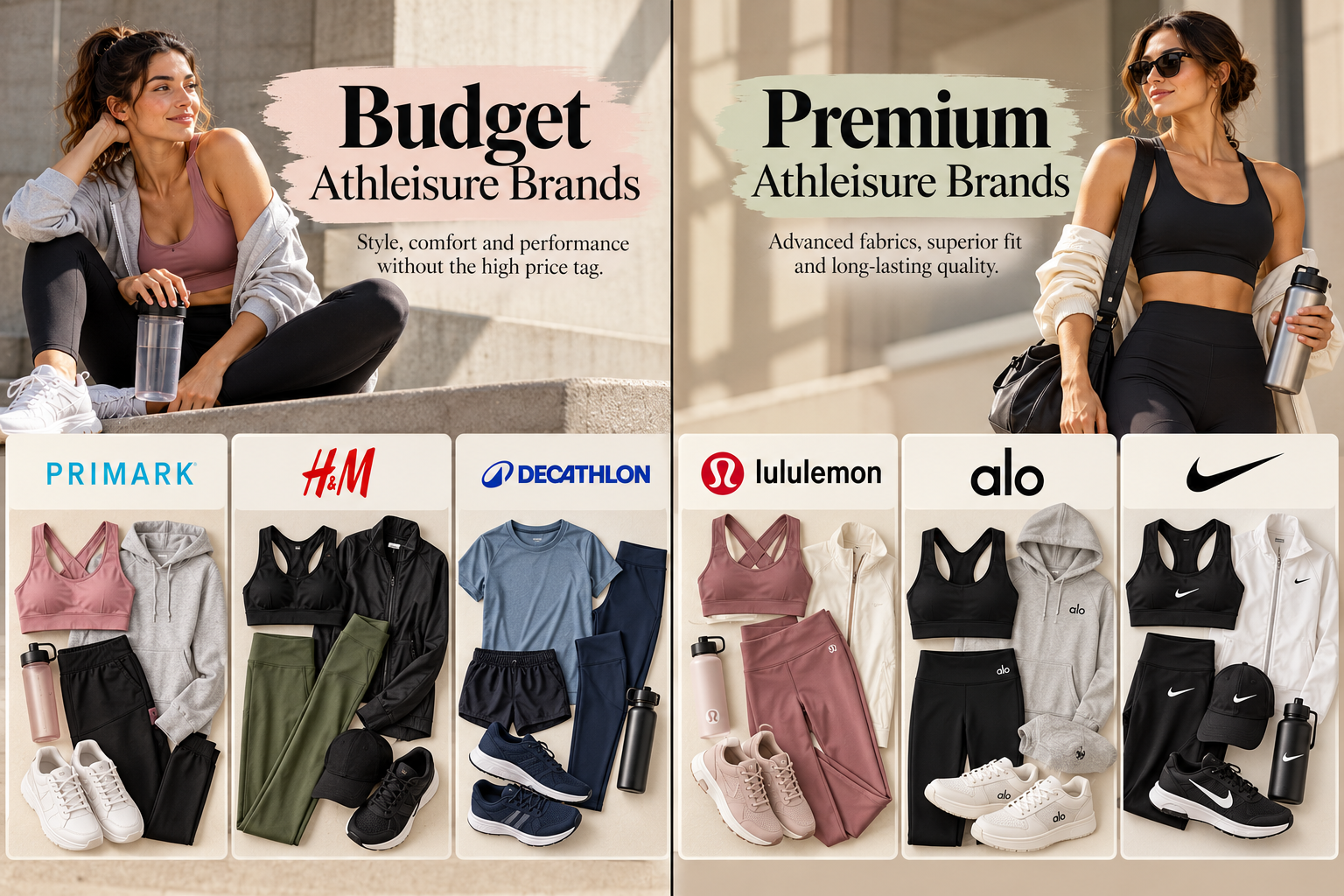
Budget vs Premium Activewear: The Comparison at a Glance
| Feature | Budget activewear | Premium activewear |
|---|---|---|
| Initial cost | Lower | Higher |
| Fabric feel | Varies by garment | Often more refined, but not always |
| Stretch recovery | Depends on knit and elastane quality | May be more consistent |
| Sweat management | Good options are available | More specialised fabric choices |
| Stitching and finishing | Inspect carefully | Often more attention to detail |
| Design and colour choice | Frequently trend-led | May include specialised styles |
| Best use | Occasional workouts and basics | Frequent training and selected staples |
These are general tendencies, not guarantees. Independent testing of multiple leggings has also found strong budget performers, so a higher price should never replace checking fit, fabric and construction.
How to Test Activewear Before Committing
A few simple checks can reveal problems that product photographs cannot.
- Squat test: Stretch leggings through a deep squat in good lighting to check opacity.
- Recovery test: Gently stretch the waistband and fabric, then see whether they return to shape.
- Movement test: Walk, bend, raise your arms and try the movements relevant to your workout.
- Seam check: Inspect the crotch, inner thighs, waistband and underarms for loose threads or uneven stitching.
- Care check: Read washing instructions. High heat, fabric softener and rough washing can damage some performance fabrics.
To judge long-term durability properly, compare garments after the same number of wears and washes. A single fitting-room test cannot establish how many months a product will last.
Is Premium Activewear Worth the Extra Money?
The answer depends on how often you wear it. Imagine a budget pair costing £25 that lasts 50 wears: that works out at £0.50 per wear. A premium pair costing £80 that lasts 200 wears costs £0.40 per wear. In that example, the more expensive garment offers better value over time.
But if the premium pair lasts only 80 wears, its cost rises to £1 per wear. These are illustrations, not measured product lifespans; actual durability depends on construction, use and care.
For shoppers evaluating premium activewear, the strongest strategy is selective spending. Invest in items where support, compression or frequent use make performance important. Save on basic tops, occasional-use pieces and trend-led colours when an affordable option meets your needs.
Budget vs Premium Activewear: Frequently Asked Questions
1. What fabric is best for durable workout leggings?
Nylon-elastane and polyester-elastane blends are common choices. The best option depends on knit density, stretch recovery, opacity and intended activity—not just the fibre names on the label.
2. How many activewear sets do I need?
For someone exercising three to five times a week, a small rotation of two or three bottoms and several tops can be practical, provided garments are washed after use and dried properly. Your routine and laundry frequency will determine the ideal number.
3. How can I make activewear last longer?
Wash garments according to their care labels, use a gentle cycle when suitable, avoid excessive heat and turn pieces inside out to reduce surface abrasion. Do not leave sweaty clothes damp in a gym bag.