
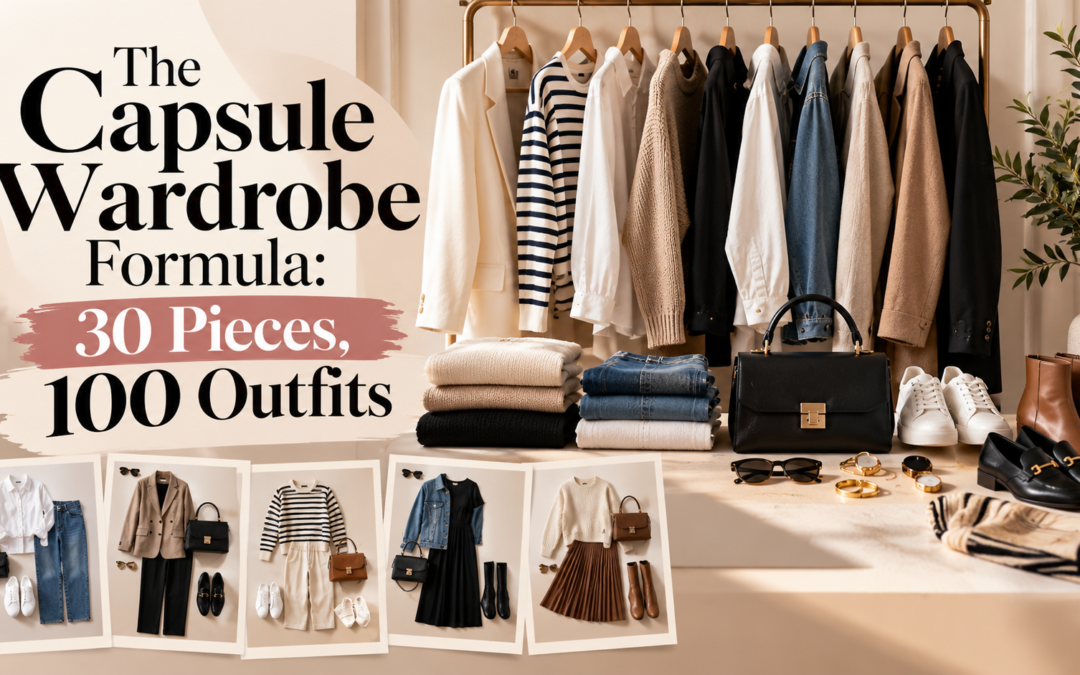
The Capsule Wardrobe Formula: 30 Pieces, 100 Outfits
A wardrobe full of clothes does not always make getting dressed easier. You might own dozens of tops, several pairs of jeans and dresses for different occasions, yet still struggle to put together an outfit. The problem is often not a lack of clothing but a lack of combinations. A Capsule Wardrobe addresses this by focusing on a carefully selected collection of versatile pieces that work together across multiple outfits.
The idea is simple: choose around 30 clothing items, including tops, bottoms, dresses, outerwear and a few layering essentials, then combine them in different ways. With thoughtful colour coordination and a balance of everyday basics and statement pieces, this compact collection can generate far more outfit combinations than its size suggests.
There is no universal number of garments that defines a capsule wardrobe. Some people work with 20 pieces, while others need 40 or more because of their climate, profession or lifestyle. The 30-piece formula is a practical starting point, particularly if you want to reduce clutter, make shopping more intentional and get more wear from clothes you already own. The goal is not to follow a strict minimalist rule; it is to make your wardrobe work harder.
1. Start With the Right 30 Pieces
The easiest way to build a functional wardrobe is to divide your clothing into categories. This prevents you from ending up with 15 tops and nothing suitable to wear with them.
| Category | Number of pieces | What to include |
|---|---|---|
| Tops | 8 | T-shirts, shirts, blouses and a versatile knit top |
| Bottoms | 5 | Jeans, tailored trousers, casual trousers and skirts |
| Dresses and one-piece outfits | 3 | Everyday dress, workwear dress and an occasion-ready option |
| Outerwear and layering | 4 | Blazer, cardigan, jacket and lightweight coat |
| Knitwear | 3 | Sweater, pullover and layering knit |
| Shoes | 4 | Sneakers, loafers, boots and versatile dress shoes |
| Additional layering pieces | 3 | A vest, a layering shirt and a versatile top |
| Total | 30 | A balanced, mix-and-match wardrobe |
This is a suggested formula, not a rigid shopping list. If you live somewhere warm, you might replace a heavy coat with a lightweight overshirt. If you work in a formal office, you may need more tailored trousers and fewer casual pieces.
2. Choose a Colour Palette that Makes Mixing Easy
Colour coordination is what turns separate garments into a cohesive wardrobe. Start with two or three neutrals, such as black, navy, beige, white or grey. Add two accent colours that complement your skin tone and personal style.
For example, a navy, white, beige and burgundy palette allows a white shirt to work with navy trousers, beige skirts and denim. Burgundy knitwear can add colour without making the rest of the wardrobe difficult to coordinate.
Before buying anything new, lay your existing clothes together and identify recurring colours. You may discover that you already own enough compatible pieces to create a capsule without spending money.
3. Pick Versatile Essentials Before Trend-Led Pieces
The most useful items are those that work across several settings.
-
A white or neutral shirt: Wear it tucked into tailored trousers, open over a T-shirt or layered beneath a sweater.
-
Well-fitting jeans: Choose a cut that works with sneakers, boots and loafers.
-
A tailored blazer: Combine it with jeans for a smart-casual outfit or wear it with matching trousers for work.
-
A neutral cardigan: Layer it over dresses, basic tops and shirts.
-
A simple dress: Change the shoes, bag and outerwear to make it suitable for daytime or evening plans.
A useful rule is to check whether a new item works with at least three things you already own. If it only matches one outfit, it may not earn its place in a compact wardrobe.
4. Use the 100-Outfit Formula
Thirty pieces can create more than 100 outfit combinations, but the result depends on how the items interact. Tops and bottoms can be combined in multiple ways, while dresses, layers and footwear add further options.
Consider a simple example: six tops paired with four bottoms already give you 24 combinations. Add two layering options, and many of those combinations can become distinct outfits. Shoes and accessories create even more variation.
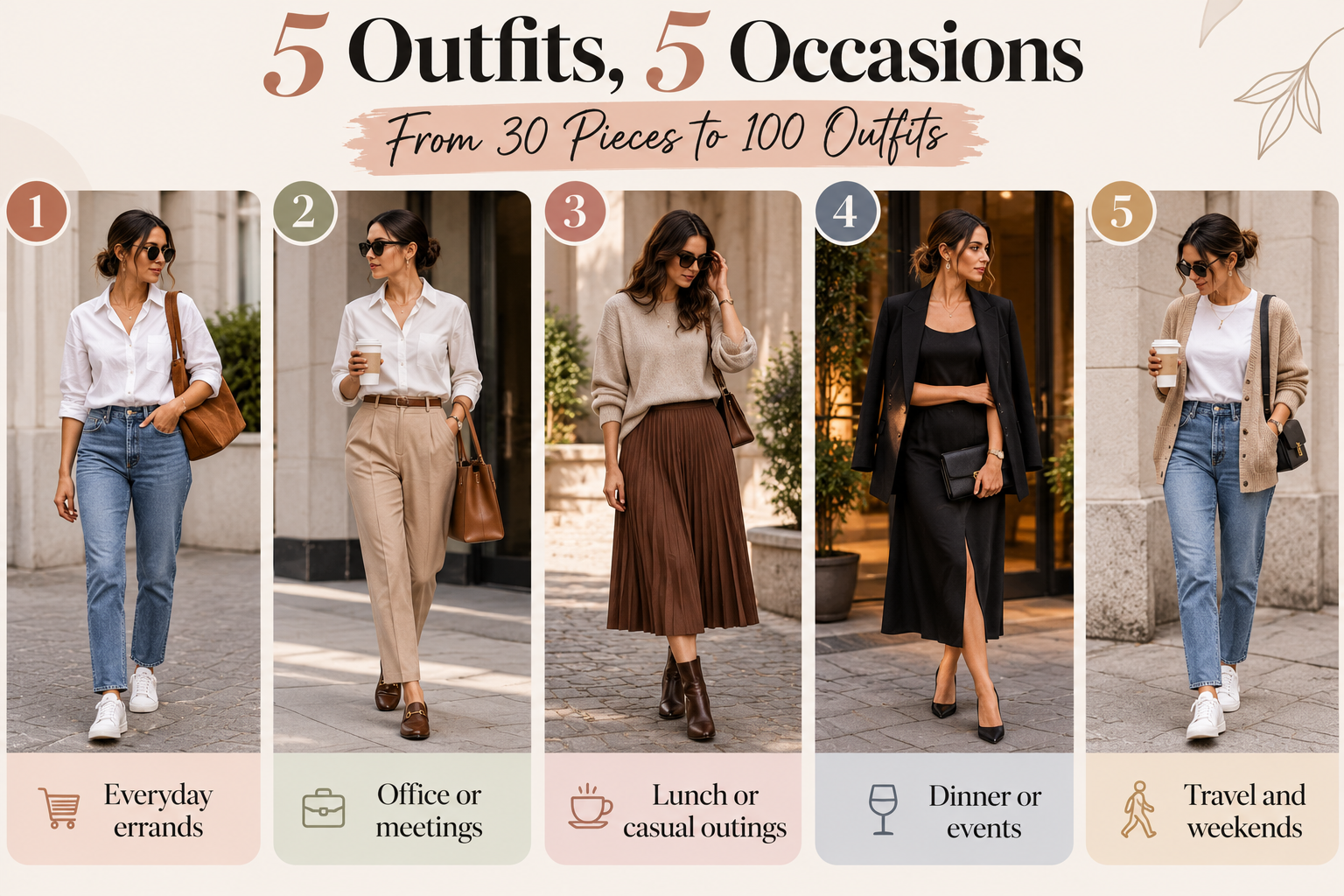
Here are five combinations using common wardrobe essentials:
| Outfit | Combination | Best for |
|---|---|---|
| 1 | White shirt + blue jeans + sneakers | Everyday errands |
| 2 | White shirt + tailored trousers + loafers | Office or meetings |
| 3 | Neutral knit + midi skirt + boots | Lunch or casual outings |
| 4 | Simple dress + blazer + dress shoes | Dinner or events |
| 5 | T-shirt + jeans + cardigan + sneakers | Travel and weekends |
To reach 100 genuinely wearable outfits, focus on combinations you would actually choose for your lifestyle. A theoretical combination is not useful if the pieces clash, the weather makes them impractical, or the dress code does not allow them.
5. Build Outfits Around Your Weekly Routine
A successful Capsule Wardrobe reflects your real schedule rather than an idealised lifestyle. Someone working in an office five days a week needs a different balance from someone who works remotely or spends most days outdoors.
Plan outfits around your typical week. Reserve enough polished combinations for work, keep comfortable options for weekends and include a few pieces for dinners or special occasions. If you travel regularly, prioritise wrinkle-resistant clothing and layers that can handle changing temperatures.
You can also photograph your favourite combinations and save them in a phone album. On busy mornings, you will have ready-made outfit ideas instead of repeatedly reaching for the same two combinations.
6. Avoid the Mistakes That Make a Small Wardrobe Feel Limiting
The biggest mistake is buying a completely new set of clothes before checking what you own. A capsule should simplify your existing wardrobe, not create another shopping project.
Avoid choosing pieces solely because they are neutral or fashionable. Fit, comfort and personal preference matter more than following a colour palette perfectly. Do not discard clothes you genuinely enjoy just because they fall outside a strict 30-piece limit.
Seasonality also matters. A wardrobe built for summer may need different layers in winter. Rotate suitable items as the weather changes rather than forcing every garment to work throughout the year.
Finally, track what you wear over a month. Items you repeatedly skip may not suit your routine, while frequently worn pieces can guide future purchases.
Final Thoughts
The best capsule wardrobe is not necessarily the smallest one. It is the collection that helps you get dressed confidently without wasting time or money on clothes you rarely wear. Start with 30 useful pieces, choose colours that coordinate, and experiment with combinations before buying anything else. With a little planning, 100 outfits become a realistic styling goal rather than a reason to shop more.
FAQs
1. What is a capsule wardrobe?
A capsule wardrobe is a curated collection of clothing designed to work together, making it easier to create outfits with fewer items.
2. How often should I update my capsule wardrobe?
Review it when seasons change or your lifestyle shifts. Replace worn-out essentials and add new pieces only when they fill a genuine gap.
3. Is a capsule wardrobe suitable for every budget?
Yes. You can build one from clothes you already own, thrifted finds and occasional replacements. There is no need to purchase an entirely new wardrobe.
Also Read: Coupert Review: Does the Coupon Extension Actually Save Money?