
Do You Actually Need a VPN in 2026? An Honest Answer
by parth@bidkinetic.com | Aug 9, 2026 | Tech
A VPN is often marketed as a simple privacy switch, but the reality is more nuanced. Do you actually need a VPN in 2026? For some people, it is a genuinely useful security and privacy tool; for others, it may be an unnecessary monthly expense. VPN usage has also grown alongside internet restrictions and privacy concerns. Proton VPN reported major download increases across 62 countries in 2025, with some spikes connected to censorship, internet shutdowns and new privacy rules.
At the same time, CISA continues to recommend VPNs or other secure-access solutions for certain remote-work and public-network situations, while warning that VPNs themselves can have security weaknesses.
What a VPN Actually Does
A VPN (Virtual Private Network) creates an encrypted connection between your device and a VPN server. Instead of websites seeing your normal public IP address, they generally see the VPN server’s address. This can make your traffic less exposed on networks you do not control and can reduce the amount of browsing information visible to your internet provider.
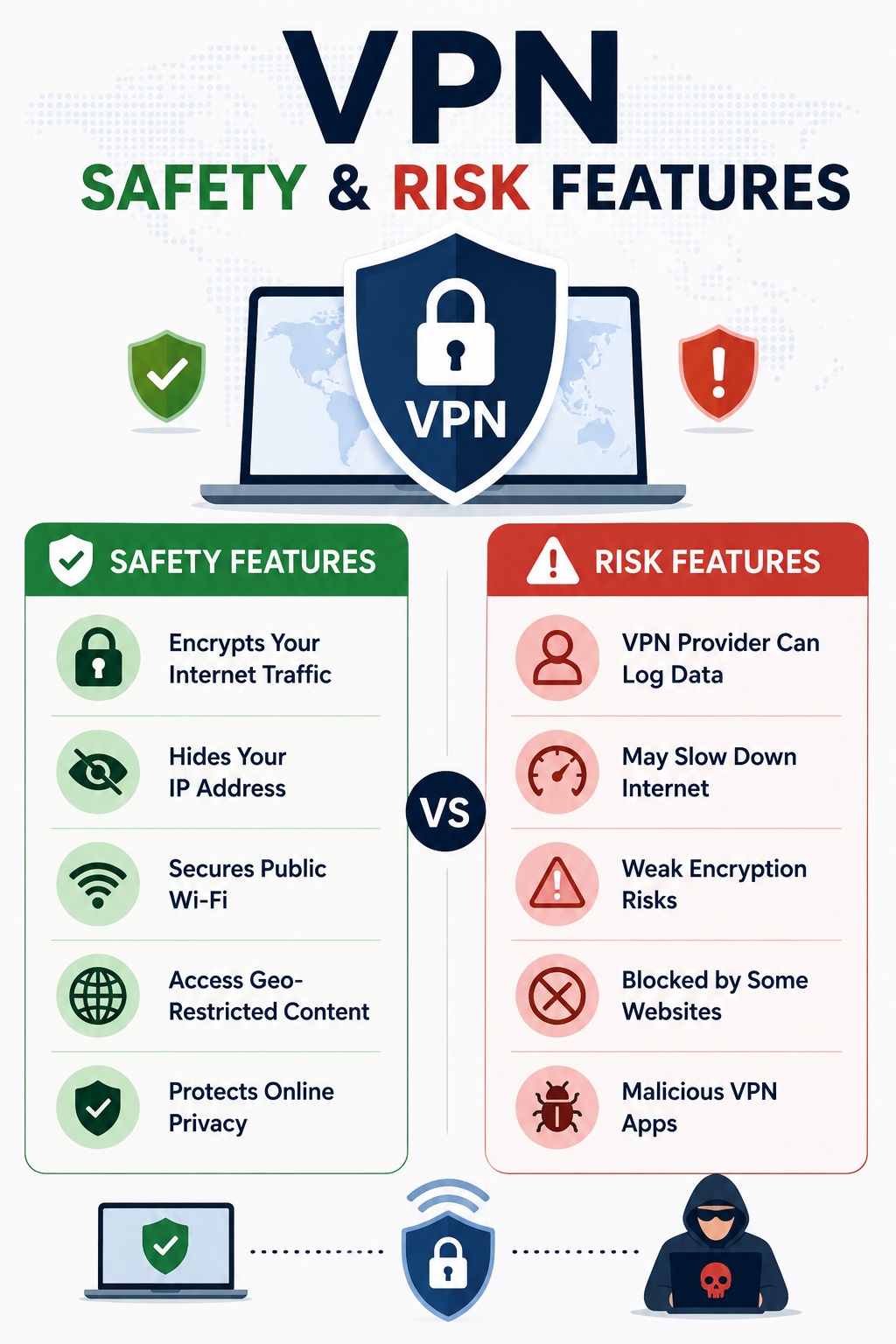
That does not make you anonymous. Websites can still identify you through accounts, cookies, browser characteristics and other tracking technologies. You are also placing some trust in the VPN company, so choosing the provider matters.
Who Has a Good Reason to Use One?
Frequent travellers are among the clearest candidates.
- Hotel, airport and café networks are outside your control, and public Wi-Fi can create additional security risks.
- CISA recommends using a VPN or another authorised secure-access solution when connecting to third-party networks in certain work environments.
Remote employees may also need a VPN to access company systems.
- In this case, the VPN is primarily an access and security mechanism rather than a tool for hiding everyday browsing.
- Businesses are increasingly considering Zero Trust, SASE and other modern approaches alongside traditional VPN infrastructure.
Privacy-conscious users have another reason.
- A VPN can prevent your ISP or someone operating the local network from having the same visibility into your connection.
- However, that privacy benefit depends heavily on the VPN provider’s policies and technical practices.
Who Probably Does Not Need One?
If you mainly browse from a secure home network, use HTTPS websites, keep your devices updated and have strong account security, a VPN may not add enough value to justify another subscription.
A VPN is also not necessary simply because you occasionally use public Wi-Fi. Modern websites generally use HTTPS encryption, which protects the contents of normal web connections. A VPN can provide another layer, but it should not be treated as the only protection you need.
A VPN Is Not Antivirus Software
This is where VPN marketing can create unrealistic expectations. A VPN does not automatically stop phishing, malware, malicious browser extensions or stolen passwords.
If you click a fake banking link and enter your credentials, a VPN cannot recognise the scam for you. Similarly, if malware is already installed on your laptop, routing your connection through a VPN does not remove it.
A sensible security setup still includes software updates, strong passwords, multifactor authentication, device security and careful handling of suspicious links and downloads.
The VPN Provider Becomes Part of the Trust Chain
Using a VPN does not eliminate trust; it moves some of it. Your internet provider may have less visibility into your connection, but the VPN provider becomes responsible for handling that traffic.
Before choosing a service, check its privacy policy, ownership, data-retention practices and whether its privacy claims have undergone independent audits. Be cautious about providers promising complete anonymity or protection against every type of online threat.
Security agencies have also pointed out that VPNs themselves can be vulnerable. CISA and its partners identified more than 22 known exploited vulnerabilities associated with VPN solutions and have warned organisations to keep VPN systems properly secured and updated.
What About Streaming and Changing Your Location?
Changing your apparent IP location is another major reason people subscribe to VPN services. A VPN can route your connection through a server in another country, but this does not guarantee access to every region-specific website or streaming catalogue.
Streaming platforms actively detect and block many VPN addresses, so performance and accessibility can change without warning. A VPN should therefore not be purchased solely on the assumption that it will permanently unlock every service available in another country.
How to Decide If You Need One
| Your Situation | VPN Value |
|---|---|
| Frequent public Wi-Fi | High |
| Regular international travel | High |
| Employer requires VPN access | High |
| Strong privacy concerns | Moderate to high |
| Occasional home browsing | Low |
| Secure home network | Low |
| Expecting complete anonymity | Not realistic |
| Looking for antivirus protection | Not the right tool |
This is why do you actually need a VPN in 2026 is better answered by looking at your habits rather than following a universal recommendation. If you travel frequently, work remotely or regularly connect through networks you do not trust, a VPN can be a sensible addition.
For someone who spends most of their time on a properly secured home network, the priorities may be different. Strong account protection, multifactor authentication, updated software and careful browsing habits could provide more practical value than adding another subscription.
How to Choose a VPN
Do not select a provider simply because it offers the biggest discount or the largest server count. Start by checking what information it collects and how long it retains that information.
Look for modern protocols, a reliable kill switch, clear privacy documentation, independent security assessments and a transparent company structure. Connection speed is also important because an impressive privacy policy is less useful if the service makes normal browsing, video calls or downloads frustratingly slow.
Do you actually need a VPN in 2026? The answer becomes clearer when you identify the specific problem you want to solve. Buy one because you need additional privacy on untrusted networks or secure remote access, not because an advertisement suggests that the internet is otherwise completely unsafe.
Frequently Asked Questions on Do You Actually Need a VPN in 2026
1. Does a VPN make me anonymous?
No. It can hide your IP address and encrypt the connection to the VPN server, but websites can still identify you through accounts, cookies and other tracking methods.
2. Is a VPN necessary on home Wi-Fi?
Usually not for ordinary browsing if your router, devices and accounts are properly secured. A VPN may still be useful if you have a specific privacy requirement.
3. Does a VPN protect against hackers?
Only to a limited extent. It can protect the connection between your device and VPN server, but it does not replace device security, updates, multifactor authentication or protection against phishing.
Ultimately, do you actually need a VPN in 2026? There is no universal answer. A VPN is neither a useless gimmick nor an essential requirement for every internet user. It is one security and privacy layer that becomes particularly valuable when your circumstances call for it. The smartest approach is to understand what it protects, recognise what it cannot do and choose a service based on your actual needs rather than fear-driven marketing.