
ExpressVPN vs NordVPN vs Surfshark: The 2026 Speed and Privacy Test
Choosing a VPN in 2026 is less about finding one that can simply hide an IP address and more about finding one that does not make the internet noticeably worse while doing it. In a controlled comparison using a 900 Mbps baseline connection, recent testing recorded NordVPN at 899 Mbps locally, Surfshark at 895 Mbps and ExpressVPN at 724 Mbps. On a US connection, the figures were 794 Mbps, 780 Mbps and 469 Mbps, respectively. Across local and international tests, NordVPN retained about 87% of the baseline speed, compared with 74% for Surfshark and 54% for ExpressVPN. That does not automatically make NordVPN the best VPN for everyone. Privacy architecture, leak protection, device limits, usability and subscription cost change the equation. This ExpressVPN vs NordVPN vs Surfshark comparison looks at how the three actually stack up when speed and privacy are treated as separate tests rather than one big feature checklist.
Speed Test: NordVPN Takes the Lead
The speed difference became much easier to understand when the testing moved away from nearby servers.
- On the US server, NordVPN reached 794 Mbps download, Surfshark 780 Mbps and ExpressVPN 469 Mbps.
- The UK results were similarly close at the top, with NordVPN reaching 860 Mbps, Surfshark 848 Mbps and ExpressVPN 575 Mbps.
- On the Japan server, NordVPN recorded 619 Mbps, Surfshark 574 Mbps and ExpressVPN 301 Mbps.
ExpressVPN remained stable rather than unusable, but its Lightway protocol could not match the sustained download performance of NordLynx and WireGuard in this test.
There is an important caveat: VPN speed varies with the user’s ISP, physical location, server congestion and time of day. A single test is therefore not a universal speed guarantee. However, the consistency across several locations gives NordVPN a meaningful advantage in this particular comparison.
What the Privacy Test Reveals
Speed is only half the job. All three services use modern encryption, kill switches and independently assessed privacy practices. The more interesting difference is how much evidence exists behind their no-logs claims.
NordVPN
Source: NordVPN
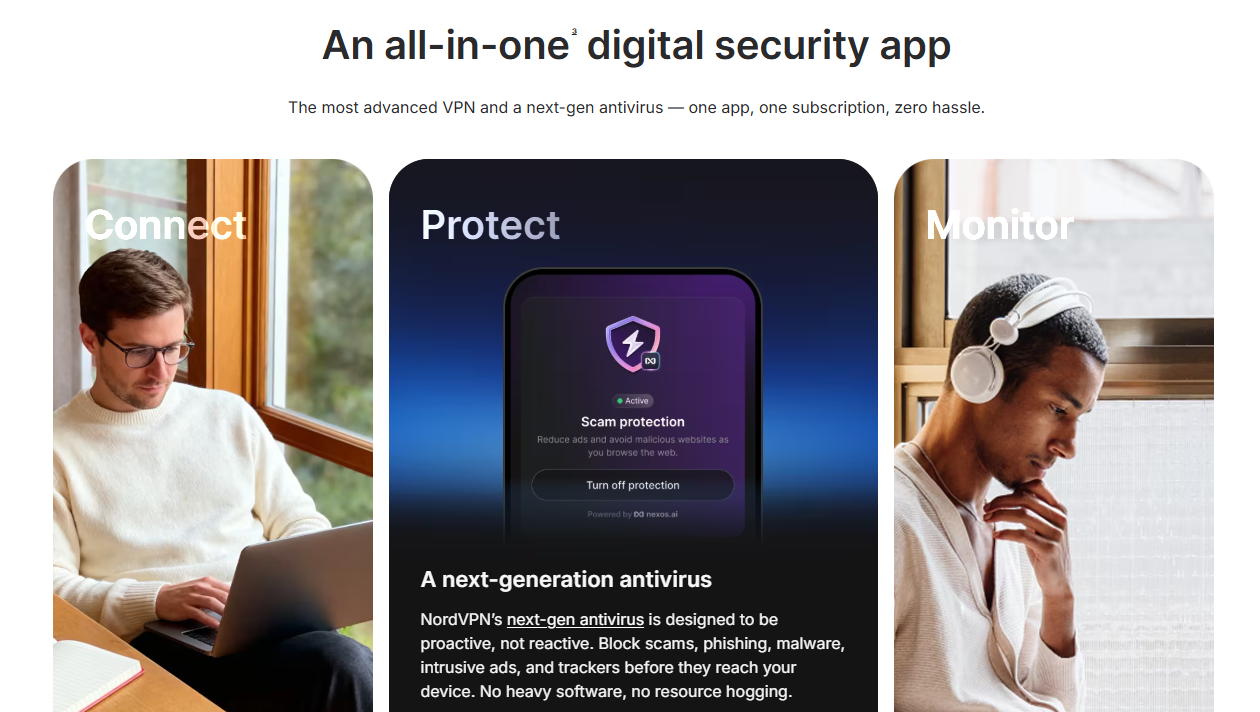
NordVPN has undergone six independent examinations of its no-logs policy, with Deloitte conducting the later reviews, including the sixth in 2025. Its servers are also RAM-only, meaning data is not retained on conventional hard drives.
ExpressVPN
Source: ExpressVPN
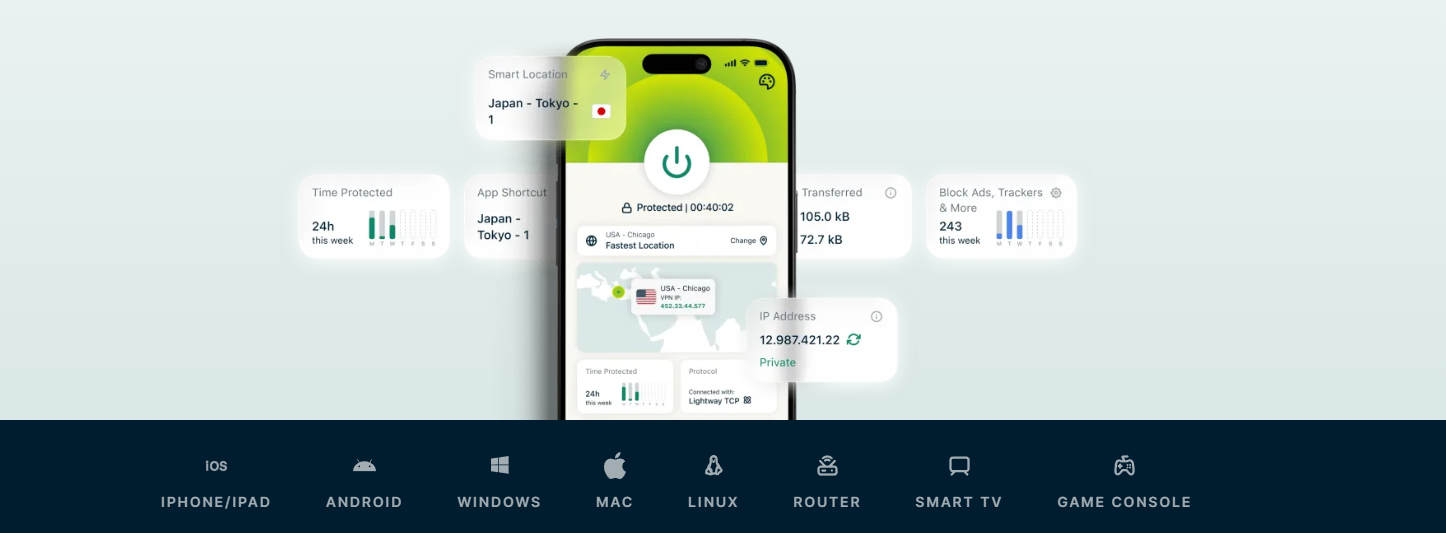
ExpressVPN’s privacy record is similarly strong. Its current documentation lists a third KPMG no-logs audit from 2025, multiple Lightway security assessments and audits of its TrustedServer architecture. ExpressVPN says it does not collect browsing history, traffic destinations, DNS queries or assigned session IP addresses.
Surfshark
Source: Surfshark
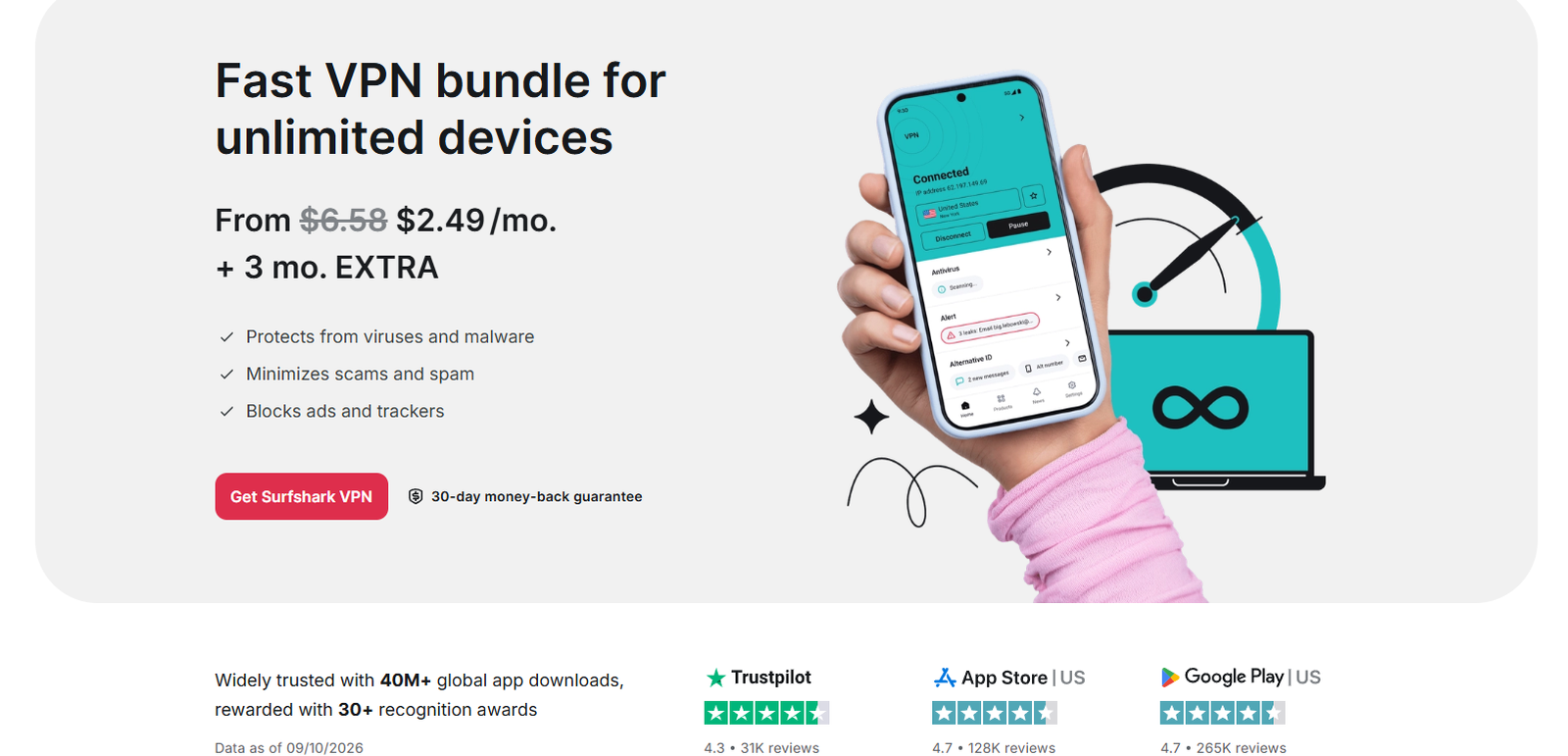
Surfshark has also strengthened its privacy credentials. Deloitte verified its no-logs policy in both 2023 and 2025, while later infrastructure assessments examined its security and found no critical vulnerabilities. Surfshark operates RAM-only servers and says it does not store activity or IP-address logs.
So the ExpressVPN vs NordVPN vs Surfshark privacy comparison is surprisingly close. NordVPN has the longest documented audit trail of the three, ExpressVPN has an established privacy architecture around TrustedServer and Lightway, while Surfshark combines audited no-logs practices with RAM-only infrastructure and a broader set of privacy tools.
Features: Different Priorities, Different Winners
Using each service in normal browsing and streaming workflows highlights a difference that raw speed numbers miss.
NordVPN
NordVPN has the deepest security toolbox. Threat protection, Double VPN, Onion Over VPN, obfuscated servers and dedicated-IP options make it particularly flexible. It also supports 10 simultaneous devices.
Surfshark
Surfshark takes the opposite approach on device coverage. Every plan supports unlimited simultaneous devices, which is difficult to ignore for households with phones, laptops, tablets, televisions and other connected hardware. Its CleanWeb blocking, MultiHop and NoBorders tools add useful functionality without requiring a higher device allowance.
ExpressVPN
ExpressVPN feels more streamlined. Lightway is its proprietary protocol, while Network Lock acts as the kill switch on supported desktop platforms. It has fewer advanced privacy tools than NordVPN and Surfshark, but that can actually make the service easier for someone who wants to connect and get on with browsing.
| Category | ExpressVPN | NordVPN | Surfshark |
| Best tested download speed | 724 Mbps | 899 Mbps | 895 Mbps |
| US download | 469 Mbps | 794 Mbps | 780 Mbps |
| UK download | 575 Mbps | 860 Mbps | 848 Mbps |
| Japan download | 301 Mbps | 619 Mbps | 574 Mbps |
| Main protocol | Lightway | NordLynx | WireGuard |
| Simultaneous devices | 8 | 10 | Unlimited |
| No-logs verification | Strong | Extensive | Strong |
| RAM-only infrastructure | Yes | Yes | Yes |
| Best suited to | Simplicity | Speed + features | Value + many devices |
Pricing Changes the Value Calculation
This is where Surfshark gains ground. Its current Starter plan is advertised at $2.49/month on its long-term introductory offer and covers unlimited devices. NordVPN’s current Basic pricing starts at $3.49/month under its promotional 27-month offer, with 10 devices.
ExpressVPN generally sits at a higher price point, although current promotional pricing varies by plan and subscription length. The extra cost is easier to justify for users who value its simpler interface and mature privacy architecture, but harder to justify purely on speed.
This makes the ExpressVPN vs NordVPN vs Surfshark decision less straightforward than picking the fastest service. NordVPN wins the performance contest, while Surfshark offers the strongest hardware-per-dollar proposition.
Which VPN Should You Choose?
For raw performance, NordVPN is the winner. Its NordLynx connection produced the fastest results across the tested locations, and its privacy credentials are backed by a long sequence of independent assessments. It is the strongest all-round option if speed, streaming and advanced security tools matter equally.
Surfshark is the smarter choice for families or people running many devices. Unlimited simultaneous connections can make the lower subscription price significantly more valuable than it initially appears.
ExpressVPN remains the cleanest choice for users who prioritise a polished, uncomplicated experience. Its speed was behind the other two in the cited 2026 test, but its connections remained stable and its privacy architecture remains well documented.
Ultimately, the ExpressVPN vs NordVPN vs Surfshark contest has three different winners depending on the priority: NordVPN for performance, Surfshark for value and device coverage, and ExpressVPN for simplicity and a mature privacy-focused design.
FAQs
- Which is fastest in 2026, ExpressVPN, NordVPN or Surfshark?
NordVPN was fastest in the cited 2026 comparison, retaining about 87% of the baseline connection speed. Surfshark retained 74%, while ExpressVPN retained 54%. - Which VPN is best for privacy?
All three have strong privacy credentials and independent assessments. NordVPN has the longest documented sequence of no-logs examinations, while ExpressVPN and Surfshark also have recent third-party verification. - Which one is best for a family?
Surfshark is the obvious choice if the household has many devices because its unlimited-device policy removes the connection limit that applies to NordVPN and ExpressVPN.
Also Read: Krisp Review: Does AI Noise Cancellation Actually Work on Calls?