
Free-to-Play Spending: A Sane Budget System for Gamers
A game can cost nothing to download and still become a regular expense. A battle pass here, a limited-time skin there, a few extra lives when you’re close to finishing a level-individual purchases can feel insignificant until the monthly statement arrives. Managing free-to-play spending is less about refusing every in-game purchase and more about deciding what your entertainment is worth before a game starts asking for money.
The numbers suggest this is a relevant issue for many players. According to Lumikai’s 2025 consumer research report, based on a survey of more than 3,000 Indian smartphone users, 33% of respondents said they made payments in games. The report identified in-game purchases, virtual currency, and battle passes among the ways players spend. An earlier Lumikai survey covering September 2023 to September 2024 found that 25% of gamers had spent money on games. These figures reflect different survey periods and samples, but both point to a gaming culture where free downloads and paid extras comfortably coexist.
The challenge is that gaming purchases rarely arrive as one large bill. They are spread across different games, stores, currencies, and payment methods. A sensible budget brings all of them together without turning gaming into a financial guilt trip.
Why Free Games Can Become Expensive
Free-to-play games often earn revenue through optional purchases, including character skins, premium currencies, season passes, upgrades, and random-reward boxes. These purchases can genuinely improve the experience. The trouble starts when the timing of an offer influences the decision more than its actual value.
A limited-time cosmetic may disappear soon. A battle pass may promise rewards if you keep playing. A discounted currency bundle may look like a bargain even when you did not intend to buy anything.
The Australian Competition and Consumer Commission warns that some game features can pressure players into spending repeatedly, even when a game is advertised as free. The US Federal Trade Commission has also highlighted concerns about unclear virtual-currency pricing and loot boxes.
The answer is not to assume every game is manipulative. It is to create a system that gives you control over the timing and amount of your purchases.
Build a Gaming Budget That Fits Your Life
Start with money left after essentials such as housing, bills, food, savings, and debt payments. Gaming spending should come from discretionary income, not money needed for those priorities.
Choose a monthly amount you can comfortably afford, even if that amount is zero. For example, a gamer with ₹1,000 available for entertainment might allocate ₹600 to gaming purchases, ₹200 to subscriptions, and leave ₹200 unspent. These are illustrative figures, not recommended spending targets; your budget should reflect your circumstances.
The key is to set one limit across every game and platform. Otherwise, ₹300 on mobile, ₹500 on PC, and ₹400 on console can quietly become a ₹1,200 month.
The Simple Spending System
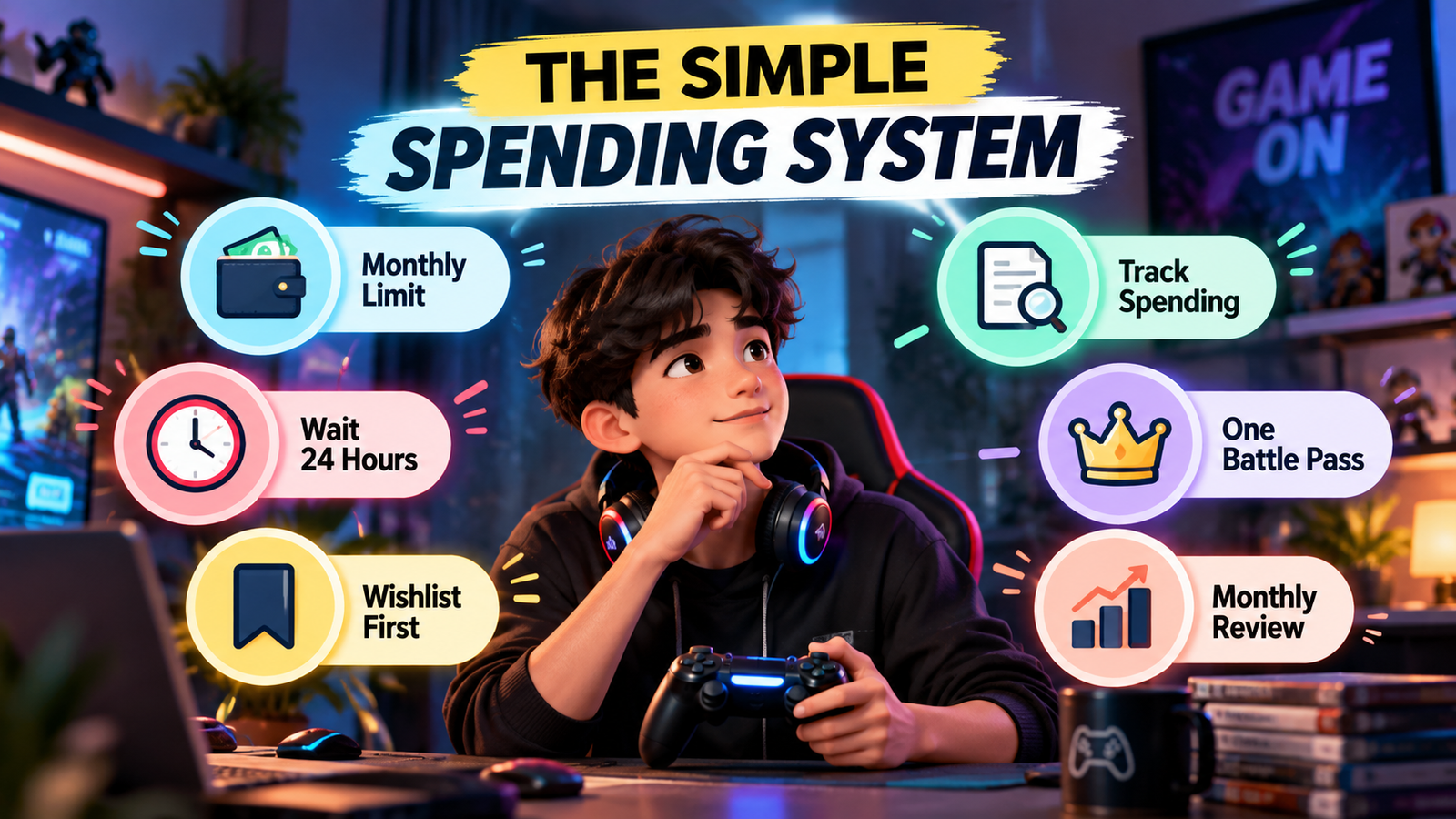
| Rule | How it works | Why it helps |
|---|---|---|
| Monthly cap | Set one total limit for all games | Prevents scattered purchases adding up |
| Waiting period | Wait 24 hours before buying non-essential items | Reduces impulse spending |
| Wishlist first | Save skins and bundles before purchasing | Separates interest from urgency |
| Real-money tracking | Record the actual currency cost | Makes virtual purchases easier to understand |
| One battle pass | Prioritise one active pass at a time | Avoids paying for rewards you cannot finish |
| Monthly review | Check receipts and subscriptions | Reveals recurring costs and unused purchases |
Keep the system simple enough to maintain. A note on your phone or a basic spreadsheet is enough. Record the date, game, item, actual amount paid, and whether the purchase was planned.
Decide What Is Worth Paying For
Not all purchases offer the same value. A cosmetic skin you use for hundreds of hours may provide more enjoyment than a bundle you forget about after a week. A battle pass can be worthwhile if you already play regularly, but less so if you are buying it mainly to avoid missing rewards.
Before spending, ask three questions: Would I still want this if it were available next month? Does it fit my remaining budget? Will I realistically use or enjoy it?
For random-reward purchases, be even more cautious. A loot box does not guarantee the item you want, and buying more boxes does not make a previous unsuccessful purchase worthwhile. If the odds or total potential cost are unclear, skip it.
A good free-to-play spending plan makes room for purchases you genuinely value while removing the pressure to buy everything a game promotes.
Use Payment Controls to Protect Your Budget
Convenient payment methods make purchases easy, but that also means it is easy to lose track of the total. Review your platform’s account settings and consider:
- Removing saved payment details from games where you tend to make impulse purchases.
- Requiring a password or authentication before transactions.
- Disabling one-tap purchases where possible.
- Setting parental controls and purchase approvals on children’s accounts.
- Turning off promotional notifications that encourage rushed decisions.
If you share a device or payment method with family members, agree on purchase rules in advance. For younger players, discuss virtual currency in real-money terms and make it clear whether purchases are allowed, how much is available, and who must approve them.
Track the Cost of Every Game You Play
Your monthly gaming expense may include more than microtransactions. Add subscriptions, downloadable content, premium memberships, and purchases made through official or third-party stores. Check recurring charges after a game stops being part of your routine.
A simple monthly review can separate spending into three categories: planned purchases, spontaneous purchases, and recurring costs. If spontaneous spending repeatedly pushes you over budget, adjust your controls rather than relying on willpower alone.
The best free-to-play spending system is one you can follow during an exciting event, a competitive season, or a tempting store rotation, not just during a quiet week.
Final Takeaway
Gaming should be entertainment, not a recurring financial surprise. Set one monthly cap, track real-money costs, give non-essential purchases time to cool off, and spend only on items that genuinely improve your experience. With a practical approach to free-to-play spending, you can enjoy your favourite games without letting every new season, skin, or limited-time offer decide how much you pay.
Frequently Asked Questions
1. How much should I spend on free-to-play games?
There is no universal amount. Set a limit based on your disposable income after essentials and savings. Spending nothing is a perfectly valid choice.
2. Are battle passes worth buying?
They can be worthwhile if you play enough to enjoy the rewards and the price fits your budget. Check the pass duration and required playtime before paying.
3. How do I stop impulse purchases in games?
Use a 24-hour waiting rule, disable one-tap payments, mute promotional notifications, and keep a wishlist. These small barriers create time to reconsider.
Also Read: Airwallex Review: Best Business Account for International Payments?