
How to Start an Amazon FBA Business in 2026: Realistic Costs and Steps
How to start an Amazon FBA Business in 2026 requires a more realistic understanding of costs, competition and profit margins, especially as the marketplace becomes increasingly competitive. Starting an Amazon FBA Business successfully now is more than finding a popular product and sending inventory to Amazon. Product margins, advertising costs, inventory risk, referral fees, fulfilment charges and cash flow all need to work together before the first order is placed. In the US, Amazon’s Professional selling plan costs $39.99 per month, while the Individual plan costs $0.99 per item sold, before other selling fees. FBA then adds fulfilment and storage costs based on the product.
Amazon says its average US FBA fee increase for 2026 is about $0.08 per unit, or less than 0.5% of the average selling price, while a 3.5% fuel and logistics surcharge applies to US and Canada FBA fulfilment fees from April 17, 2026.
What FBA Actually Does
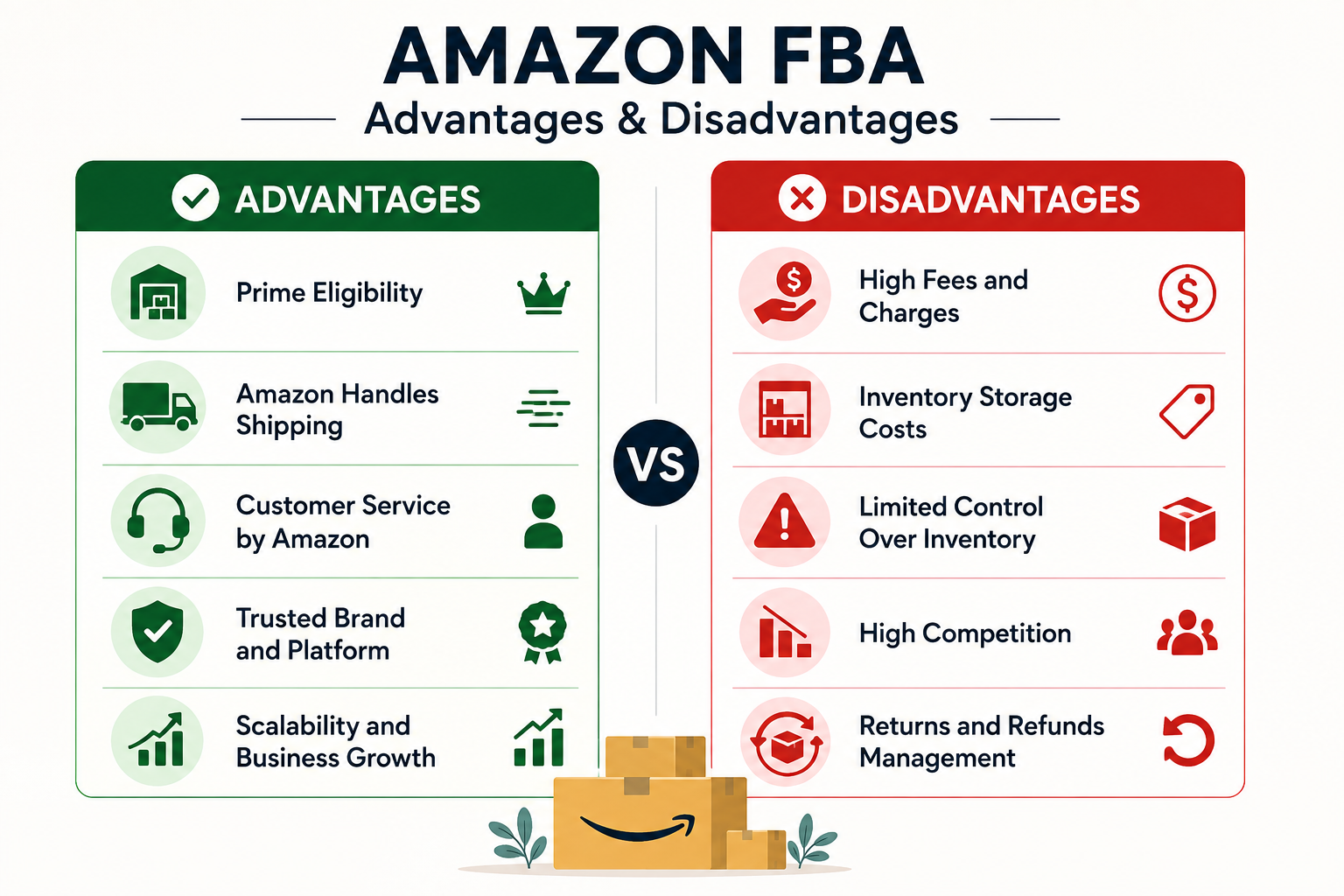
Fulfillment by Amazon means you send your inventory to Amazon’s fulfillment network, and Amazon handles storage, picking, packing, shipping, customer service and returns for eligible orders. You remain responsible for choosing the product, sourcing it, setting the price, managing the listing and generating demand.
That distinction is important because FBA removes much of the logistics work, but it does not remove the commercial risk. Amazon charges storage before an item sells and fulfilment fees when an order is fulfilled, with costs influenced by product size and weight.
How Much Money Do You Really Need?
There is no official minimum investment, and the right amount depends heavily on the product.
- For a beginner launching one relatively small private-label product in the US, a practical starting budget could be around $3,000 to $7,000.
- You can start with less by ordering a small quantity or using an existing product, but having too little working capital can create problems when inventory needs to be reordered before your first batch has generated enough cash.
| Expense | Realistic beginner range |
|---|---|
| Product samples | $100-$300 |
| Initial inventory | $1,000-$2,500 |
| Freight and import costs | $400-$1,000 |
| Product photography/design | $150-$500 |
| Trademark/brand setup | $250-$600+ |
| Amazon selling plan | $39.99/month in US |
| Initial advertising | $500-$1,500 |
| Contingency/working capital | $500-$1,500 |
| Typical starting budget | $3,000-$7,000 |
These are planning estimates, not Amazon’s official charges. Actual costs can be substantially higher for bulky products, regulated categories, premium branding or large initial orders. Amazon’s own Revenue Calculator should be used before committing capital because it lets sellers compare FBA and other fulfilment methods using product dimensions, weight, price and shipping information.
Step 1: Pick a Product With Room for Profit
Do not begin by thinking, “What sells well on Amazon?” Start by thinking, “What can I sell profitably after every major cost?“
- Look for products that are relatively small, lightweight, durable and easy to understand.
- Avoid products with complicated compliance requirements, high return rates or expensive shipping unless you have experience in that category.
A useful target is to model your product backwards from its selling price. If a product sells for $30, calculate Amazon fees, landed product cost, advertising, returns and other expenses before deciding whether the margin is attractive.
Step 2: Validate Demand and Competition
Search Amazon manually before placing an order. Examine the first page, read negative reviews and look for complaints customers repeatedly make. Those complaints can reveal opportunities for improving an existing product.
Do not rely solely on sales estimates from third-party software. Look at review counts, pricing, listing quality, variations, image quality and how established the leading brands appear. A product with high demand can still be a poor choice if several established sellers have strong reviews and pricing power.
Step 3: Order Samples Before Inventory
Never make a large inventory commitment based only on supplier photographs.
- Order samples from multiple suppliers and compare material quality, dimensions, packaging, finishing and consistency.
- Ask suppliers about minimum order quantities, production timelines, packaging specifications and defect policies.
- Your sample should also be tested under the conditions customers are likely to use it.
- A product that looks good in a catalogue can become expensive if it generates returns after launch.
Step 4: Calculate Landed Cost
Your product cost is not the same as your landed cost. Include manufacturing, packaging, inspection, freight, customs duties, import charges and transportation to Amazon’s fulfilment network.
This is where many beginner calculations fall apart. A product that costs $5 from a supplier may not actually cost $5 by the time it becomes sellable inventory in Amazon’s warehouse.
Step 5: Create the Listing Before the Shipment Arrives
Your listing should be treated as part of the product launch, not something to finish at the last minute. Invest in clear product photography, useful infographics and concise copy that explains what the product does and why it is different.
Use customer language naturally in the title, bullets and description, but do not turn the listing into a collection of repeated keywords. Your images should answer the questions a shopper would normally ask before purchasing.
Step 6: Launch With Controlled Advertising
Amazon advertising can help a new listing gain visibility, but spending aggressively without understanding conversion can burn through your launch budget quickly.
Start with a controlled campaign structure, monitor which search terms generate relevant clicks and separate useful terms from expensive ones that produce little return. Your initial objective should be learning which searches and audiences actually convert, not simply generating the largest possible number of impressions.
Step 7: Manage Inventory Like a Cash-Flow Business
FBA is often described as a hands-off fulfilment model, but inventory management remains your responsibility. Running out of stock can interrupt sales momentum, while ordering too much can leave your money sitting in storage.
Amazon also has inventory-related fees and programs that can affect profitability, so monitor your sell-through rate and replenishment timing rather than ordering based on optimism. The company provides inventory and fee tools inside Seller Central to help sellers estimate costs and manage stock.
What Makes FBA Profitable in 2026?
The strongest opportunity is usually not simply finding the cheapest product. It is finding a product where you can create enough differentiation to maintain a healthy selling price.
That might mean improving the design, packaging, instructions, bundle, sizing, materials or customer experience. A product that is identical to dozens of cheaper listings gives you very little control over pricing.
This is why starting an Amazon FBA Business should be approached as a product-development exercise rather than a simple marketplace arbitrage strategy. Your advantage needs to survive beyond the first few months.
Don’t Ignore Amazon’s 2026 Fee Changes
Amazon’s US fee structure changes periodically, so calculations made from an old YouTube video or blog post can be misleading. For 2026, Amazon announced an average FBA fee increase of $0.08 per unit in the US, while also introducing or changing specific fee components and a fuel and logistics surcharge.
If you plan to sell in India instead, do not apply US figures to your business. Amazon.in uses a different fee structure, and its 2026 changes include category-specific selling fees and other marketplace charges.
A Sensible First-Year Approach
For a beginner on how to start an Amazon FBA Business successfully, the objective should not be to launch ten products immediately. Start with one product, understand its economics and learn how customers respond before expanding.
A reasonable first cycle is to spend several weeks on product research and supplier validation, order samples, place a controlled inventory order, launch with measured advertising and then use actual sales data to decide whether to reorder, improve the product or abandon it.
The biggest advantage of this approach is that it limits the cost of being wrong.
Is Amazon FBA Still Worth It?
Yes, but it is no longer sensible to treat FBA as easy passive income. The model works best for sellers who understand margins, customer demand, inventory cycles and advertising rather than those chasing whatever product happens to be trending.
Before spending money, use Amazon’s free Revenue Calculator to model the exact product. Amazon allows sellers to compare estimated FBA fees, fulfilment costs and revenue against other fulfilment options.
Ultimately, how to start an Amazon FBA Business successfully comes down to making the numbers work before placing the purchase order. If the product remains profitable after Amazon fees, landed costs, advertising, returns and realistic operating expenses, you have something worth testing. If the margin disappears after those calculations, a popular product is still a bad business.
Frequently Asked Questions on How to Start an Amazon FBA Business
1. Can I start Amazon FBA with $1,000?
It is possible, but the budget leaves little room for inventory, advertising, freight and unexpected costs. A $3,000-$7,000 planning range is more realistic for a small US private-label launch, although the actual amount varies significantly by product.
2. What is the cheapest Amazon selling plan?
In the US, the Individual plan costs $0.99 per item sold, while the Professional plan costs $39.99 per month, before other selling fees. Amazon notes that the Professional plan may make more sense for sellers expecting to sell more than about 40 units per month.
3. Does Amazon FBA guarantee profit?
No. FBA handles fulfilment, but sellers still carry product, inventory, advertising and pricing risks. Profit depends on the difference between selling revenue and all associated costs.
Also Read: How to Do Keyword Research for a New Website: Free + Paid Methods