
Wide Feet Problems Solved: Brands, Lasts, and Fitting Guide
Struggling to find comfortable shoes for wide feet? Compare wide-fit brands, understand shoe lasts, and learn how to measure your feet for a better fit.

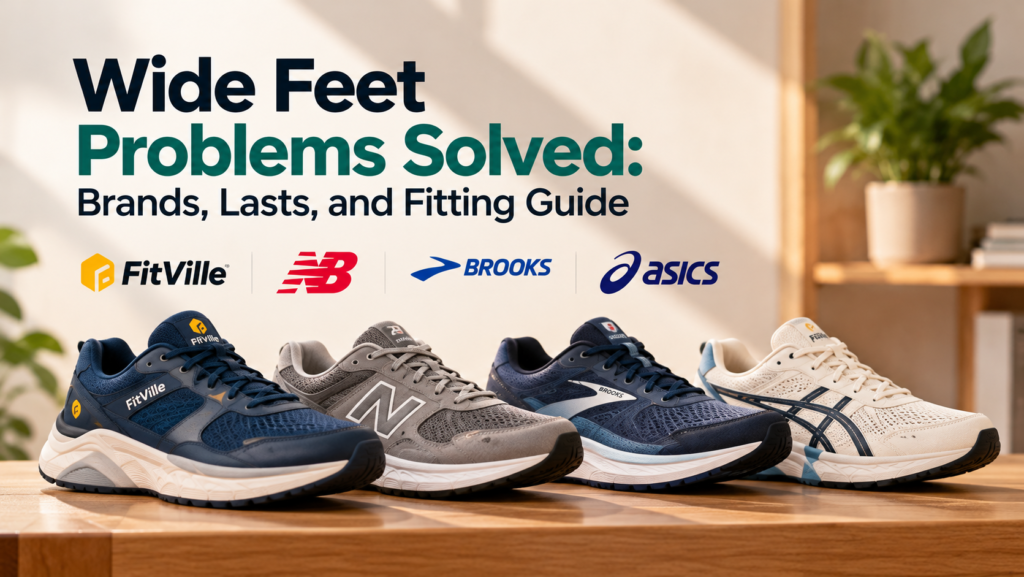
For people with wider feet, the problem often starts with standard shoe shapes that do not match their natural foot dimensions. Buying a larger size may create more length without providing enough room across the ball of the foot. The demand for better-fitting wide-feet footwear comes down to three things: width, shape, and internal volume.
Width determines how much room the shoe provides across the foot, the last determines its overall shape, and internal volume affects how comfortably the foot sits inside. Getting these details right can help reduce pressure points, friction, and unnecessary discomfort. Brands such as FitVille, New Balance, Brooks, and ASICS offer options worth exploring, although availability varies by model and region.
Here is how to identify the source of your fit problems, choose the right brands, and find shoes that work for your everyday needs.
1. FitVille: Best Starting Point for Wide and Extra-Wide Options
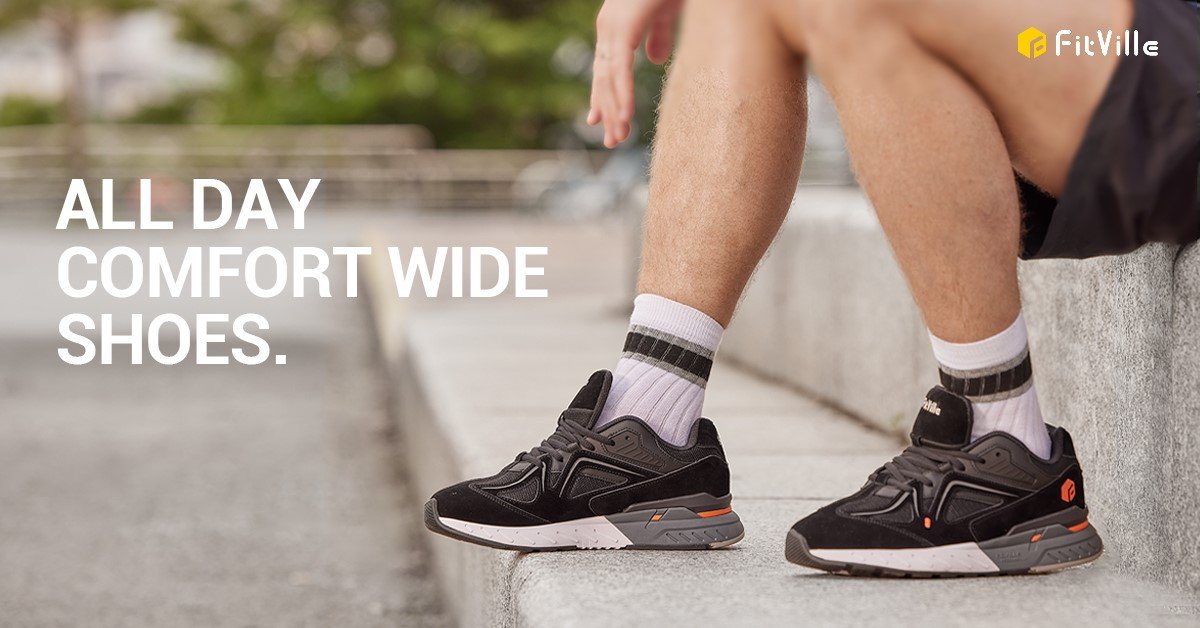
FitVille is worth considering if conventional trainers feel tight across your toes or forefoot. The brand focuses on wide-fit footwear, with selected models available in 2E, 4E, and, for certain styles, 6E widths.
The FitVille Rebound Core is a practical option for everyday walking and extended periods on your feet. Its design includes a roomy toe box, cushioned midsole, supportive heel structure, and slip-resistant outsole. These features aim to balance comfort with stability for everyday use.
FitVille also offers other styles for walking, casual wear, and sport-related activities. Check each product’s width options rather than assuming the entire range has identical sizing.
Best for: People who need extra forefoot room, wider sizing options, and everyday comfort.
Fitting tip: Start with your measured length, then select the appropriate width using the brand’s size chart. Explore the FitVille Rebound Core collection for model details and sizing information.
2. New Balance: Best for Multiple Width Options
New Balance is a useful brand to investigate because selected running, walking, and lifestyle shoes are offered in multiple widths. Depending on the model, shoppers may find wide or extra-wide versions rather than having to size up in length.
- The important distinction is that width availability varies by product.
- One New Balance trainer may fit comfortably across the forefoot, while another in the same nominal size may feel narrower because of its construction and upper materials.
- Look for models that provide enough room around the ball of the foot while keeping the heel secure.
- A shoe that feels roomy at the toes but slips at the back is not necessarily the right fit.
Best for: People looking for wide-width choices across walking, running, and everyday styles.
Fitting tip: Filter by width on the brand’s website before comparing colours or designs.
3. Brooks: Best for Walking and Running Shoe Choices
Brooks is worth exploring if you need footwear for regular walks, running, or time spent on your feet. Selected models come in wide and extra-wide widths, depending on the shoe and market.
- When comparing Brooks shoes, pay attention to the intended activity.
- A running shoe designed for a smooth forward stride may feel different from a walking shoe built for everyday use.
- Cushioning, heel hold, toe-box shape, and upper flexibility all influence comfort.
Do not assume that a highly cushioned shoe will automatically fit a wide foot. Cushioning affects how the shoe feels underfoot; it does not guarantee adequate width.
Best for: Walkers and runners who want activity-specific footwear with wider sizing options.
Fitting tip: Try the shoes with your usual walking or running socks and test them on a short walk before committing to longer sessions.
4. ASICS: Best for Sport-Specific Fit Options
ASICS offers running and training shoes, with selected models available in wide widths. These are worth considering if your current footwear feels restrictive during exercise or if your toes need more space during longer runs.
Fit depends on the particular model.
- Some designs have a more accommodating forefoot, while others may feel snug because of their upper construction or performance-oriented shape.
- For exercise footwear, the shoe should hold the heel and midfoot securely without squeezing the toes.
- Your foot should not slide forward on descents or press painfully against the front during movement.
Best for: Active users looking for running or training footwear in selected wide-width models.
Fitting tip: Check the exact width designation on the product page, as not every ASICS shoe is available in a wide version.
5. Choose the Right Shoe Last, Not Just the Right Size
A shoe last is the form used to shape a shoe during manufacturing. It influences the shoe’s width, toe shape, depth, and overall proportions. Two shoes marked with the same size can feel completely different because they are built on different lasts.
A tapered toe shape may squeeze toes that spread naturally. A rounded or anatomical toe box can provide more space, but the label alone does not guarantee a comfortable fit.
Consider these points when comparing lasts:
- Toe-box shape: Look for room around the big toe and little toe, without rubbing against the sides.
- Forefoot width: The widest part of your foot should align with the widest part of the shoe.
- Instep height: If the upper presses across the top of your foot, you may need more internal depth.
- Heel shape: A wider shoe should still hold your heel securely while walking.
The right last makes wide-feet footwear more comfortable because it addresses the shape of your foot instead of simply adding length.
6. Measure Your Feet Before Ordering
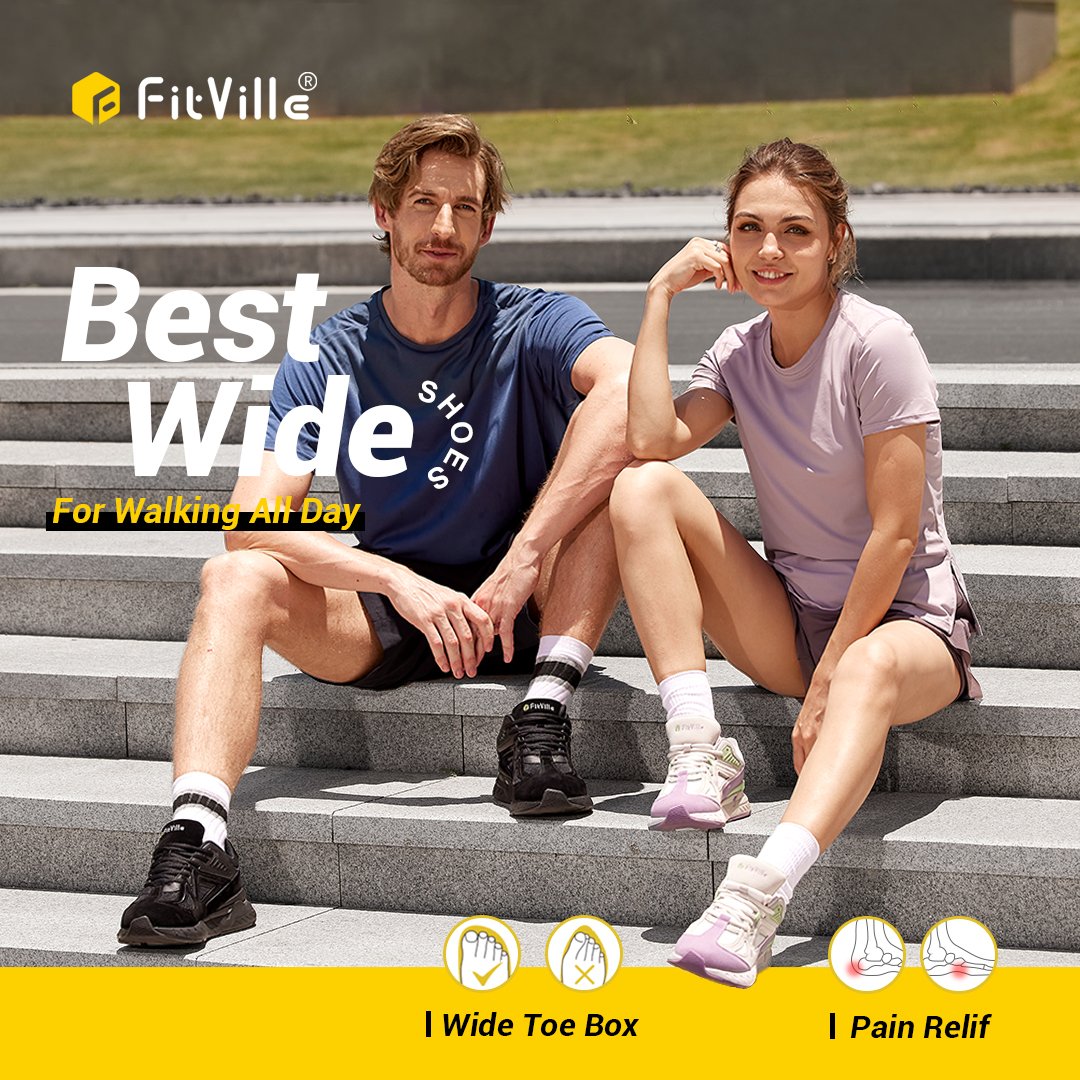
Measure both feet while standing, preferably later in the day when they may be slightly larger. Record heel-to-toe length and the width across the widest part of each foot. Use the larger foot as your starting point and compare the measurements with the specific brand’s size chart.
Width labels are useful, but they are not perfectly interchangeable between manufacturers. In many men’s US sizing systems, D represents standard width, 2E wide, and 4E extra-wide. Women’s conventions differ, so always check the brand’s chart.
When trying on wide-feet footwear, stand up and walk around. Your toes should be able to spread without touching the sides, and there should be no painful pressure across the forefoot. Avoid choosing a longer size simply to create width, as excess length can cause heel slipping and friction.
Quick Comparison: Which Brand Should You Try?
| Brand | Main strength | What to check |
| FitVille | Wide and extra-wide options in selected styles | Width range, toe-box room, heel fit |
| New Balance | Multiple widths across selected categories | Model-specific width availability |
| Brooks | Walking and running options | Intended activity and forefoot fit |
| ASICS | Sport-specific footwear | Wide versions and toe-box shape |
Wide-Feet Footwear: FAQs
1. What causes shoes to feel tight even in my usual size?
Your usual size may reflect length but not width. Different lasts, toe shapes, and upper materials can make shoes feel tighter or roomier even when the size label is identical.
2. Should I buy a bigger shoe size if I have wide feet?
Not automatically. First, check whether the brand offers a wider width in your measured length. Increasing length alone may cause your heel to slip or your foot to move inside the shoe.
3. Is FitVille suitable for very wide feet?
FitVille offers selected models in 2E and 4E widths, with some styles extending to 6E. Check the specific product’s size chart because the available widths vary by model.
Also Read: Pins & Aces Review: Golf Apparel That Doesn’t Take Itself Seriously