


Top Women’s Handbag Trends for Modern Style
How to Learn a Language with iTalki: A Beginner’s Roadmap
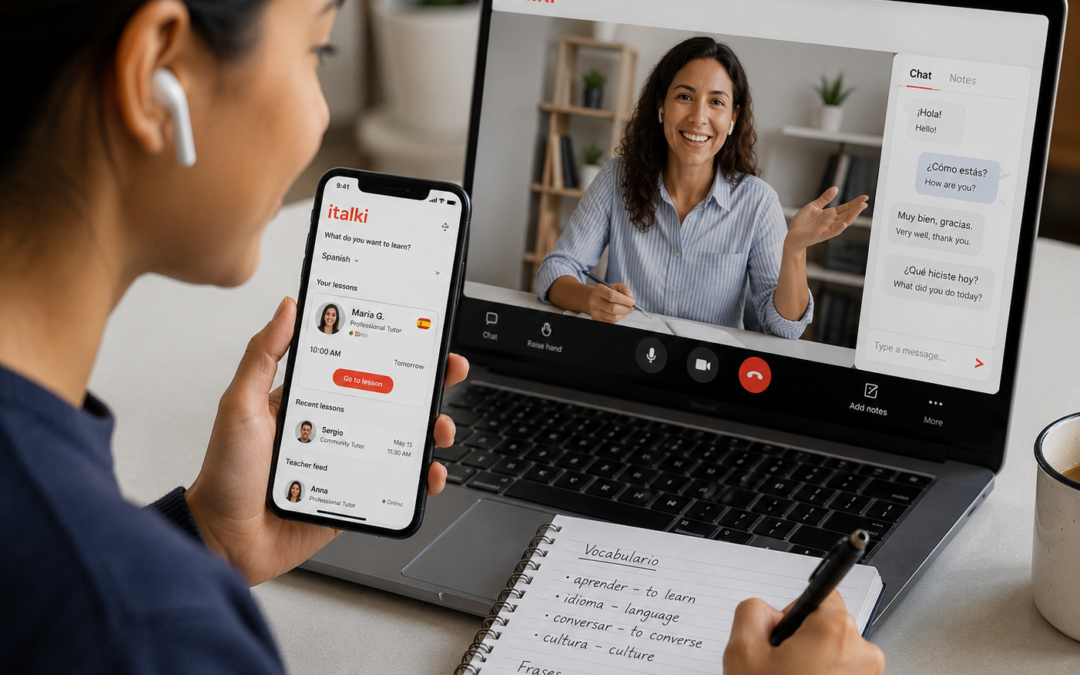
Learning a new language has never been easier to access, but choosing the right platform can make all the difference. If you’re wondering how to learn a Language with iTalki, you’re not alone. As one of the world’s leading online language-learning marketplaces, iTalki connects learners with thousands of professional teachers and community tutors across 150+ languages, serving millions of students worldwide. In contrast to traditional language apps that depend heavily on quizzes and flashcards, iTalki focuses on live, one-on-one conversations customized to your goals, pace, and proficiency level.
Whether you’re preparing for an international move, advancing your career, studying abroad, or merely exploring a new culture, iTalki provides an hands-on learning experience that emphasizes real communication as opposed to rote memorization. The key to success, however, is not just in booking lessons but in pursuing a structured learning roadmap that transforms occasional practice into lasting fluency.
Why iTalki Stands Out from Traditional Language Apps
Most language-learning platforms are excellent for building vocabulary and introducing grammar, but many learners eventually reach a plateau. They understand the language while reading or listening, yet find it difficult to hold a natural conversation.
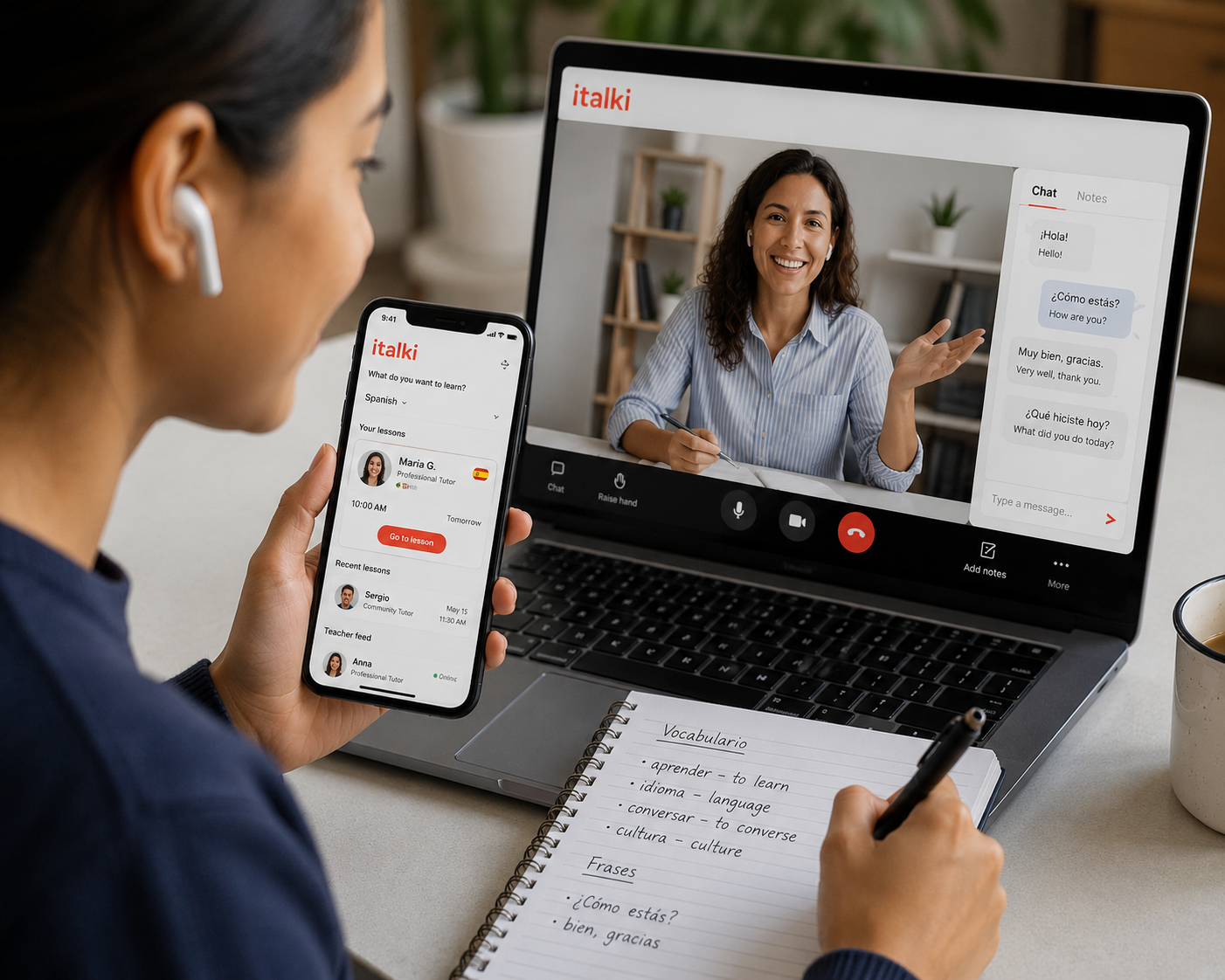
That’s where iTalki offers a different experience. Instead of learning from pre-recorded lessons alone, students interact directly with native speakers and experienced instructors in live sessions. Every lesson is personalized, allowing learners to focus on pronunciation, conversation, grammar, business interaction, travel phrases, or exam preparation based on individual goals.
Perhaps the biggest advantage is flexibility. You choose your teacher, lesson frequency, budget, and learning objectives rather than following a rigid curriculum designed for everyone.
How to Learn a Language with iTalki?
Follow these steps for an easy way to learn your desired language:
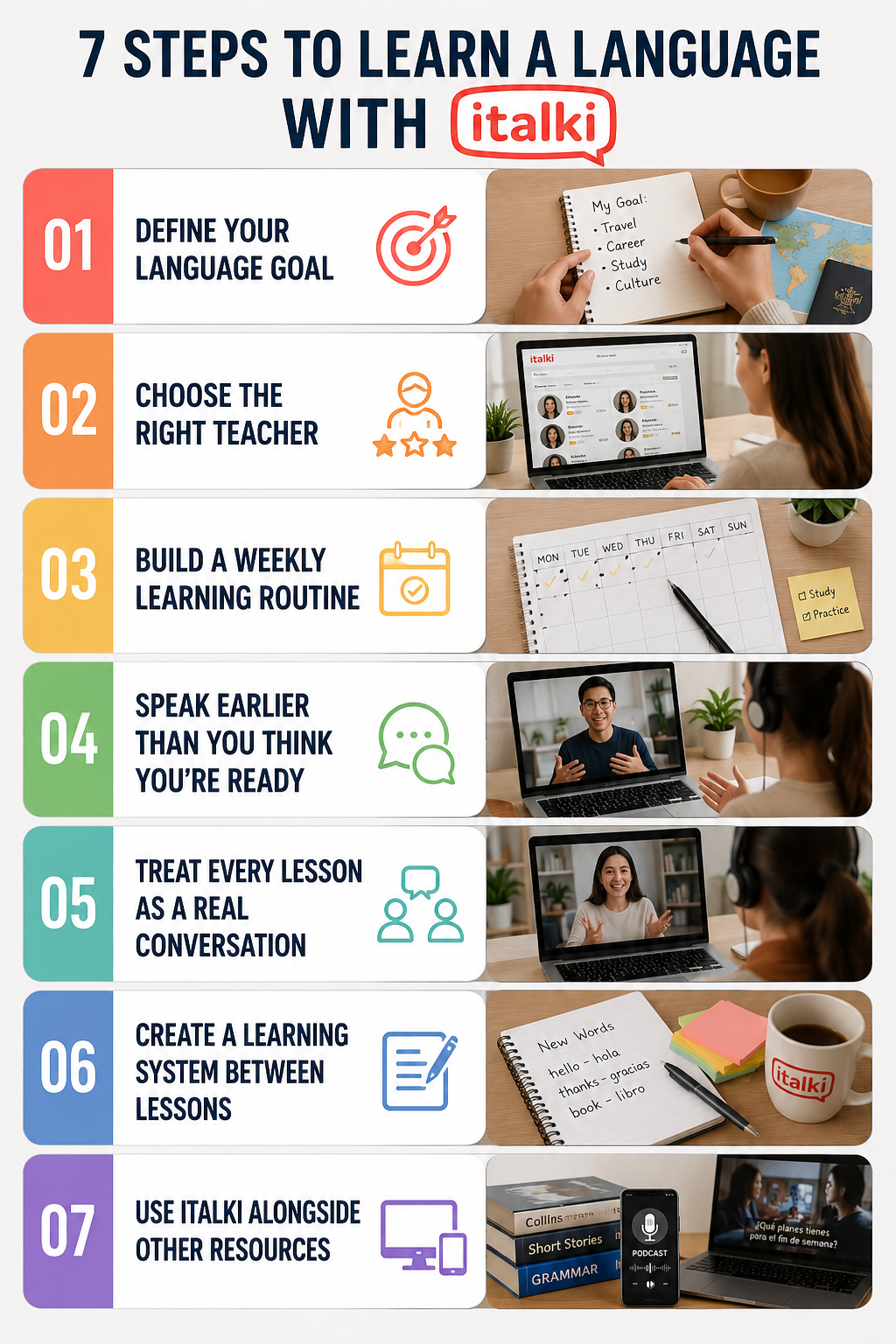
Step 1: Define Your Language Goal Before Booking Lessons
Many beginners rush into booking classes without deciding why they want to learn a language. This often leads to inconsistent progress because every lesson lacks direction.
Before scheduling your first session, identify your key objective.
Are you learning Spanish for travel? German for higher education? Japanese for business? French for immigration? Your goal will influence the vocabulary, speaking exercises, and lesson structure your teacher prepares.
A learner planning to relocate to Germany benefits more from everyday conversations and workplace vocabulary than advanced literary discussions.
Having a clear destination makes the learning journey much more efficient.
Step 2: Choose the Right Teacher-Not Just the Highest Rated One
One of the most overlooked aspects of how to learn a language with iTalki is selecting a teacher whose teaching style corresponds to your learning habits.
iTalki offers two primary categories:
| Teacher Type | Best For | Key Benefit |
|---|---|---|
| Professional Teachers | Structured learning, grammar, exams | Certified instruction with organized lesson plans |
| Community Tutors | Conversation practice, fluency | Natural speaking practice at affordable rates |
Instead of choosing the most popular instructor, read their profile carefully. Watch introduction videos, review student feedback, and check whether they specialize in beginners, intermediate learners, pronunciation coaching, or business discourse.
Sometimes a teacher with fewer students may be a much better fit for your learning style.
Step 3: Build a Weekly Learning Routine
Consistency matters more than intensity.
Taking one three-hour lesson every two weeks rarely produces lasting improvement. Instead, shorter but regular sessions help reinforce vocabulary and improve speaking confidence.
A practical beginner schedule might include:
- Two live iTalki lessons each week.
- Fifteen to twenty minutes of vocabulary review every day.
- Listening to podcasts or YouTube content in the target language.
- Writing short journal entries several times a week.
- Speaking aloud even when practicing alone.
Think of language learning as exercise. Regular repetition strengthens your memory far more effectively than occasional marathon learning sessions.
Step 4: Speak Earlier Than You Think You’re Ready
Many beginners postpone speaking because they fear making mistakes.
Ironically, waiting often slows progress.
- Language acquisition research regularly shows that active communication accelerates fluency.
- Mistakes are not signs of failure; they’re essential feedback that helps your brain refine pronunciation, sentence formation, and vocabulary recall.
- A helpful iTalki teacher will encourage conversation from your very first lessons, even if you’re only speaking in short statements.
The goal isn’t perfection. The goal is communication.
Step 5: Treat Every Lesson as a Real Conversation
One common mistake is treating live lessons like classroom lectures.
Instead, arrive prepared.
- Bring questions you’ve encountered during self-study.
- Ask your teacher to explain confusing grammar rules using practical examples.
- Discuss current events, hobbies, work, travel experiences, or books you’ve read.
The more personal your conversations become, the easier vocabulary is to remember because it’s connected to your own experiences instead of isolated word lists.
Step 6: Create a Learning System Between Lessons
Your progress doesn’t happen during the one-hour lesson alone; It happens in the days between classes.
After every session:
- Review your teacher’s corrections.
- Rewrite unfamiliar sentences.
- Practice difficult pronunciation.
- Convert new vocabulary into flashcards.
- Record yourself speaking and compare it with native pronunciation.
Even fifteen focused minutes each day dramatically improves long-term retention.
This “review loop” is what separates casual learners from confident speakers.
Step 7: Use iTalki Alongside Other Resources
The strongest learners rarely depend on a single platform.
Combine iTalki with complementary resources that strengthen different language skills.
For example:
- Read children’s books before moving to newspapers.
- Listen to beginner podcasts over your commute.
- Watch television with subtitles in your target language.
- Follow social media creators who post in the language you’re learning.
- Change your phone’s language settings once you’re comfortable.
Each activity reinforces what you learn during live lessons and exposes you to natural sentence forms.
Common Beginner Mistakes to Avoid
Many learners unintentionally slow their own progress despite investing in lessons.
Some of the most common mistakes include:
- Booking random teachers every week instead of building continuity.
- Skipping lessons for long periods.
- Memorizing vocabulary without using it in conversation.
- Focusing only on grammar exercises.
- Avoiding speaking because of fear of making mistakes.
- Expecting fluency after only a few weeks.
Language learning rewards patience and repetition much more than speed.
Measuring Progress Beyond Vocabulary
Success isn’t simply knowing more words.
A better way to measure improvement is by asking yourself practical questions.
Can you introduce yourself naturally?
Can you order food confidently?
Can you explain your job?
Can you tell a short story without translating every sentence in your head?
These milestones show real communication skills, which is ultimately the purpose of learning any language.
Final Thoughts
Learning a new language isn’t about finding a magic app; it’s about building consistent habits supported by meaningful conversations. If you’re exploring how to learn a language with iTalki, think of the platform as your personal language classroom rather than just another online service. By selecting the right teacher, practicing regularly, reviewing lessons between sessions, and embracing mistakes as part of the process, you’ll make steady progress toward real conversational fluency.
The learners who succeed aren’t necessarily the most talented; they’re the ones who keep showing up, speaking often, and making every lesson count.
Frequently Asked Questions
1. Is iTalki suitable for complete beginners?
Yes. iTalki offers teachers who specialize in absolute beginners and can guide learners from basic greetings to advanced conversation through personalized lessons.
2. How many iTalki lessons should I take each week?
For most beginners, two to three lessons per week combined with daily self-study provides a balanced and sustainable learning routine.
3. Should I choose a professional teacher or a community tutor?
Professional teachers are ideal for structured learning, grammar, and exam preparation, while community tutors are excellent for conversational practice and improving speaking confidence.
Also Read: Udemy Course Quality: How to Spot a Great Course Before You Buy
Udemy Course Quality: How to Spot a Great Course Before You Buy
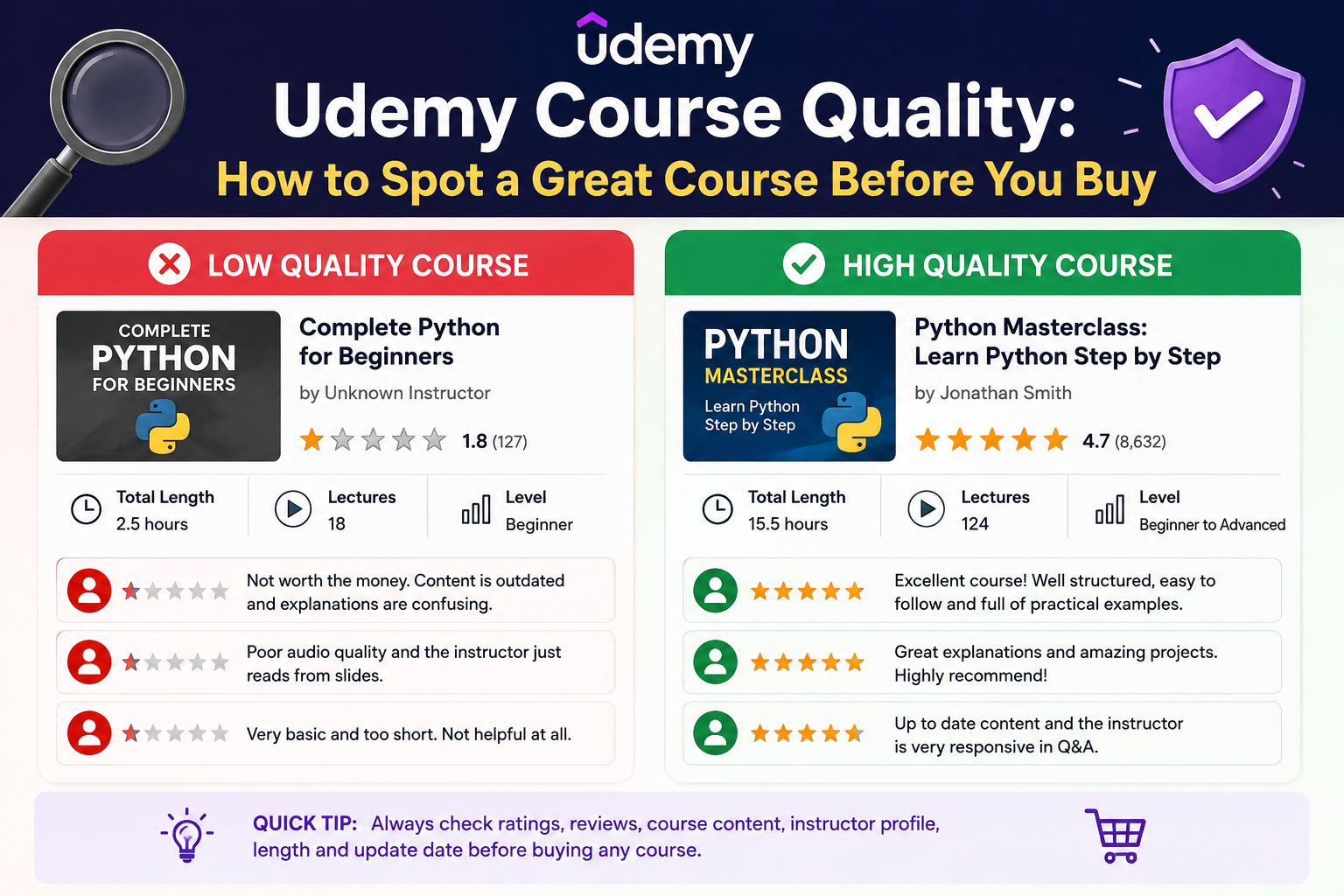
Choosing an online course should be as thoughtful as choosing a college class or a professional certification. With more than 250,000 courses and over 80 million learners internationally, Udemy has become one of the largest online learning marketplaces, covering everything from programming and artificial intelligence to photography, finance, language learning, and personal development. However, the sheer number of options means that Udemy course quality can vary widely. Some courses are taught by industry leaders with years of practical experience, while others may be outdated, poorly structured, or lacking relevant projects.
Before spending your money, even during Udemy’s frequent sales, it pays to know what separates an excellent course from an average one. By evaluating the instructor, curriculum, reviews, update history, and learning resources, you can make a smarter purchase and ensure the course genuinely helps you achieve your goals.
Why Udemy Course Quality Varies So Much
Unlike classic educational institutions that follow a standardized curriculum, Udemy operates as an open marketplace where instructors from around the world can publish courses. This range is one of its biggest strengths because learners can access niche topics taught by real professionals. At the same time, it also means that course quality isn’t uniform.
Some instructors have many years of industry experience and consistently update their content to reflect changing technologies and best practices. Others may create a course once and leave it untouched for years. That’s why buyers should never assume every highly rated course offers the same learning experience. Understanding what adds to a course quality helps you separate genuinely valuable courses from those that simply look appealing on the surface.
Start with the Instructor, Not the Star Rating
Most buyers immediately check the course rating, but experienced learners usually start with the instructor profile.
Take a few minutes to understand who is teaching the course.
- Does the instructor actively work in the field?
- Have they built products, managed projects, or consulted for companies?
Their real-world experience often translates into practical lessons that go beyond textbook explanations.
Also check the instructor’s overall teaching history on Udemy.
- Look at the number of students they’ve taught, the average rating across all their courses, and whether they consistently receive positive feedback.
An instructor who has successfully taught thousands of learners across multiple courses is generally a safer choice than someone with only one newly published course and limited reviews.
Read Reviews Like A Researcher
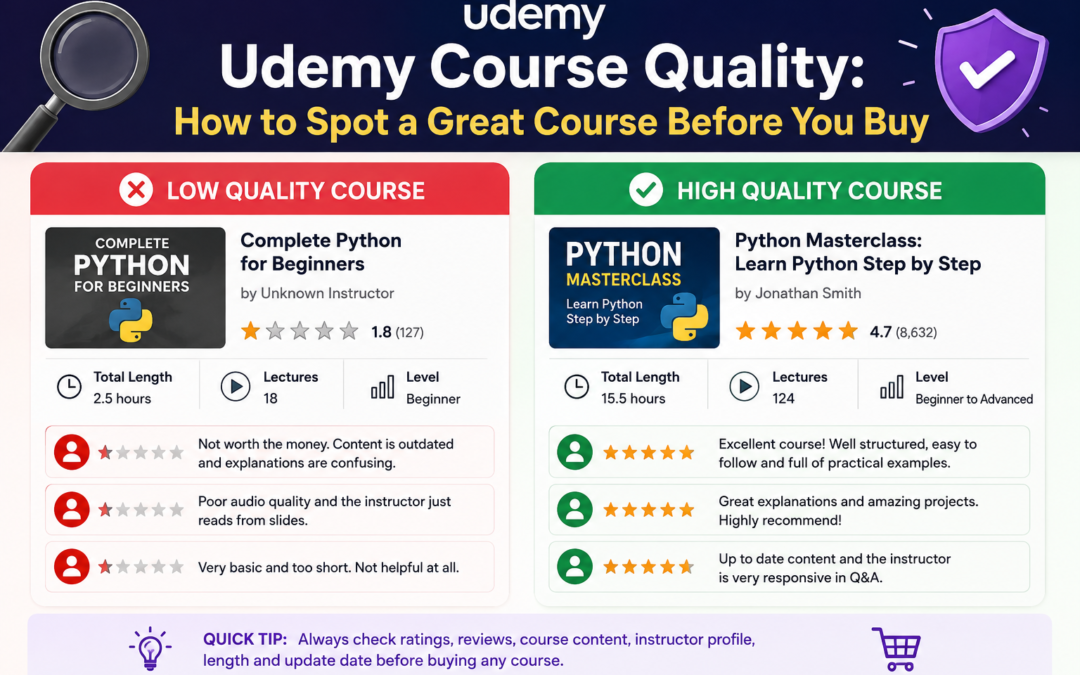
A 4.8-star rating may look impressive, but it doesn’t tell the complete story. Instead of relying only on the average rating, spend a few minutes reading recent student reviews.
- Look for comments about teaching clarity, practical exercises, audio quality, and whether the course helped learners solve real problems.
- Three- and four-star reviews are often the most informative because they usually explain both strengths and weaknesses rather than offering only praise or criticism.
If multiple learners mention outdated lessons, poor explanations, or missing resources, consider those warning signs even if the overall rating remains high.
| What To Evaluate | Why It Matters |
|---|---|
| Instructor experience | Indicates practical industry knowledge |
| Recent student reviews | Reflect the current course quality |
| Last updated date | Ensures content is relevant |
| Course curriculum | Shows learning depth and structure |
| Projects and assignments | Helps build practical skills |
| Q&A activity | Demonstrates instructor engagement |
Review the Curriculum Before Purchasing
A well-designed curriculum tells a story. It begins with fundamentals, gradually introduces more advanced concepts, and finishes with projects or case examples that reinforce learning.
Avoid buying courses simply because they advertise dozens of hours of content. A concise, well-organized 12-hour course often provides more value than a 40-hour course filled with repetitive explanations.
While you review the curriculum, ask yourself whether the lessons follow a logical sequence and check if the course includes quizzes, assignments, downloadable resources, or practical exercises. These items indicate that the instructor has designed the course for learning rather than simply recording lectures.
Preview Lessons Reveal the Real Teaching Style
One of the most overlooked features on Udemy is the preview lecture.
Watching just a few preview videos can tell you far more than a star rating. Pay attention to the instructor’s communication technique, audio quality, pacing, screen recordings, and ability to explain difficult concepts in simple language.
Everyone learns differently. Some people prefer detailed explanations, while others enjoy fast-paced demonstrations. Preview lessons help you determine whether the instructor’s teaching style fits your study preferences before making a purchase.
Always Check When the Course Was Last Updated
Technology evolves quickly, especially in fields such as artificial intelligence, programming, cybersecurity, digital marketing, and cloud computing.
One of the strongest indicators of Udemy course quality is how recently the course has been updated.
- A Python course created five years ago without updates may no longer cover the latest libraries, while an SEO course from 2023 might already miss major algorithm changes.
That doesn’t mean older courses have no value.
- Subjects like communication, leadership, photography basics, or productivity often remain relevant for years.
- The key is ensuring the update frequency matches the pace of change within the subject.
Look Beyond Course Length
Many buyers assume longer courses automatically provide better value. In reality, course length should never be the deciding factor.
Instead, focus on whether the course includes practical learning opportunities. The best courses typically combine video lessons with real-world projects, downloadable templates, coding exercises, worksheets, quizzes, and case studies.
These resources encourage active learning instead of passive watching. By completing projects, learners gain confidence and build a portfolio they can use professionally, making the course far more valuable than one consisting only of lengthy video lectures.
Compare Similar Courses Before Making a Decision
One of the smartest ways to improve your chances of finding a great course is to compare at least three options before purchasing.
- Rather than choosing the first course that appears in search results, compare the instructors, curriculum, update history, projects, student reviews, and course outcomes.
- You may discover that a slightly lower-rated course offers better practical exercises or more comprehensive coverage.
- Taking just ten minutes to compare similar courses is able to significantly improve your study journey and help you invest in content that actually delivers long-term value.
Red Flags That Should Make You Think Twice
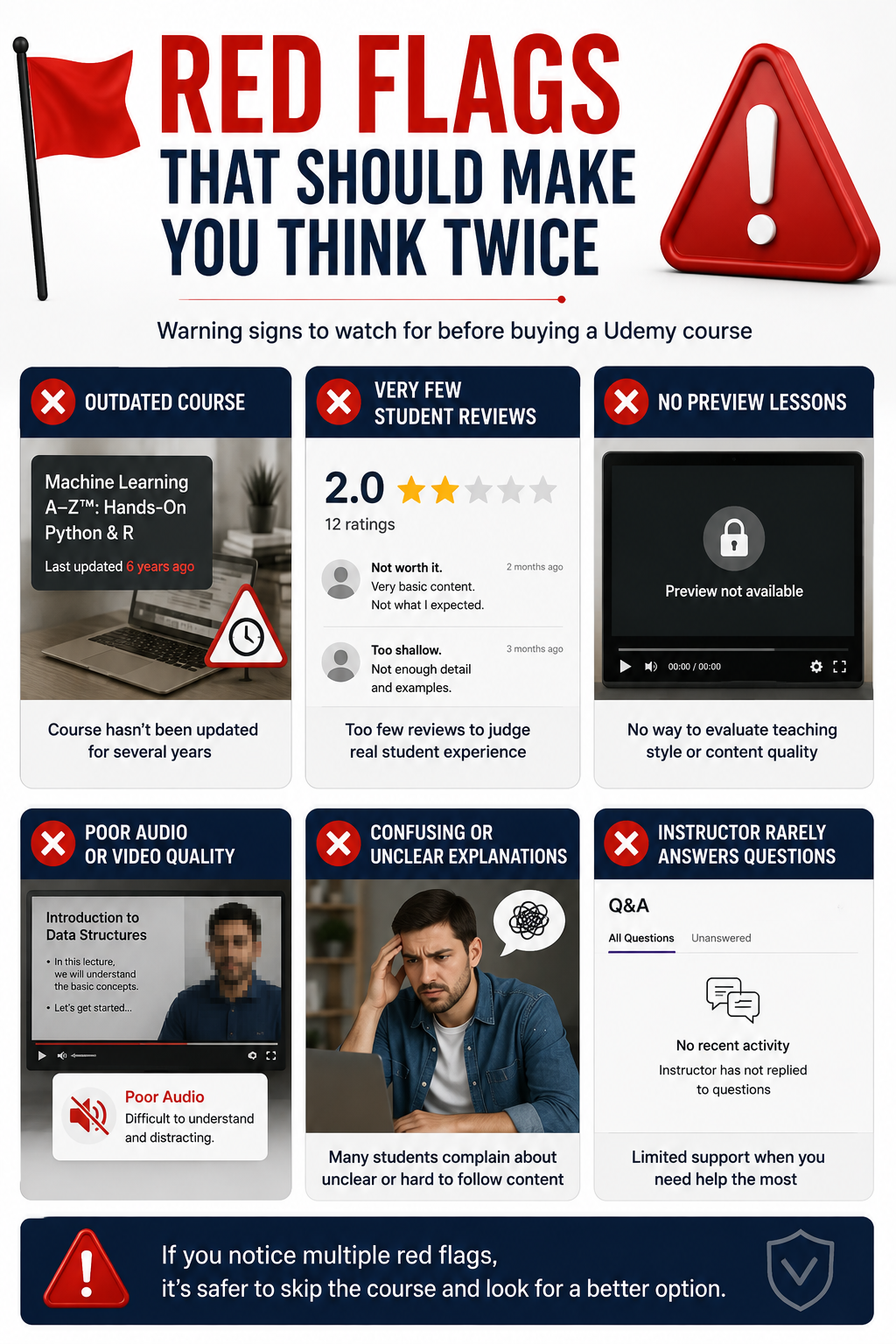
Certain warning signs often indicate that a course may not meet your expectations.
Be cautious if the course hasn’t been updated for several years in a rapidly changing field, contains very few genuine student reviews, lacks preview lessons, or has recurring complaints about poor audio or confusing explanations. Similarly, if the instructor rarely answers questions in the discussion section, you may receive limited support when you face difficulties.
Spotting these red flags before purchasing can save both time and money while helping you avoid disappointing learning experiences.
Final Thoughts
Choosing the right online course requires more than looking at the price or overall rating. The best way to evaluate Udemy course quality is by considering multiple factors together, including instructor expertise, course structure, recent reviews, update history, practical projects, and learner support.
A handful of extra minutes of research before purchasing can make the difference between completing a course with valuable, job-ready skills and abandoning one that fails to meet expectations. Whether you’re learning for career advancement, certification preparation, or self-improvement, selecting the right course is the first step toward successful online learning.
Frequently Asked Questions
1. How can I tell if a Udemy course is worth buying?
Review the instructor’s credentials, recent student reviews, course curriculum, update history, preview lessons, and the availability of projects or practical assignments before making your decision.
2. Are highly rated Udemy courses always the best?
Not necessarily. While ratings are helpful, they should be considered alongside the number of reviews, course updates, instructor experience, and student feedback about learning outcomes.
3. Why is the course update date important?
For quickly evolving subjects like AI, programming, digital marketing, and cybersecurity, regular updates guarantee the content stays accurate and aligned with prevailing industry practices.
Also Read: How to Choose the Right Hair Care Devices for Your Hair Type