
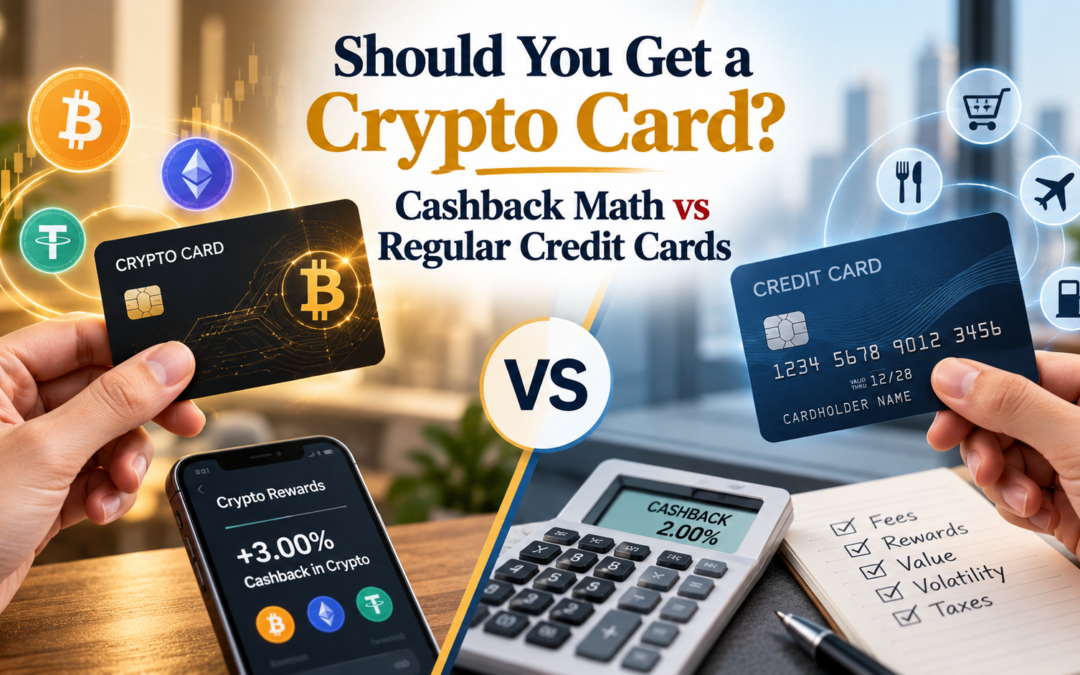
Should You Get a Crypto Card? Cashback Math vs Regular Credit Cards
Credit card rewards are big business. According to the Consumer Financial Protection Bureau (CFPB), consumers earned more than $40 billion in rewards from major general-purpose credit cards in 2022. Now, crypto-linked cards offer another way to earn on everyday spending, promising rewards in Bitcoin, Ethereum, stablecoins or other digital assets instead of conventional cashback. But a headline reward rate of 3% or 4% does not automatically make a Crypto card the better choice. Some products are genuine credit cards, while others are debit or prepaid cards funded from an existing balance.
That distinction affects borrowing costs, spending flexibility and how you access your money. The real question is how much value you keep after fees, reward conditions, price fluctuations and taxes, not simply how much cryptocurrency appears in your account.
Understand What You Are Actually Getting
Before comparing rewards, identify the type of card you’re considering.
A crypto rewards credit card works much like a traditional credit card: you borrow against a credit limit, receive a statement and repay the balance. The difference is that your rewards arrive in cryptocurrency rather than cash or points.
A crypto debit or prepaid card works differently. It uses money or digital assets already available in your account or wallet. Some cards convert cryptocurrency when you make a purchase; others spend stablecoins or let you pay through a linked balance.
This distinction matters. A genuine credit card may help build credit history when used responsibly, while a prepaid card generally does not function as a revolving credit account. A crypto-backed credit product can introduce another risk: borrowing against collateral that may fall in value.
Compare the Cashback Math, Not Just the Advertised Rate

Let’s compare two hypothetical cards using $2,000 in monthly spending. Assume a regular credit card offers 2% cashback, while a crypto card advertises 3% in digital-asset rewards.
| Calculation | Regular credit card | Crypto card |
|---|---|---|
| Monthly spending | $2,000 | $2,000 |
| Advertised reward rate | 2% | 3% |
| Monthly rewards earned | $40 | $60 |
| Annual rewards before costs | $480 | $720 |
| Illustrative annual card or membership fee | $0 | $120 |
| Net annual rewards before other costs | $480 | $600 |
In this example, the crypto card finishes $120 ahead annually, assuming you qualify for the full reward rate and the reward value remains unchanged.
But suppose the crypto card requires a $20 monthly subscription instead. That is $240 per year, reducing its net rewards to $480, exactly the same as the regular card before considering volatility or other charges.
This is why a Crypto card should be evaluated using the reward rate you can realistically earn, not the maximum rate shown in an advertisement.
Account for Fees, Caps and Conditions
Some cards offer their best rewards only when you hold a minimum balance, subscribe to a paid tier, stake a token or meet monthly spending requirements. Others limit how much spending qualifies for bonus rewards.
Check these details before applying:
- Annual or subscription fees: Calculate the full cost over 12 months.
- Reward caps: A higher rate may apply only to selected categories or limited spending.
- Foreign transaction fees: These can reduce rewards when travelling or shopping internationally.
- Conversion and withdrawal fees: Moving crypto or converting it into cash may cost money.
- Token requirements: Holding an issuer’s token to unlock rewards exposes you to its price movements.
Compare the terms against your actual spending habits. A card with a lower headline rate but straightforward, unrestricted rewards may deliver more value than a complicated premium option.
Remember That Crypto Rewards Can Lose Value

Traditional cashback is generally denominated in a fixed currency. If your card credits $20 in cashback, that $20 does not fluctuate with a cryptocurrency market price.
Crypto rewards are different. Suppose you earn $60 worth of Bitcoin in a month. If Bitcoin’s market price falls by 20% before you sell, the reward would be worth approximately $48, assuming the entire holding moves with the market and excluding fees. If its price rises, the value could increase instead.
Stablecoin rewards may reduce exposure to typical cryptocurrency price swings, but they are not risk-free. Their value depends on the asset’s design, backing, redemption arrangements and issuer or platform reliability.
Also consider custody. If rewards remain on an exchange or with a card provider, you depend on that platform’s security and withdrawal policies. If you transfer them to your own wallet, you take responsibility for protecting your keys.
Do Not Ignore Interest and Taxes
Rewards can quickly become irrelevant if you carry a credit card balance. For example, $60 in monthly rewards is not a good deal if interest charges and fees cost more than the benefit. The CFPB explains that many issuers calculate interest daily and that paying the statement balance in full can help avoid purchase interest when the card’s grace-period conditions are met.
Tax treatment is another consideration. Rules vary by jurisdiction. In the United States, digital assets are generally treated as property for federal tax purposes, and selling or exchanging them can create a reportable gain or loss. Keep records of reward amounts, dates, values and later disposals, and consult current local tax guidance.
Who Should Choose Each Card?
A traditional cashback card may be the better fit if you want predictable rewards, simple redemption and minimal exposure to digital assets. It is particularly attractive when there is no annual fee, and the reward rate matches your everyday purchases.
A crypto card may suit people who already understand digital assets, want to accumulate them gradually and are comfortable with price volatility, platform risk and recordkeeping. It makes less sense if you need every dollar of your rewards for near-term expenses or would need to pay a costly subscription to unlock the advertised rate.
The Verdict
A Crypto card can be worthwhile, but only when its rewards survive the maths. Compare net annual value, read the conditions, understand whether you are using credit or prepaid funds, and account for price and tax risks. If simplicity and predictable value matter most, a regular cashback card is often the easier choice. If you already use cryptocurrency and are comfortable with the trade-offs, a well-chosen crypto rewards card can be a useful addition to your wallet.
FAQs
1. Is a crypto card better than a regular credit card?
Not automatically. It depends on the effective reward rate, fees, eligibility conditions, risk tolerance and whether the card provides genuine credit or prepaid spending.
2. Can crypto cashback lose value?
Yes. If rewards are paid in a volatile cryptocurrency, their market value can fall after you receive them. Stablecoins can be less volatile but still carry risks.
3. Do crypto cards charge annual fees?
Some have no annual fee, while others require paid memberships, token holdings or staking. Review the current terms for your region before applying.
Also Read: Airwallex Review: Best Business Account for International Payments?