
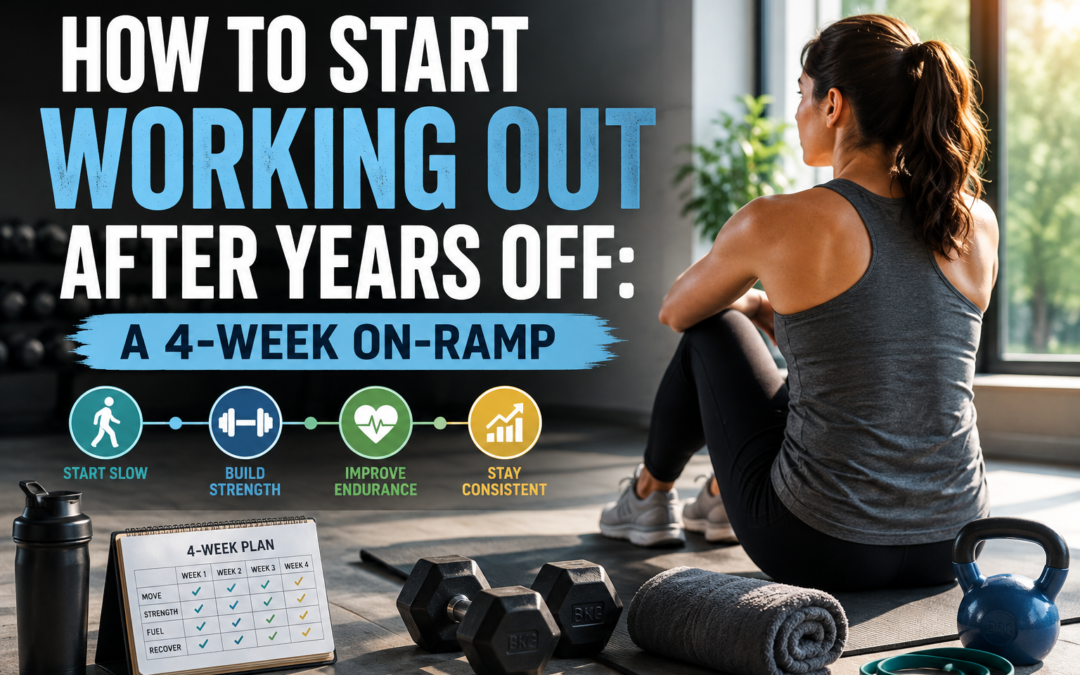
How to Start Working Out After Years Off: A 4-Week On-Ramp
by parth@bidkinetic.com | Aug 24, 2026 | LifeStyle
How to start working out after years off is less about finding the hardest workout and more about giving your body enough time to rebuild its tolerance for movement. If you have spent several years mostly inactive, jumping straight into five gym sessions a week can leave you with severe soreness, irritated joints or an injury that puts you back on the couch. The CDC recommends that adults eventually work toward 150 minutes of moderate-intensity activity each week plus muscle-strengthening activity on at least two days, but it also emphasizes that some activity is better than none and that people should build up gradually.
Wondering how to start working out after years off? Explore this helpful guide and start your routine today. The four-week plan below is designed as an on-ramp, not a fitness challenge. The goal is to finish the month feeling capable of doing more, not exhausted from trying to do everything immediately.
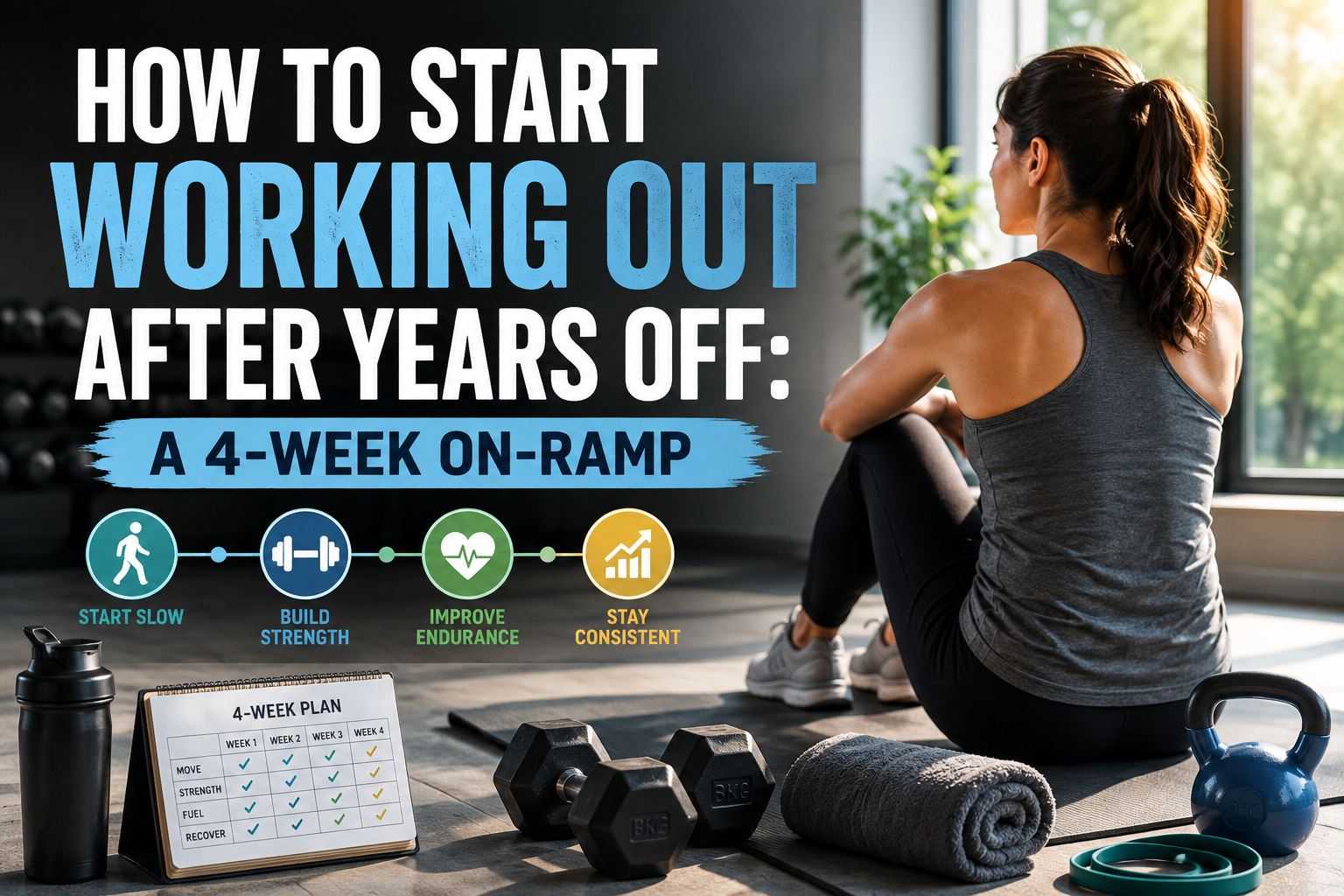
Before You Start: Don’t Train at Your Old Fitness Level
Your previous ability is useful for motivation, but it is not a good guide for your first week back.
If you used to run 5K, squat heavy weights or play competitive sports, your cardiovascular fitness and movement skills may return faster than your tendons, joints and muscles can tolerate increased training.
Start with movements you can perform comfortably and leave several repetitions “in the tank.” During the first two weeks, finishing a workout feeling like you could have done more is a good sign.
If you have been inactive and are wondering how to start working out after years off, particularly if you have a chronic condition or disability, the CDC recommends discussing the appropriate activity level with a healthcare professional.
Your 4-Week Return-to-Exercise Plan
Here’s your routine on how to start working out after years off:
| Week | Cardio | Strength | Main Goal |
|---|---|---|---|
| Week 1 | 3 × 20-minute easy walks | 2 × 20-25 minutes | Reintroduce movement |
| Week 2 | 3 × 25-minute walks | 2 × 25-30 minutes | Build consistency |
| Week 3 | 3 × 30-minute walks + 1 optional easy session | 3 × 30 minutes | Increase workload carefully |
| Week 4 | 4 × 30-minute moderate sessions | 3 × 30-40 minutes | Establish a sustainable routine |
Week 1: Make Exercise Feel Normal Again
Don’t worry about calories burned or how much weight you can lift.
- Monday: 20-minute easy walk
- Tuesday: Strength workout
- Wednesday: Rest or 10-15-minute relaxed walk
- Thursday: 20-minute easy walk
- Friday: Strength workout
- Saturday: 20-minute walk
- Sunday: Rest
For strength, perform one set of 8-12 repetitions of:
- Chair or bodyweight squats
- Wall or incline push-ups
- Glute bridges
- Resistance-band rows
- Standing calf raises
- Dead bugs or another comfortable core exercise
Keep the resistance light enough that your technique remains controlled. The CDC recommends 8-12 repetitions as a useful starting range for strengthening exercises.
Week 2: Add Time, Not Intensity
Your body has now had a week to adjust.
Increase walks to around 25 minutes and repeat the same basic strength movements. If you completed Week 1 comfortably, you can add a second set to two or three exercises rather than increasing the weight substantially.
A useful test is the talk test: during moderate activity, breathing should be noticeably harder, but you should still be able to speak in short sentences.
Don’t turn every walk into a race.
Week 3: Introduce a Real Training Rhythm
This is where your routine starts resembling regular exercise.
Try:
- Monday: Strength
- Tuesday: 30-minute brisk walk
- Wednesday: Strength
- Thursday: Rest or easy movement
- Friday: Strength
- Saturday: 30-minute walk
- Sunday: 30-minute easy walk
You can introduce slightly more resistance during strength sessions if the previous week’s sets felt controlled. Increase one variable at a time: either repetitions, resistance or total sets.
Do not simultaneously increase weight, workout duration and training frequency.
Week 4: Build the Habit You Can Keep
By Week 4, the objective isn’t to prove that you’re fit again. It’s to establish a schedule you can continue for the next three months.
- Use three strength sessions and three to four moderate cardio sessions, with at least one easier day between harder sessions when needed.
- You can also introduce short intervals during walking, for example, 2 minutes brisk + 3 minutes easy, repeated several times. There is no need to begin running yet.
- The official target of 150 minutes of moderate activity is a longer-term destination, not a requirement you must hit during your first week back.
How Hard Should Your First Workouts Feel?
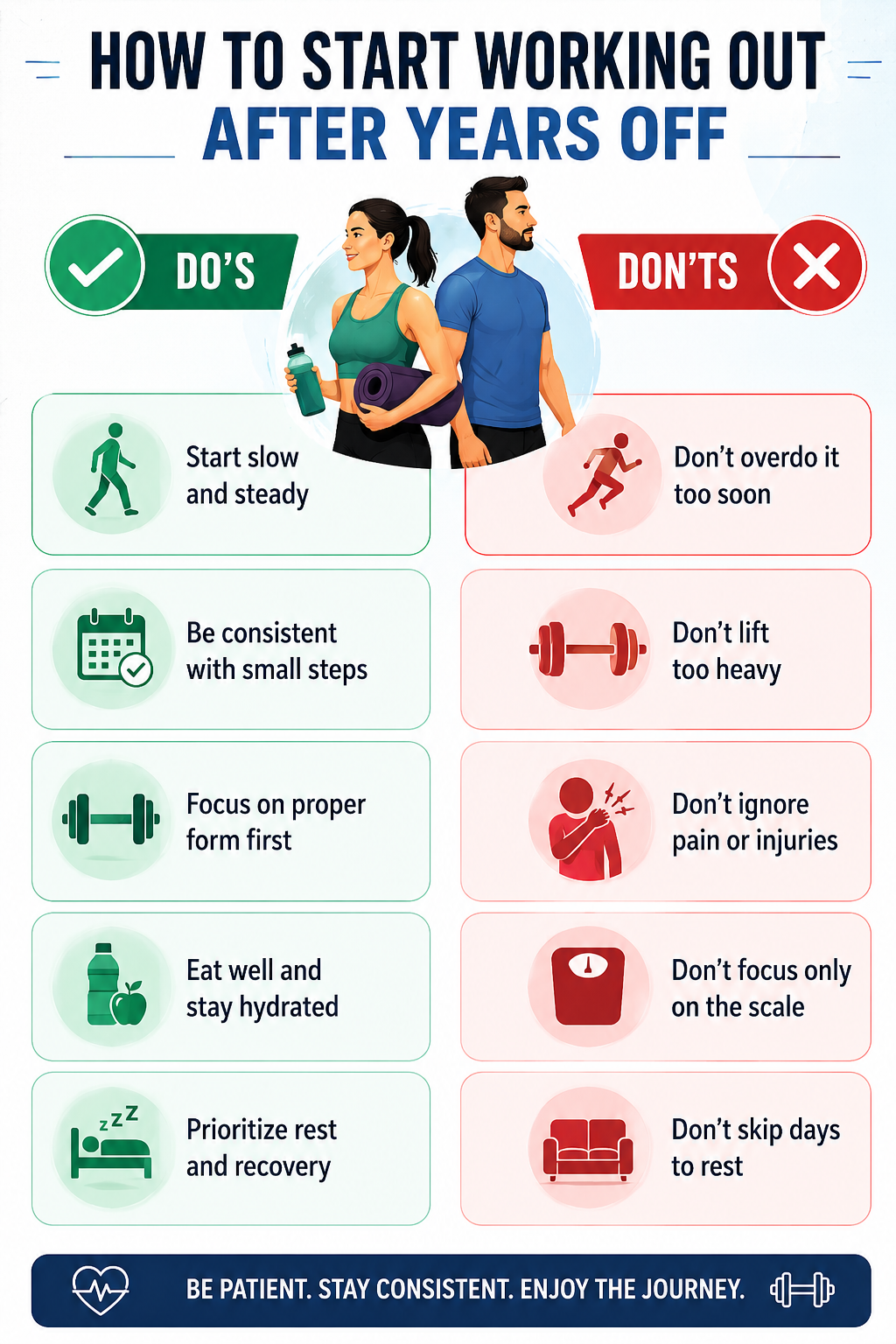
A simple effort scale can prevent the most common mistake: doing too much because you feel motivated.
Aim for approximately 5-6 out of 10 effort during most sessions in the first two weeks. You should finish feeling worked, not destroyed.
Normal early-stage soreness can happen when muscles experience unfamiliar work. Persistent joint pain, sharp pain, chest discomfort, fainting, unusual shortness of breath or other concerning symptoms are different and should not be treated as something to “push through.”
Diet: Don’t Try to Fix Years of Inactivity in One Week
Exercise and food need to work together, but returning to the gym is not the right time for an extreme diet.
Build meals around four things:
- Protein: Eggs, Greek yogurt, chicken, fish, lean meat, tofu, beans or lentils.
- Carbohydrates: Rice, potatoes, oats, whole-grain bread, fruit and other minimally processed carbohydrate sources can provide useful training fuel.
- Vegetables and fruit: Aim for variety rather than obsessing over individual “superfoods.”
- Healthy fats: Nuts, seeds, avocado and olive oil can help round out meals.
If you exercise in the morning, you don’t necessarily need a large meal beforehand. A banana with yogurt, toast with eggs or oatmeal can be enough for an easier session. For longer or harder workouts, a meal containing carbohydrates and protein a few hours beforehand may be more comfortable.
Hydration matters too. Don’t wait until you’re extremely thirsty to start drinking, particularly when exercising in hot weather.
Nutrition strategies that support training should consider the type, amount and timing of food and fluids, according to the joint position of the Academy of Nutrition and Dietetics, Dietitians of Canada and the American College of Sports Medicine.
The Recovery Rule That Makes the Plan Work
Your workout is the stress. Recovery is when your body adapts to it.
For the first month, prioritize sleep, regular meals and rest days rather than trying to compensate for missed workouts.
If your legs are extremely sore after Tuesday’s workout, Wednesday does not have to become another hard training session. An easy walk can be more useful than forcing another demanding workout.
The CDC also recommends gradually increasing muscle-strengthening activity over time rather than starting at a high level immediately.
What to Do After the Four Weeks
If you complete the month without persistent pain or excessive fatigue, you can gradually move toward the standard adult target of 150 minutes of moderate aerobic activity and at least two strength sessions each week.
From there, choose a routine based on your actual life. Three 40-minute gym sessions that you consistently attend are more useful than an ambitious six-day program that lasts two weeks.
The most important part of how to start working out after years off is understanding that your first month is about rebuilding capacity and consistency. You don’t need your old fitness back immediately. You need a routine your body can tolerate and a schedule you genuinely want to repeat next week.
FAQs on How to Start Working Out After Years Off
1. How often should I work out after years of being inactive?
Start with 3-5 days of light-to-moderate movement, including two strength sessions during the first week. You don’t need to exercise intensely every day. Gradually increase duration, resistance and frequency as your body adapts.
2. Should I start with cardio or strength training?
Ideally, use both. Walking or another low-impact cardio activity rebuilds cardiovascular fitness, while basic resistance exercises help rebuild muscle strength. During the first week, keep both sessions relatively easy.
3. Is muscle soreness normal when returning to exercise?
Some muscle soreness is common after restarting exercise, particularly when muscles have not been trained for a long time. However, sharp pain, significant swelling or persistent joint pain isn’t something you should simply push through.