
How to Read Size Charts When Shopping International Brands
Ordering clothes from an international brand can be exciting until you reach the size selector. A familiar M might fit perfectly in one store but feel tight in another. A UK 10, US 6 and EU 38 may appear to describe similar clothing sizes, yet they are not universally interchangeable across brands or garment types. That is why learning how to read size charts is more useful than memorising your usual size.
The reason is that clothing sizes are not based on one globally uniform measurement system. The International Organization for Standardization (ISO) publishes standards for defining body measurements and developing clothing size tables, but brands still make sizing decisions around their target customers, designs and intended fit. ISO 8559-3, for example, explains how body measurement data and measurement intervals are used to develop sizing tables.
When shopping across the US, UK, European and Asian markets, the right approach is to compare actual measurements, understand what each chart measures and account for the way a garment is designed to fit.
1. Start With Measurements, Not Your Usual Size
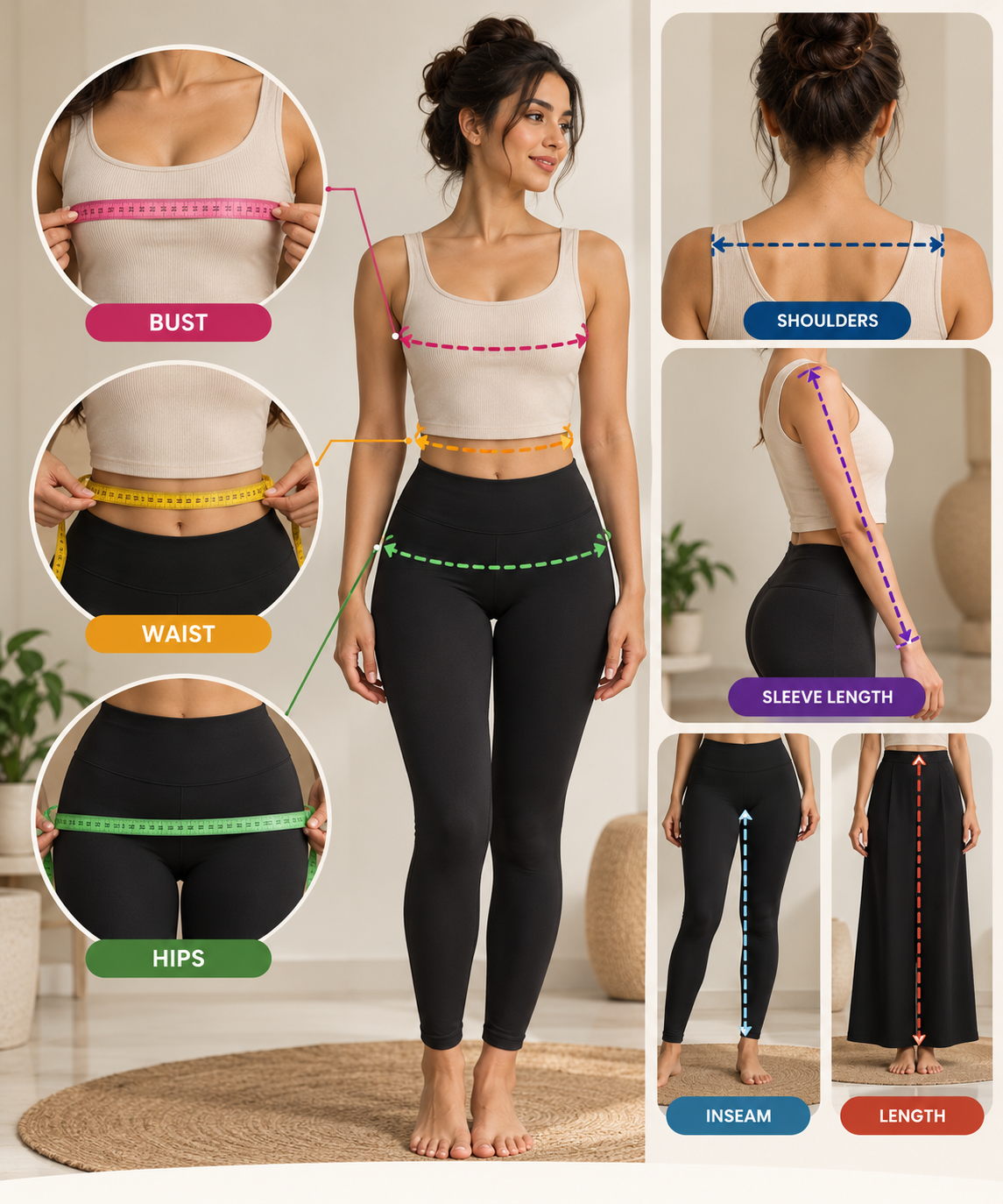
Before choosing a size, take your body measurements with a flexible measuring tape. Measure over light clothing, keep the tape comfortably snug and avoid pulling it tight enough to compress your body.
For most clothing, these measurements are a practical starting point:
- Bust or chest: Measure around the fullest part of your chest, keeping the tape level.
- Waist: Measure around your natural waist, usually the narrowest part of your torso.
- Hips: Measure around the fullest part of your hips and seat.
- Inseam: Measure from the crotch to the desired trouser hem.
- Shoulders and sleeve length: Check these when buying shirts, jackets or structured tops.
Write your measurements in centimetres and inches if you shop from different countries. One inch equals 2.54 centimetres, so a small conversion error can affect the fit of a close-fitting garment.
Measure again occasionally, particularly if your current wardrobe fits differently or you are buying a garment with little stretch.
2. Understand Which Country’s Size System You Are Seeing
International size labels can be confusing because the same number does not mean the same thing everywhere. Use the retailer’s own chart rather than assuming a direct conversion.
The table below gives a general guide to common labels. These are examples of sizing systems, not guaranteed one-to-one equivalents.
| Market | Common women’s clothing labels | What to check |
|---|---|---|
| United States (US) | Numeric sizes such as 0, 2, 4, 6 | Brand-specific bust, waist and hip ranges |
| United Kingdom (UK) | Numeric sizes such as 4, 6, 8, 10 | The UK chart, not a US conversion |
| European Union (EU) | Numeric sizes such as 32, 34, 36, 38 | The brand’s EU measurements |
| International | XS, S, M, L, XL | Actual body measurements assigned to each label |
| Asian markets | Numeric or letter-based labels | Garment-specific measurements and fit notes |
Important: These systems do not have a universal conversion rule that works for every retailer. Even two brands using the same country sizing system may assign different measurements to the same label.
3. Check Whether the Chart Shows Body or Garment Measurements
This is one of the most important steps in understanding how to read size charts.
A body measurement chart tells you the body dimensions a size is intended to fit. A garment measurement chart gives the actual dimensions of the finished item.
For example, a shirt designed for a 96 cm chest may measure more than 96 cm across its full circumference because it needs room for movement and comfort. That additional space is often called ease.
Do not compare your body measurement directly with a garment measurement without checking what the chart represents. If a product page lists the garment’s chest width measured flat, remember that the full circumference is approximately twice that width.
Also look for instructions such as “measure from shoulder to hem” or “waist measured flat.” These details tell you how the retailer obtained the numbers.
4. Choose a Size Based on the Garment Type
Your measurements may remain the same, but the best size can change depending on what you are buying. A fitted blazer, oversized T-shirt and stretch dress are designed to sit differently on the body.
Use these guidelines when comparing products:
- Tops and shirts: Prioritise bust or chest, shoulder width and sleeve length. For fitted shirts, shoulder measurements can be especially important.
- Jeans and trousers: Check waist, hips, rise and inseam. Two pairs with the same waist measurement can feel different because of their rise and cut.
- Dresses: Compare bust, waist and hip measurements, then check the length. A bodycon dress needs a different fit from an A-line dress.
- Outerwear: Allow for the clothes you plan to wear underneath. A jacket worn over a sweater may need more room than a lightweight layer.
- Shoes: Look for foot length in centimetres, width information and the retailer’s own shoe-size conversion chart.
Fabric matters, too. Stretch denim or elastane-blend clothing can offer more flexibility than rigid cotton. Satin, linen and structured woven fabrics generally behave differently from stretchy jersey, so read the product description alongside the chart.
5. What If Your Measurements Fall Between Two Sizes?
Suppose your bust corresponds to a medium, but your waist and hips fall within the large range. Do not automatically choose medium because it is your usual size.
First, identify which measurement matters most for the garment. For a fitted top, the bust and shoulders may determine comfort. For trousers, the waist, hips and rise can matter more.
Then consider the fabric and silhouette. Stretchy clothing may accommodate small differences, while structured garments usually offer less flexibility. If you prefer a relaxed fit, the larger size may work better, provided the shoulders, sleeves or length do not become excessively loose.
When the product page includes customer reviews, look for comments about fit rather than relying on ratings alone. Reviews mentioning height, body measurements and the size purchased can help you interpret the chart more confidently.
6. Common Mistakes to Avoid
The most frequent mistake is ordering the same letter size from every brand. Another is choosing a size based on height or weight alone when the chart provides more relevant measurements.
Avoid assuming that a higher price guarantees better sizing consistency. Also, do not ignore product-specific fit notes. A listing that says “oversized,” “slim fit” or “runs small” provides useful context that a standard chart cannot communicate by itself.
Ultimately, how to read size charts comes down to using measurements as evidence rather than treating size labels as fixed standards.
Final Thoughts
Shopping international brands becomes much easier when you stop relying on familiar size labels and start comparing actual measurements. Check the right dimensions, understand the difference between body and garment measurements, consider the fabric and read the fit notes.
A few minutes spent studying a size chart can help you choose clothing that fits more comfortably, reduce avoidable returns and make online shopping a more confident experience.
How to Read Size Charts: FAQs
1. Are international clothing sizes standardised?
No. International sizing systems differ, and brands can interpret their target measurements differently. Always consult the retailer’s specific chart.
2. Should I size up when shopping from Asian brands?
Not automatically. Some products may have a smaller fit, while others follow different measurement ranges. Compare your measurements with the product chart before deciding.
3. What should I do if my bust and waist fall into different sizes?
Choose based on the garment’s construction and the measurement most important for fit. Check reviews and consider whether the fabric offers stretch.
Also Read: Humble Choice Review: Is the Monthly Subscription Worth It Now?