
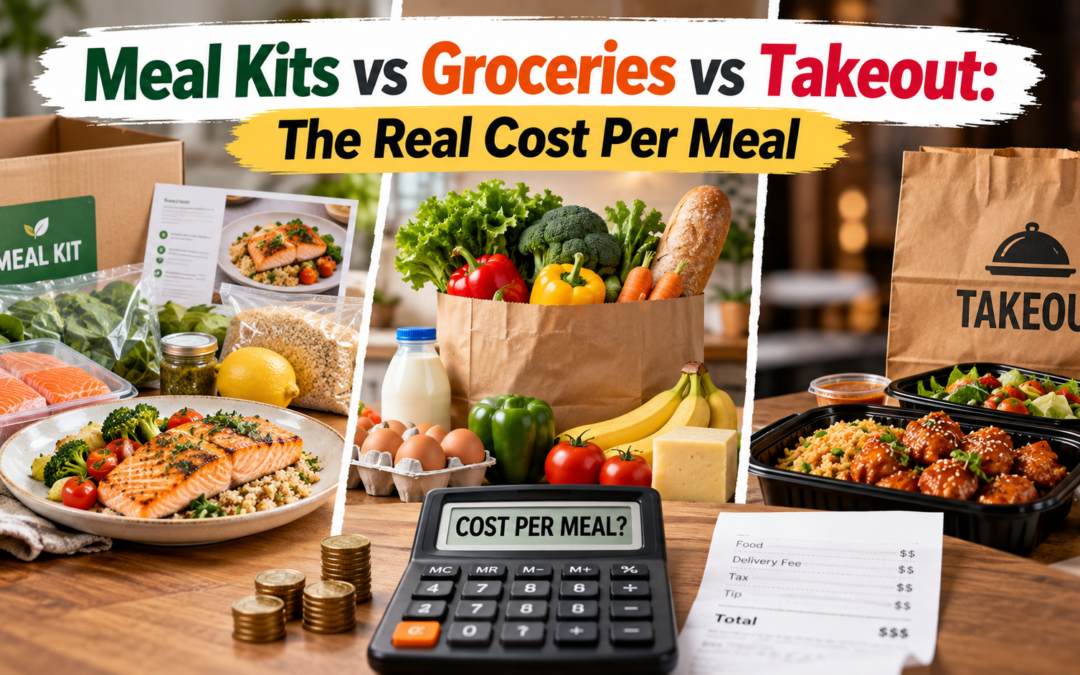
Meal Kits vs Groceries vs Takeout: The Real Cost Per Meal
by parth@bidkinetic.com | Sep 28, 2026 | LifeStyle
The price of dinner is no longer as simple as looking at a grocery receipt or restaurant menu. In 2026, U.S. food prices continue to move differently depending on where the meal comes from. Food-at-home prices were 2.2% higher in August 2026 than a year earlier, while food-away-from-home prices were up 3.4%. USDA’s September outlook expects food-at-home prices to rise about 2.4% for 2026, compared with 3.5% for food purchased away from home. That makes the meal kits vs. groceries vs. takeout debate more interesting than simply asking which option has the lowest sticker price.
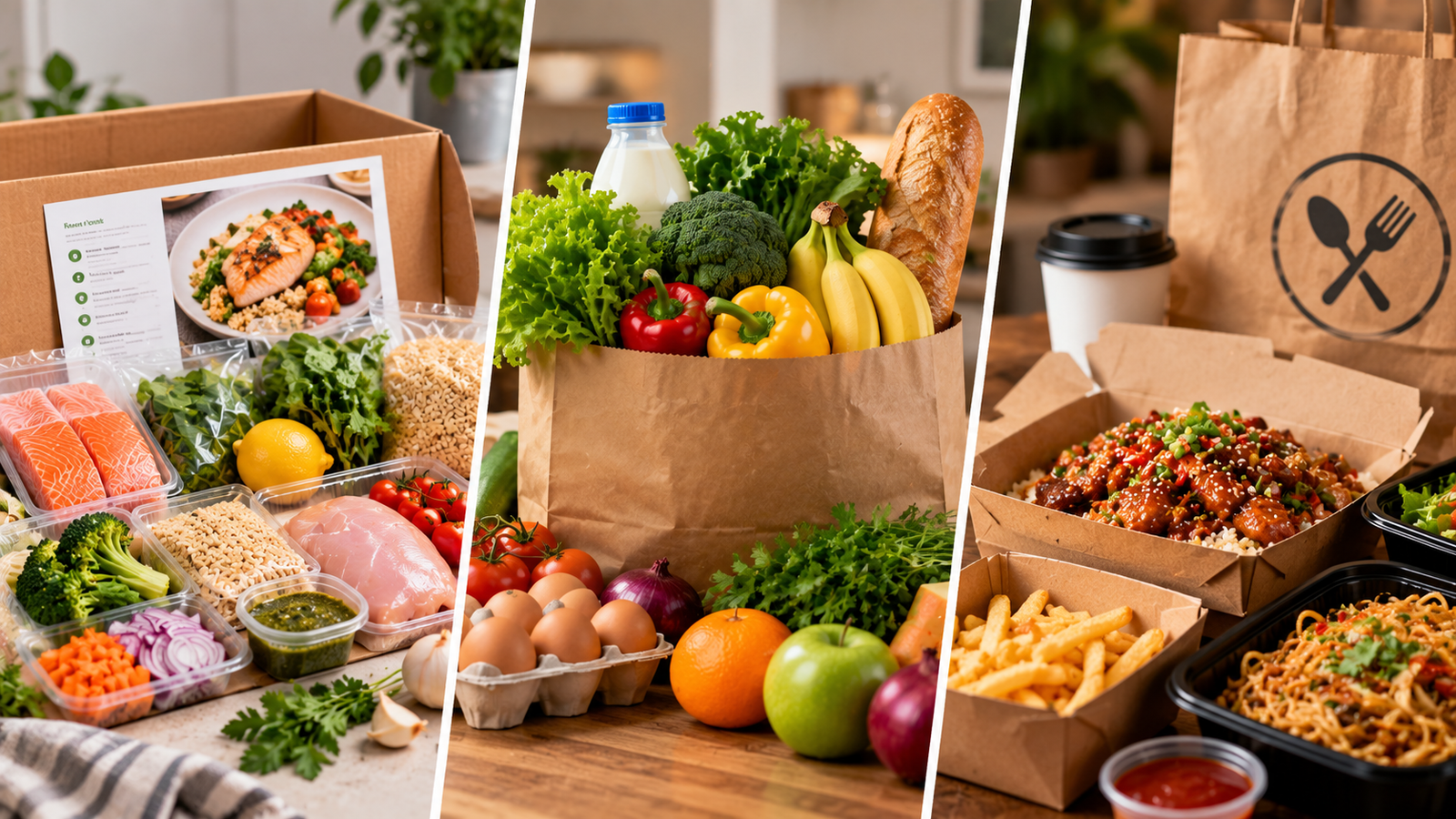
Groceries generally win on ingredient cost, meal kits charge a premium for planning and portioning, while takeout sells convenience without requiring cooking or cleanup. Recent 2026 pricing audits put meal kits around $8.74-$10.23 per serving on average, depending on the services and methodology used.
But the real comparison needs to include shipping, food waste, leftovers, preparation time, delivery fees and the number of people eating.
What Does One Meal Actually Cost?
For a practical comparison, consider a typical dinner for one adult in the U.S. These aren’t fixed national prices; grocery stores, restaurants, cities, promotions and portion sizes can change the result considerably.
| Option | Typical cost per person | Extra costs to consider | Cooking time | Waste risk |
|---|---|---|---|---|
| Groceries | $4-$10 | Pantry ingredients, unused produce | 20-60 min | Medium |
| Meal kit | $8-$13 | Shipping, premium upgrades | 15-40 min | Low–Medium |
| Pickup takeout | $12-$22 | Tax, tip in some cases | 0-5 min | Low |
| Delivery takeout | $18-$35+ | Delivery, service fees, tip | 0-5 min | Low |
A 2026 pricing study comparing hundreds of recipes found a $4.62 median ingredient cost per serving for grocery-made dinners, while mainstream meal kits commonly landed between roughly $8 and $12.49 before delivery costs.
That’s an important distinction: a $10 meal kit isn’t necessarily replacing a $5 restaurant meal. It is usually replacing a grocery-cooked meal that could cost considerably less.
Groceries: Cheapest, But Only If You Use What You Buy
Cooking from groceries usually has the lowest direct cost per serving. Buying rice, pasta, vegetables, chicken, beans, eggs and other ingredients in larger quantities can bring the cost of individual meals down substantially.
The catch is that grocery shopping works best when ingredients are used across several meals.
Suppose a recipe requires half a bell pepper, two tablespoons of cilantro and a small amount of sour cream. The checkout bill includes the full packages. If the remaining ingredients eventually go bad, the effective cost of the meal becomes higher.
This is why cost-per-serving calculations based only on recipe ingredients can be misleading.
Groceries become particularly economical when:
- Ingredients are used in multiple recipes.
- Pantry staples are already available.
- Meals produce leftovers.
- Shopping is planned around weekly promotions.
- The household has enough people to use larger packages.
Meal Kits: Paying for More Than Ingredients
Meal kits sit between grocery shopping and takeout. The ingredients are portioned, recipes are selected, and the shopping process is largely removed.
That convenience has a measurable price.
- Current 2026 audits put average meal-kit pricing around $8.74 to $10.23 per serving, with cheaper plans falling below that and premium services reaching considerably higher.
- Shipping can push the effective cost upward.
The biggest financial advantage isn’t necessarily the ingredients. It’s waste and decision-making.
- A meal kit can make sense when a household regularly buys groceries for recipes but throws away unused ingredients.
- It can also replace restaurant orders on busy evenings without eliminating cooking altogether.
The downside is that meal kits aren’t automatically economical. Ordering small boxes, choosing premium proteins or paying significant shipping charges can erase much of the value.
Takeout: The Convenience Premium Is Real
Takeout is where the calculation changes most dramatically.
A $14 restaurant entrée might initially look competitive with a $10-$12 meal kit. But the final amount can change after tax, service charges, delivery fees and tips.
Pickup is therefore substantially different from delivery.
For example:
- Restaurant meal: $15
- Tax: $1.50
- Service/delivery charges: $4
- Tip: $3
The final cost becomes $23.50, not $15.
That doesn’t make takeout a bad value. The restaurant is providing cooking, ingredients, equipment, labor and cleanup. The question is whether that convenience is worth the premium for a particular meal.
The Cost Per Meal Changes With Household Size
This is where the meal kits vs groceries vs takeout comparison gets more complicated.
For a family of four, grocery cooking can become extremely economical because one preparation can feed everyone. A meal kit can also work well if its pricing is based on four servings.
Takeout becomes much more expensive when every family member needs a separate entrée.
For one person, however, groceries can be less efficient. Buying an entire package of spinach, a dozen eggs or a large bag of vegetables for one meal creates a greater risk of leftovers and waste.
That means the cheapest option on paper isn’t always the cheapest option for a specific household.
Time Has a Cost Too
Ingredient price isn’t the only thing worth calculating.
A grocery meal may require planning, shopping, storing ingredients, preparing food, cooking, and cleaning.
A meal kit eliminates much of the planning and shopping. Takeout eliminates almost all of the work.
For someone earning $30 an hour, spending 90 minutes shopping, preparing, and cleaning has an opportunity cost of roughly $45. That doesn’t mean the meal literally costs $45 more, but it explains why a higher-priced option can still feel financially reasonable.
Which One Makes Sense?
The meal kits vs groceries vs takeout calculation depends heavily on what is being optimized.
- Choose groceries when minimizing food cost is the priority and ingredients can be used efficiently.
- Choose meal kits when saving planning time, controlling portions and reducing unused ingredients matter more than getting the absolute lowest ingredient price.
- Choose pickup takeout when convenience matters but delivery fees can be avoided.
- Choose delivery takeout when time is the primary concern and the additional fees are acceptable.
The Bottom Line
The meal kits vs groceries vs takeout comparison doesn’t have one universal winner. Groceries usually offer the lowest ingredient cost, meal kits charge extra for convenience and portion control, while takeout commands the highest premium for a ready-to-eat meal.
The smarter calculation is not simply “What is cheapest?” It is “What does this meal actually cost after waste, fees, time and leftovers are included?”
For regular home cooks, groceries can remain difficult to beat. For busy households trying to replace restaurant orders without returning to full-scale meal planning, meal kits occupy a useful middle ground. Takeout remains the simplest option when cooking isn’t worth the time on a particular night.
FAQs
1. Are meal kits cheaper than takeout?
Often, yes, particularly compared with delivered restaurant meals. But shipping and premium meal selections can narrow the difference.
2. Are groceries always the cheapest option?
No. Groceries generally have the lowest ingredient cost, but unused ingredients and food waste can increase the effective cost per meal.
3. How should cost per meal be calculated?
Add the actual ingredients or menu price, shipping or delivery charges, applicable fees and tax. For groceries, also account for the portion of ingredients actually consumed and any significant waste.
Also Read: How to Order Delivery for Less: Fees, Timing, and Pickup Tricks