
The True Cost of Streaming in 2026: Building the Right Bundle
Understand the cost of streaming in 2026, compare subscription bundles, ad-supported plans, and premium services, and build an entertainment package that fits your budget.

Streaming was supposed to make entertainment cheaper. Cancel cable, subscribe to a few apps, and watch what you want. But as platforms raise prices, introduce advertising tiers, and reserve popular shows for exclusive subscriptions, the monthly bill can grow faster than expected. Understanding the cost of streaming in 2026 means looking beyond individual subscription prices to the combined expense of video, live sports, music, and add-ons.
Deloitte’s 2025 Digital Media Trends research found that US households subscribing to streaming video-on-demand services paid an average of $69 per month for four paid services, a 13% increase from the previous year. Its 2026 reporting also found that nearly 75% of consumers were frustrated by rising entertainment subscription prices, while around 40% had recently cut back because of financial concerns.
The problem is not that streaming offers poor value. It is that people often pay for several overlapping services without checking whether they use them enough. The smarter approach is to build a bundle around viewing habits, household preferences, and a realistic monthly budget.
Why Streaming Bills Are Getting More Expensive
A subscription that looks affordable on its own can become costly when combined with others. One service carries your favourite dramas, another has exclusive films, a third offers live sports, and another becomes necessary when a new season arrives.
Premium, ad-free plans generally cost more than entry-level subscriptions. Some platforms also charge extra for additional household members, while live sports, premium channels, and rental titles can add to the total.
According to Deloitte’s research, 47% of surveyed consumers said they paid too much for streaming services, and 41% felt the available content was not worth the price. These figures point to a value problem: subscribers are not necessarily looking for fewer entertainment options; they want to feel that their spending is justified.
What Does Streaming Cost in 2026?
The following examples illustrate how quickly subscriptions can add up. These are illustrative monthly budgets, not universal market prices. Actual prices vary by country, plan, taxes, promotions, and billing method.
| Streaming setup | Example monthly budget | Best suited for |
|---|---|---|
| One ad-supported service | $9 | Casual viewers |
| Two standard subscriptions | $30 | Couples or small households |
| Three mixed-tier services | $45 | Regular film and series watchers |
| Four paid video services | $69 | Households with varied interests |
| Four services plus live sports or premium add-ons | $90–$120+ | Sports fans and heavy viewers |
The $69 figure reflects Deloitte’s reported average for subscribing households in 2025, rather than a recommended spending target. The other figures are planning examples to help you estimate your own bill.
For a household spending $69 every month, the annual cost reaches $828. At $100 per month, entertainment subscriptions total $1,200 a year. That is enough to make a periodic subscription review worthwhile.
How to Build the Right Streaming Bundle
The best bundle is not necessarily the one with the most apps. It is the one that delivers the content you genuinely want at a price you can justify.
Start with your must-watch content.
- List the shows, films, sporting events, or programmes your household regularly follows.
- Choose one core service that covers the biggest share of those interests.
- Treat other subscriptions as optional rather than automatic.
Consider ad-supported plans.
- If you mainly watch casually, a lower-priced plan with advertisements may be sufficient.
- Deloitte reported that 54% of surveyed streaming subscribers had at least one paid ad-supported service in 2025.
- Compare the savings against the amount of advertising and any restrictions on downloads, picture quality, or simultaneous screens.
Check official bundles.
- Some providers package multiple entertainment services together for less than separate subscriptions.
- Compare the bundle’s full price with the individual plans you would actually choose.
- Avoid paying for a third service simply because it is included if nobody in your household watches it.
Rotate subscriptions strategically.
- Instead of maintaining five services all year, keep two core subscriptions and activate another when a show or sports season you care about arrives.
- Cancel or downgrade it when you finish watching.
- Check renewal dates so a temporary subscription does not become a forgotten recurring expense.
Separate video from everything else.
- Music streaming, cloud gaming, premium sports packages, and audiobook services may appear on the same payment statement, but they serve different purposes.
- Review them together when budgeting while evaluating each on its own value.
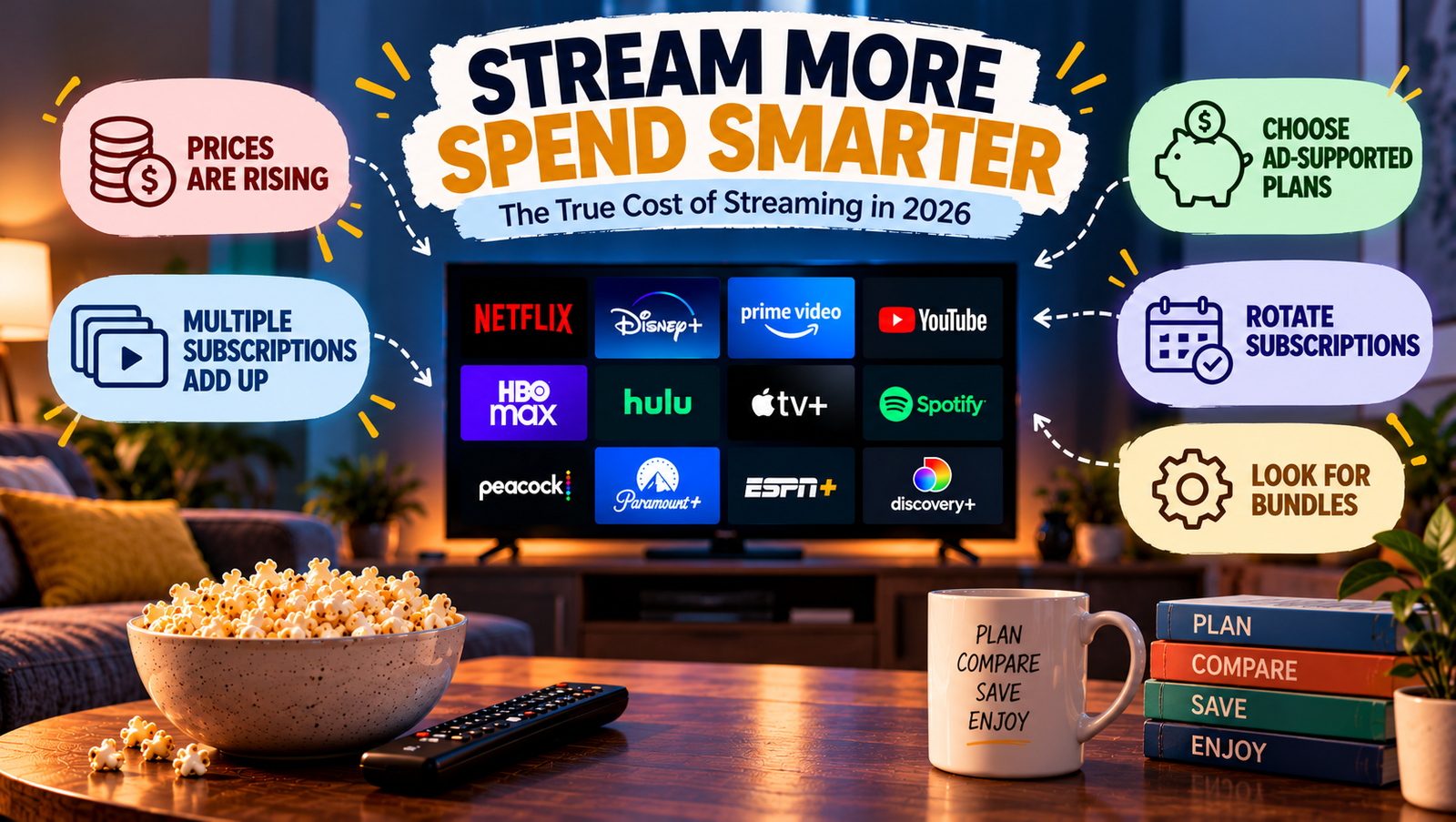
Hidden Costs Worth Checking
The advertised subscription price is only part of the equation. Taxes, extra-member charges, premium channel upgrades, and rental fees may increase the final bill. Annual plans can reduce the monthly equivalent but require a larger upfront payment and may be less flexible if your viewing habits change.
Internet access is another consideration. If you upgraded your broadband package mainly to support streaming across several devices, include that incremental cost when assessing your entertainment budget. Likewise, avoid paying for a premium video tier if your television and viewing habits do not benefit from its additional features.
To understand the true cost of streaming in 2026, review your bank or card statements for the last three months. Record every recurring charge, note the last time you used each service, and calculate both your monthly and annual totals. Then compare those totals against your actual viewing habits.
When Is a Bundle Worth It?
A bundle makes sense when it combines services you would otherwise pay for separately and offers a genuine saving. It is less attractive when the discount encourages you to keep paying for content you rarely watch.
Before signing up, compare the bundle’s regular price, not just its introductory offer, with the total cost of individual subscriptions. Check whether advertising is included, whether every service is available in your region, and what happens when a promotional period ends.
The right cost of streaming in 2026 is personal. A sports-loving household may reasonably spend more than someone who watches one series a week. What matters is choosing that amount deliberately instead of letting renewals make the decision for you.
Final Thoughts
Streaming remains a flexible way to watch entertainment, but convenience can hide a surprisingly large recurring bill. The best approach is to choose services based on real viewing habits, compare bundles carefully, and cancel anything that no longer earns its place in your budget. A smaller, well-chosen lineup can deliver more value than a long list of subscriptions.
Frequently Asked Questions
1. How much does the average household spend on streaming?
Deloitte’s 2025 research found that US households subscribing to streaming video-on-demand services spent an average of $69 per month across four paid services.
2. Are streaming bundles cheaper than separate subscriptions?
They can be, provided you use the included services. Compare regular prices and check for ads, content restrictions, and renewal terms before committing.
3. How can I reduce my streaming bill without losing my favourite shows?
Keep your essential service, rotate secondary subscriptions, consider ad-supported plans, and cancel services you rarely use.
Also Read: Kovo Credit Builder Review: How Does It Work?