
Weight Loss Apps: What Helps, What’s Noise, and What’s Harmful
Explore weight loss apps like JustFit, Verv and Slimkit. Understand useful features, misleading claims, potential risks and how to choose safely.

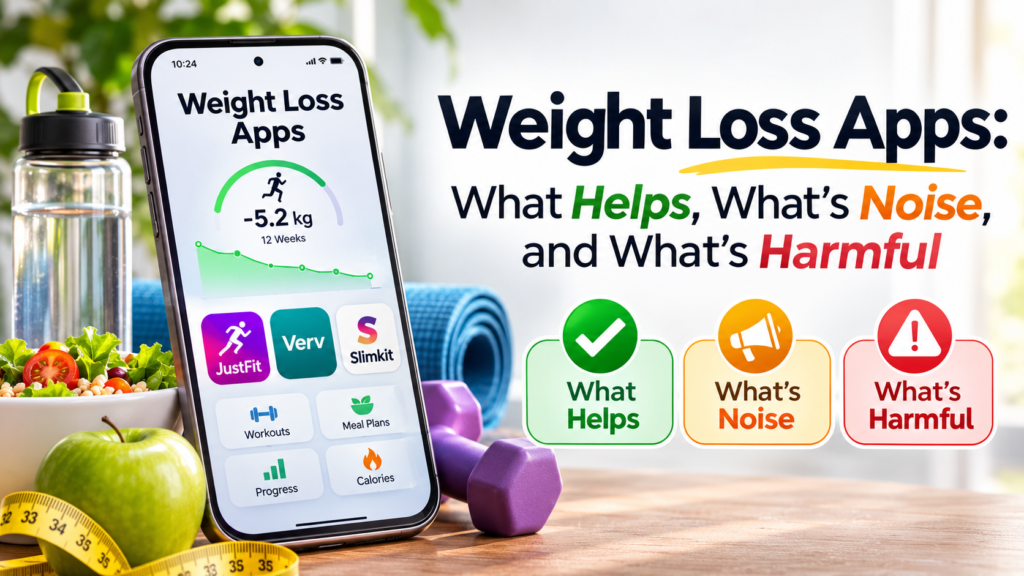
Weight loss has become one of the most popular reasons people turn to health and fitness technology. From calorie counters and personalised meal plans to home workout programmes and daily progress trackers, smartphones now offer tools that promise to make managing weight easier. The demand is understandable: according to the World Health Organization, approximately 2.5 billion adults worldwide were overweight in 2022, including more than 890 million living with obesity. As digital health becomes part of everyday life, weight loss apps are increasingly being used to monitor eating habits, encourage physical activity and build healthier routines.
But not every app delivers what its marketing promises. Some genuinely help users understand their habits and stay consistent, while others rely heavily on countdowns, unrealistic transformation claims, restrictive calorie targets and subscription pressure. Apps such as JustFit and Slimkit offer different approaches to fitness and weight management, making it important to understand what their features actually do before choosing one.
The real question is not which app promises the fastest results, but which one supports habits that are safe, realistic and sustainable.
What Actually Makes a Weight Loss App Useful?
A useful app should help users make better decisions rather than simply encourage them to check their weight every morning.
The strongest features generally include:
- Progress tracking: Monitoring activity, exercise consistency, nutrition and other meaningful habits.
- Personalised workout plans: Exercises adapted to fitness level, available time and physical limitations.
- Nutrition awareness: Helping users understand food portions, nutritional balance and eating patterns.
- Realistic goal-setting: Encouraging gradual improvements rather than extreme short-term targets.
- Consistency reminders: Supporting routines without creating guilt when a workout is missed.
Research supports the potential of these tools. A 2025 systematic review and meta-analysis published in the Journal of Medical Internet Research, involving 11 randomised controlled trials and 1,717 participants, found modest improvements in body weight and BMI from smartphone-based interventions over four to six months. However, long-term effectiveness was less certain, with adherence and personalised support remaining important challenges.
JustFit: Convenient Home Workouts, but Check the Details

JustFit – Lazy Workout focuses primarily on home-based exercise, making it appealing to people who prefer working out without gym equipment.
Its features include personalised workout plans, wall Pilates, beginner-friendly exercise programmes, targeted training routines and daily progress tracking. The app also offers different difficulty levels, allowing users to explore workouts according to their fitness experience.
- What helps: Its structured workout sessions can make exercise easier to fit into a busy schedule. The no-equipment approach is particularly useful for beginners who want to establish a routine at home.
- What’s noise: Marketing around belly-focused workouts can create the impression that exercising one body part will specifically remove fat from that area. Targeted exercises can strengthen muscles, but they cannot guarantee localised fat loss.
- What to check: Review the subscription price, renewal conditions and exercise suitability before purchasing. Some Google Play user reviews have also raised concerns about workout personalisation and exercises appearing despite selected limitations.
Verv/Slimkit: More Than Just a Workout Tracker
Verv/Slimkit are worth examining together because Slimkit’s platform offers several fitness applications, while Verv provides a broader lifestyle-focused experience.
Verv combines home workouts, walking and running programmes, meal plans, yoga, meditation and sleep-related content. Its Google Play listing describes vegetarian and vegan meal options alongside other nutrition programmes.
- What helps: The combination of movement, food awareness and relaxation can encourage users to look beyond calorie burning. Walking programmes and short workouts may also make daily activity more manageable.
- What’s noise: Having dozens of workout programmes, recipes and meditation sessions does not automatically mean better weight-management results. More features can sometimes make an app unnecessarily complicated.
- What to check: Examine whether the meal recommendations suit your dietary preferences, whether the exercise plans match your fitness level and whether premium features require recurring payments.
What Is Actually Noise in Weight Loss Apps?
Some features look impressive but contribute very little to meaningful progress.
- Unrealistic transformation countdowns: Promises such as losing several kilograms in seven days are marketing claims, not reliable expectations. Weight changes depend on several factors, including diet, activity, sleep, health conditions and individual physiology.
- Daily calorie-burning competitions: Exercise challenges can encourage movement, but constantly trying to beat yesterday’s calorie count can create unnecessary pressure.
- Belly-fat and thigh-fat promises: No workout can guarantee fat loss from a specific body part. Strengthening a muscle and reducing overall body fat are different processes.
- Too many notifications: Reminders can support consistency, but constant alerts about missed workouts or incomplete targets can turn health tracking into a source of stress.
When Weight Loss Apps Become Harmful
This is the part users should pay particular attention to. An application can have an attractive interface, thousands of downloads and positive ratings without necessarily being appropriate for every individual.
Watch out for these warning signs:
- Extremely restrictive calorie targets: Apps that encourage severe food restriction without considering individual nutritional requirements can contribute to nutritional deficiencies and unhealthy eating patterns.
- Guilt-based messaging: Notifications that shame users for eating, resting or missing workouts can negatively affect their relationship with food and exercise.
- Unverified supplements: Be cautious of applications promoting detox teas, fat burners or supplements with exaggerated weight-loss claims.
- Obsessive tracking: Constantly recording every bite, weighing yourself multiple times daily or feeling anxious about missing targets can become unhealthy.
- Poor privacy practices: Health information, body measurements, food diaries and activity records are sensitive personal data. Check what information an app collects, shares and retains.
If tracking begins affecting your mood, eating habits or self-esteem, consider taking a break. Anyone experiencing disordered eating patterns should seek guidance from a qualified healthcare professional.
Quick Comparison: Which App Offers What?
| Feature | JustFit | Verv / Slimkit |
|---|---|---|
| Home workouts | Yes | Yes |
| Walking and running | Limited focus | Dedicated programmes |
| Nutrition plans | Not its main focus | Available in Verv |
| Yoga and meditation | Limited focus | Available in Verv |
| Progress tracking | Yes | Yes, depending on app |
| Best suited for | Home workout routines | Broader fitness and wellness routines |
Features vary by individual app, subscription and region. Slimkit is a platform offering multiple applications, not a single interchangeable product.
How to Choose an App That Supports Real Progress
Before downloading another fitness application, consider what you actually need.
If your biggest challenge is finding time to exercise, a structured workout application such as JustFit may be useful. If you prefer combining walking, running, meal planning and relaxation, Verv offers a broader collection of tools.
However, do not choose based entirely on ratings or advertisements. Check whether the app provides realistic goals, transparent subscription terms, adaptable exercise programmes and clear privacy information.
The most useful weight loss apps are those that encourage sustainable habits rather than making users dependent on daily targets or constant tracking.
Remember that technology cannot replace balanced nutrition, adequate sleep, regular physical activity and professional healthcare when needed.
Frequently Asked Questions
1. Do weight loss apps actually work?
Research suggests they can support modest weight reduction, particularly when they encourage consistent activity, nutrition awareness and behavioural changes. Results vary between individuals.
2. Is JustFit good for beginners?
JustFit offers beginner-oriented home workouts and structured programmes. However, users should check exercise modifications and ensure that routines are suitable for their fitness level.
3. What is the difference between Verv and Slimkit?
Verv is a fitness and wellness application offering workouts, nutrition plans, walking, running and meditation. Slimkit is the platform behind several fitness applications, including different workout and activity-focused products.
Also Read: How to Spot Quality Clothing Online Without Touching the Fabric