
DoorDash Fees Explained: DashPass Math and When It Pays Off
by parth@bidkinetic.com | Aug 30, 2026 | LifeStyle
DoorDash fees can make a meal that looks reasonably priced on the menu surprisingly expensive at checkout. For US customers, the final bill can include delivery fees, service fees, small-order charges, taxes and a tip, while the menu prices shown on DoorDash can also differ from a restaurant’s own prices. DashPass changes part of that equation by offering $0 delivery fees and reduced service fees on eligible orders, but it does not make every fee disappear.
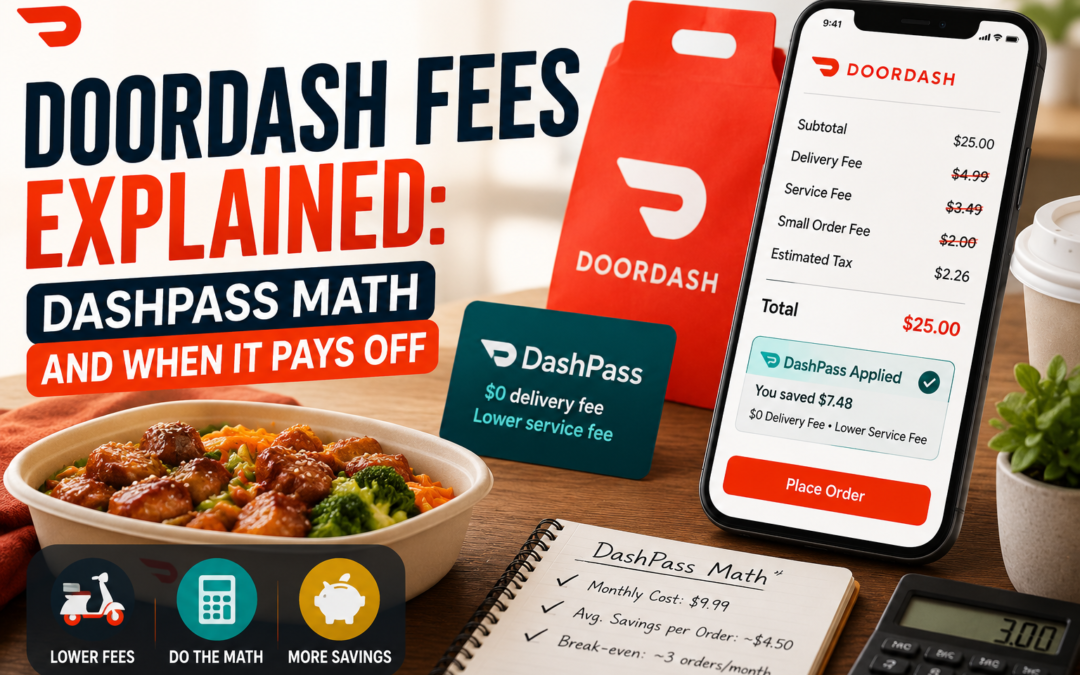
As of 2026, DoorDash lists DashPass at $9.99 per month or $96 per year, plus applicable taxes. DoorDash says members save an average of $4-$5 per eligible order, which provides a useful starting point for deciding whether the subscription makes financial sense.
The catch is that the math depends on how often you order, where you order from and whether your carts meet the required minimum subtotal.
What You’re Actually Paying For
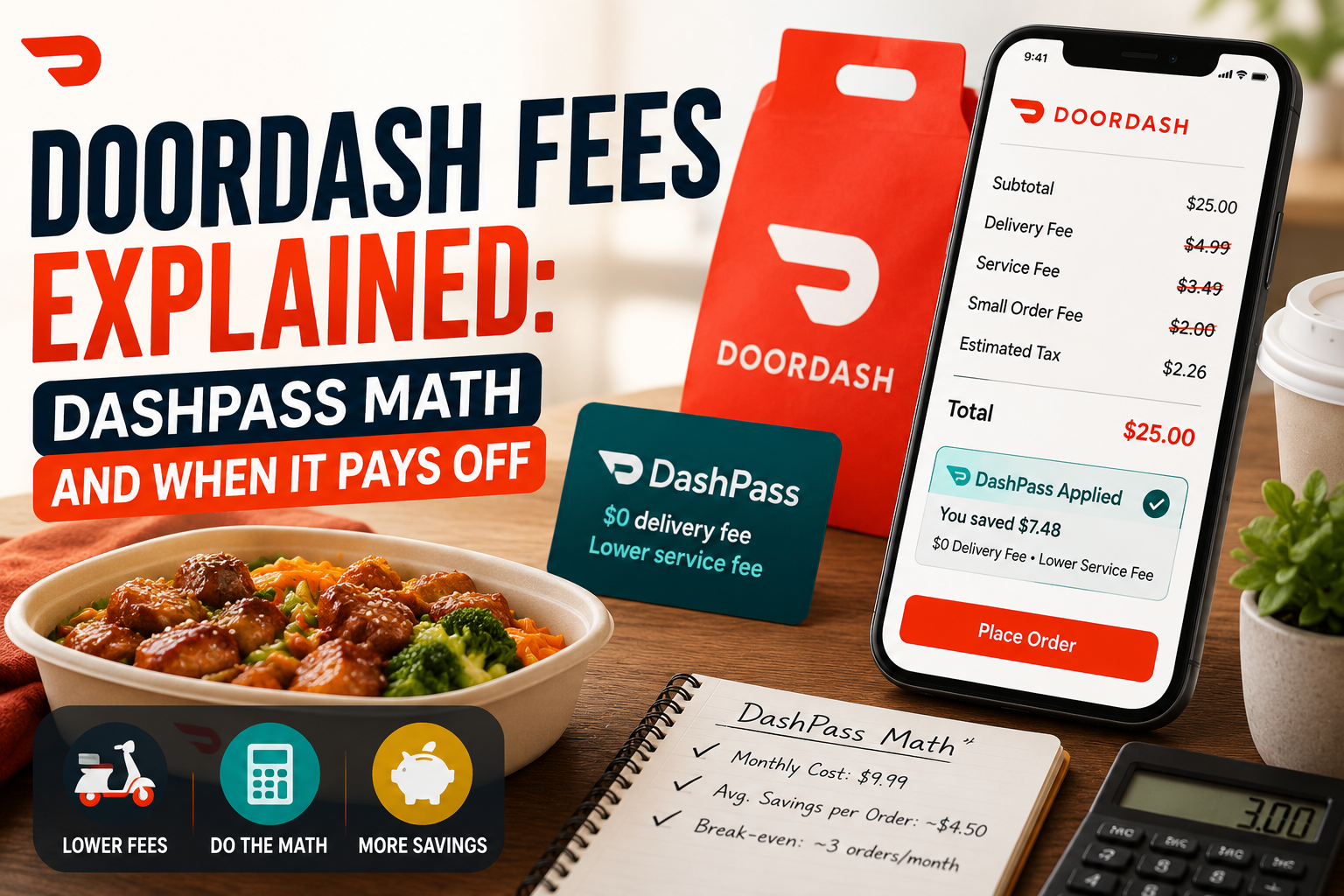
A typical DoorDash checkout can contain several separate charges. The delivery fee pays for getting the order to you and can vary by restaurant, distance and other factors. DashPass can reduce this to $0 on qualifying orders.
Then there’s the service fee, which DoorDash says may apply even when DashPass benefits are active. There can also be small-order, expanded-range, regulatory-response or surge-related fees depending on the transaction and location. Taxes and gratuity are separate as well.
Perhaps the easiest charge to overlook isn’t technically a fee at all: the menu price. DoorDash’s US terms state that prices displayed through the service may differ from prices offered by the merchant or other websites.
That means a subscription can save you on delivery while the overall order still costs more than picking up the same food yourself.
The Basic DashPass Break-Even Math
At the standard monthly price of $9.99, the simplest calculation is:
$9.99 ÷ $4.50 average savings = about 2.2 orders
So, if your eligible orders genuinely save around $4.50 each, you need roughly three qualifying orders per month to recover the membership fee.
For the $96 annual plan:
$96 ÷ $4.50 = about 21.3 orders per year
That works out to fewer than two qualifying orders per month.
| Ordering pattern | Approx. eligible orders | Basic conclusion |
|---|---|---|
| Occasional delivery | 1/month | Usually hard to justify |
| Regular delivery | 2/month | Depends on actual savings |
| Frequent delivery | 3-4/month | DashPass can make sense |
| Weekly ordering | 4-5/month | Stronger case for membership |
| Several orders weekly | 8+ /month | Potentially significant savings |
These calculations use DoorDash’s stated average savings as an illustration. Your actual savings can be lower or higher.
The Minimum-Order Trap
This is where DoorDash fees become more complicated than a simple subscription calculation.
DashPass benefits only apply to eligible merchants and orders that meet the applicable minimum subtotal. DoorDash’s current US guidance says the minimum is generally $12 for restaurant or convenience orders and $25 for grocery orders, although DoorDash notes that requirements can vary and the app identifies the applicable threshold.
Importantly, the minimum is calculated on the subtotal before fees and taxes.
Imagine you want a $9 sandwich and a $3 drink. Your $12 subtotal may qualify. But a $10 entrée plus a $1.50 side leaves you below the threshold, even though the final amount after fees could be considerably higher.
That creates an awkward situation: adding another item you don’t need just to unlock free delivery isn’t necessarily saving money.
If you’re adding $5 of food to avoid a $3 delivery charge, you’ve spent more, not saved more.
DashPass Doesn’t Make Every Fee Disappear
One of the biggest misconceptions about DashPass is that it turns a DoorDash checkout into a simple food-price-plus-tip transaction.
It doesn’t.
DoorDash explicitly states that service fees, taxes and gratuity can still apply to DashPass orders. Other fees may also apply depending on the order.
This matters most for smaller orders. Eliminating a $4 delivery charge sounds valuable, but if you’re still paying several dollars in other charges, the total difference may be smaller than expected.
Always compare the final checkout total, not just the delivery-fee line.
The Annual Plan Changes the Calculation
At $96 per year, the annual DashPass plan works out to $8 per month before taxes when averaged across 12 months.
That makes the annual option more attractive for someone who knows they will use DoorDash throughout the year. But there’s a catch: paying annually only saves money if you actually use the membership consistently.
If you order heavily during college semesters or certain months and barely use DoorDash during others, a monthly plan can provide more flexibility despite its higher annualized cost.
DoorDash also runs limited-time offers. For example, it has recently advertised a first-year annual price of $59 for selected customers, after which the subscription renews at the then-current annual price.
A promotional price can completely change the break-even calculation, so check the renewal price before signing up.
When DashPass Is Probably Worth It
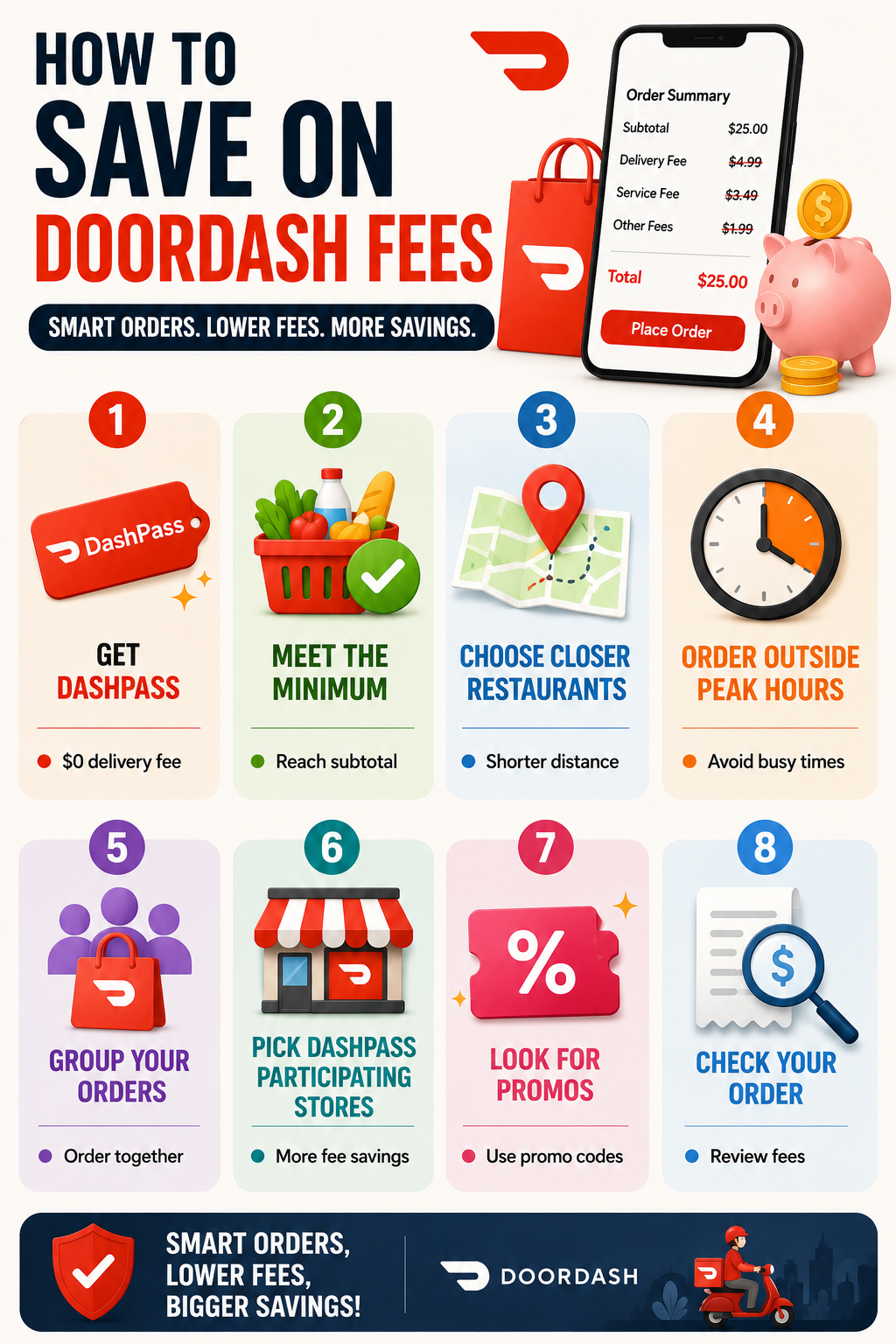
DashPass is easiest to justify if you order delivery at least three times a month, regularly meet the qualifying subtotal and use restaurants that participate in the program.
It becomes even more compelling if you order groceries or convenience items through DoorDash and can consistently reach the applicable minimums.
Another useful situation is ordering for multiple people. A $40 family dinner can make the delivery-fee savings more meaningful than a $12 solo order, provided you aren’t ordering extra food simply to qualify.
DoorDash also extends DashPass benefits to eligible grocery and convenience orders, giving frequent users more opportunities to recover the subscription cost.
When You Should Skip It
- If you order delivery once or twice a month, don’t assume DashPass is automatically cheaper.
- It’s also a poor fit if most of your preferred restaurants aren’t DashPass eligible, your orders frequently fall below the minimum, or you usually pick up food yourself.
- And if you subscribe because one promotional offer looks attractive, remember that subscriptions automatically renew until canceled.
- DoorDash’s terms state that DashPass is an automatically renewing subscription. Set a reminder before the promotional period ends if you don’t intend to keep it.
A Better Way to Calculate Your Savings
Instead of asking, “Is DashPass worth $9.99?”, look at your own last five or ten orders.
Write down:
- Delivery fee without DashPass
- Reduced service fee, if applicable
- Order subtotal
- Other fees
- Final amount
- Whether the order met the minimum
Add up the delivery and fee savings you would actually have received. If that number consistently exceeds the membership cost, you have your answer.
This method is more useful than relying on an advertised average because your ordering habits may be very different from the typical DashPass customer.
FAQs
1. Does DashPass eliminate all DoorDash Fees?
No. DashPass provides $0 delivery fees and reduced service fees on qualifying orders, but taxes, gratuity and potentially other fees can remain.
2. What is the DashPass minimum order?
For US restaurant and convenience orders, DoorDash currently states a $12 minimum in its general guidance, while grocery orders generally require $25. Individual merchant requirements can vary, so check the amount displayed in the app.
3. Is the annual DashPass plan cheaper?
At the standard prices currently listed by DoorDash, $96 annually is less than paying $9.99 every month for 12 months. But the annual plan only makes sense if you expect to use the service consistently enough to recover the cost.
The smartest way to approach DoorDash fees is to stop looking at any single charge in isolation. DashPass can be a genuine money-saver for frequent users, but the subscription doesn’t turn every delivery into a bargain. Look at your order frequency, minimums, service charges and actual checkout totals. If the numbers work for your habits, the membership can pay for itself; if not, paying for fewer deliveries may be the bigger saving.