
by parth@bidkinetic.com | Sep 17, 2026 | Homestyle
Buying furniture online usually involves a compromise between appearance, construction, comfort, and price. CHITA Living has built its range around trying to narrow that gap, offering contemporary sofas, sectionals, recliners, dining furniture, and accent pieces with materials that sound more premium than the typical mid-range category. The brand says its furniture uses solid-wood frames, high-density CertiPUR-US-certified foam, and OEKO-TEX-certified fabric and leather, while products are shipped from U.S. warehouses.
For this Chita Living review, the focus is less on showroom photography and more on what the specifications, policies, and real owner feedback reveal about the furniture. The result is a brand that looks impressively close to high-end furniture, although some details, particularly cushion construction, returns, and model-to-model differences, deserve attention before placing a large order.
Design & Build: Does It Look Premium?
CHITA’s biggest selling point is easy to spot: its furniture is designed to look considerably more expensive than many of its price tags suggest.
The collection leans toward contemporary and transitional styling, with low-profile sofas, rounded silhouettes, textured upholstery, wooden details, modular configurations, and neutral colors. The brand says its furniture uses solid-wood frames, while individual models can differ considerably in their frame construction and cushion materials.
CHITA isn’t selling one standardized construction across its entire catalog. A sofa’s actual frame, foam, filling, upholstery, and dimensions need to be checked individually.
Materials & Construction: What’s Inside?
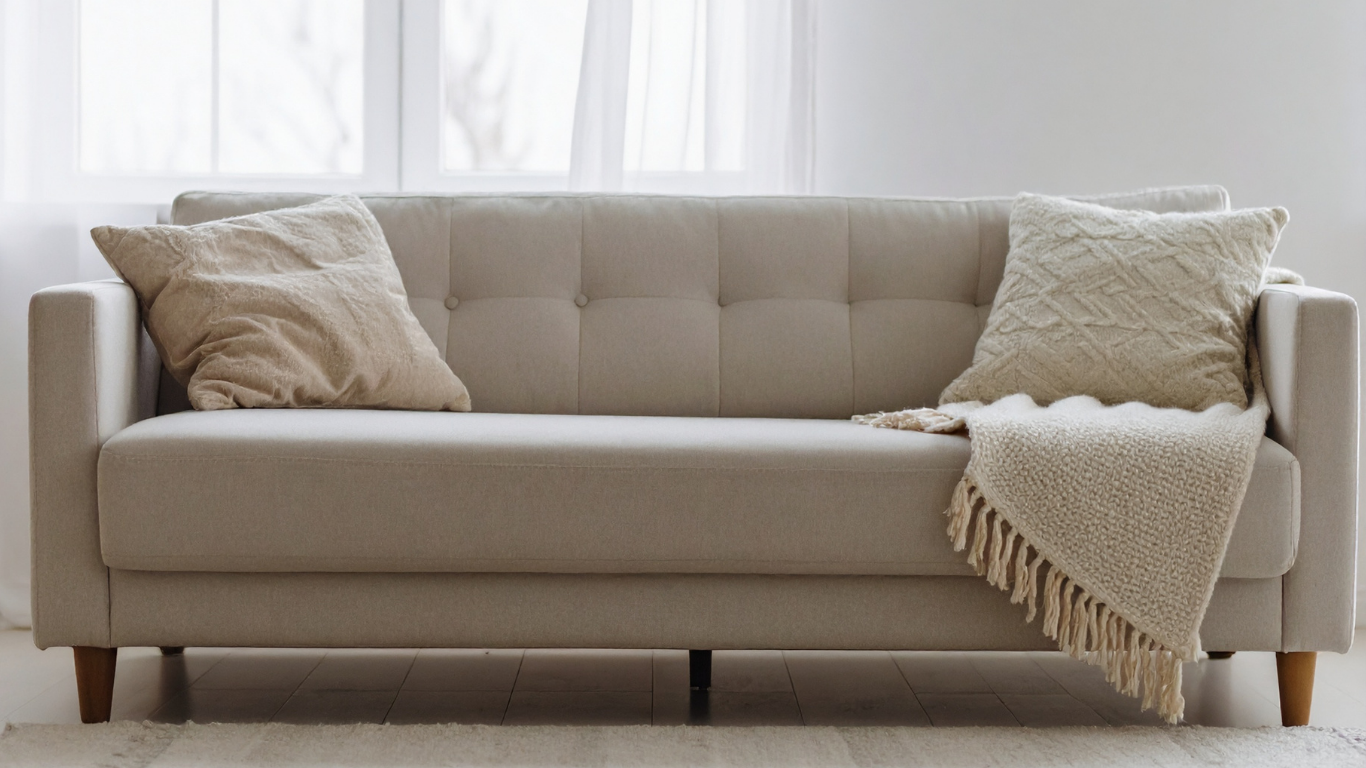
CHITA lists high-density, CertiPUR-US-certified foam among its materials, alongside solid wood and OEKO-TEX-certified upholstery on its broader collection.
Some models use combinations of high-resiliency foam, polyester fiber, and feather filling. That can create a softer, more relaxed seating experience, but it can also mean more maintenance than a simple foam cushion.
This is one area where online shopping requires a little more attention. The exact construction listed on the product page tells you far more than the CHITA name itself.
Comfort: Soft Doesn’t Always Mean Better
Comfort is highly subjective, but owner feedback reveals an important point: CHITA’s seating experience isn’t completely consistent across models.
Some owners describe the sofas as comfortable and attractive, while others have raised concerns about cushion feel and noise. A Reddit owner of the Keaton sofa, for example, reported a noticeable plasticky or squeaking sensation from the cushion construction and said CHITA considered the behavior an expected characteristic of the materials. Another owner in the same discussion reported a similar experience with a different model.
That’s not evidence that every CHITA sofa has the same problem. In fact, another owner specifically described a CHITA Sienna chair as comfortable.
The practical takeaway is simple: don’t assume that every CHITA cushion feels the same.
How Does CHITA Compare on Features?
| Feature |
CHITA Living |
| Design |
Contemporary, premium-looking |
| Frame |
Solid wood on the brand’s broader collection |
| Foam |
CertiPUR-US-certified options |
| Upholstery |
Fabric and leather options |
| Shipping |
U.S. warehouse fulfillment |
| Standard warranty |
1 year |
| Standard return window |
30 days |
| Sofa return fee |
20% restocking fee |
| Price guarantee |
30 days |
CHITA’s current warranty provides one year of coverage for eligible manufacturing and material defects under normal use. The company can repair, replace, or provide a partial refund depending on its assessment.
Delivery & Assembly: Plan Before the Truck Arrives
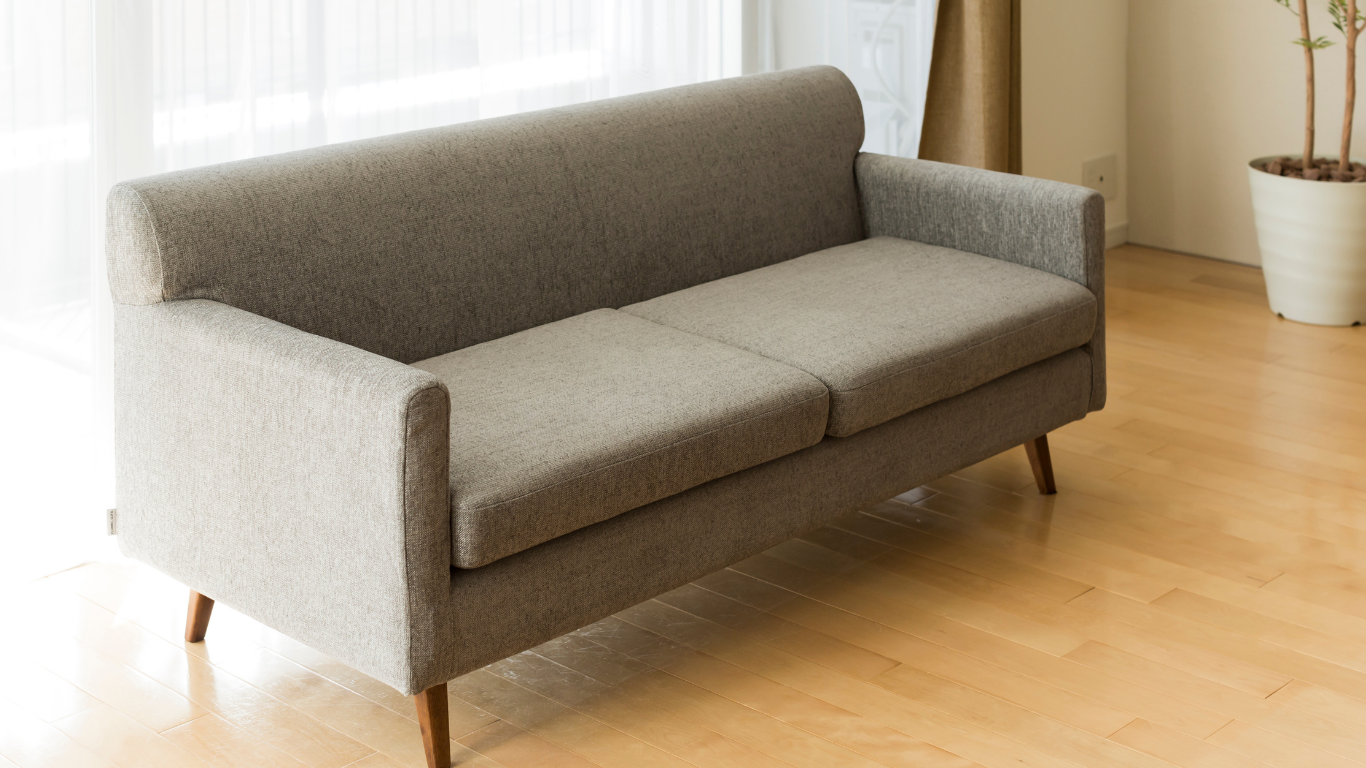
Large furniture isn’t something to order casually.
- Before purchasing, measure doorways, staircases, elevators, hallways, and the actual room where the furniture will sit.
- CHITA itself recommends checking delivery access and whether the particular model requires assembly.
- The company also says its products are warehoused in the U.S. and advertises free shipping, with a typical delivery estimate of 5-7 days on its general brand information.
- Actual timing can vary by product and delivery method.
Inspect the furniture carefully when it arrives.
- CHITA’s delivery policy says damage should be noted and reported promptly, with photographs and supporting information required for claims.
Returns: Read This Before Ordering
This is probably the least glamorous part of buying a sofa and one of the most important.
CHITA’s current policy allows most eligible products to be returned within 30 days, subject to conditions including unused condition and original packaging. Sofa and sectional returns carry a 20% restocking fee, and shipping deductions may apply depending on the reason for the return.
That makes fabric samples particularly useful before ordering. A color that looks perfect on a monitor can look noticeably different in natural light.
The brand also currently offers a 30-day price guarantee, meaning eligible price reductions within 30 days can qualify for a refund of the difference.
Durability: What Can Actually Be Judged?
CHITA’s solid-wood frame and high-density foam specifications provide encouraging signs, but durability is ultimately model- and usage-dependent.
There isn’t enough consistent long-term owner data across the entire range to conclude that every CHITA sofa will perform identically for five or ten years. Some owners specifically seek out the brand because of its perceived value, while others have reported problems with individual models.
For buyers, checking the exact frame construction, cushion filling, foam density, upholstery material, and warranty is more useful than relying on the brand name alone.
Is CHITA Living Worth It?
The answer depends heavily on what you’re expecting from “mid-range.”
CHITA’s furniture clearly aims higher aesthetically than many budget brands. The materials are not simply positioned as the cheapest available options, and the combination of solid-wood construction, CertiPUR-US foam, contemporary design, and detailed upholstery choices gives many pieces a distinctly upscale appearance.
But there are trade-offs. The one-year warranty isn’t particularly long for expensive furniture, sofa returns carry a 20% restocking fee, and owner experiences with comfort aren’t completely uniform.
For buyers who care strongly about appearance and want something more distinctive than mass-market furniture, CHITA is an interesting middle ground. The safest approach is to judge the specific model, not the entire brand, by its marketing.
Pros & Cons
Pros
- Premium-looking contemporary designs
- Solid-wood construction on the brand’s collection
- CertiPUR-US-certified foam options
- OEKO-TEX-certified upholstery options
- U.S. warehouse fulfillment
- 30-day price guarantee
Cons
- Cushion construction varies by model
- Some owners report unusual cushion feel or noise
- Sofa returns have a 20% restocking fee
- One-year standard warranty is relatively limited
- Large furniture should be carefully measured before delivery
FAQs
1. Is CHITA Living good quality?
CHITA offers several quality-focused materials, including solid wood, CertiPUR-US-certified foam, and OEKO-TEX-certified upholstery. However, construction varies between models, so the individual product specifications matter.
2. Can CHITA furniture be returned?
Most eligible items can be returned within 30 days under the current policy. Sofa and sectional returns are subject to a 20% restocking fee, with possible shipping deductions.
3. Is CHITA furniture actually high-end?
Its styling and selected materials can give it a high-end appearance, but it is better described as mid-range furniture with premium design cues rather than equivalent to luxury furniture.
Also Read: Novilla Mattress Review: What $300 Gets You in 2026

by parth@bidkinetic.com | Sep 17, 2026 | Travel
Renting a car in Mexico can look straightforward online: choose a vehicle, select your dates, pay the quoted rate, and collect the keys. In practice, the final rental cost and pickup experience can depend heavily on insurance, deposits, vehicle availability, location fees, and the terms attached to your reservation. This Hertz Mexico review looks at those details rather than simply judging the company by its advertised daily rates.
Hertz Mexico says it has more than 60 years of presence in the country and operates more than 190 locations, including major airports. Its fleet covers compact cars, SUVs, hybrids and sports cars, with vehicles equipped with features such as air conditioning, ABS, airbags and Bluetooth.
The important part for travelers is the pricing structure. Hertz Mexico states that quoted reservations include VAT and third-party liability protection up to MXN 700,000, but optional protection products and services can add substantially to the final bill. A security hold is also placed on the renter’s card, with the amount depending on the vehicle and protection selected.
Fleet: Plenty of Choice, but Check the Category
Hertz Mexico has a reasonably broad selection, ranging from economical compact cars to SUVs, premium vehicles and speciality models. The current fleet page specifically highlights compact, hybrid, SUV and sports-car categories.
One thing worth remembering is that a reservation generally represents a vehicle category, not necessarily a guaranteed make and model. If a particular model matters for luggage space, passenger capacity or comfort, confirm the category carefully before booking.
For families, larger SUVs and passenger vehicles make more sense, while compact cars can be more practical for city driving and lower fuel consumption.
Pricing: The Advertised Rate Isn’t the Whole Story

This is where the Hertz Mexico experience deserves the closest attention.
Hertz Mexico’s terms state that airport surcharges and city-location fees may apply. The reservation includes the services specifically listed in the booking, along with third-party liability protection, local fees and VAT under the stated conditions. Other protection coverage and services carry additional charges.
The security hold can also be significant. Hertz Mexico’s published retention table currently shows, for example, that some compact categories can have a MXN 17,000-20,000 retention without coverage, while larger or premium categories can reach MXN 40,000-55,000. With protection selected, the required retention can be considerably lower.
| Area |
What Hertz Mexico States |
| Minimum rental |
24 hours |
| Minimum age |
18, with young-driver charges for 18-24 |
| Payment |
Credit/debit cards; no cash |
| Credit cards |
American Express, Visa, Mastercard |
| Third-party liability |
Included according to reservation terms |
| Security hold |
Depends on vehicle and protection |
| One-way rental |
Available between eligible cities, with charges |
| U.S. travel |
Prior authorization and special protection required |
Insurance: Read This Before Pickup
Insurance is probably the most important part of the booking to understand.
Hertz Mexico says purchasing its additional automobile insurance is not mandatory, but declining its protection results in a security retention on the credit card. The amount varies according to the vehicle and coverage chosen.
Its published protection options include LDW, CDW, CDW2, theft protection, personal accident coverage and additional liability protection. The company also publishes specific deductibles and retention amounts by vehicle category.
This is why comparing only the online rental rate can be misleading. Before paying, calculate the rental + required/selected protection + taxes/fees + security hold rather than looking at the base rate alone.
Pickup and Customer Service

The actual experience appears to vary by location.
- Recent customer reviews on Trustpilot include complaints about additional insurance charges, vehicle availability, unexpected fees and lengthy resolution processes.
- There are also positive reviews, including customers reporting that deposits were returned as expected and staff provided adequate service.
- These reviews are individual experiences rather than proof of how every Hertz Mexico branch operates.
- Reviews from Cancun Airport similarly show a mixed picture: some travelers reported friendly service and upgrades, while others mentioned long waits and concerns about insurance pricing.
That makes the specific pickup location an important factor. Airport branches, particularly busy tourist destinations, can have a very different experience from smaller city offices.
What Documents Do You Need?
Hertz Mexico requires a valid driver’s license, official identification and a credit or debit card in the renter’s name. Foreign travelers need a passport or passport card, and an international driving permit may need to be presented alongside the original country-of-origin license where applicable.
Debit-card rentals have additional restrictions and are generally limited to qualifying airport locations with same-day flight documentation.
Hertz Mexico Review: Returning the Car

Check the return time carefully.
- Hertz Mexico states that additional charges apply if the vehicle is returned after the agreed time.
- One-way rentals are possible between cities where Hertz has offices, but a change of city can generate an additional fee.
- The FAQ currently states a charge of $9 plus tax per kilometer for a different-city return.
- Before leaving the vehicle, photograph the exterior, interior, fuel level and mileage.
- Keep the final rental agreement and receipt until the card hold has been released.
Final Verdict
This Hertz Mexico review shows a rental company with a substantial fleet, extensive national coverage and clearly documented rental and protection policies. The biggest issue for travelers isn’t simply the base rental price; it’s understanding what happens to that price once protection, deposits, location charges and other services enter the calculation.
Hertz Mexico can make sense for travelers who want a recognizable rental network and a wide range of vehicles. However, the booking should be approached with the same care as any major travel expense: read the protection terms, confirm the deposit, verify the vehicle category and ask the branch about anything that isn’t clear before signing.
For anyone considering Hertz Mexico, the most useful comparison isn’t “Which company has the cheapest advertised rate?” It’s “What will the complete rental cost me, and what will be held on my card?”
Hertz Mexico Review: FAQs
- Is insurance mandatory with Hertz Mexico?
Hertz Mexico says its additional automobile insurance is not mandatory, although declining protection results in a credit-card retention.
- Can a Hertz Mexico rental be driven into the United States?
Yes, but prior authorization and special protection are required. Travel through Mexico’s southern borders is prohibited under the published terms.
- Does Hertz Mexico accept cash?
No. Hertz Mexico states that it does not accept cash and accepts qualifying credit and debit cards.
Also Read: Flying Etihad Economy: An Honest Long-Haul Review
by parth@bidkinetic.com | Sep 16, 2026 | LifeStyle
A 12-inch memory foam mattress selling around $299 in 2026 is bound to raise a few questions about what has been sacrificed to reach that price. The EGOHOME mattress review focuses on the Black 12″ Foam Mattress, an all-foam model built with copper- and gel-infused memory foam, a graphene-infused cover and a high-density support core. EGOHOME currently lists the mattress at $299 on its U.S. site, down from $359, with a 100-night home trial and 10-year limited warranty. Its foam is CertiPUR-US certified, while the mattress is also listed with OEKO-TEX certification.
Independent hands-on testing of the same 12-inch Black model found a medium-firm feel around 7.5/10, excellent motion isolation and surprisingly sturdy edges, although heat retention remains one of its weaknesses.
What Is the EGOHOME Black 12″?
The Black 12″ is an all-foam mattress rather than a hybrid. Its construction combines memory foam layers with cooling gel and copper infusions, followed by a high-density foam support base. The outer cover uses graphene, which EGOHOME markets for temperature regulation and odor resistance. The mattress is also fiberglass-free, using an alternative flame-retardant inner cover.
The important thing here is that this isn’t an ultra-thin budget mattress. At 12 inches, there’s enough material to create a proper layered support system rather than simply adding a thick piece of soft foam to a basic base.
NovaReads Testing Notes
| Category |
NovaReads assessment |
| Mattress type |
All-foam memory foam |
| Height |
12 inches |
| Firmness |
Medium-firm, around 7.5/10 |
| Price |
Around $299 at EGOHOME |
| Motion isolation |
Excellent |
| Pressure relief |
Excellent |
| Edge support |
Good |
| Cooling |
Average |
| Ease of movement |
Average |
| Trial |
100 nights |
| Warranty |
10 years limited |
| Foam certification |
CertiPUR-US |
One particularly useful independent test placed a 56-pound weight on the mattress and measured approximately 3.5 inches of compression, indicating strong pressure relief. The same testing also found that a glass barely moved when a 10-pound weight was dropped at different distances, suggesting excellent motion isolation.
Those results line up with what makes the Black 12″ interesting at its price.
Comfort: More Supportive Than Plush
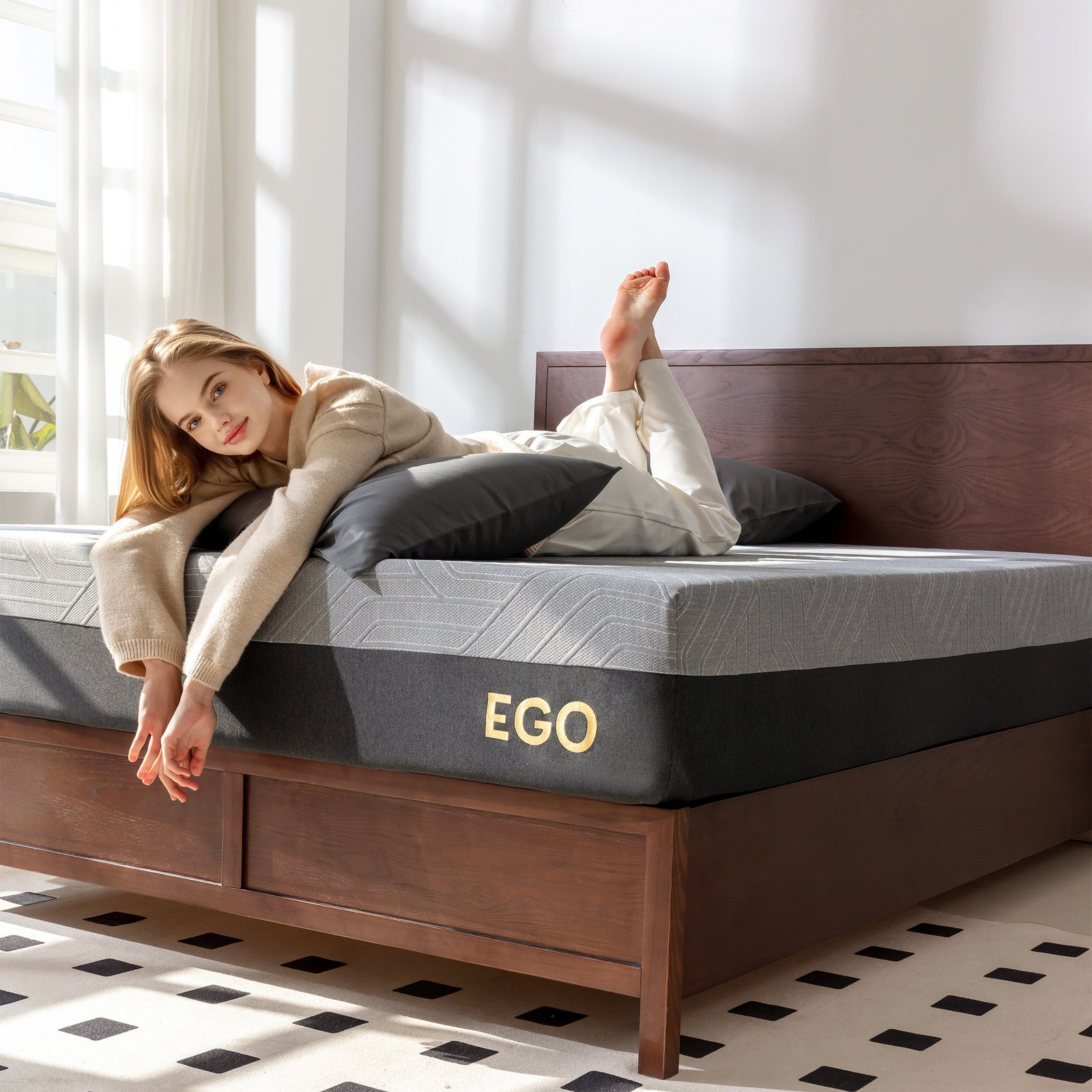
Memory foam shoppers often expect that deep, sinking “cloud” sensation. The EGOHOME doesn’t quite deliver that.
The foam does contour around the body, particularly at the shoulders and hips, but the mattress has a noticeably supportive feel underneath. Independent testing rated it 7.5/10 for firmness and found that it worked across side, back and stomach sleeping positions.
Side sleepers get enough contouring to reduce pressure around the shoulders and hips, while the denser support foam keeps the lower back from sinking excessively. That balance is one of the stronger aspects of the mattress.
For people who prefer a genuinely plush mattress, however, this may feel firmer than expected.
Motion Isolation: A Real Strength
This is one area where the EGOHOME mattress review produced particularly encouraging results.
The all-foam construction absorbs movement extremely well. In independent testing, a glass placed on one side of the mattress barely moved when a 10-pound weight was dropped at increasing distances. The test received a 5/5 score for motion isolation.
For couples, that’s more than a laboratory statistic. A partner turning over, getting out of bed or changing position is less likely to disturb the other person.
Does the Graphene Cover Actually Keep It Cool?
This is where expectations need to be controlled.
EGOHOME uses a graphene-infused cover alongside gel and copper-infused foam, all intended to improve temperature management. But the mattress is still built primarily from dense foam, and that matters.
During hands-on testing, the mattress initially felt comfortable, but warmer and more humid conditions exposed a weakness: heat accumulated during the night. The tester specifically found it too warm during humid weather despite the anti-heat cover.
So, while the cooling materials aren’t meaningless, they don’t transform this into a dedicated cooling mattress.
Edge Support and Getting In and Out
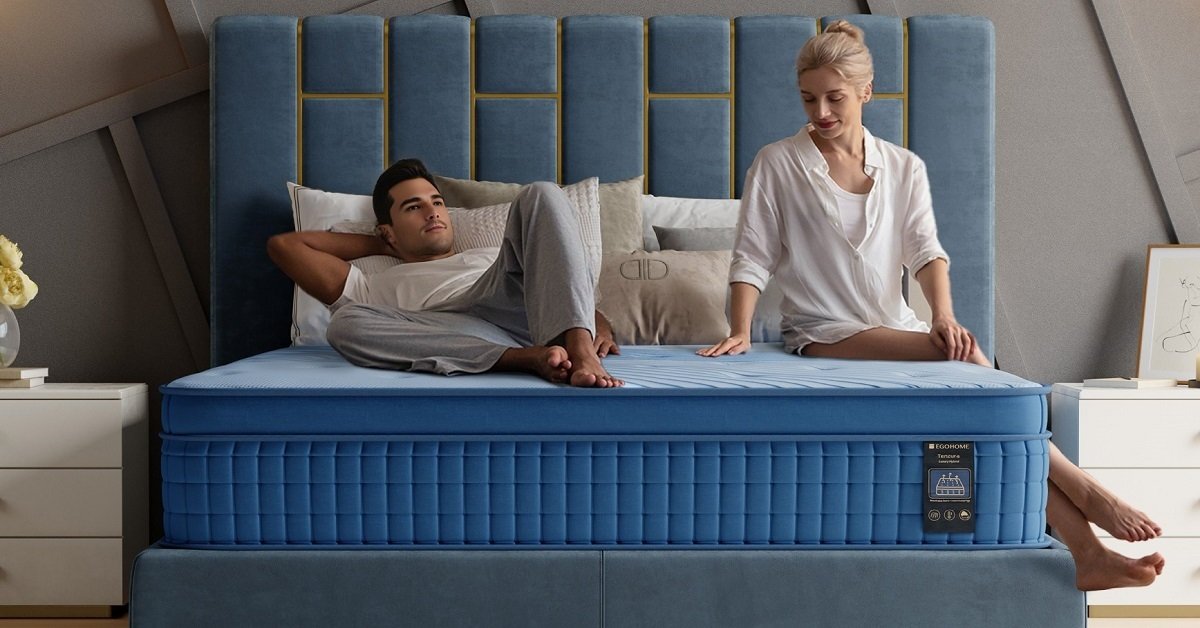
Budget memory foam mattresses often struggle around the perimeter. The Black 12” does better than expected.
Independent testing found the edges stable enough for sitting, sleeping and getting up without an obvious feeling of collapse.
That doesn’t mean the edge feels like a reinforced hybrid mattress. There’s still some compression when weight is concentrated directly on the perimeter. But for normal sleeping, the usable surface feels reasonably secure.
Setup and Trial Period
The mattress arrives compressed and rolled, making delivery considerably easier than moving a conventional mattress.
One hands-on tester found the full-size mattress surprisingly manageable to unpack, with a full-size model weighing around 53 pounds. It reached roughly 11 inches within 20 minutes and its full 12-inch height after one night.
EGOHOME currently offers a 100-night home trial and a 10-year limited warranty on the Black 12″ Foam Mattress.
Is the EGOHOME Black 12″ Worth It?
The EGOHOME mattress review points to a mattress that understands where a budget sleeper is likely to notice compromises.
It doesn’t offer the airflow of a good hybrid, and its slow-moving foam won’t appeal to people who prefer a springy surface. But it delivers strong pressure relief, excellent motion isolation and respectable edge support without pushing the price into premium territory.
At around $299, that’s a compelling combination.
The EGOHOME mattress review is therefore less about calling it a luxury mattress at a bargain price and more about recognizing what it actually does well. Side and back sleepers who like supportive memory foam should find plenty to appreciate, while hot sleepers may want to consider EGOHOME’s hybrid range instead. Independent testing of the hybrid version found better temperature control thanks in part to its coil layer.
NovaReads rating: 4/5
FAQs
- Is the EGOHOME Black 12″ firm or soft?
It’s best described as medium-firm. Independent testing rated it around 7.5/10.
- Does EGOHOME sleep cool?
The graphene, gel and copper materials help with temperature management, but independent testing found that the all-foam Black 12″ can retain heat, particularly in humid conditions.
- How long is the EGOHOME trial?
The current Black 12″ listing includes a 100-night home trial and a 10-year limited warranty.
Also Read: Torras Coolify Review: Does It Really Keep You Cool?
by parth@bidkinetic.com | Sep 16, 2026 | LifeStyle
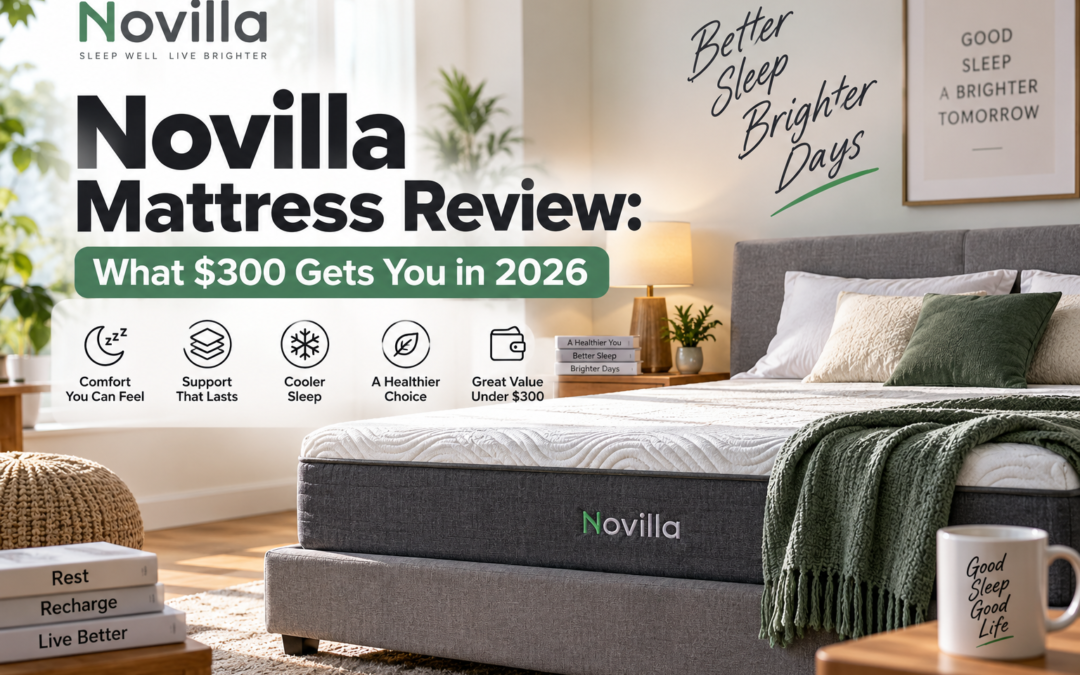
A queen-size mattress for around $300 sounds like the kind of purchase where compromises should be expected. This Novilla mattress review tells a more interesting story. In 2026, the Novilla Bliss 12-inch memory foam mattress is selling around the $279-$300 mark for a queen, depending on retailer and promotion. It uses a three-layer all-foam construction with gel-infused memory foam, transition foam and a high-density support base. The mattress is CertiPUR-US certified, available in multiple heights, and backed by a 100-night trial when purchased directly from Novilla.
NovaReads’ assessment focused on the 12-inch Bliss because it represents the sweet spot of Novilla’s budget range. Rather than judging it against $1,000-plus mattresses, the more useful question is simple: what kind of sleep experience can you realistically expect for roughly $300?
The Bliss follows the familiar bed-in-a-box formula.
- The top layer uses NanoGEL memory foam designed to provide contouring while helping with heat management.
- Underneath are comfort and support layers that give the mattress its structure.
- The 12-inch version is approximately medium in firmness, with our testing placing it around 6/10.
That combination creates a noticeably cushioned feel rather than the responsive, springy sensation of a hybrid mattress.
- Pressure relief is one of its better attributes, particularly for side and back sleepers under roughly 230 pounds.
- Our testing also found strong motion isolation, which is useful for couples.
What Does $300 Actually Buy?
| Category |
NovaReads assessment |
| Mattress type |
All-foam memory foam |
| Height tested |
12 inches |
| Queen price |
Around $279-$300 |
| Firmness |
Medium, around 6/10 |
| Pressure relief |
Very good |
| Motion isolation |
Very good |
| Edge support |
Average |
| Cooling |
Fair to good |
| Ease of movement |
Average |
| Trial |
100 nights direct |
| Warranty |
10 years limited |
The price is the first thing that changes the conversation.
- A queen-size 12-inch Bliss can come in below $300, while the broader memory-foam category often costs considerably more.
- Novilla itself lists several Bliss configurations, with an 8-inch queen starting around $230 and the 12-inch model around $300.
The catch is that low price doesn’t magically produce premium construction. The Bliss feels like a budget memory-foam mattress because its strengths are concentrated in comfort and motion isolation rather than advanced support technology.
Comfort: Surprisingly Good for the Price

The first impression is soft enough to let the body settle into the foam, but there is still enough underlying support to prevent it from feeling like a mattress topper placed on a board.
Side sleepers are likely to appreciate this most. The foam allows the shoulders and hips to sink in, reducing the feeling of pressure around those areas. Back sleepers also get reasonable contouring without an excessively deep “sinking” sensation.
Stomach sleepers are where the equation changes. The medium feel may not provide enough resistance for heavier sleepers, particularly around the hips. Independent reviews have similarly identified body weight and sleeping position as important considerations with the Bliss.
Motion Isolation Is One of Its Strong Points
This is an area where an inexpensive all-foam mattress can outperform expectations.
During testing, the Bliss performed well at absorbing movement across the surface. That means a partner changing position or getting out of bed is less likely to create the rolling sensation associated with some spring mattresses.
For couples shopping around the $300 mark, this is arguably more useful than having an elaborate collection of premium-sounding materials.
What About Cooling?
The Bliss uses gel-infused foam and a breathable-style cover, but it shouldn’t be confused with a genuinely cool-sleeping mattress.
The foam construction still retains more heat than many hybrid mattresses with substantial airflow through coils. Independent assessments have identified temperature regulation as one of the areas where Novilla makes compromises.
In an air-conditioned bedroom, this may not be an issue. Hot sleepers, however, should keep expectations realistic.
Edge Support and Movement
The edges reveal another part of the budget construction.
There is enough support for normal sleeping, but sitting directly on the edge doesn’t produce the stable, reinforced feeling found on better-built hybrid mattresses. Independent testing has also flagged edge support as a weakness.
The all-foam design can also make changing positions slightly less effortless than on a responsive coil mattress. That’s not necessarily a problem for most sleepers, but it’s worth knowing before buying.
Setup, Trial and Warranty
The Bliss arrives compressed in a box.
- Novilla recommends allowing the mattress up to 72 hours to fully expand and for any initial manufacturing odor to dissipate.
- Direct purchases currently come with a 100-night sleep trial and a 10-year limited warranty.
- The warranty covers certain manufacturing and structural defects, including qualifying indentations greater than one inch, foam cracks or splits and some cover defects.
- Comfort preferences aren’t covered under the warranty, which is why the sleep trial matters.
One important detail: return policies can differ when buying through Amazon, Walmart or another third-party retailer, so the seller’s terms should be checked before ordering.
Is the Novilla Bliss Actually Worth $300?
After looking at the construction and our performance testing, the Novilla mattress review comes down to expectations.
If the goal is an affordable all-foam mattress with good pressure relief and strong motion isolation, the Bliss makes a convincing case. At roughly $300 for a queen, it offers considerably more mattress than the price might suggest.
But it isn’t a luxury mattress hiding inside a budget box. Edge support is ordinary, cooling isn’t its strongest feature, and heavier sleepers may want something more supportive. Those compromises become easier to accept when the price is around $300.
For side sleepers, guest rooms, apartments, first homes and budget-conscious couples, the Novilla mattress review shows why the Bliss remains an interesting option in 2026. It doesn’t attempt to compete with premium mattresses on every metric. Instead, it concentrates the budget where most people actually notice it: cushioning, pressure relief and motion control.
NovaReads verdict: 4/5 for value at around $300.
Novilla Mattress Review: FAQs
- Is the Novilla Bliss a good mattress for $300?
For shoppers prioritizing affordability, pressure relief and motion isolation, the Bliss offers a strong combination for its price.
- How long is the Novilla trial period?
Novilla currently offers a 100-night trial on mattresses purchased directly through its qualifying channels.
- How long is the Novilla mattress warranty?
Novilla provides a 10-year limited warranty for its mattresses, subject to its warranty terms.
Also Read: How to Choose a Mattress for Back Pain: Firmness, Position, and Fit
by parth@bidkinetic.com | Sep 15, 2026 | Gadgets
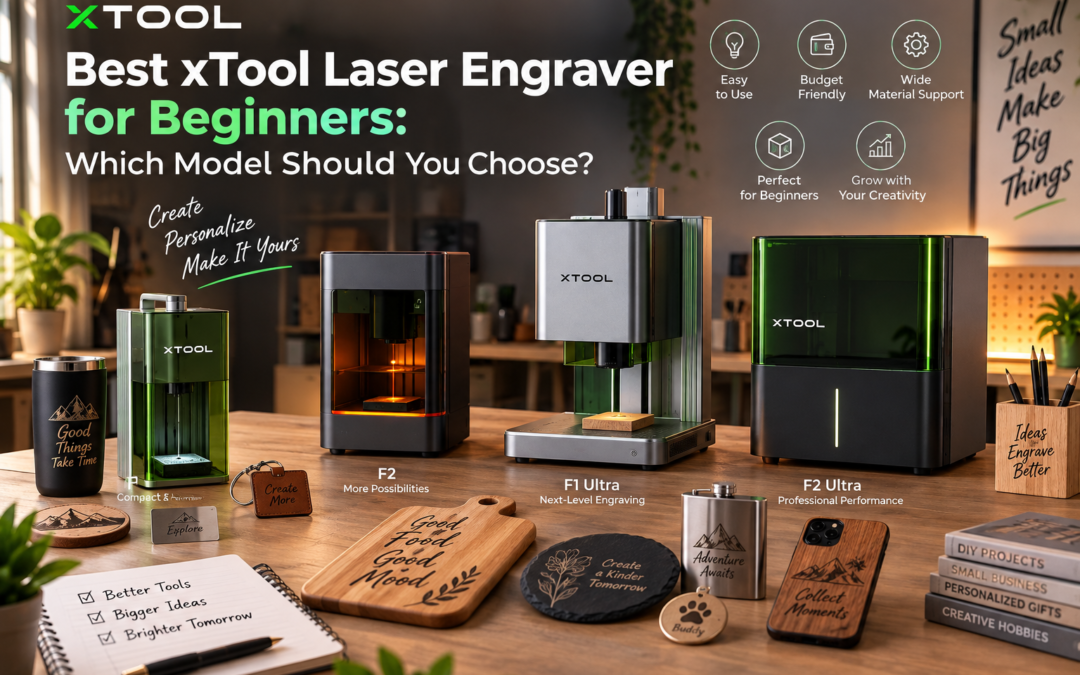
Choosing a laser engraver for beginners isn’t simply about finding the machine with the highest laser power. xTool’s current engraving lineup spans compact dual-laser machines, fiber-and-diode systems, MOPA lasers and UV engravers, each aimed at different materials and levels of production. The F1, for example, combines a 10W diode laser with a 2W IR laser, while the F1 Ultra moves to a 20W fiber and 20W diode combination. The newer F2 Ultra goes substantially further with a 60W MOPA and 40W diode setup, while the F2 Ultra UV uses a 5W UV laser for materials such as glass.
That variety is useful, but it also makes the buying decision harder. A beginner engraving wooden gifts has very different requirements from someone engraving stainless steel jewelry or producing detailed glass products. Here’s how the main xTool engraving machines compare.
xTool F1: The Easiest Place to Start
For someone buying a first engraving machine, the xTool F1 is probably the most approachable model in the lineup.
It combines a 10W blue diode laser with a 2W infrared laser, giving beginners access to two different laser wavelengths without having to buy separate machines. Its compact design also makes it easier to accommodate in a home workshop or small studio. xTool positions the F1 specifically as a portable laser engraver with IR and diode lasers.
The real attraction is versatility at a relatively manageable scale. The diode laser is useful for materials such as wood and other common craft surfaces, while the IR laser expands its usefulness for engraving certain metals and plastics.
The limitation is its smaller engraving area. If the plan involves large signs or oversized artwork, the F1 isn’t the right machine. For personalized gifts, small business products, jewelry and detailed designs, however, it makes considerably more sense.
xTool F2: A More Capable Portable Engraver

Source: xTool
The xTool F2 is a step up from the F1 while retaining the portable format. It uses a 15W diode laser alongside a 5W IR laser.
That extra power gives it more headroom for engraving and certain cutting-related applications, while the IR laser remains useful for materials that benefit from infrared processing.
For a beginner who already knows that engraving will become a serious hobby or small business, the F2 can be a more future-proof choice than the entry-level F1. It is particularly interesting for people who don’t want a large machine taking over their workspace.
xTool F1 Ultra: Best for Metal Engraving
The F1 Ultra is where the xTool range starts becoming much more serious.
It combines a 20W fiber laser with a 20W diode laser. xTool says its fiber laser uses a fiber gain medium rather than the DPSS approach used by common IR lasers, allowing deeper engraving at the same power level. Its maximum speed is rated at 10,000mm/s, while the fiber laser has a spot size of 0.03 × 0.03mm.
That makes the F1 Ultra particularly interesting for metal engraving, including applications involving jewelry, tools, identification plates and personalized metal products. xTool also lists it as a dual-laser engraving machine designed for deep metal engraving and batch production.
It isn’t the machine most people should buy simply because they’re beginners. The extra capability makes sense when metal is a major part of the intended workload.
xTool F2 Ultra: For Serious Production
Source: xTool
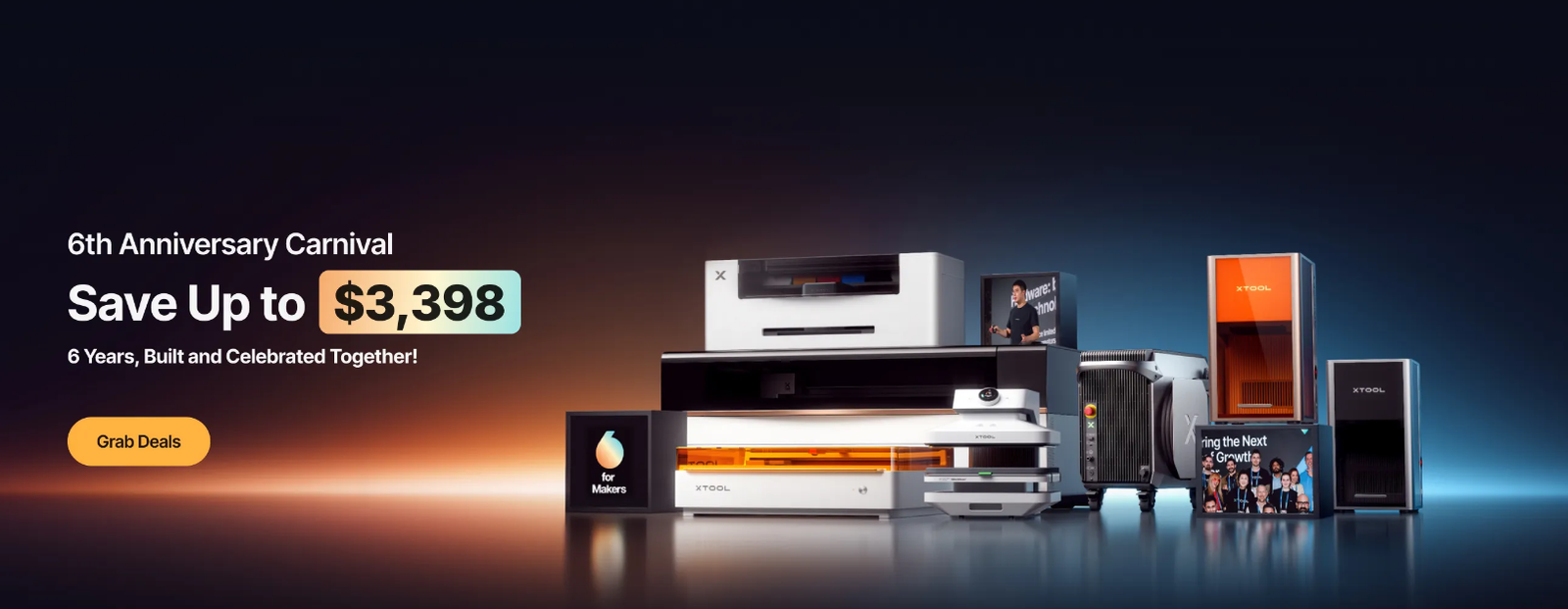
The F2 Ultra takes the concept further with a 60W MOPA laser and 40W diode laser. xTool currently positions it among its professional engraving machines for applications including metal processing and more demanding production work.
MOPA technology is particularly relevant when users need more control over how a fiber laser interacts with metal. That can matter for detailed engraving and specialized finishes, rather than simply creating a basic permanent mark.
For a first-time hobbyist, however, this level of capability can be unnecessary. It is better suited to someone starting a business or upgrading from a smaller engraver after understanding exactly what their production requirements are.
xTool F2 Ultra UV: For Glass and Delicate Materials
The F2 Ultra UV occupies a different niche. Instead of using a conventional diode or fiber setup, it uses a 5W UV laser. xTool specifically markets the machine for glass and various other materials.
UV engraving is valuable when the material or finish requires a different processing approach from what blue diode or infrared/fiber lasers provide. This makes it an interesting option for businesses working with glass products, specialty items and detailed personalization.
It is not the obvious first purchase for a general-purpose beginner, but it becomes compelling when the material list demands UV processing.
Which xTool Laser Engraver Is Best for Beginners?
| Model |
Laser configuration |
Best suited for |
Beginner suitability |
| xTool F1 |
10W diode + 2W IR |
Crafts, gifts, small products |
Excellent |
| xTool F2 |
15W diode + 5W IR |
More demanding portable engraving |
Very good |
| xTool F1 Ultra |
20W fiber + 20W diode |
Metal + mixed-material engraving |
Good |
| xTool F2 Ultra |
60W MOPA + 40W diode |
Commercial metal engraving |
Moderate |
| xTool F2 Ultra UV |
5W UV |
Glass and specialty materials |
Moderate |
What Should a Beginner Actually Buy?
For most first-time users, the F1 is the easiest recommendation.
- Its combination of diode and IR lasers means beginners can experiment with different materials without immediately committing to a large professional system.
- It is also easier to position in a home workspace than a production-focused machine.
The F2 makes more sense if there’s already a clear plan to take engraving beyond occasional crafts.
- Its 15W diode and 5W IR combination gives it more room to grow while retaining the portable concept.
If metal is the main reason for buying a laser, skip the entry-level thinking and consider the F1 Ultra.
- Its fiber laser is designed specifically for deeper and more precise metal engraving, making it a much better long-term choice for that workload.
The F2 Ultra and F2 Ultra UV should be viewed as specialist or commercial choices rather than automatic upgrades for beginners.
Ultimately, the best laser engraver for beginners is determined by the materials and products you intend to work with. A compact dual-laser F1 can be a smarter purchase than a powerful professional machine if the goal is personalized gifts and small projects. Conversely, someone building a metal-engraving business may save money in the long run by starting with a fiber-capable model.
Laser Engraver for Beginners: FAQs
- Is the xTool F1 good for metal engraving?
Its 2W IR laser allows it to work with certain metals and metal-marking applications, although the F1 Ultra’s 20W fiber laser is much better suited to serious metal engraving.
- What is the xTool F2 Ultra used for?
It is designed for more advanced engraving applications, particularly demanding metal work, using its 60W MOPA and 40W diode laser configuration.
- Which xTool engraver is best for glass?
The F2 Ultra UV is the specialist option to consider because it uses a 5W UV laser and is specifically positioned for glass and various other materials.
Also Read: Dreame Robot Vacuum Review: Flagship Features at Half the Price