
How to Sign Documents Online Legally: E-Signature Laws Explained Simply
Signing a document no longer requires printing, scanning, or sending paperwork through a courier. Employment agreements, vendor contracts, service proposals and business approvals can now be completed electronically. Understanding E-signature laws helps individuals and businesses sign online confidently without overlooking important legal conditions. But does clicking a signature button make a document legally binding?
In many cases, yes. As of 2026, major jurisdictions including India, the United States, the UK and the European Union recognise electronic signatures under specific legal frameworks. For example, India’s Information Technology Act, 2000 provides legal recognition to electronic signatures under Section 5, while the EU’s eIDAS Regulation establishes three categories of electronic signatures. The US ESIGN Act protects electronic records and signatures from being rejected solely because they are electronic.
However, legal recognition does not mean every electronic signature is automatically valid for every document. Identity verification, consent, document integrity and applicable local requirements still matter.
What Is an Electronic Signature?
An electronic signature is information in digital form that a person uses to indicate agreement, approval or acceptance of a document.
It can take several forms:
- Typing your name into a signature field.
- Drawing your signature using a mouse, stylus or touchscreen.
- Uploading an image of your handwritten signature.
- Approving a document through a verified signing platform.
- Using a certificate-based digital signature.
The important point is that an electronic signature should demonstrate the signer’s intention to sign. A typed name alone may be sufficient in some situations, but stronger identity verification and supporting evidence can make a signature more reliable.
Are Electronic Signatures Legally Binding?
Generally, yes, provided the applicable legal requirements are satisfied.
The legal position depends on the country, document type and signing method. Here is how the main frameworks work.
1. India: Information Technology Act, 2000
India recognises electronic signatures under the Information Technology Act, 2000.
Section 5 provides legal recognition to electronic signatures where a law requires a document to be signed or authenticated, provided the prescribed electronic authentication method is used. Section 3 covers digital signatures, while Section 3A provides for other prescribed electronic signature or authentication techniques.
The government-backed eSign service allows individuals to sign documents online using identity authentication, including eligible Aadhaar-based e-KYC processes. Licensed Certifying Authorities facilitate the service.
There are also important exclusions.
- Certain documents, including wills, trusts and specified negotiable instruments and powers of attorney, fall outside the Act’s general electronic recognition framework.
- Check the current First Schedule and any applicable special law before signing these documents electronically.
2. United States: ESIGN Act and UETA
The Electronic Signatures in Global and National Commerce Act, commonly called the ESIGN Act, establishes that a signature or contract cannot be denied legal effect solely because it is electronic.
The Uniform Electronic Transactions Act (UETA), adopted by most US jurisdictions, provides a complementary framework for electronic records and signatures in transactions covered by the relevant state law.
Consumer transactions have additional consent and disclosure requirements. Certain documents, such as wills and some family-law or court-related records, may also be excluded or subject to specific rules.
3. European Union: eIDAS Regulation
The EU’s eIDAS framework recognises three types of electronic signatures:
- Simple Electronic Signature (SES): Basic electronic data associated with a document and used to sign it.
- Advanced Electronic Signature (AES): Uniquely linked to the signer, capable of identifying them, under their control and connected to the document so later changes can be detected.
- Qualified Electronic Signature (QES): An advanced signature created using a qualified certificate and qualified signature-creation device. It has the legal effect of a handwritten signature across EU Member States.
An ordinary electronic signature cannot be rejected in legal proceedings merely because it is electronic or does not qualify as a QES. However, a QES provides a higher level of legal assurance.
4. United Kingdom: Electronic Communications Act 2000
The UK recognises electronic signatures as admissible evidence in legal proceedings. Section 7 of the Electronic Communications Act 2000 addresses their use in establishing the authenticity and integrity of electronic communications and data.
Whether a particular signing method is sufficient depends on the document, the parties’ intentions and any applicable execution formalities.
Simple vs Advanced vs Qualified Electronic Signatures
| Signature type | How it works | Typical use |
|---|---|---|
| Simple (SES) | Typed name, click-to-sign or drawn signature | Routine approvals and agreements |
| Advanced (AES) | Stronger identity verification and document integrity controls | Business contracts and higher-value transactions |
| Qualified (QES) | Certified signing process meeting eIDAS requirements | Transactions requiring the highest EU signature assurance |
These categories are particularly relevant under eIDAS. Other countries use different terminology and technical requirements, so do not assume that a signature category automatically has the same legal status worldwide.
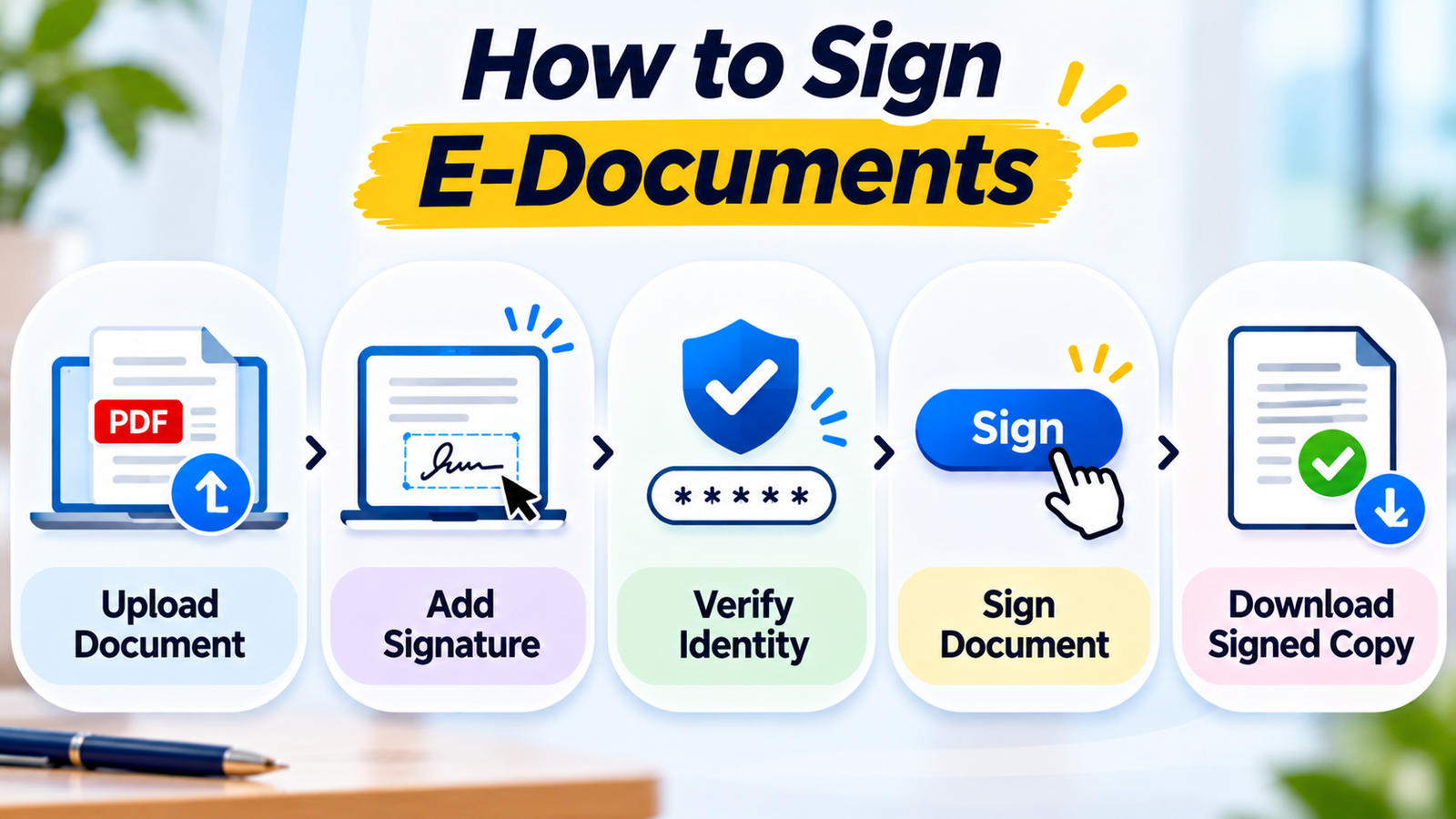
How to Sign a Document Online Legally
A reliable signing process involves more than placing a signature image on a PDF.
- Prepare the final document: Check the names, dates, payment terms, clauses and attachments before sending it for signature.
- Choose an appropriate platform: Use a reputable service that supports the legal and technical requirements of your jurisdiction.
- Verify the signer’s identity: Depending on the document, this may involve email verification, OTP, identity checks or a digital certificate.
- Obtain clear consent: The signer should understand what they are signing and demonstrate an intention to approve the document.
- Complete the signature process: Follow the platform’s signing instructions and confirm that all required parties have signed.
- Save the signed copy and audit trail: Retain the final document, timestamps, authentication records and completion certificate where available.
What Makes an Electronic Signature Legally Strong?
When evaluating E-signature laws and choosing a signing tool, look beyond convenience. A dependable process should establish who signed, when they signed, what they agreed to and whether the document changed afterwards.
Useful safeguards include identity verification, secure access, timestamps, tamper-evident records, consent evidence and a downloadable audit trail.
For important business agreements, these records can help demonstrate the signing process if a dispute arises.
Final Thoughts
Online signing has made everyday business transactions faster, but convenience should never replace legal care. The right approach depends on the document, the country and the level of assurance required.
Understanding E-signature laws helps you choose the right signing method, maintain reliable records and avoid unnecessary disputes. For routine agreements, a reputable electronic signing platform may be sufficient. For property matters, regulated transactions or high-value contracts, check the applicable legal formalities before signing.
A signature is only one part of a valid agreement. Clear consent, proper documentation and reliable evidence matter just as much.
E-signature laws: Frequently Asked Questions
1. Are electronic signatures valid for employment contracts?
They are generally recognised for many employment agreements, subject to local employment law and any special execution requirements.
2. Is typing my name considered a legal signature?
It can qualify as an electronic signature when used with the intention of signing and when applicable legal requirements are met. Its evidentiary strength depends on the circumstances.
3. Can a signed PDF be changed afterwards?
Technically, a PDF may be modified, but doing so can invalidate a digital signature or reveal changes. Preserve the original signed version and verify its signature status before relying on it.
Also Read: GamsGo Review: Shared Streaming Subscriptions, Legit or Risky?