
How to Avoid Ticket Scams: Verified Resale vs Sketchy Listings
When a major esports final sells out, a popular streamer announces a live show, or a gaming convention releases its last batch of passes, the pressure to secure a ticket can make buyers overlook warning signs. Knowing how to avoid ticket scams is essential when purchasing tickets for gaming tournaments, creator events, fan conventions, live podcasts, and streaming entertainment experiences. The UK government reported in August 2026 that research by O2 estimated annual ticket fraud losses at £150 million, with 14% of surveyed gig-goers saying they had purchased a fake ticket. While this research focused on gig-goers, the same risks apply to buyers navigating online resale listings and social media offers.
The challenge is that fraudulent listings can look convincing. Scammers may use genuine event artwork, copied ticket screenshots, fake testimonials, and profiles that appear established. The safest approach is to understand the difference between verified resale and an unverified seller before making a payment.
Verified Resale vs. Sketchy Listings: What’s the Difference?
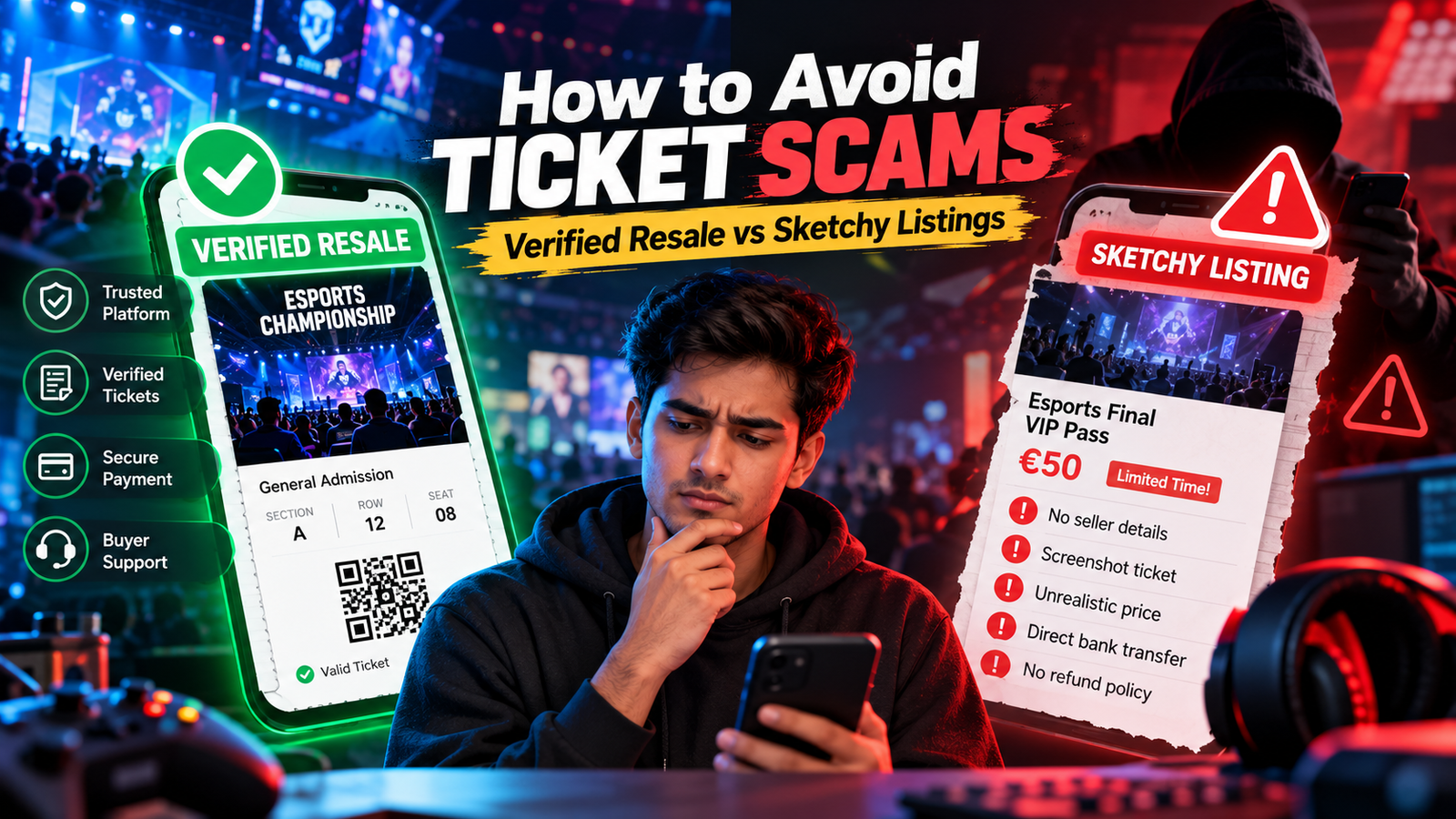
A verified resale ticket is offered through a platform or process that provides specific checks or protections. Depending on the service, this might include ticket validation, secure transfer, buyer support, or a guarantee if a ticket is invalid. However, the word verified does not mean every resale ticket is automatically valid at every event. Always check what the platform actually guarantees.
A sketchy listing typically appears on an unofficial website, social media post, gaming community server, or direct message without reliable proof of ownership or a secure transaction process.
| What to check | Verified resale | Sketchy listing |
|---|---|---|
| Seller and platform | Identifiable platform with published policies | Anonymous profile or unclear business details |
| Ticket delivery | Supported transfer through the official ticketing system | Screenshot, PDF, or vague delivery promise |
| Payment | Checkout with documented buyer protection | Direct bank transfer, cryptocurrency, or gift cards |
| Pricing | Clear total price and fees | Unrealistic discount or surprise charges |
| Refund policy | Written rules and a support process | No clear refund terms or guarantees |
| Event eligibility | Transfer rules can be checked | Seller cannot explain restrictions |
A resale platform can still carry risks, so check the event organiser’s authorised resale options first.
Start With the Official Event Website
Before searching social media for tickets, visit the official website of the tournament organiser, gaming convention, streamer, venue, or promoter. Follow its ticketing link rather than clicking the first advertisement in search results.
This is particularly important for esports events, where tickets may be tied to specific seating sections, access tiers, VIP experiences, or age restrictions. Some events also limit resale or prohibit ticket transfers altogether.
If the official seller shows that an event is sold out, look for a resale partner linked directly by the organiser. Do not assume a site is authorised simply because it uses the event logo or appears prominently in search results.
Check How the Ticket Will Be Transferred
Digital tickets are convenient, but screenshots are not reliable proof of ownership. A barcode or QR code can be copied and sent to several buyers, with only one person potentially gaining entry.
Ask whether the ticket can be transferred through the original ticketing platform. If the event uses an official mobile app, check its instructions for accepting transferred tickets.
Be cautious when a seller claims that a screenshot is all you need, refuses to explain the delivery process, or promises to transfer a ticket that the event rules say is non-transferable. Never share your own account password or one-time verification code to receive a ticket.
Recognise the Warning Signs of Fake Listings
Scammers often exploit excitement and fear of missing out. A seller might claim that another buyer is waiting, demand immediate payment, or offer a premium gaming convention pass at a price far below comparable listings.
Other warning signs include newly created profiles, inconsistent usernames, copied event images, poor-quality websites, and requests to continue the transaction privately after you have contacted a resale platform.
For gaming and streaming events, be especially careful in Discord communities, Reddit threads, Facebook groups, and direct messages from accounts claiming to represent creators. A familiar username or profile picture does not prove that the person is genuine.
Protect Your Payment and Personal Information
Use the official checkout or the resale platform’s own payment system.
- Depending on your country and provider, a credit card or another payment method with a dispute process may offer more options if a transaction goes wrong.
- Avoid sending money directly through bank transfers, cryptocurrency, gift cards, or payment methods that offer little recourse for a fraudulent purchase.
- Never pay an extra fee through an unrelated link to “unlock” a ticket after checkout.
- Before entering payment details, inspect the website address carefully.
- A secure connection alone does not establish that a seller is legitimate.
- Read the refund policy, check the full price including fees, and save your order confirmation.
Check the Rules for Gaming and Streaming Events
Not every ticket provides the same access. An esports championship may distinguish between general admission, premium seating, meet-and-greet access, and backstage experiences. A creator event might require identification that matches the booking, while a gaming convention pass may be valid only on a specific day.
Confirm the date, venue, ticket category, transfer eligibility, and any age or identity requirements before paying. If a listing promises merchandise, early entry, or a creator meet-and-greet, verify that these benefits are included in the official ticket description.
Understanding how to avoid ticket scams also means checking what you are actually buying, not just whether a digital ticket file looks authentic.
What to Do If You Suspect a Ticket Scam
Stop communicating with the seller if you notice inconsistencies or pressure to make another payment. If you have already paid, contact your bank or payment provider promptly and ask whether the transaction can be disputed. Keep the listing, messages, payment receipt, seller details, and any ticket files as evidence.
Report the account or listing to the platform where you found it. You can also contact the event organiser or original ticket provider to ask whether the transfer is legitimate. If you shared passwords or verification codes, secure the affected account immediately and enable multifactor authentication.
Frequently Asked Questions
1. Can screenshots of gaming event tickets be trusted?
Not reliably. Screenshots can be copied, reused, or altered. Prefer an official ticket transfer that places the ticket in your own account.
2. Is every verified resale ticket guaranteed to work?
No. Protection depends on the platform’s actual terms and the event’s transfer rules. Read the guarantee carefully and confirm that resale is permitted.
3. Is it safe to buy tickets through Discord or social media?
It is riskier when the seller cannot be independently verified, or the transaction takes place outside a protected checkout. Use official sales channels or authorised resale options wherever possible.
How to Avoid Ticket Scams: Final Thoughts
A sold-out gaming final or a rare chance to see your favourite creator live can make an unofficial offer feel tempting. But a convincing screenshot, an urgent message, or a bargain price is not proof of a genuine ticket.
The best way to avoid ticket scams is to start with the event organiser, use authorised resale channels, verify the transfer process, and keep payments within a platform that clearly explains its buyer protections. A few checks before checkout can help protect both your money and the experience you have been looking forward to.
Also Read: AirAsia MOVE Review: Flights, Hotels, Deals and Booking Experience