by parth@bidkinetic.com | Oct 29, 2026 | LifeStyle
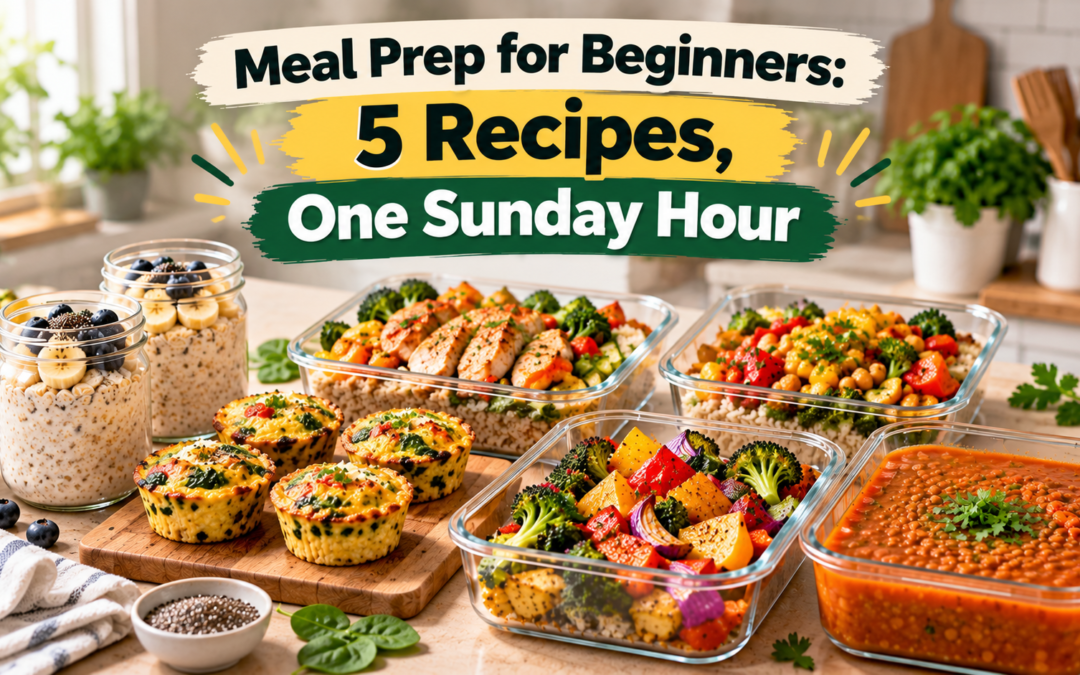
Our everyday goal is not to cook every meal for the entire week. It is to remove the small decisions that make weekday cooking tiring: what to eat, whether you have the ingredients and how long dinner will take. With five simple recipes, shared ingredients and a little organisation, one Sunday hour can give you a useful head start on the week. This meal prep for beginners plan uses oats, eggs, chicken or chickpeas, rice, vegetables and lentils to keep the shopping list manageable. You can adapt the quantities to your household, swap ingredients based on local prices and adjust the seasoning to suit your taste.
Your Sunday Shopping List
For approximately four servings of the main dishes, plus breakfast portions, gather:
- Rolled oats, milk or a fortified plant-based alternative, yoghurt and bananas
- Eggs, spinach and a little grated cheese
- Chicken breast or firm tofu, canned chickpeas and brown or white rice
- Lentils, canned chopped tomatoes, onions, carrots and bell peppers
- Olive oil, garlic, cumin, paprika, black pepper, salt and lemon
- Optional toppings: nuts, seeds, fresh herbs or hot sauce
Check your pantry before shopping. Frozen vegetables work well in cooked dishes, and canned chickpeas reduce preparation time.
5 Easy Meal-Prep Recipes
1. Banana Overnight Oats
Prep time: 5 minutes | Makes: 2 portions
Overnight oats are a useful breakfast when you have little time in the morning. They need no cooking and can be customised with fruit, nuts or spices.
Ingredients
- 1 cup rolled oats
- 1 cup milk or unsweetened plant milk
- ½ cup plain yoghurt
- 1 banana, sliced
- A pinch of cinnamon
Method
Divide the oats, milk and yoghurt between two containers. Stir, add the banana and cinnamon, then cover and refrigerate. If you prefer a different texture, add a splash of milk before eating.
For variation, use frozen berries or a spoonful of peanut butter. Keep crunchy toppings separate until serving.
2. Spinach and Cheese Egg Muffins
Prep time: 5 minutes | Cook time: 15-18 minutes | Makes: 6 muffins
These mini frittatas work for breakfast, a quick snack or a light lunch with toast and fruit.
Ingredients
- 4 eggs
- 1 cup chopped spinach
- ¼ cup grated cheese
- Black pepper and a pinch of salt
Method
Heat the oven to 180°C (350°F). Beat the eggs, stir in spinach, cheese and seasoning, then divide the mixture between six lightly greased muffin cups. Bake until the centres are fully set.
Let them cool briefly before storing. Reheat individual portions thoroughly when ready to eat. If you do not have a muffin tray, bake the mixture in a small oven-safe dish and cut it into squares.
3. Lemon-Spiced Chicken or Chickpea Rice Bowls
Prep time: 10 minutes | Cook time: 20 minutes | Makes: 3-4 portions
This flexible bowl is the foundation of your lunch plan. Choose chicken for one version or chickpeas for a plant-based alternative.
Ingredients
- 1 cup uncooked rice
- 2 chicken breasts, sliced, or 1 can chickpeas, drained
- 1 bell pepper and 1 onion, chopped
- 1 tablespoon olive oil
- ½ teaspoon each of paprika and cumin
- Lemon juice, salt and pepper
Method
Cook the rice according to the packet instructions. Toss the chicken or chickpeas with oil, spices, salt and pepper. Sauté the chicken until fully cooked, or cook the chickpeas with the vegetables until warmed through and lightly browned. Add lemon juice at the end.
Divide the rice, protein and vegetables into containers. Keep sauces separate so the bowls do not become soggy. Chicken and chickpeas can also be used in wraps or salads for variety.
4. One-Pan Roasted Vegetables
Prep time: 10 minutes | Cook time: 20-25 minutes | Makes: 3-4 side portions
Roasted vegetables add colour and flavour to rice bowls, sandwiches and quick dinners without requiring another complicated recipe.
Ingredients
- 2 cups broccoli florets
- 2 carrots, sliced
- 1 bell pepper, chopped
- 1 tablespoon olive oil
- Garlic, black pepper and paprika
Method
Toss the vegetables with oil and seasoning. Spread them in a single layer on a baking tray and roast at 200°C (400°F) until tender and lightly browned, turning once if needed.
Use whatever vegetables are affordable or already in your fridge. Courgettes, cauliflower and frozen vegetables suitable for roasting can also work. Avoid overcrowding the tray, as tightly packed vegetables tend to steam instead of brown.
5. Quick Tomato and Lentil Soup
Prep time: 5 minutes | Cook time: 20-25 minutes | Makes: 3 portions
This hearty soup gives you a freezer-friendly option for later in the week. Lentils provide plant protein and fibre, while tomatoes and spices create a rich base.
Ingredients
- 1 cup red lentils, rinsed
- 1 can chopped tomatoes
- 1 small onion, diced
- 1 carrot, diced
- 3-4 cups vegetable stock or water
- ½ teaspoon cumin and a little black pepper
Method
Soften the onion and carrot in a saucepan with a little oil. Add the lentils, tomatoes, cumin and stock. Simmer until the lentils are tender, adding water if the soup becomes too thick. Taste and adjust the seasoning.
Divide into individual portions. Serve with toast, or add leftover roasted vegetables when reheating for a more substantial meal.
Your One-Hour Sunday Prep Schedule
The secret is to work on several recipes at once rather than completing each one from start to finish.
| Time |
Task |
| 0-10 minutes |
Start the rice, preheat the oven, chop vegetables and mix the overnight oats |
| 10-20 minutes |
Put egg muffins and vegetables in the oven; begin the lentil soup |
| 20-35 minutes |
Cook the chicken or chickpeas while the soup simmers and the vegetables roast |
| 35-45 minutes |
Check doneness, finish cooking and prepare storage containers |
| 45-60 minutes |
Portion meals, label containers, refrigerate or freeze appropriately, and clean up |
This schedule assumes you have the ingredients ready, use the oven and stovetop simultaneously, and have enough pans and containers. Cooking times can vary, so allow extra time if you are new to the kitchen.
How to Store Your Meals Safely
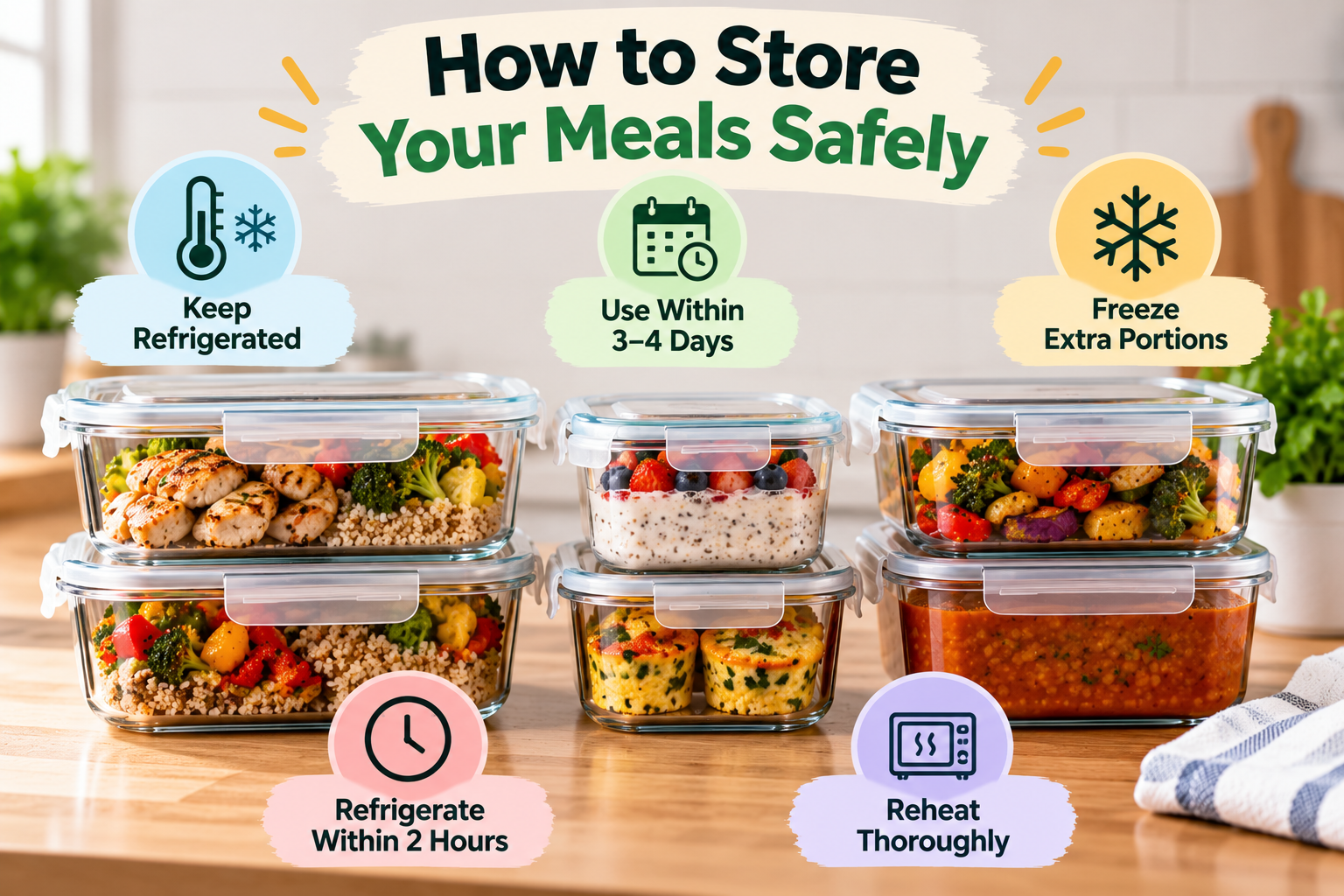
Meal prep only works when food stays safe to eat. Refrigerate cooked dishes promptly, using shallow containers to help them cool quickly. Do not leave perishable food at room temperature for more than two hours. Keep your refrigerator at or below 4°C (40°F), and use most cooked leftovers within three to four days. Freeze portions that you will not eat within that period.
Label containers with the preparation date and reheat only the portion you intend to eat. Reheat leftovers to 74°C (165°F). Keep ingredients such as sauces and fresh toppings separate until serving to preserve texture.
Make Next Week Easier
The best meal prep for beginners routine is one you can repeat without feeling tied to the kitchen all Sunday. Start with these five recipes, see which meals you actually enjoy and adjust the quantities next week. One hour of preparation can make busy mornings and evenings easier, reduce last-minute takeaway decisions and help you use groceries more thoughtfully.
Meal Prep for Beginners: Frequently Asked Questions
1. Is meal prep for beginners expensive?
It does not have to be. Start with inexpensive staples such as oats, eggs, rice, lentils, seasonal vegetables and canned beans. Reusing ingredients across several recipes helps reduce waste and makes shopping more predictable.
2. What containers are best for meal prep?
Choose clean, food-safe, airtight containers in portion sizes that suit your meals. Microwave-safe containers are useful for reheating, while separate small containers help keep dressings and toppings fresh.
3. What if I get bored eating the same meals?
Change the flavour rather than cooking everything from scratch again. Try lemon and herbs one day, cumin and paprika another, or use the rice and protein in a wrap or salad. Keep sauces and toppings separate for more flexibility.
Also Read: Snaplii and Digital Wallets in Canada: A Newcomer’s Guide
by parth@bidkinetic.com | Oct 29, 2026 | LifeStyle
Grocery bills often rise for reasons that have little to do with the price of essential foods. Duplicate pantry purchases, last-minute convenience items, oversized packs and produce that spoils before it is used can quietly push spending beyond budget. The challenge is not simply finding cheaper groceries; it is getting more usable meals from every dollar spent. The U.S. Environmental Protection Agency estimates that food waste costs the average American consumer approximately $728 annually, or around $56 per week. That makes food waste a practical place to start when looking at how to cut your grocery bill.
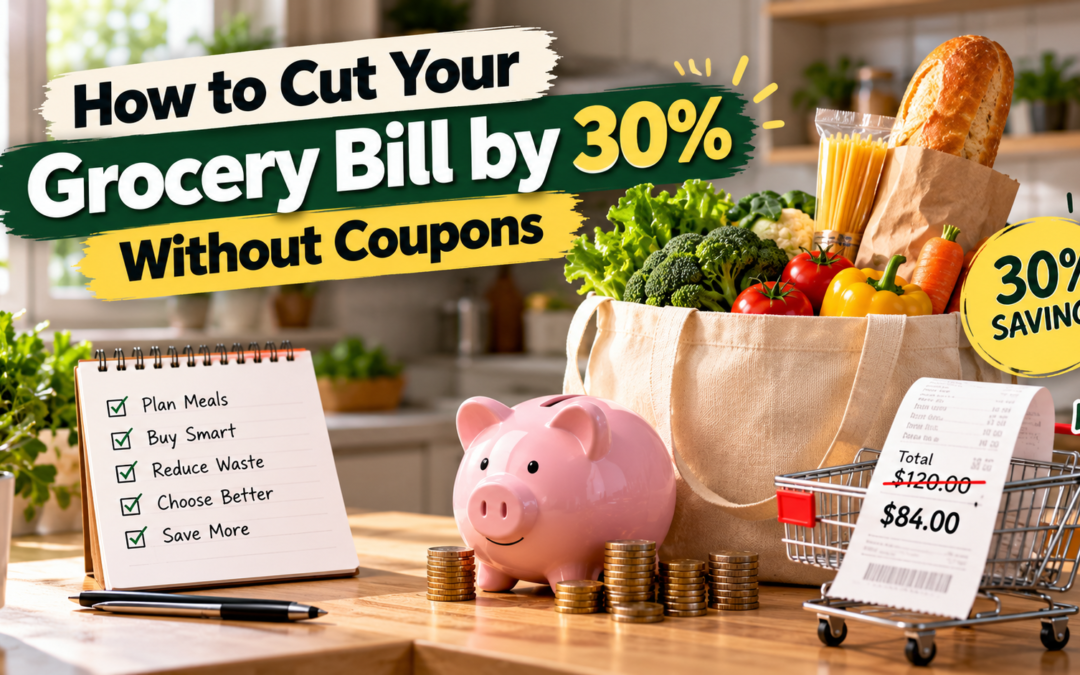
A 30% reduction is an ambitious target, not a guaranteed result, but combining smarter meal planning, lower-cost substitutions and better storage can make a meaningful difference without clipping coupons or compromising nutrition.
1. Start by Tracking What You Actually Spend
Before changing your shopping habits, review your grocery receipts and bank transactions from the past month. Separate essential ingredients from snacks, ready-made meals, drinks and household products. Include small top-up trips because these can add up faster than expected.
If you spend $800 a month on groceries, a 30% reduction would mean bringing the total down to $560, saving $240. Use this as a target rather than assuming every household can achieve the same result.
Identify your three biggest spending categories and focus on those first. If packaged snacks dominate your bill, changing your produce-buying habits alone will not deliver substantial savings.
2. Plan Meals Around Food You Already Own
Check your refrigerator, freezer and pantry before writing a shopping list.
- That half-used bag of spinach, leftover rice or unopened tin of beans could form the basis of a meal you would otherwise buy ingredients for.
Plan five or six main meals for the coming week, leaving room for leftovers or an unplanned meal.
- Build the menu around overlapping ingredients.
- For example, roasted vegetables can become a lunch bowl the next day, while cooked beans can be used in wraps, salads or a simple curry.
This approach reduces duplicate purchases and makes your shopping list more precise. The U.S. EPA also recommends planning meals around food already available at home to prevent waste.
3. Compare Unit Prices Instead of Pack Sizes
A larger pack is not automatically cheaper. Unit pricing shows the cost per kilogram, litre, 100 grams or another standard quantity, making comparisons between brands and pack sizes easier.
For example, a 500-gram bag of oats costing $2.50 works out to $5 per kilogram. A one-kilogram bag costing $4.20 costs $4.20 per kilogram, making it the better value if you will use the full amount.
Apply this comparison to rice, pasta, cereal, cooking oil, cleaning products and other regular purchases. Check the price per usable quantity, not just the headline price. For fresh produce or meat, also consider trimming, preparation and spoilage.
4. Switch Selected Branded Products to Store Brands
You do not need to replace every familiar product.
- Start with staples where brand loyalty may not make much difference, such as flour, sugar, oats, canned tomatoes, dried pasta, beans and frozen vegetables.
Compare ingredient lists, nutrition information and pack sizes before switching.
- A cheaper alternative is worthwhile when it meets your household’s needs, and the quality is acceptable.
Keep premium products where you genuinely notice a difference, but test lower-cost alternatives for routine ingredients. Even modest savings across several frequently purchased items can accumulate over a month.
5. Build Meals Around Affordable Ingredients
Meat, speciality products and ready-to-eat foods can make meals expensive when they appear in every dish. Try using affordable protein sources such as lentils, chickpeas, beans, eggs or tofu more often, depending on your dietary needs and local prices.
A pot of lentil soup, bean chilli or chickpea curry can provide several servings. Pair these dishes with grains and vegetables for satisfying meals without relying on costly ingredients.
Frozen vegetables and seasonal produce are also worth comparing with out-of-season fresh options. Frozen foods can be especially useful because you can take out what you need and keep the rest stored safely.
6. Stop Paying for Convenience You Can Prepare Yourself
Pre-cut fruit, grated cheese, individually wrapped snacks, and pre-seasoned ingredients often cost more than their less-processed equivalents. Convenience products are not always a bad purchase, especially when time is limited, but they deserve a closer look.
Try washing and chopping vegetables in batches, portioning snacks at home and preparing a simple dressing or seasoning mix yourself. If a family-size pack is cheaper per serving, divide it into usable portions and store them properly.
The important distinction is between saving money and creating extra work. Choose the tasks that offer worthwhile savings without making meal preparation unrealistic.
7. Reduce Food Waste With a Weekly Fridge Check
Food that gets thrown away represents money already spent. The EPA estimates that more than one-third of food in the United States is never eaten, although the amount wasted varies by household and food category.
Set aside ten minutes before your weekly shop to identify ingredients that need using soon. Move older items to the front, freeze suitable foods before they spoil and label leftovers with the date. Follow safe storage guidance and discard food that is unsafe to eat.
Create a flexible “use-it-up” meal each week, such as soup, fried rice, pasta or an omelette. These dishes can make use of several leftover ingredients without requiring a separate shopping trip.
8. Shop Less Often and Give Every Trip a Purpose
Frequent grocery trips create more opportunities for impulse purchases. A planned weekly shop, supported by one small top-up if necessary, can help you stay within budget.
Write your list by category and stick to it. Before adding an unplanned item, ask whether it is needed for a specific meal or whether you already have something suitable at home. Avoid buying large quantities just because something is on offer unless you have the storage space and a realistic plan to use it.
Online shopping can help some households avoid browsing temptations, but compare delivery fees and minimum-order requirements before deciding which method is cheaper.
A Practical Grocery-Saving Plan on How to Cut Your Grocery Bill
| Strategy |
What to change |
How to measure progress |
| Meal planning |
Plan meals around existing ingredients |
Fewer duplicate purchases |
| Unit pricing |
Compare cost per kilogram or litre |
Lower cost for regular staples |
| Store brands |
Replace selected branded basics |
Lower average basket cost |
| Affordable proteins |
Use beans, lentils and eggs more often |
Lower cost per serving |
| Food-waste prevention |
Freeze, store and use leftovers |
Less food discarded |
| Fewer shopping trips |
Shop from a planned list |
Fewer unplanned purchases |
| Convenience swaps |
Prepare selected items at home |
Lower cost for equivalent portions |
How to Cut Your Grocery Bill by 30% Without Guesswork
For four weeks, record your grocery spending and compare it with a baseline month. Keep household size, dietary needs and the definition of grocery spending consistent. Track food bought, food discarded and any extra takeaway spending that replaces planned meals.
If your monthly bill is $800, aim for $200 in savings first, then assess whether reaching $240 is realistic. Do not count a lower grocery bill as a genuine saving if you have simply shifted the expense to restaurants or takeaway meals.
The most useful changes are the ones you can maintain. A lower-cost meal plan, sensible substitutions and less waste will generally be more dependable than chasing temporary bargains.
How to Cut Your Grocery Bill: FAQs
1. How to cut your grocery bill by 30% without coupons?
It is possible for some households, particularly those with substantial food waste, frequent impulse purchases or expensive convenience habits. However, results depend on your starting budget, local prices and household needs. Treat 30% as a goal to test rather than a guaranteed outcome.
2. What is the easiest way to start saving on groceries?
Begin by checking what you already own and planning meals around those ingredients. Make a list before shopping and compare unit prices for products you buy regularly. These changes require no coupon collection or paid subscription.
3. Are store-brand groceries as good as branded products?
Many store-brand products can be suitable alternatives, but quality and ingredients vary. Compare labels, nutrition information, pack sizes and taste. Switch selectively rather than assuming every cheaper product is equivalent.
Also Read: The Best Meal Kit for Your Situation: Solo, Family, or Fitness

by parth@bidkinetic.com | Oct 28, 2026 | Games
A game can cost nothing to download and still become a regular expense. A battle pass here, a limited-time skin there, a few extra lives when you’re close to finishing a level-individual purchases can feel insignificant until the monthly statement arrives. Managing free-to-play spending is less about refusing every in-game purchase and more about deciding what your entertainment is worth before a game starts asking for money.
The numbers suggest this is a relevant issue for many players. According to Lumikai’s 2025 consumer research report, based on a survey of more than 3,000 Indian smartphone users, 33% of respondents said they made payments in games. The report identified in-game purchases, virtual currency, and battle passes among the ways players spend. An earlier Lumikai survey covering September 2023 to September 2024 found that 25% of gamers had spent money on games. These figures reflect different survey periods and samples, but both point to a gaming culture where free downloads and paid extras comfortably coexist.
The challenge is that gaming purchases rarely arrive as one large bill. They are spread across different games, stores, currencies, and payment methods. A sensible budget brings all of them together without turning gaming into a financial guilt trip.
Why Free Games Can Become Expensive
Free-to-play games often earn revenue through optional purchases, including character skins, premium currencies, season passes, upgrades, and random-reward boxes. These purchases can genuinely improve the experience. The trouble starts when the timing of an offer influences the decision more than its actual value.
A limited-time cosmetic may disappear soon. A battle pass may promise rewards if you keep playing. A discounted currency bundle may look like a bargain even when you did not intend to buy anything.
The Australian Competition and Consumer Commission warns that some game features can pressure players into spending repeatedly, even when a game is advertised as free. The US Federal Trade Commission has also highlighted concerns about unclear virtual-currency pricing and loot boxes.
The answer is not to assume every game is manipulative. It is to create a system that gives you control over the timing and amount of your purchases.
Build a Gaming Budget That Fits Your Life
Start with money left after essentials such as housing, bills, food, savings, and debt payments. Gaming spending should come from discretionary income, not money needed for those priorities.
Choose a monthly amount you can comfortably afford, even if that amount is zero. For example, a gamer with ₹1,000 available for entertainment might allocate ₹600 to gaming purchases, ₹200 to subscriptions, and leave ₹200 unspent. These are illustrative figures, not recommended spending targets; your budget should reflect your circumstances.
The key is to set one limit across every game and platform. Otherwise, ₹300 on mobile, ₹500 on PC, and ₹400 on console can quietly become a ₹1,200 month.
The Simple Spending System

| Rule |
How it works |
Why it helps |
| Monthly cap |
Set one total limit for all games |
Prevents scattered purchases adding up |
| Waiting period |
Wait 24 hours before buying non-essential items |
Reduces impulse spending |
| Wishlist first |
Save skins and bundles before purchasing |
Separates interest from urgency |
| Real-money tracking |
Record the actual currency cost |
Makes virtual purchases easier to understand |
| One battle pass |
Prioritise one active pass at a time |
Avoids paying for rewards you cannot finish |
| Monthly review |
Check receipts and subscriptions |
Reveals recurring costs and unused purchases |
Keep the system simple enough to maintain. A note on your phone or a basic spreadsheet is enough. Record the date, game, item, actual amount paid, and whether the purchase was planned.
Decide What Is Worth Paying For
Not all purchases offer the same value. A cosmetic skin you use for hundreds of hours may provide more enjoyment than a bundle you forget about after a week. A battle pass can be worthwhile if you already play regularly, but less so if you are buying it mainly to avoid missing rewards.
Before spending, ask three questions: Would I still want this if it were available next month? Does it fit my remaining budget? Will I realistically use or enjoy it?
For random-reward purchases, be even more cautious. A loot box does not guarantee the item you want, and buying more boxes does not make a previous unsuccessful purchase worthwhile. If the odds or total potential cost are unclear, skip it.
A good free-to-play spending plan makes room for purchases you genuinely value while removing the pressure to buy everything a game promotes.
Use Payment Controls to Protect Your Budget
Convenient payment methods make purchases easy, but that also means it is easy to lose track of the total. Review your platform’s account settings and consider:
- Removing saved payment details from games where you tend to make impulse purchases.
- Requiring a password or authentication before transactions.
- Disabling one-tap purchases where possible.
- Setting parental controls and purchase approvals on children’s accounts.
- Turning off promotional notifications that encourage rushed decisions.
If you share a device or payment method with family members, agree on purchase rules in advance. For younger players, discuss virtual currency in real-money terms and make it clear whether purchases are allowed, how much is available, and who must approve them.
Track the Cost of Every Game You Play
Your monthly gaming expense may include more than microtransactions. Add subscriptions, downloadable content, premium memberships, and purchases made through official or third-party stores. Check recurring charges after a game stops being part of your routine.
A simple monthly review can separate spending into three categories: planned purchases, spontaneous purchases, and recurring costs. If spontaneous spending repeatedly pushes you over budget, adjust your controls rather than relying on willpower alone.
The best free-to-play spending system is one you can follow during an exciting event, a competitive season, or a tempting store rotation, not just during a quiet week.
Final Takeaway
Gaming should be entertainment, not a recurring financial surprise. Set one monthly cap, track real-money costs, give non-essential purchases time to cool off, and spend only on items that genuinely improve your experience. With a practical approach to free-to-play spending, you can enjoy your favourite games without letting every new season, skin, or limited-time offer decide how much you pay.
Frequently Asked Questions
1. How much should I spend on free-to-play games?
There is no universal amount. Set a limit based on your disposable income after essentials and savings. Spending nothing is a perfectly valid choice.
2. Are battle passes worth buying?
They can be worthwhile if you play enough to enjoy the rewards and the price fits your budget. Check the pass duration and required playtime before paying.
3. How do I stop impulse purchases in games?
Use a 24-hour waiting rule, disable one-tap payments, mute promotional notifications, and keep a wishlist. These small barriers create time to reconsider.
Also Read: Airwallex Review: Best Business Account for International Payments?
by parth@bidkinetic.com | Oct 28, 2026 | LifeStyle
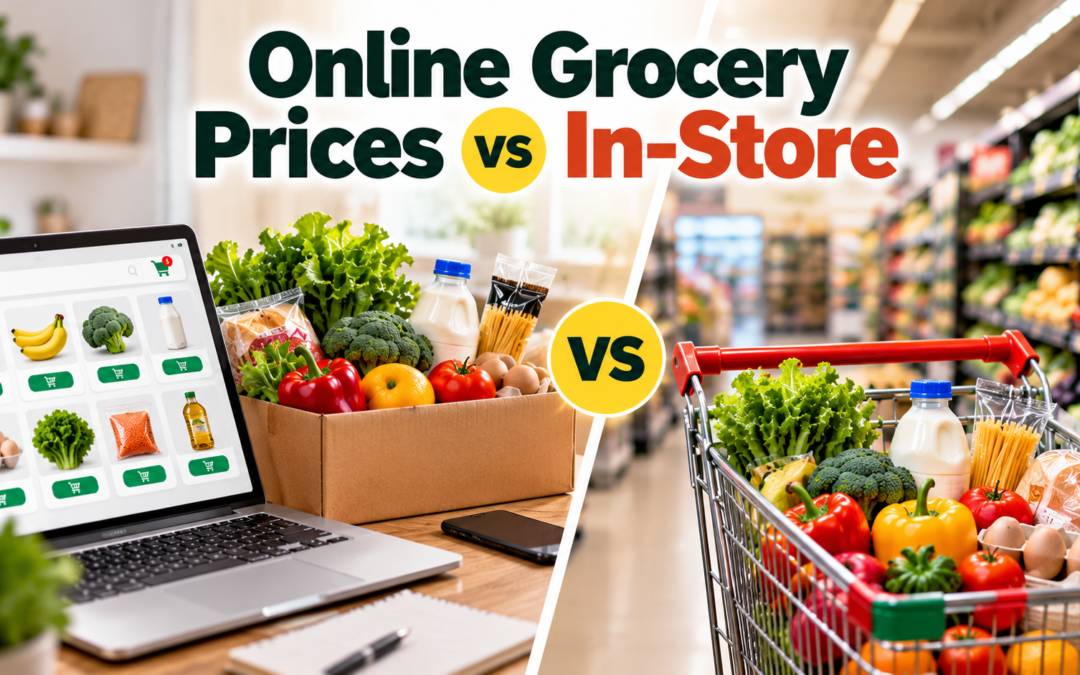
A grocery bill is shaped by more than the price printed beside a product. Delivery charges, app-only discounts, pack sizes, impulse purchases, and changing promotions can all affect what you pay at checkout. That is why comparing online grocery prices vs in-store requires more than checking the price of milk or a packet of rice once.
A national comparison by NBC stations in March 2026 also found that prices for 12 matching grocery items were generally the same across in-store shopping, online pickup, and delivery at Walmart, Target, and Whole Foods. Delivery fees, however, added approximately $9.95-$13.95 to orders in that test.
So, which option saves more? To answer that properly, a month-long comparison needs to track identical products, quantities, promotions, and fees. Here is how to evaluate the 50-item basket and what the findings should reveal.
How to Compare 50 Grocery Items Over 30 Days
A useful comparison starts with a fixed shopping list rather than whatever happens to be on sale. The basket should represent a realistic household’s weekly purchases, covering pantry staples, fresh food, packaged products, and everyday essentials.
For a fair test, record the price of each item in a physical supermarket and on its online shopping platform on the same day. Repeat the process throughout the month, ideally at the same time of day, and note any stock shortages or substitutions.
The comparison should include:
- Pantry staples: Rice, atta, cooking oil, pulses, sugar, salt, and flour.
- Dairy and breakfast: Milk, curd, butter, cheese, bread, and breakfast cereal.
- Fresh produce: Potatoes, onions, tomatoes, bananas, apples, and seasonal vegetables.
- Packaged foods: Biscuits, snacks, pasta, noodles, sauces, and ready-to-eat products.
- Household essentials: Dishwashing liquid, detergent, toilet paper, and cleaning supplies.
These categories make it easier to spot patterns. Fresh produce may be affected by seasonal pricing, while branded packaged goods are often easier to compare because the pack size and product specifications are clearly stated.
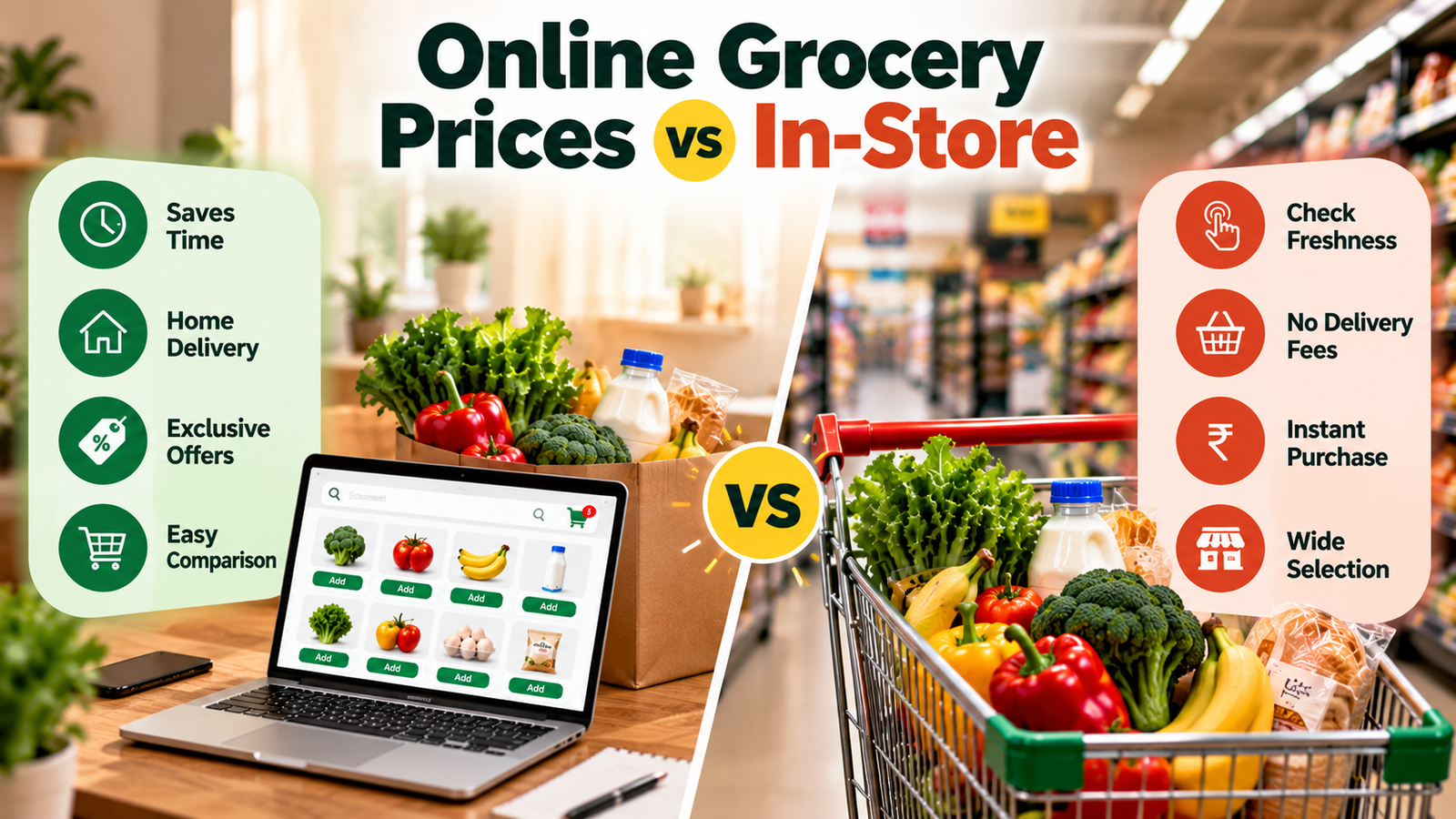
Online Grocery Prices vs In-Store: What Should Be Measured?
The biggest mistake in grocery comparisons is treating the displayed product price as the final cost. A product may cost the same through both channels, yet the online order can become more expensive after service fees and delivery charges.
| Comparison factor |
Online grocery shopping |
In-store shopping |
| Product prices |
May match store prices or vary by platform |
Depends on local store pricing and promotions |
| Discounts |
App coupons, digital offers, loyalty deals |
Shelf promotions, loyalty offers, clearance deals |
| Delivery costs |
May include delivery, handling, or platform fees |
Usually no delivery fee for shoppers carrying purchases home |
| Minimum order |
Some services require a minimum basket |
No delivery minimum for ordinary walk-in shopping |
| Impulse purchases |
Suggested products and promotional banners |
End-of-aisle displays and checkout products |
| Product selection |
Convenient search and price filtering |
Easier to inspect freshness, quality, and pack condition |
| Time and travel |
Saves the trip to the store |
Requires travel, parking, and time spent shopping |
The most useful number is the final basket total, not the cheapest individual product. Keep loyalty discounts and coupons in the calculation, but record them separately so you can distinguish regular prices from temporary savings.
What a Month of Tracking Can Reveal
Without verified records from the actual 50 items, it would be misleading to claim that online shopping was a specific percentage cheaper or more expensive. Still, a properly conducted comparison can uncover several useful patterns.
1. Identical prices do not mean identical bills. If product prices match but delivery costs extra, in-store shopping may win on total cost. Online pickup can offer a middle ground when available without a substantial fee.
2. Discounts can change the winner. A platform coupon may make a large order cheaper, but the savings should be calculated after any minimum-spend requirement and service charges.
3. Pack sizes can distort comparisons. A 5 kg rice bag should not be compared directly with a 1 kg bag by total price. Calculate the cost per kilogram, litre, or unit.
4. Shopping habits affect the final amount. Online ordering makes it easy to review a basket before paying, while physical shopping lets customers inspect products and compare shelf offers. Either method can encourage overspending if the shopper lacks a list.
5. Availability matters. A low online price is not useful if the item is unavailable and replaced with a more expensive alternative. Record substitutions rather than silently treating them as identical products.
A month-long record is especially valuable because a single shopping day may coincide with a sale, a seasonal price change, or a temporary stock shortage.
How to Calculate the Real Savings
For each shopping day, add the cost of the same 50 items and then include any applicable charges.
Net online difference = Online final total − In-store final total
A positive result means online shopping cost more for that basket; a negative result means it cost less.
For example, if the in-store basket costs ₹4,000 and the online basket costs ₹4,000 before fees, a ₹99 delivery charge makes the online total ₹4,099. The difference is ₹99, or approximately 2.5% of the in-store total.
Repeat this calculation for each weekly comparison and then compare the monthly averages. Do not add together four weekly baskets if they represent repeated purchases of the same items; use a consistent basket and report the method clearly.
For anyone investigating online grocery prices vs in-store, this approach separates genuine product-price differences from the cost of convenience.
Which Shopping Method Is Better for Your Budget?
In-store shopping is often attractive when you have easy access to a supermarket, need only a few products, or want to inspect fresh food personally. It can also be economical when the store offers promotions that are not available online.
Online shopping may be better for large planned orders, people with limited time, or households that can use worthwhile discounts without paying excessive fees. A saved shopping list also makes repeat orders easier and reduces the risk of forgetting essentials.
The smartest approach may be to use both. Buy fresh produce and urgent items in-store when practical, then compare online prices for heavier pantry staples and household products. The online grocery prices vs in-store decision should be based on your actual basket, not a blanket assumption that one channel is always cheaper.
Frequently Asked Questions
1. Are online groceries more expensive than in-store groceries?
Not necessarily. Product prices may be identical, but delivery and service fees can increase the final bill. Some platforms also offer discounts that change the comparison.
2. How many items should I compare to get a reliable result?
Fifty commonly purchased items provide a useful starting point. Tracking them over several weeks helps account for promotions and short-term price changes, although one retailer or location cannot represent every market.
3. Should delivery fees be included in grocery price comparisons?
Yes. Compare the complete checkout total, including delivery, handling, small-order charges, and applicable taxes. Include tips where relevant, and show them separately if they are optional.
Also Read: Kovo Credit Builder Review: How Does It Work?
by parth@bidkinetic.com | Oct 28, 2026 | LifeStyle
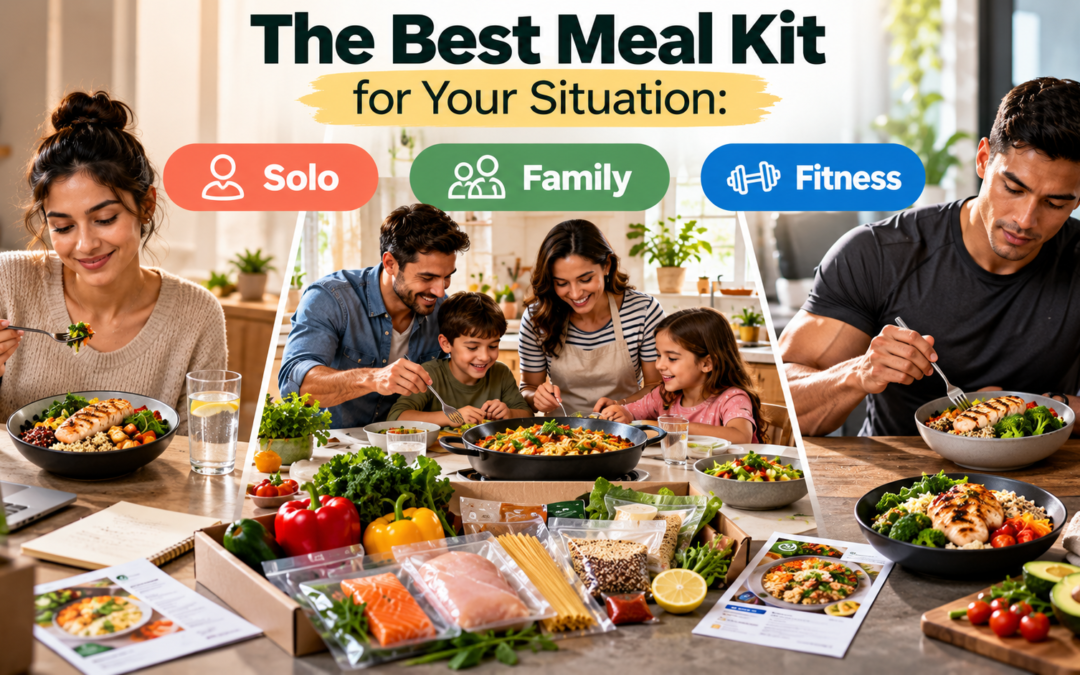
Choosing a meal kit is no longer just about avoiding grocery shopping. It is about finding a system that fits your household, schedule, appetite, and nutritional priorities. A five-minute microwave meal might be ideal for a professional living alone, while a family of four may need flexible portions and recipes that children will actually eat. Someone training for a marathon or building muscle will have different priorities altogether, including protein, carbohydrates, and portion consistency. The challenge is that meal kits and prepared-meal subscriptions solve different problems. Meal kits supply ingredients and recipes for cooking at home; prepared meals arrive cooked and generally need reheating. Finding the best meal kit for your situation starts with understanding which format suits your everyday life.
1. Best Meal Kits for People Living Alone
Cooking for one can be surprisingly inconvenient. Grocery packs may contain more produce than you can use, many recipes serve two or more people, and buying delivery every evening can become expensive.
For solo diners, the right service depends on whether you enjoy cooking or simply want dinner ready after work.
Top options to consider:
- Factor: Best for convenience. Its prepared meals are designed for reheating, making them useful for busy professionals who want to minimise kitchen time.
- CookUnity: Best for variety. It offers chef-prepared, single-serving meals, with menu choices that can suit people who want different cuisines throughout the week.
- EveryPlate: Best for budget-conscious home cooks. Its straightforward meal kits can help reduce the cost of cooking, particularly if you are happy to prepare multiple servings and save leftovers.
Before subscribing, check minimum order quantities, delivery charges, and serving sizes. A low advertised price per serving may depend on ordering more meals than you actually need.
Who should choose this category? People living alone, working irregular hours, or trying to reduce takeaway orders without committing to extensive meal preparation.
2. Best Meal Kits for Families
Family meal planning involves more than putting dinner on the table. Parents must balance different appetites, food preferences, preparation time, and the weekly grocery budget. A meal kit can simplify that routine, but only if its portions and recipes suit the household.
Top options to consider:
- HelloFresh: A strong option for households that enjoy cooking together. Its recipe range includes familiar weeknight meals and dishes with different flavours, helping families introduce variety without planning everything from scratch.
- Home Chef: Worth considering for portion flexibility and customisation. Depending on the available menu, households can choose recipes and options that better fit their needs.
- Blue Apron: Suitable for families who want to explore different recipes and cooking techniques. Its meal-kit and prepared-meal offerings can provide flexibility for different evenings.
When comparing family plans, look beyond the number of recipes available. Check whether the serving sizes match your children’s appetites, whether ingredients can be swapped, and whether the cooking time includes chopping and cleanup.
A useful strategy is to order two familiar meals and one new recipe each week. This keeps dinner predictable enough for picky eaters while introducing variety gradually.
Who should choose this category? Parents, couples with children, and shared households that want a more organised approach to weekday dinners.
3. Best Meal Kits for Fitness and Nutrition Goals
Fitness-focused eating requires a more deliberate approach. Someone trying to build muscle may prioritise protein, while an endurance athlete may need sufficient carbohydrates to support training. A person managing their weight may care about portion sizes and overall energy intake.
The best choice is not necessarily the service advertising the most protein. It is the one that makes it practical to follow your nutritional plan consistently.
Top options to consider:
- Factor: Useful for active people who want prepared meals with minimal cooking. Review the nutrition label for protein, calories, sodium, and other nutrients before selecting meals.
- Green Chef: Worth exploring if you prefer cooking at home and want menus built around particular dietary preferences, including some high-protein and plant-forward options.
- Trifecta Nutrition: A fitness-oriented prepared-meal service to consider if you want meals aligned with goals such as performance, muscle gain, or weight management. Check the current plan details and available menu before ordering.
For fitness, consistency matters more than impressive packaging. Compare the actual nutrition information for each meal, and make sure the portions align with your needs. If you have a medical condition or specific dietary requirements, a registered dietitian can help you determine appropriate targets.
Who should choose this category? Gym-goers, recreational athletes, busy professionals following a nutrition plan, and anyone who wants to spend less time calculating or preparing meals.

Meal Kit Comparison: Which One Fits You?
| Your situation |
Services to consider |
Main advantage |
What to check |
| Living alone |
Factor, CookUnity |
Single-serving convenience |
Minimum orders and total delivery cost |
| Budget-conscious solo cook |
EveryPlate |
Simple, economical recipes |
Leftovers and ingredient quantities |
| Family meals |
HelloFresh, Home Chef |
Recipe variety and household flexibility |
Portion sizes and child-friendly choices |
| Fitness and nutrition |
Factor, Green Chef, Trifecta Nutrition |
Convenient meals with nutrition information |
Protein, calories, sodium, and serving size |
| Enjoy cooking |
HelloFresh, Blue Apron |
Guided recipes and hands-on preparation |
Actual cooking and cleanup time |
Availability, menus, plan structures, and prices can change. Check each provider’s current website and delivery coverage before subscribing.
How to Choose the Best Meal Kit for Your Situation
Before paying for a subscription, ask yourself four practical questions.
How much time do I have? If you have less than ten minutes to prepare dinner, a ready-made meal may be more realistic than a recipe kit requiring chopping and cooking.
What is my weekly budget? Calculate the total cost, including shipping, taxes where applicable, and any subscription fees. Compare it with what you would ordinarily spend on groceries or takeaway meals.
Will I eat every meal? A large plan is poor value if meals sit untouched in the refrigerator. Start with a smaller order, if available, and track what you actually consume.
Can the service accommodate my diet? Check ingredient lists, allergen statements, and nutrition labels. Dietary filters are useful, but they do not automatically guarantee suitability for a severe allergy.
Ultimately, the best meal kit for your situation is the one you can afford, enjoy, and use consistently. Your household size matters, but so do your cooking habits and the realities of your week.
Final Takeaway
The best meal kit for your situation should solve a genuine problem, whether that means making solo dinners easier, taking pressure off family meal planning, or helping you stay consistent with fitness nutrition. Start with your real routine, compare total costs, and test a small order before committing to a long-term plan.
Frequently Asked Questions
1. Are meal kits cheaper than grocery shopping?
Not always. Meal kits can reduce planning time and help portion ingredients, but grocery shopping and cooking from scratch are often cheaper. Compare the full weekly cost rather than introductory offers alone.
2. Are meal kits suitable for one person?
Yes. Prepared single-serving meals are especially convenient, while ingredient-based kits can work if you are happy to eat leftovers. Always check minimum serving requirements.
3. Which meal kit is best for building muscle?
Look for meals with sufficient protein and enough total energy to support your training. Factor and Trifecta Nutrition are options to investigate, but suitability depends on each meal’s actual nutritional profile and your individual requirements.
Also Read: AirAsia MOVE Review: Flights, Hotels, Deals and Booking Experience
