by parth@bidkinetic.com | Oct 21, 2026 | LifeStyle
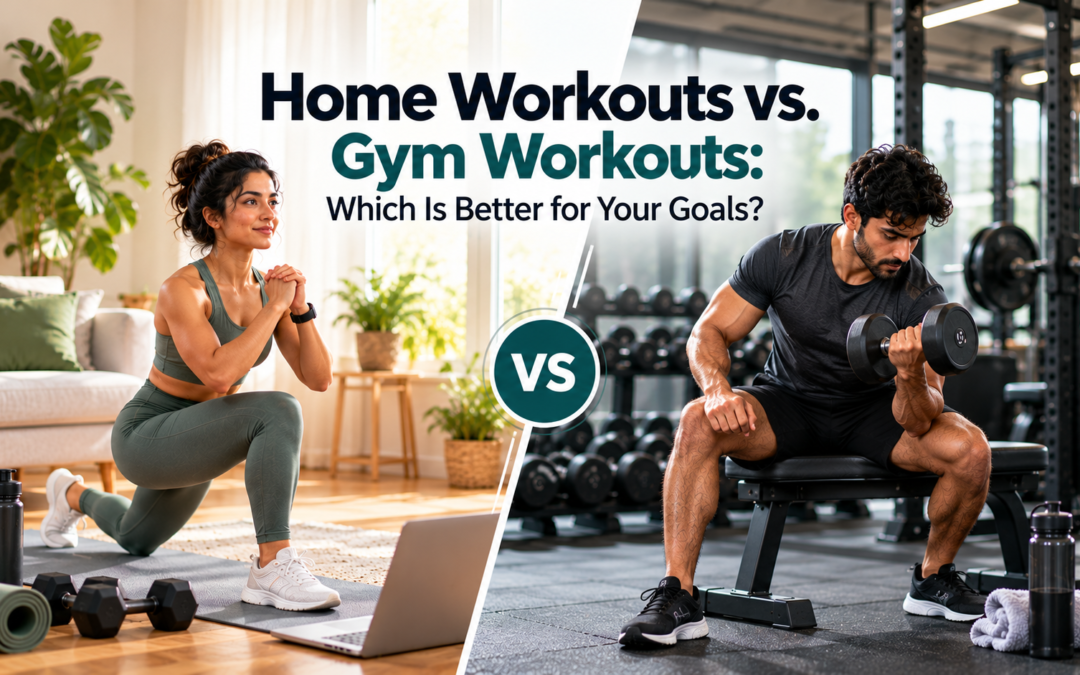
The debate around home workouts vs. gym training often comes down to one question: where will you get better results? The answer depends less on the location and more on the quality of your training, the equipment available, and how consistently you exercise. It is suggested that you get at least 150 minutes of moderate-intensity aerobic activity each week, plus muscle-strengthening activities on at least two days. You can meet these recommendations through brisk walking, bodyweight exercises, resistance bands, free weights, or gym machines.
Home workouts offer convenience and lower ongoing costs, while gyms provide equipment, dedicated training space, and access to professional guidance. Neither automatically guarantees better fitness. Someone who follows a structured home routine can make meaningful progress, just as a gym member can struggle if workouts are inconsistent. The smarter choice is the one that supports your specific goal and fits your everyday life.
1. Home Workouts vs. Gym: Which Is Better for Weight Loss?
Weight loss depends on maintaining an appropriate calorie deficit over time, alongside habits that support health and activity. Both home and gym workouts can contribute to that process.
At home, you can combine brisk walking, dance workouts, bodyweight circuits, and strength exercises without commuting. This makes it easier to fit movement into a busy schedule. However, home sessions still need enough intensity and consistency to challenge your fitness level.
Gyms offer treadmills, stationary bikes, rowing machines, and other equipment that makes it easier to vary cardio sessions. You can also combine cardio with resistance training in one visit.
Which should you choose? Choose home workouts if convenience helps you exercise regularly. Choose a gym if you enjoy equipment variety or find a dedicated exercise environment more motivating. Neither setting guarantees faster fat loss.
2. Building Muscle: Where Do You Get Better Results?
Muscle growth requires resistance training that challenges your muscles and progresses as your strength improves. You do not necessarily need a gym membership to begin.
Home training can start with squats, push-ups, lunges, glute bridges, resistance bands, and adjustable dumbbells. These exercises can build strength when the difficulty increases appropriately. The limitation is equipment: as you become stronger, you may need heavier weights or more challenging variations.
A gym generally offers more options for progressive resistance, including barbells, dumbbells, cable machines, and weight machines. This can make it easier to train specific muscle groups and increase loads in small increments.
For beginners, home training can be enough to establish strength and technique. For people pursuing substantial muscle growth, a well-equipped gym may offer greater flexibility. Still, the quality of your programme matters more than the building in which you train.
3. Cost Comparison: Home Equipment vs. Gym Membership
The financial difference becomes clearer when you calculate the total cost over several months rather than comparing one purchase with one monthly fee.
Home workouts may require little more than comfortable clothing and a mat. Resistance bands or adjustable dumbbells are optional starting investments. A gym membership, by contrast, can involve monthly dues, joining fees, transport, and sometimes additional coaching costs.
| Factor |
Home workouts |
Gym workouts |
| Starting cost |
Low with bodyweight exercise |
Membership or entry fees |
| Equipment |
Optional personal purchases |
Shared machines and weights |
| Travel |
No commute required |
Travel time and transport |
| Coaching |
Apps or online instruction |
Trainers may be available at extra cost |
| Exercise variety |
Depends on space and equipment |
Usually broader equipment selection |
| Long-term expense |
Often lower, depending on purchases |
Recurring membership costs |
Home training is usually the more economical starting point, but the difference depends on your purchases and local membership prices. If you buy extensive equipment, home workouts can become expensive too.
4. Motivation, Consistency, and Time
A workout plan only works when you can follow it repeatedly. This is where personal preferences matter more than generic fitness advice.
- Home exercise eliminates travel and lets you train around work, childcare, or other commitments.
- You can complete a 20-minute session between meetings or exercise early in the morning without waiting for equipment.
- The downside is that household distractions can interrupt training, and some people find it difficult to stay accountable alone.
A gym provides a dedicated space where exercise becomes the main activity.
- Group classes, familiar routines, and seeing other people train can help some members stay motivated.
- However, crowded equipment areas and commuting can make sessions less convenient.
If you regularly skip the gym because getting there feels like a chore, home training may be the better option. If your home environment makes concentration difficult, a gym may help you establish a more reliable routine.

5. Equipment, Coaching, and Workout Variety
Home workouts can be surprisingly versatile. Bodyweight training, yoga, Pilates, resistance bands, and dumbbells cover many fitness needs. Apps such as Verv can also help organise guided sessions and walking or running activities.
However, exercise demonstrations and programmes are not a substitute for personalised coaching when you need technique corrections or have specific training requirements. Beginners may benefit from professional guidance, particularly when learning unfamiliar lifts.
Gyms typically provide a wider selection of equipment, and some offer trainers who can demonstrate exercises, adjust programmes, and help you develop sound technique. Availability and coaching fees vary.
When comparing home workouts vs. gym training, consider the equipment required for your actual goal. You may not need a gym for general fitness, but access to heavier weights can become valuable as your strength increases.
6. How to Choose Based on Your Fitness Goal
Your ideal training environment should support the result you want without making exercise unnecessarily difficult to maintain.
- Weight management: Either setting works. Choose the option that helps you maintain regular activity and sustainable eating habits.
- Muscle growth: Home training can work with sufficient resistance, while gyms offer more equipment for progressive overload.
- General fitness: Walking, bodyweight exercise, resistance bands, and gym sessions can all contribute.
- Busy schedules: Home workouts reduce travel time and make short sessions easier to organise.
- Learning proper technique: Consider qualified coaching, whether at a gym or through suitable professional instruction.
You can also combine both options. Train at home during busy weekdays and use a gym when you want heavier weights or equipment you do not own. Your routine does not need to follow a strict either-or approach.
FAQs
1. Are home workouts as effective as gym workouts?
They can be, depending on your programme, intensity, equipment, and consistency. Home training is effective for many general fitness goals, while gyms offer more resistance and equipment choices.
2. Can I build muscle without going to the gym?
Yes. Bodyweight exercises, resistance bands, and dumbbells can build muscle when the training challenges you and becomes progressively harder. More advanced goals may require heavier resistance.
3. Which is cheaper: home workouts or a gym membership?
Home workouts are often cheaper, especially when you use bodyweight exercises. Gym costs depend on membership prices, travel, and whether you pay for coaching or additional services.
Final Verdict
There is no universal winner in the home workouts vs. gym debate. Home training offers flexibility, privacy, and lower entry costs. Gyms provide equipment variety, dedicated space, and opportunities for coaching.
Start with the environment that makes exercise easiest to maintain. Set a realistic schedule, track your progress, and increase the challenge as your fitness improves. If your goals or circumstances change, you can always switch or combine both approaches. Consistency and a suitable training plan will matter far more than where you exercise.
Also Read: Kovo Credit Builder Review: How Does It Work?

by parth@bidkinetic.com | Oct 20, 2026 | LifeStyle
The first few steps after getting out of bed can be surprisingly painful when plantar fasciitis affects your feet. The condition involves irritation and strain in the plantar fascia, a thick band of tissue connecting the heel to the front of the foot. Walking on hard floors, spending long hours standing or increasing activity too quickly can aggravate symptoms. Choosing the right footwear can make everyday movement more comfortable, but not every cushioned sneaker provides the support your feet need. The best walking shoes for plantar fasciitis combine appropriate heel cushioning, a stable base, a secure heel counter and enough room for your toes.
The ideal combination depends on your arch, foot width, walking habits and whether you use orthotic insoles. Here are five options worth considering, from wide-fit comfort footwear to supportive walking shoes designed for longer days on your feet.

FitVille is worth considering if standard sneakers feel restrictive around your forefoot. Its Rebound Neo range is designed with wider-fitting options and cushioning intended for everyday walking. The brand highlights features such as dual-density midsoles, removable insoles and additional room for wider feet.
- Why consider them: A roomy fit can help prevent uncomfortable squeezing, while a supportive sole and removable insole may suit people who need to accommodate an orthotic.
- Best for: Walkers who struggle with narrow footwear or need additional toe-box space.
- Before buying: Confirm the exact model’s width, arch support and insole design. FitVille offers several styles, and features vary between them. Do not assume every model provides the same level of support.
Explore the FitVille plantar fasciitis footwear guide for its range and design details.
2. HOKA Bondi 9: Best for Maximum Cushioning
The HOKA Bondi 9 is a cushioned shoe to consider if your walks involve pavements, concrete paths or other hard surfaces. Its thick midsole and rocker-shaped profile are designed to provide cushioning and a rolling transition through each step. These features may appeal to people who prefer a softer landing and a less abrupt push-off.
- Why consider it: Substantial cushioning, a broad platform and rocker geometry.
- Best for: Everyday walking, longer outings and people who prefer a highly cushioned shoe.
- Before buying: A thick sole does not guarantee comfort for every foot. Try the shoe on and check that the heel feels secure and the arch support suits your foot.
3. Brooks Addiction Walker 2: Best for Structured Walking Support
The Brooks Addiction Walker 2 is a dedicated walking shoe with a more structured construction than many lightweight trainers. Its stable platform and motion-control features make it worth considering for people who want additional guidance during walking, particularly when their feet roll inward excessively.
- Why consider it: A supportive structure, firm feel and removable insole that can accommodate some orthotics.
- Best for: Longer periods of walking or standing, including workdays spent on hard floors.
- Before buying: This shoe may feel heavier and less flexible than a casual sneaker. Its structured support is not necessary for everyone, so consider your foot mechanics and comfort preferences.
4. New Balance 928v3: Best for Stability and Width Options
The New Balance 928v3 is another option for walkers who prioritise stability over a lightweight, minimalist feel. It is designed as a supportive walking shoe, with a structured platform and width options that can help people find a more suitable fit.
- Why consider it: Stability-focused construction and multiple width options, depending on the version and market.
- Best for: People who need a supportive everyday walking shoe and find standard-width footwear uncomfortable.
- Before buying: Check current availability, sizing and whether the shoe’s support features suit your gait. A stability shoe should feel supportive rather than forcing your foot into an uncomfortable position.
5. ASICS GEL-KAYANO: Best for Stability-Focused Walkers
Although designed primarily as a running shoe, the ASICS GEL-KAYANO range can also be considered for walking. Its stability-oriented construction is intended to help manage excessive inward foot movement, while cushioning supports repeated impact.
- Why consider it: A combination of cushioning and stability features.
- Best for: People who prefer a structured athletic shoe for walking and everyday use.
- Before buying: Stability footwear is not automatically the right choice for every person with heel pain. If you have high, rigid arches or find stability shoes uncomfortable, a different cushioning profile may work better. Check the specifications of the particular version you plan to buy.
Quick Comparison: Which Shoe Should You Consider?
| Shoe |
Main strength |
Suitable starting point |
| FitVille Rebound Neo |
Wide-fit comfort |
Wider feet and toe-box space |
| HOKA Bondi 9 |
Maximum cushioning |
Long walks on hard surfaces |
| Brooks Addiction Walker 2 |
Structured support |
Walking and standing for work |
| New Balance 928v3 |
Stability and width options |
Support-focused daily walking |
| ASICS GEL-KAYANO |
Stability-oriented cushioning |
Walkers who prefer structured trainers |
These are starting points rather than a universal ranking. Fit, comfort and the specific version matter more than brand reputation alone.
What to Look for Before Buying
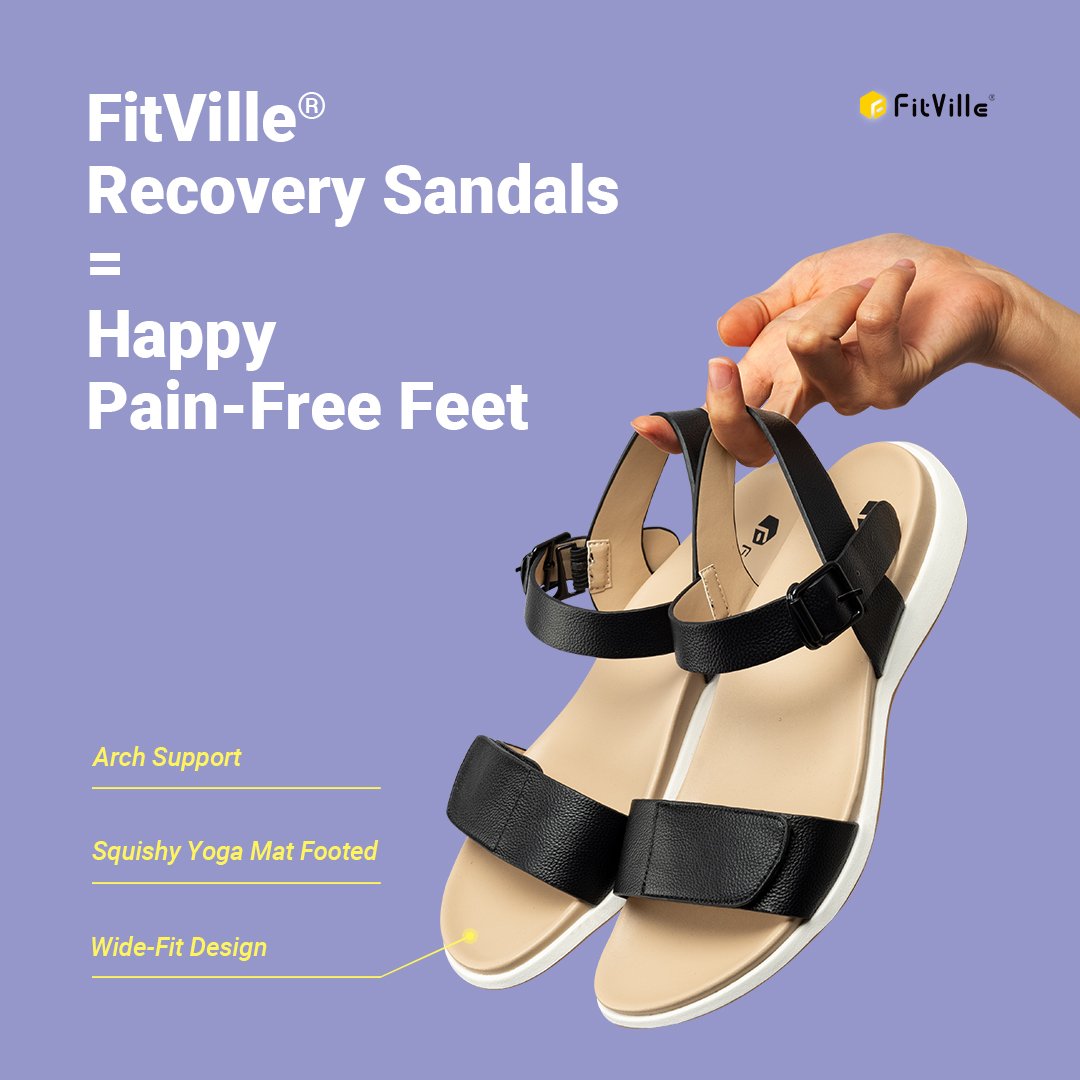
When comparing walking shoes for plantar fasciitis, check four things: cushioning under the heel, a heel counter that holds its shape, a midsole that resists excessive twisting, and a toe box that allows comfortable movement.
Try shoes later in the day, when feet may be slightly swollen, and wear your usual walking socks. If you use prescribed orthotics, check whether the insole is removable and whether the shoe has enough depth. Walk around the store and pay attention to heel security, arch pressure and any rubbing.
Final Thoughts
The best walking shoes for plantar fasciitis are those that fit your feet, support your preferred activities and remain comfortable throughout the day. FitVille is a useful starting point for wider-fit options, while HOKA, Brooks, New Balance and ASICS offer different approaches to cushioning and stability.
Rather than choosing solely by reviews or marketing claims, compare the shoe’s construction, try it on and seek personalised advice when symptoms persist. A well-fitting pair can support a more comfortable walking routine as part of a broader approach to managing heel pain.
Frequently Asked Questions
1. Can walking shoes cure plantar fasciitis?
No. Supportive footwear may improve comfort, but it does not guarantee recovery. Treatment may also involve stretching, strengthening, activity adjustments and professional guidance.
2. Is FitVille a good option for plantar fasciitis?
FitVille is worth exploring if you need a wider fit, cushioning or removable insoles. Check the specifications and fit of the individual model rather than relying on the brand name alone.
3. Should I choose soft or firm shoes?
Look for a balance of cushioning and stability. Extremely soft footwear that collapses under your foot may not provide the support you need.
Also Read: JustFit App Review: Can a 10-Minute Workout App Deliver Results?
by parth@bidkinetic.com | Oct 20, 2026 | Health
Wearable activity trackers can record your heart rate, count your steps, estimate calories burned, analyse sleep and even calculate how quickly your body may recover from exercise. But more numbers do not necessarily mean better health insights. The real question behind fitness trackers vs smartwatches is which measurements you can use to make meaningful changes to your routine.
Research published in Frontiers in Digital Health in 2026 reviewed 47 studies on wrist-worn activity trackers and found that accuracy varies by device, activity and measurement. Heart-rate and step-count tracking have improved, but estimating energy expenditure remains challenging. The review reports that recent devices can still show errors of approximately 10-40% in calorie estimates compared with laboratory reference methods.
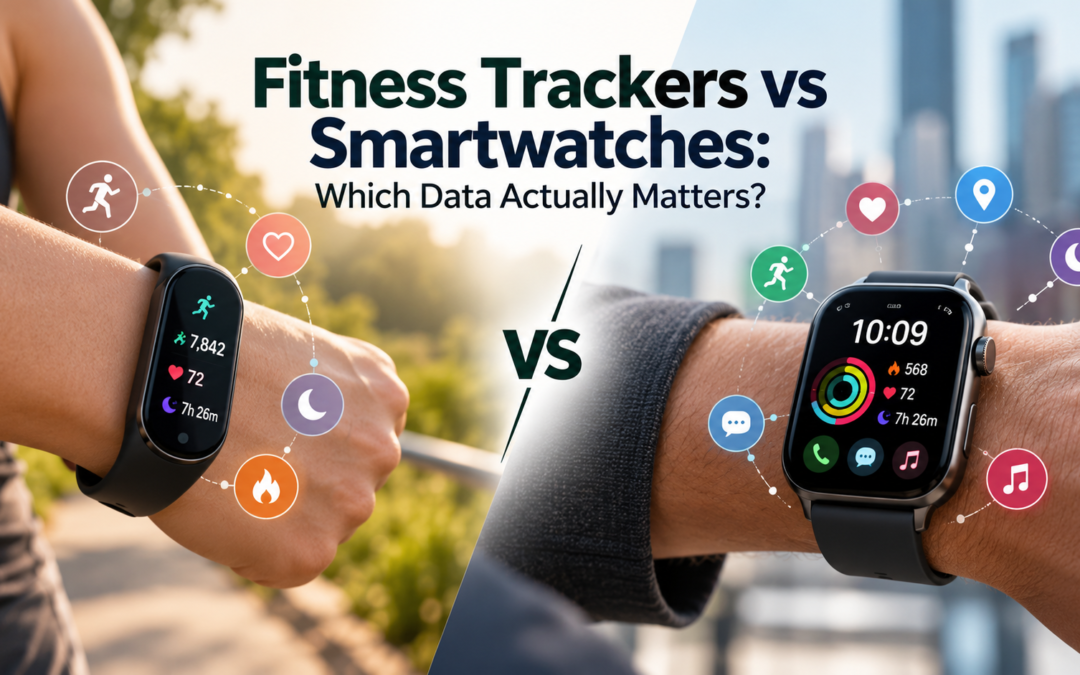
That distinction matters when choosing a wearable. A fitness tracker may offer a simpler way to follow activity and sleep, while a smartwatch combines those functions with apps, calls, notifications and other everyday tools. Neither automatically provides more useful data. The right choice depends on what you want to measure and how you plan to act on the results.
1. Fitness Tracker vs Smartwatch: What Is the Difference?
A fitness tracker is designed primarily to monitor activity and selected health indicators. Many models are lightweight, have fewer distractions and offer battery life suited to continuous wear.
A smartwatch usually adds a larger display, smartphone notifications, calls, third-party apps, contactless payments and music controls. Some models also offer detailed workout analysis, GPS navigation and advanced health features.
The distinction is no longer absolute. Premium fitness trackers can provide detailed recovery insights, and sports-focused smartwatches can deliver sophisticated training metrics. Instead of choosing by product category alone, compare the specific features and data quality of each model.
2. Which Health Metrics Actually Matter?
Heart rate: Useful for understanding exercise intensity
Heart rate helps you see how your body responds to walking, running, cycling and other activities. Over time, it can reveal patterns in workout intensity and resting heart rate.
However, wrist-based optical sensors can struggle during sudden changes in intensity, weight training or activities with repeated wrist movement. Fit, sensor contact and the individual device also affect readings.
Use heart-rate trends to compare similar workouts rather than treating every reading as exact. If precise training measurements are important, look for independent testing and consider whether a compatible chest strap is supported.
Steps and active minutes: Practical measures of movement
Step counts are useful for people who want to move more during the day. Active minutes can help identify whether exercise is becoming a regular habit.
These metrics are most useful when compared over time. If your usual routine involves long periods at a desk, noticing a consistent increase in daily movement may be more meaningful than hitting an arbitrary target every day.
Remember that wrist movement can affect step counting, particularly during household tasks or exercises that do not involve walking.
Sleep duration and consistency: More useful than chasing a perfect score
Wearables estimate sleep using movement, heart rate and other sensor signals. They can help you notice bedtime patterns, changes in sleep duration and differences between weekdays and weekends.
Sleep-stage estimates, however, are not equivalent to a clinical sleep assessment. Treat the overall pattern as a guide rather than assuming every minute of light, deep, or REM sleep has been classified correctly.
Calories burned: A number to interpret cautiously
Calorie expenditure is one of the most tempting metrics to watch, especially when exercising to manage weight. Yet wrist-worn devices estimate energy use using variables such as movement, heart rate, body information and proprietary algorithms.
They do not directly measure all the energy your body uses. Avoid treating the displayed figure as an exact amount you have burned or eating back every reported exercise calorie.
GPS, pace and distance: Important for outdoor training
For runners, cyclists and hikers, GPS quality may matter more than the number of wellness features on a device. Built-in GPS can record routes without requiring a phone, while connected GPS relies on a paired smartphone.
Compare route accuracy, pace stability, battery use and support for your preferred activities. A smartwatch with reliable navigation may be more useful to an outdoor runner than a tracker with extra lifestyle scores.
3. Fitness Trackers vs Smartwatches: A Practical Comparison
| Feature |
Fitness tracker |
Smartwatch |
| Daily steps and activity |
Core focus |
Usually included |
| Heart-rate monitoring |
Common |
Common |
| Sleep tracking |
Often a key feature |
Available on many models |
| Workout analysis |
Basic to advanced |
Basic to advanced |
| GPS |
May rely on phone |
Built-in on many models |
| Calls and apps |
Limited on most models |
Usually more capable |
| Battery life |
Often longer |
Often shorter with frequent use |
| Best suited to |
Consistent health and activity tracking |
Fitness plus everyday connectivity |
These are general tendencies, not guarantees. A dedicated sports watch may outperform a basic fitness band for running, while a premium smartwatch may offer better training analysis than an entry-level tracker. Check the exact model rather than assuming its category determines performance.
4. Which Device Gives You Better Data?
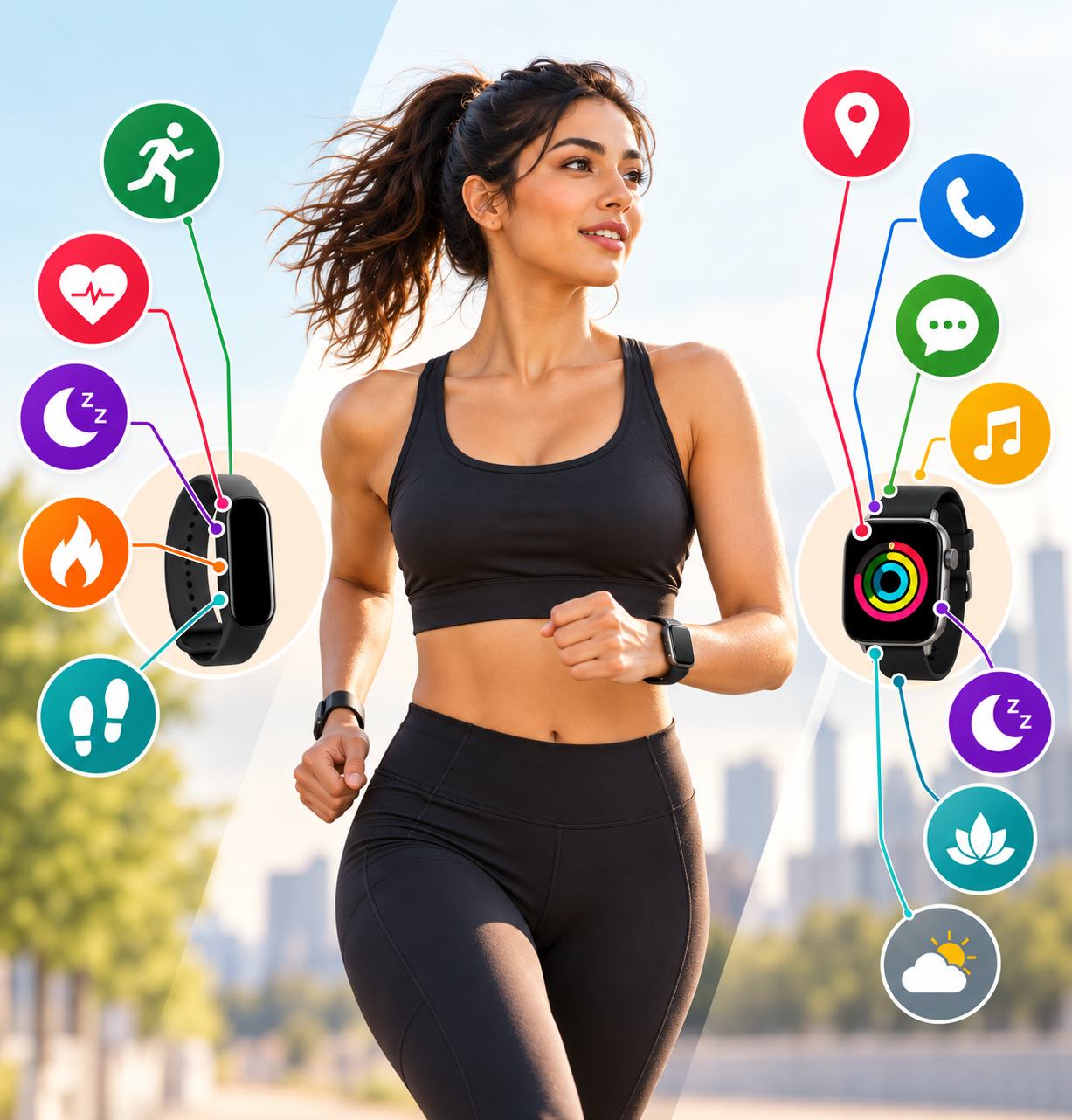
When comparing fitness trackers vs smartwatches, focus on how well the device performs the measurements you actually need.
If your priority is daily activity, sleep consistency, and resting heart-rate trends, a comfortable tracker with reliable sensors may be sufficient. You do not necessarily need a large display or dozens of apps.
If you train for races, GPS accuracy, pace analysis, workout programming and recovery trends become more important. A sports-focused smartwatch may be worth the additional cost.
For people who want to monitor health while managing a busy workday, notifications, calendar access and calls may justify choosing a smartwatch. Just remember that extra features do not automatically make its health measurements more accurate.
Before buying, check independent reviews, supported phone operating systems, subscription requirements, battery performance and whether your preferred metrics are available without paying for an additional service.
5. How to Turn Wearable Data Into Better Decisions
The most useful wearable is one that helps you change a habit, not one that gives you another screen to check.
- For everyday movement: Review weekly step averages and active minutes.
- For exercise: Compare heart rate and pace across similar sessions.
- For sleep: Look for consistent bedtime and sleep-duration patterns.
- For recovery: Combine wearable trends with how rested you actually feel.
- For long-term progress: Compare several weeks of data rather than reacting to one unusual day.
Keep the limitations in mind. Consumer wearables are useful for general trends, but their readings should not be used alone to diagnose a medical condition or replace professional assessment.
Final Verdict: Choose the Data You Will Actually Use
The debate around fitness trackers vs smartwatches is not about finding one universal winner. It is about matching the device to your priorities.
Choose a fitness tracker if you want a lightweight, focused way to monitor daily activity and health trends. Choose a smartwatch if you need those functions alongside connectivity, navigation and broader training tools.
Above all, prioritise reliable measurements, comfortable daily wear and clear insights over the sheer number of metrics advertised. The best wearable is the one that helps you understand your habits and make better decisions consistently.
Frequently Asked Questions
1. Are fitness trackers more accurate than smartwatches?
Not necessarily. Accuracy depends on the specific device, sensor, activity and metric. Compare independent testing for the measurements that matter to you.
2. Which is better for sleep tracking?
Either can work well for observing sleep duration and routine. Comfort, battery life and consistent overnight wear may matter more than whether the device is called a tracker or smartwatch.
3. Should I trust the calories-burned number?
Treat it as an estimate, not an exact measurement. Wearable calorie calculations can have substantial errors, so avoid making major dietary decisions based solely on that number.
Also Read: The Capsule Wardrobe Formula: 30 Pieces, 100 Outfits

by parth@bidkinetic.com | Oct 20, 2026 | Fashion
Ordering clothes from an international brand can be exciting until you reach the size selector. A familiar M might fit perfectly in one store but feel tight in another. A UK 10, US 6 and EU 38 may appear to describe similar clothing sizes, yet they are not universally interchangeable across brands or garment types. That is why learning how to read size charts is more useful than memorising your usual size.
The reason is that clothing sizes are not based on one globally uniform measurement system. The International Organization for Standardization (ISO) publishes standards for defining body measurements and developing clothing size tables, but brands still make sizing decisions around their target customers, designs and intended fit. ISO 8559-3, for example, explains how body measurement data and measurement intervals are used to develop sizing tables.
When shopping across the US, UK, European and Asian markets, the right approach is to compare actual measurements, understand what each chart measures and account for the way a garment is designed to fit.
1. Start With Measurements, Not Your Usual Size
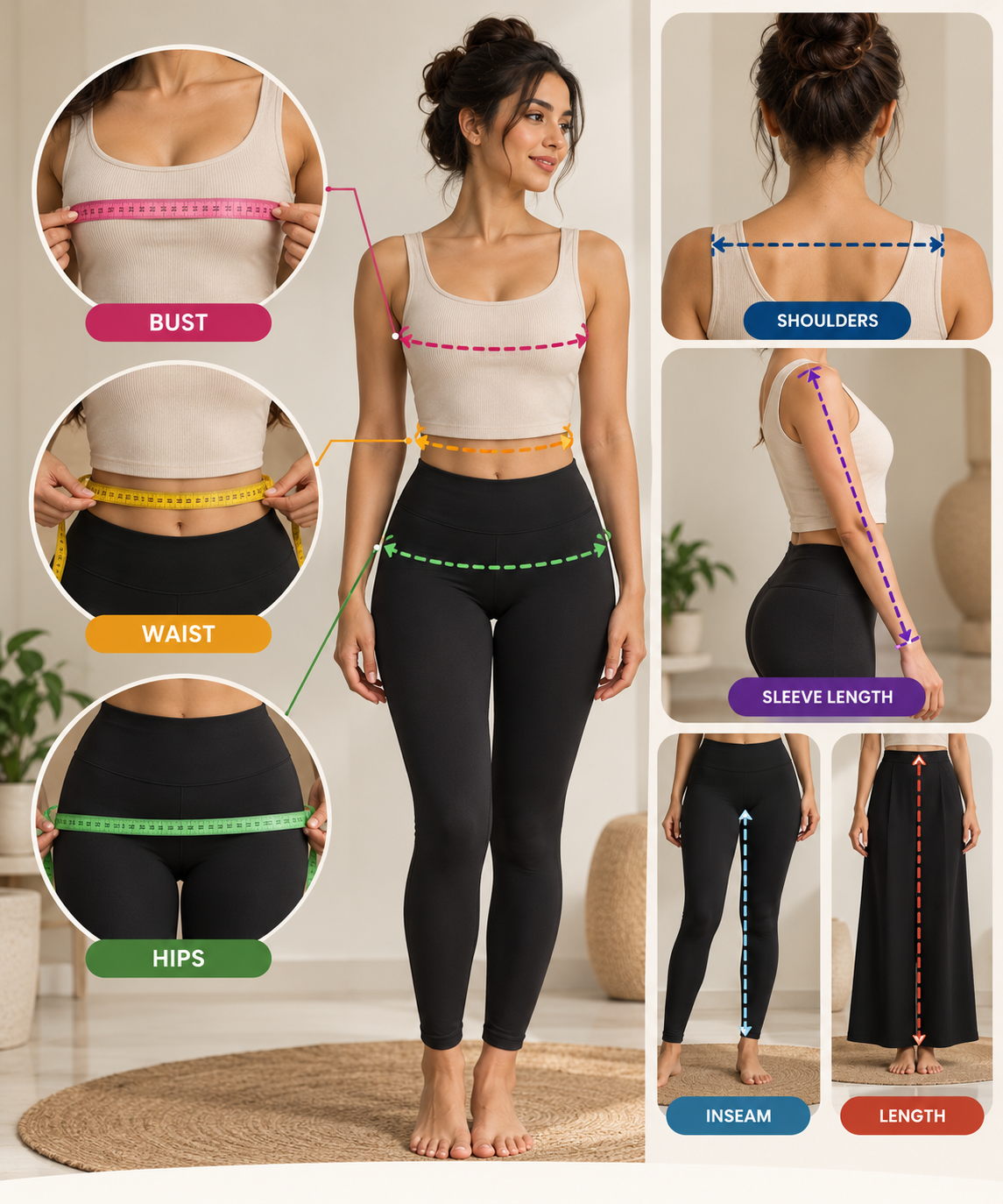
Before choosing a size, take your body measurements with a flexible measuring tape. Measure over light clothing, keep the tape comfortably snug and avoid pulling it tight enough to compress your body.
For most clothing, these measurements are a practical starting point:
- Bust or chest: Measure around the fullest part of your chest, keeping the tape level.
- Waist: Measure around your natural waist, usually the narrowest part of your torso.
- Hips: Measure around the fullest part of your hips and seat.
- Inseam: Measure from the crotch to the desired trouser hem.
- Shoulders and sleeve length: Check these when buying shirts, jackets or structured tops.
Write your measurements in centimetres and inches if you shop from different countries. One inch equals 2.54 centimetres, so a small conversion error can affect the fit of a close-fitting garment.
Measure again occasionally, particularly if your current wardrobe fits differently or you are buying a garment with little stretch.
2. Understand Which Country’s Size System You Are Seeing
International size labels can be confusing because the same number does not mean the same thing everywhere. Use the retailer’s own chart rather than assuming a direct conversion.
The table below gives a general guide to common labels. These are examples of sizing systems, not guaranteed one-to-one equivalents.
| Market |
Common women’s clothing labels |
What to check |
| United States (US) |
Numeric sizes such as 0, 2, 4, 6 |
Brand-specific bust, waist and hip ranges |
| United Kingdom (UK) |
Numeric sizes such as 4, 6, 8, 10 |
The UK chart, not a US conversion |
| European Union (EU) |
Numeric sizes such as 32, 34, 36, 38 |
The brand’s EU measurements |
| International |
XS, S, M, L, XL |
Actual body measurements assigned to each label |
| Asian markets |
Numeric or letter-based labels |
Garment-specific measurements and fit notes |
Important: These systems do not have a universal conversion rule that works for every retailer. Even two brands using the same country sizing system may assign different measurements to the same label.
3. Check Whether the Chart Shows Body or Garment Measurements
This is one of the most important steps in understanding how to read size charts.
A body measurement chart tells you the body dimensions a size is intended to fit. A garment measurement chart gives the actual dimensions of the finished item.
For example, a shirt designed for a 96 cm chest may measure more than 96 cm across its full circumference because it needs room for movement and comfort. That additional space is often called ease.
Do not compare your body measurement directly with a garment measurement without checking what the chart represents. If a product page lists the garment’s chest width measured flat, remember that the full circumference is approximately twice that width.
Also look for instructions such as “measure from shoulder to hem” or “waist measured flat.” These details tell you how the retailer obtained the numbers.
4. Choose a Size Based on the Garment Type
Your measurements may remain the same, but the best size can change depending on what you are buying. A fitted blazer, oversized T-shirt and stretch dress are designed to sit differently on the body.
Use these guidelines when comparing products:
- Tops and shirts: Prioritise bust or chest, shoulder width and sleeve length. For fitted shirts, shoulder measurements can be especially important.
- Jeans and trousers: Check waist, hips, rise and inseam. Two pairs with the same waist measurement can feel different because of their rise and cut.
- Dresses: Compare bust, waist and hip measurements, then check the length. A bodycon dress needs a different fit from an A-line dress.
- Outerwear: Allow for the clothes you plan to wear underneath. A jacket worn over a sweater may need more room than a lightweight layer.
- Shoes: Look for foot length in centimetres, width information and the retailer’s own shoe-size conversion chart.
Fabric matters, too. Stretch denim or elastane-blend clothing can offer more flexibility than rigid cotton. Satin, linen and structured woven fabrics generally behave differently from stretchy jersey, so read the product description alongside the chart.
5. What If Your Measurements Fall Between Two Sizes?
Suppose your bust corresponds to a medium, but your waist and hips fall within the large range. Do not automatically choose medium because it is your usual size.
First, identify which measurement matters most for the garment. For a fitted top, the bust and shoulders may determine comfort. For trousers, the waist, hips and rise can matter more.
Then consider the fabric and silhouette. Stretchy clothing may accommodate small differences, while structured garments usually offer less flexibility. If you prefer a relaxed fit, the larger size may work better, provided the shoulders, sleeves or length do not become excessively loose.
When the product page includes customer reviews, look for comments about fit rather than relying on ratings alone. Reviews mentioning height, body measurements and the size purchased can help you interpret the chart more confidently.
6. Common Mistakes to Avoid
The most frequent mistake is ordering the same letter size from every brand. Another is choosing a size based on height or weight alone when the chart provides more relevant measurements.
Avoid assuming that a higher price guarantees better sizing consistency. Also, do not ignore product-specific fit notes. A listing that says “oversized,” “slim fit” or “runs small” provides useful context that a standard chart cannot communicate by itself.
Ultimately, how to read size charts comes down to using measurements as evidence rather than treating size labels as fixed standards.
Final Thoughts
Shopping international brands becomes much easier when you stop relying on familiar size labels and start comparing actual measurements. Check the right dimensions, understand the difference between body and garment measurements, consider the fabric and read the fit notes.
A few minutes spent studying a size chart can help you choose clothing that fits more comfortably, reduce avoidable returns and make online shopping a more confident experience.
How to Read Size Charts: FAQs
1. Are international clothing sizes standardised?
No. International sizing systems differ, and brands can interpret their target measurements differently. Always consult the retailer’s specific chart.
2. Should I size up when shopping from Asian brands?
Not automatically. Some products may have a smaller fit, while others follow different measurement ranges. Compare your measurements with the product chart before deciding.
3. What should I do if my bust and waist fall into different sizes?
Choose based on the garment’s construction and the measurement most important for fit. Check reviews and consider whether the fabric offers stretch.
Also Read: Humble Choice Review: Is the Monthly Subscription Worth It Now?
by parth@bidkinetic.com | Oct 19, 2026 | Health
Finding a comfortable mattress on a budget is easier when you know what to look for. The best mattresses under $500 can offer pressure relief, motion isolation, and convenient home delivery without the cost of a premium luxury bed. Many online brands sell mattresses compressed in a box, making them easier to transport through apartment hallways and staircases. However, the advertised price is only one part of the decision. Mattress size, foam quality, firmness, cooling performance, and return conditions can make a significant difference to your experience.
For context, a queen mattress measures 60 × 80 inches, giving two adults a shared sleeping surface of 30 inches per person if they divide the space evenly. That makes support and motion control particularly important for couples. Side sleepers often benefit from cushioning around the shoulders and hips, while back and stomach sleepers may need a firmer, more supportive surface. EGOHOME and Novilla are worth comparing for boxed foam and hybrid options. CHITA Living can also be investigated, provided a suitable mattress is available within the budget.
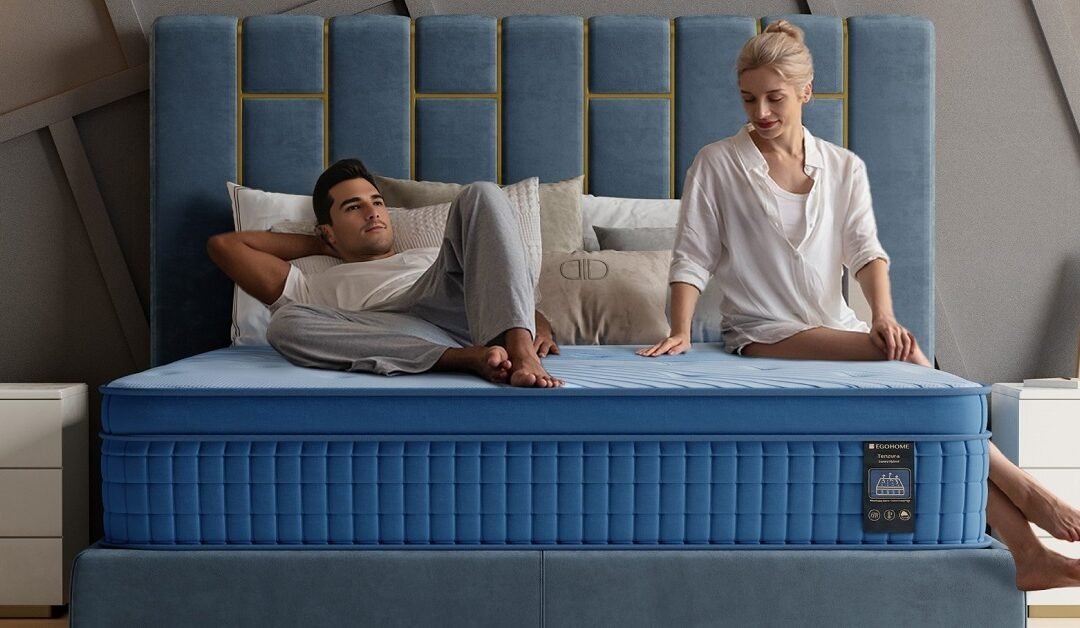
EGOHOME’s 10-inch memory foam mattress is worth considering if you prefer a bed that contours to your body rather than feeling springy. Depending on the specific version, the construction may include memory foam and cooling-oriented materials such as green tea gel. The foam layers are designed to cushion pressure points while helping reduce movement across the sleeping surface.
This can be useful for couples who wake easily when a partner changes position. The contouring feel may also appeal to side sleepers who want more cushioning around their hips and shoulders.
Why consider it: It offers a familiar all-foam feel in a boxed format, with a relatively straightforward setup.
Check before buying: Confirm the firmness, exact foam construction, certifications, and current price for your preferred size. A queen or king model may cost more than the advertised entry-level price. Review the trial period and warranty before ordering.
Novilla’s Bliss range includes gel memory foam mattresses in different sizes and thicknesses. The gel-infused comfort layer is designed to help manage heat while delivering the close, cushioned feel associated with memory foam. Some versions also feature ventilated foam construction.
This range is worth exploring if you want a simple mattress for a first apartment, guest room, or everyday bedroom without paying for a more complex support system. Different thicknesses allow you to compare price and profile, but the cheapest version may not provide the same feel as a thicker model.
Why consider it: The range gives buyers options across different budgets and mattress heights.
Check before buying: Match the thickness to your needs. A thinner mattress may work for occasional guest use, but some adults may prefer a thicker comfort and support system for nightly sleeping. Check firmness, weight guidance, and the exact model’s construction rather than choosing by price alone.
If traditional memory foam feels too soft or slow to respond, consider a Novilla hybrid mattress. Hybrid designs combine foam comfort layers with a coil support system. Foam cushions the body, while coils generally provide more bounce and may allow more airflow than a solid foam core.
This construction can suit combination sleepers who change positions during the night. However, performance depends on the particular model, including the type of coils, thickness of the comfort layers, and quality of edge support.
Why consider it: A hybrid can offer a middle ground between foam cushioning and the more responsive feel of a traditional spring mattress.
Check before buying: Not every hybrid model will fall under $500, especially in queen size. Verify the final price, motion isolation, and edge support before choosing one.
4. CHITA Living: Best for Buyers Comparing Bedroom Furnishings
CHITA Living is known for home furnishings, so it is worth checking its current product catalogue if you are comparing options for a bedroom refresh. However, confirm that a specific mattress is actually available before treating the brand as a direct alternative to EGOHOME or Novilla.
If you find a qualifying mattress, compare its construction, firmness, thickness, and support features with other options in the same price range. Make sure the listing is for a mattress rather than an upholstered bed, bed frame, or mattress topper.
Why consider it: It may be relevant when comparing bedroom products from the same retailer.
Check before buying: Verify current mattress availability, the price for your chosen size, delivery terms, warranty, and return conditions. Do not assume a product qualifies under $500 without checking the final price.
Best Mattresses Under $500: Quick Comparison
| Mattress option |
Best for |
Main advantage |
What to check |
| EGOHOME 10-Inch Memory Foam |
Everyday comfort |
Contouring and motion isolation |
Firmness and size-specific price |
| Novilla Bliss Gel Memory Foam |
Budget-conscious shoppers |
Gel-infused comfort options |
Thickness and support |
| Novilla Hybrid |
Combination sleepers |
Foam cushioning with coil support |
Price, bounce, and edge support |
| CHITA Living |
Bedroom-furniture shoppers |
Worth investigating if a mattress is listed |
Availability and specifications |
How to Choose a Mattress Under $500

Before ordering, consider how you sleep and what you expect from the mattress.
- Choose firmness for your sleeping position: Side sleepers often need extra cushioning at pressure points. Back sleepers generally benefit from balanced support, while stomach sleepers may prefer a firmer surface to limit excessive sinking. These are guidelines, not fixed rules; body weight and personal comfort also matter.
- Compare cooling claims carefully: Gel-infused foam may help with heat management, but it does not guarantee a cool sleeping surface. Look at the complete construction, cover materials, room temperature, and whether a hybrid design would better suit you.
- Check the trial and warranty: Some online mattresses come with trial periods, but conditions vary. Look for minimum-use requirements, return fees, collection arrangements, and exclusions. A warranty generally covers specified manufacturing defects, not every change in comfort.
- Plan for delivery. Boxed mattresses are compressed for shipping and need time to expand. Many begin expanding quickly, but full recovery can take 24-72 hours or longer. Follow the manufacturer’s instructions and check the package dimensions if you have narrow doorways or stairs.
Best Mattresses Under $500: FAQ
1. Can I buy a good queen mattress under $500?
Yes. Budget-friendly queen mattresses are available in memory foam and selected hybrid designs. Compare the queen-size price, support system, comfort layers, and return policy rather than relying on a twin-size advertised price.
2. Is memory foam better than a hybrid mattress?
Neither is automatically better. Memory foam generally offers closer contouring and good motion isolation. Hybrids combine foam with coils and may provide more bounce and airflow. Choose according to your sleeping position and comfort preferences.
3. How long does a mattress in a box take to expand?
Many begin expanding within minutes or hours, but full recovery can take 24–72 hours or longer. Follow the product instructions before using the mattress.
Best Mattresses Under $500: Final Thoughts
A $500 budget can be enough to find a comfortable mattress, provided you compare the details rather than chasing the biggest discount. EGOHOME is worth exploring for an all-foam feel, while Novilla offers memory foam and hybrid options for different sleeping preferences. Consider CHITA Living only after confirming that a suitable mattress is available within your budget.
The best mattresses under $500 are those that suit your body, sleeping position, and room setup while offering clear delivery, warranty, and return terms. A little research before checkout can make the difference between a good deal and a mattress you regret buying.
Also Read: JustFit App Review: Can a 10-Minute Workout App Deliver Results?
