
by parth@bidkinetic.com | Sep 14, 2026 | Gadgets
A wearable air conditioner sounds like one of those products that makes more sense on paper than around your neck. This Torras Coolify review focuses on the cooling mechanism, battery life, and independent hands-on testing. The current COOLiFY 2S is listed by TORRAS at $169 and uses cooling plates combined with directed airflow rather than simply blowing room-temperature air. TORRAS rates it for up to 28 hours in low-power fan mode, but that figure drops to 3.5 hours at the highest cooling setting. The device also offers separate fan, cooling and heating modes, app control and an adjustable fit.
The Coolify is not a tiny air conditioner capable of lowering the temperature of an entire room. Its purpose is much narrower: create a cooler personal zone around the neck and face when a conventional fan is inconvenient or unavailable. Independent testing has found the cooling effect noticeable almost immediately, although performance and battery life depend heavily on the selected setting.
Design & Comfort: Is It Easy to Wear?
The COOLiFY 2S looks more like a lightweight neckband than a conventional fan. It sits around the back and sides of the neck, with cooling plates making contact with the skin.
The adjustable design helps with fit, although comfort will depend on neck size and how tightly the device is positioned. One useful detail is that the unit doesn’t require handheld operation once it is in place, making it practical for desk work, walking or commuting.
At roughly the size expected from a device carrying a battery, cooling hardware and fans, it is not completely invisible when worn. Still, its wearable format is considerably more convenient than carrying a handheld fan around.
Cooling Performance: How Cool Does It Get?

This is where the product earns its place.
The cooling plates provide the immediate sensation of cold directly against the neck, while the fans push air upward toward the face and head. A test of the COOLiFY 2S measured the cooling plate dropping from approximately 74°F to 53°F, a 21°F surface-temperature reduction under the test conditions.
It was also found that the cooling sensation was immediate and useful on hot days, although it did not eliminate sweating altogether.
That is an important expectation to set. The Torras Coolify review is positive on cooling, but the device works best as personal relief rather than a replacement for air conditioning. The neck, face and upper shoulder area benefit most; the rest of the body remains exposed to the surrounding heat.
Battery Life: Can It Last All Day?
Battery performance is the biggest specification that needs context.
- TORRAS advertises up to 28 hours, but that applies to its lowest-power Wind Mode.
- Its own figures show approximately 5 hours on Cooling 1, 4 hours on Cooling 2 and 3.5 hours on Cooling 3.
- Heating ranges from four to six hours depending on the setting.
- That makes the COOLiFY 2S much better suited to intermittent cooling than running at maximum power from morning until night.
- The device supports USB-C charging and can also be used while charging, according to TORRAS.
Noise: Is It Quiet Enough?

At low settings, the sound is relatively easy to live with. Increase the fan speed, however, and the COOLiFY becomes much more noticeable.
Independent reviewers have described the highest fan setting as clearly audible, with one comparison putting maximum airflow closer to the sound of a small hairdryer than a silent desk fan.
For walking outdoors, commuting or working alone, that may not matter much. In a quiet office, library or conversation, the higher settings are less discreet.
App & Controls: More Useful Than Expected
The physical controls are straightforward, but the companion app adds more flexibility. Temperature and fan settings can be adjusted without repeatedly reaching behind the neck, and newer COOLiFY models also incorporate smarter temperature management.
For someone who simply wants maximum cooling, the app is not essential. It becomes more useful when switching between cooling levels or using the device for longer periods.
How It Performs in Everyday Use

The Torras Coolify review really comes down to where it is being used.
Indoors, the cooling effect is considerably more convincing because the surrounding temperature is easier to manage. A desk worker dealing with a warm room can feel the cooling around the neck without turning the entire room into an icebox.
Outside, expectations need to be lower. On very hot, humid days, the device can provide welcome relief but cannot overcome the heat entirely. Tech Advisor’s 2026 testing similarly found the cooling effective indoors but less impressive outdoors.
For travel, outdoor events, commuting and situations without reliable air conditioning, that difference can still make the device worthwhile.
| Feature |
Rating |
| Cooling performance |
4.5/5 |
| Comfort |
4/5 |
| Battery life |
3.5/5 |
| Noise |
3.5/5 |
| App & controls |
4/5 |
| Portability |
4/5 |
| Overall |
4/5 |
The Torras Coolify review verdict is more nuanced than simply calling it a neck fan.
At $169, the COOLiFY 2S is expensive compared with a conventional portable fan, but it also does something a regular fan cannot: it puts active cooling directly against the neck while remaining completely hands-free.
Its biggest limitation is endurance at maximum cooling. The advertised 28-hour battery figure is real only at a low fan setting, while intensive cooling is closer to three and a half hours. Noise also increases substantially as cooling power rises.
For commuting, travel, outdoor events and hot workplaces, the Torras Coolify review points toward a useful niche product rather than a gimmick. It will not cool an entire body or replace air conditioning, but around the neck and face, the cooling effect is genuinely noticeable.
FAQs
- Does the Torras Coolify actually cool you?
Yes. Its cooling plates create direct cooling around the neck while integrated fans move air toward the face and head. Independent testing has confirmed a substantial drop in plate temperature.
- Is Torras Coolify noisy?
Low settings are relatively manageable, but maximum airflow produces noticeable fan noise.
- Is Torras Coolify good for outdoor use?
It can provide useful relief outdoors, but its effect is more noticeable indoors or in moderately hot conditions than during extreme heat.
Also Read: TORRAS: The Phone Accessory Brand That Actually Thinks About How You Use Your Phone

by parth@bidkinetic.com | Sep 13, 2026 | Travel
Long-haul economy is where an airline’s real value becomes obvious. A two-hour flight can hide a lot; a 12- to 14-hour journey cannot. Etihad Economy currently offers a fairly strong mix of comfort, entertainment, food and onboard service, although what you actually receive depends heavily on your aircraft, route and fare type. On current Economy fares, passengers generally get 1 × 7 kg cabin bag, while checked baggage ranges from no included allowance on Basic to 25 kg on Value, 30 kg on Comfort and 40 kg on Deluxe for most destinations outside the US and Canada.
On long-haul aircraft, Etihad also provides seat-back entertainment, complimentary meals and Wi-Fi options, while Etihad Guest members get free onboard messaging. So, is it worth choosing for a long international journey? Here is a closer look at what flying Etihad Economy is actually like.
The Seat: Comfortable, But Aircraft Matters

Source: Etihad
The biggest mistake is to think of Etihad Economy as one identical product across the fleet. The experience changes considerably depending on whether you are flying an A350, 787, A380 or the newer A321LR.
On wide-body aircraft, the seats generally feel appropriate for long-haul travel, with adjustable headrests and personal entertainment screens. The A321LR is particularly interesting because it is a narrow-body aircraft operating some surprisingly long routes. Its Economy seats offer around 18 inches of width, with roughly 30 inches of pitch in most rows and more space in selected seats.
That makes seat selection worth considering. If you are tall, travelling overnight or simply dislike being boxed into a tight row, paying for a better seat can make a noticeable difference.
Food and Drinks: Better Than the Typical Economy Meal
Food is one area where Etihad generally feels more premium than its basic Economy label suggests. Complimentary meals and drinks are included on applicable Economy fares, with menus designed around the destinations Etihad serves.
The meals are not restaurant quality, obviously, but the presentation and variety can make a long flight feel less monotonous. Special meals can also be requested for dietary requirements through the booking or manage-booking process.
For Indian travellers, the availability of familiar flavours and international choices is particularly useful. Still, expectations should remain realistic: catering can vary by route, flight duration and catering station.
Entertainment and Wi-Fi
This is probably one of Etihad’s strongest areas. The E-BOX entertainment system offers a large selection of movies, television, music and games, with seat-back screens available in its wide-body Economy cabins.
On a long-haul flight, having a good screen and enough content matters more than people realise. It breaks up the journey and means you don’t have to rely entirely on your phone or downloaded content.
Wi-Fi is more complicated. It isn’t universally free for every Economy passenger. Etihad Guest members receive complimentary chat access, while unlimited Wi-Fi or broader access depends on the fare, membership status and aircraft.
Cabin Crew and Service
The cabin crew can make or break a long-haul Economy journey, and this is where Etihad tends to retain its premium-airline character.
The service is generally polished without being excessively formal. On a long flight, small things like how quickly a request is handled, whether meals are cleared efficiently and how the crew responds during overnight hours matter more than scripted greetings.
There can naturally be differences between individual flights and crews, but Etihad’s overall service proposition remains one of its stronger selling points.
Baggage: Read Your Fare Conditions Carefully
This is one of the areas where travellers can get caught out.
For tickets issued from June 18, 2026, Etihad’s current Economy structure lists Basic, Value, Comfort and Deluxe fares. For most destinations outside the US and Canada, the checked allowance is 0 kg/fees apply on Basic, 25 kg on Value, 30 kg on Comfort and 40 kg on Deluxe. US and Canada itineraries generally have a 2 × 23 kg allowance across these Economy fare types.
| Feature |
Etihad Economy Rating |
| Seat comfort |
4/5 |
| Meals |
4/5 |
| Entertainment |
4.5/5 |
| Wi-Fi |
3/5 |
| Cabin baggage |
4/5 |
| Checked baggage |
3.5/5 |
| Crew service |
4/5 |
| Seat selection |
3.5/5 |
| Overall long-haul experience |
4/5 |
The Advantages

Source: Etihad
The biggest advantage of Etihad Economy is balance. You are not getting one spectacular feature while everything else is compromised.
- The combination of a modern cabin, personal entertainment, complimentary meals, respectable service and connectivity makes the experience competitive with other major Gulf carriers.
- The airline is also a particularly interesting option for travellers connecting through Abu Dhabi, where the stopover can break up an otherwise exhausting ultra-long-haul itinerary.
The Disadvantages
The fare structure is probably the biggest frustration. A cheap Economy ticket may look attractive until you add seat selection, baggage or Wi-Fi.
Seat quality can also vary considerably depending on the aircraft.
- A spacious A350 or 787 experience is not necessarily comparable with every narrow-body configuration.
And while Etihad Economy can feel premium for Economy, it is still Economy.
- On an ultra-long flight, limited personal space, a fixed seat and the inevitable cabin fatigue eventually become noticeable.
Is Etihad Economy Worth It?
For long-haul travel, Etihad Economy is a strong choice if the fare is competitive and you check the aircraft and fare conditions before booking.
The strongest value comes when the ticket includes checked baggage and the flight operates on a modern wide-body aircraft. Checking the aircraft type, seat map and fare conditions before booking can prevent unpleasant surprises later.
Overall, Etihad’s Economy cabin gets the important things mostly right: a comfortable enough seat, a good entertainment system, complimentary food, professional service and useful connectivity options. It may not transform a 12-hour flight into a luxurious experience, but it can make a long journey considerably easier to manage.
FAQs
- Is Etihad Economy good for long-haul flights?
Yes. It offers complimentary meals, seat-back entertainment on wide-body aircraft and generally good cabin service. Aircraft choice makes a significant difference.
- Is Wi-Fi free in Etihad Economy?
Etihad Guest members receive free chat access. Full Wi-Fi availability and pricing depend on the aircraft, fare and membership status.
- Is food free on Etihad Economy?
Yes, onboard food and drinks are included with current Economy fare types, subject to the flight and service conditions.
- Which seat should I choose on Etihad Economy?
For a long flight, consider an extra-legroom or preferred seat if the additional cost is reasonable, particularly if you are tall or travelling overnight.
Also Read: Flying Etihad: What the Airline Actually Gets Right (And Why It Matters)

by parth@bidkinetic.com | Sep 13, 2026 | Travel
Choosing between two activity-booking platforms can be surprisingly difficult. Both can put thousands of tours, attraction tickets and experiences in one place, but they are not identical. Viator vs Klook is really a comparison between two different approaches to travel experiences: Viator has built its reputation around a huge global marketplace for tours and activities, while Klook has developed a broader experience platform with particularly strong coverage across Asia.
Viator currently lists more than 300,000 travel experiences across 2,500 destinations, ranging from sightseeing tours and private guides to adventure activities and attraction tickets. Klook, meanwhile, says it has more than half a million offerings across 3,400+ destinations, covering activities as well as accommodation, airport transfers, rail passes, SIM cards and other travel essentials.
That difference matters when choosing a platform. Someone looking for a guided European city tour may find Viator more natural, while a traveller planning a Japan, Thailand or Singapore trip may get more value from Klook’s combination of attractions, transport and activities.
Viator: A Stronger Focus on Tours and Experiences
Source: Viator
Viator feels like a specialist marketplace rather than a general travel booking site. Its core product is the experience itself.
What Stands Out
The catalogue covers walking tours, food experiences, private excursions, attraction tickets, day trips, outdoor activities and unusual local experiences. Viator says its experiences are sourced from local operators and supported by traveller reviews, with more than 300,000 options available globally.
One practical advantage is the amount of information available before booking. Listings typically include ratings, traveller reviews, photos, duration, meeting information, cancellation conditions and booking details. For popular attractions, there can also be several competing tours, making it easier to compare different operators.
Flexibility is a Major Advantage
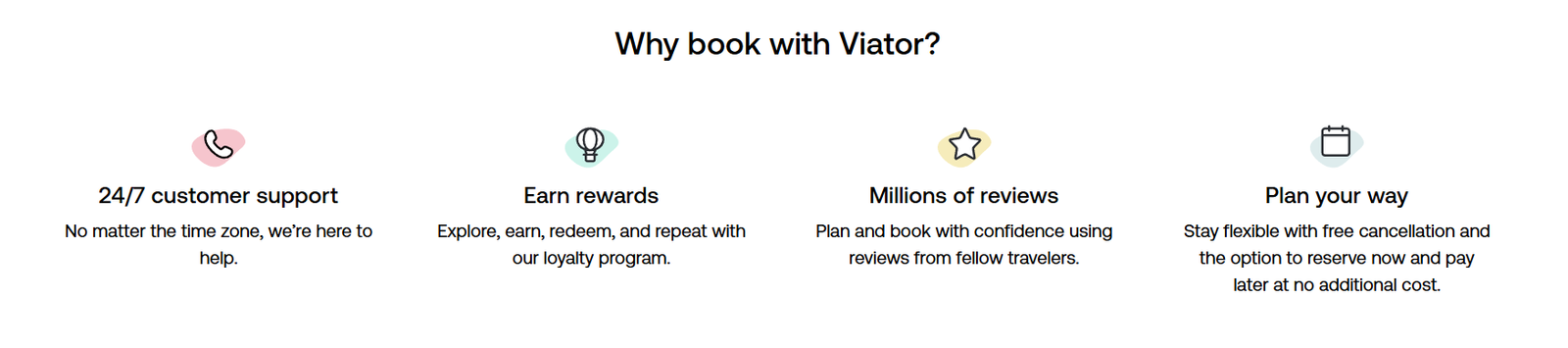
Viator promotes free cancellation on many experiences and offers Reserve Now & Pay Later on eligible bookings. Its current platform also provides 24/7 customer support. However, cancellation conditions can vary by activity, so the policy shown on the individual listing matters more than the general platform promise.
Where Viator Falls Short
The sheer size of the marketplace can make the choice overwhelming. A search for something as simple as a city walking tour may return numerous similar listings with different meeting points, durations, group sizes and cancellation policies.
Prices can also vary substantially between operators. Viator is useful for comparison, but the first result is not necessarily the best one.
Klook: More Than a Tours Platform
Source: Klook
Klook takes a broader approach. Its catalogue includes tours and experiences, but the platform also covers attraction tickets, airport transfers, car rentals, train passes, hotels, cruises, SIM cards and travel essentials.
Where Klook Really Performs Well
Klook is particularly convenient for travellers visiting Asian destinations. Its current platform prominently features Japan, South Korea, Singapore, China, Thailand, Vietnam, Malaysia and the Philippines, alongside European and North American destinations.
For example, a Japan trip can be planned around attraction tickets, airport transfers, rail products and day trips without switching between several websites. That is one of Klook’s strongest practical advantages.
Deals and KlookCash
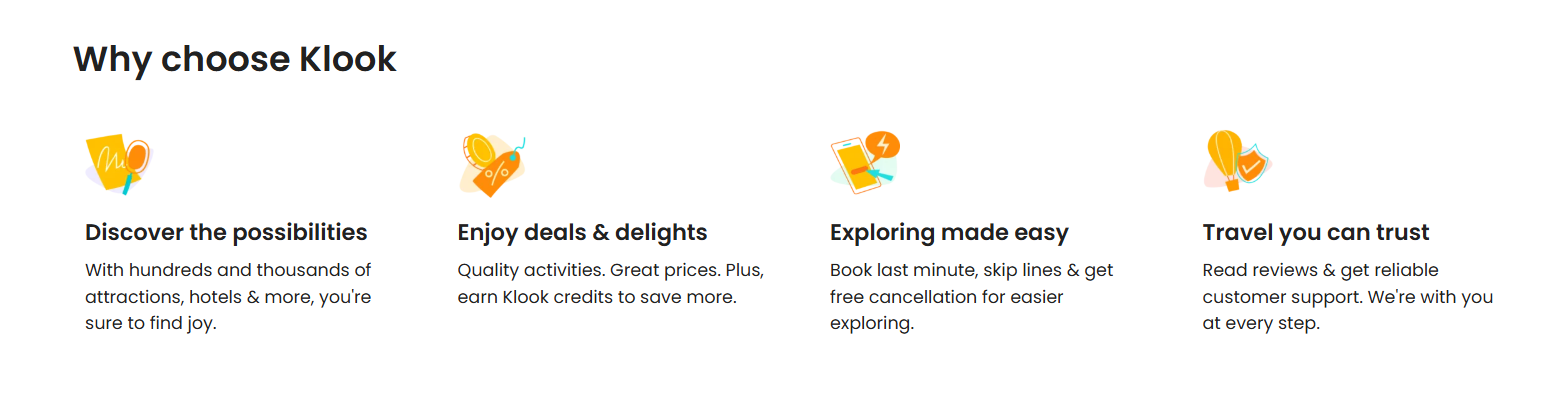
Klook also puts more emphasis on discounts and repeat-booking rewards. The platform offers KlookCash after eligible bookings, while its current site promotes last-minute booking, free cancellation on selected products and attraction deals.
Its 2026 Travel Pulse research also found that 47% of surveyed APAC travellers were actively looking for deals, discounts or bundled offers, while 42% said they were booking earlier to secure better prices.
Viator vs Klook: Side-by-Side
| Feature |
Viator |
Klook |
| Main focus |
Tours and experiences |
Experiences, attractions and travel services |
| Experience inventory |
300,000+ |
500,000+ offerings |
| Destinations |
2,500+ |
3,400+ |
| Strongest advantage |
Global tours and guided experiences |
Asia-focused activities and travel essentials |
| Attraction tickets |
Yes |
Yes |
| Day trips |
Yes |
Yes |
| Transport |
More limited |
Strong selection |
| Rail passes |
Limited |
Strong, especially Asia |
| Rewards |
Viator rewards |
KlookCash |
| Cancellation |
Available on many listings |
Available on selected listings |
| Customer support |
24/7 |
Customer support available |
Which Platform Has Better Tours?
For a pure tours-and-activities search, Viator vs Klook is a closer contest.
Viator has the advantage when the priority is finding guided experiences across a wide range of international destinations. Its large marketplace, extensive traveller-review base, and focus on local operators make it particularly useful for sightseeing tours, private excursions and specialist experiences.
Klook becomes more attractive when the activity is only one part of the trip. Someone booking a Tokyo attraction might also need a train pass, airport transfer, SIM card or other travel product. Having those options alongside the activity can save time.
Which Is Better for Asian Travel?
This is where Klook has a noticeable edge.
The platform has deep coverage across Asian destinations and includes products that are particularly useful in the region, such as Japan Rail-related products, Shinkansen bookings, airport transfers and attraction tickets. Its current India platform also lists activities, tours and attractions across major Indian destinations.
That does not make Viator weak in Asia. It simply means Klook’s broader ecosystem can be more convenient when transportation and attractions need to be booked together.
Advantages and Disadvantages
Viator Advantages
- Very large global tours and activities catalogue
- Strong selection of guided and private experiences
- Extensive traveller reviews
- 24/7 customer support
- Free cancellation available on many activities
- Reserve Now & Pay Later on eligible experiences
Viator Disadvantages
- Large number of similar listings can make comparison time-consuming
- Prices vary significantly between operators
- Cancellation rules differ by experience
- Less useful if the main requirement is transport or travel essentials
Klook Advantages
- More than 500,000 offerings across 3,400+ destinations
- Particularly strong Asian coverage
- Activities, attraction tickets and transport on one platform
- KlookCash rewards
- Mobile-friendly booking experience
- Discounts and bundled offers on selected products
Klook Disadvantages
- Some destinations have a much stronger inventory than others
- Experience quality can vary between individual operators
- Deals and cancellation terms differ by product
- The broader catalogue can sometimes make the platform feel less focused than a dedicated tours marketplace
Final Verdict: Viator or Klook?
The better choice depends on what is being booked. Viator vs Klook is not really a question of which company is universally better. Viator is the stronger pick when the priority is finding and comparing tours, guided experiences and excursions worldwide.
Klook makes more sense when a trip involves activities plus attraction tickets, transportation, rail passes or other travel essentials, particularly across Asia.
For a European city break, safari, food tour or private sightseeing experience, Viator deserves the first search. For Japan, Singapore, Thailand, South Korea or a similar Asia-focused trip where several travel components need to be arranged, Klook can be the more convenient option.
The smartest approach is to check both before paying. Compare the exact activity, operator, meeting point, cancellation policy and final price rather than assuming that one platform will always be cheaper.
FAQs
1. Is Viator better than Klook?
Viator is generally better for travellers primarily looking for tours, guided activities and excursions. Klook is stronger when activities need to be combined with attraction tickets, transport and other travel services.
2. Which is better for Japan travel, Viator or Klook?
Klook is often the more convenient option for Japan because it combines activities with rail, transport and attraction products. Viator remains useful for guided tours and local experiences.
3. Can you cancel Viator bookings?
Many Viator activities offer free cancellation, but the exact deadline and refund conditions depend on the individual experience. Always check the listing before booking.
Also Read: Qmove Review 2026: Delivery, Moving and Freight Transportation Explained

by parth@bidkinetic.com | Sep 12, 2026 | Gadgets
A premium robot vacuum can easily cross the $1,000 mark once self-emptying, heated mop washing, obstacle avoidance and advanced navigation enter the picture. The Dreame Robot Vacuum L40 Ultra makes that price equation considerably more interesting. Dreame currently lists the model at $799.99, putting it close to half of its original launch price.
That matters because the L40 Ultra is not a stripped-down midrange cleaner. It has an all-in-one dock, extendable mop and side brush, hot-water mop washing, warm-air drying, LiDAR navigation, AI-assisted obstacle avoidance and automatic dust collection. After spending time with the machine, the biggest surprise is not how many features it has, but how well most of them translate into less daily maintenance.
Setup Is Surprisingly Painless
The L40 Ultra arrives with a sizeable docking station, so finding the right spot is more important than with a conventional robot vacuum. Once connected to the Dreamehome app, the robot can create a map of the home and divide it into rooms.
Mapping is impressively quick and accurate. Furniture and room boundaries are generally placed correctly, and the app makes it easy to rename rooms, create no-go zones and schedule individual areas.
The dock is undeniably large, though. Its footprint needs to be considered before buying, particularly in smaller apartments.
Vacuuming: Strong Where It Counts

Source: Dreametech
The L40 Ultra’s vacuuming performance is one of its strongest points. Dreame rates the machine at up to 11,000Pa suction, while its rubber brush and included TriCut brush are designed to reduce hair tangling.
On hard floors, everyday dust, crumbs and hair are handled with very little drama. Carpet cleaning is also competent, with the robot increasing suction when needed.
Pet owners have another reason to consider it. Independent testing found particularly strong performance with pet hair, while its navigation system is capable of working around common household obstacles.
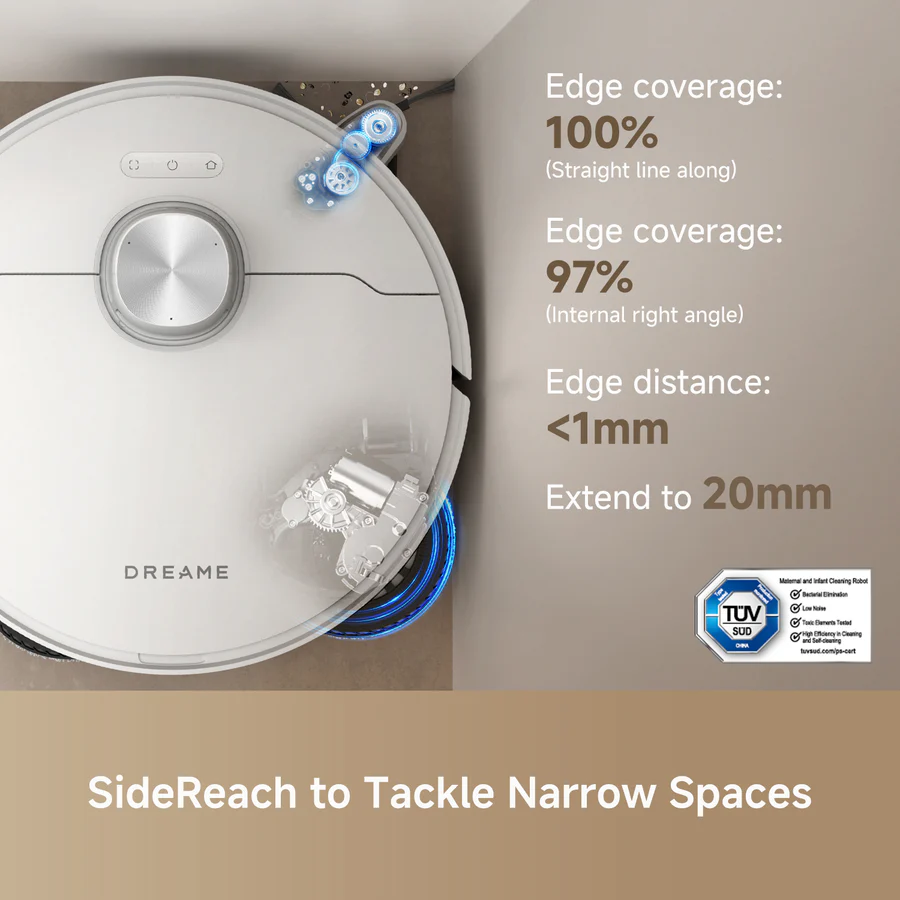
The extendable side brush is particularly useful around furniture and along edges, where conventional circular robots often leave a visible strip of debris.
The Mopping System Is the Real Upgrade
Mopping is where this Dreame Robot Vacuum starts feeling much closer to a flagship appliance.
The mop extends outward to reach closer to walls and furniture, while the robot can lift the mop pads when it encounters carpet. More importantly, the docking station washes the pads with heated water and dries them with warm air after cleaning.
That last part makes a difference in everyday use. There is no need to remove damp pads after every run and leave them somewhere to dry.
The mopping system is still not a substitute for manually attacking a dried-on stain. But for footprints, kitchen residue and the general film that accumulates on hard flooring, it does a surprisingly good job.
Navigation Is Better Than Simply Avoiding Furniture
The L40 Ultra uses LiDAR alongside a camera and structured-light sensors for mapping and obstacle avoidance. It can recognize household objects and adjust its route rather than blindly bouncing between furniture.
In a normal home, this translates into fewer collisions and fewer occasions where the robot needs rescuing. Cables and very small objects can still cause trouble, so the usual pre-cleaning floor check remains worthwhile.
Multi-floor mapping is another useful feature for larger American homes with more than one level, although the robot itself still needs to be moved between floors.
The Dock Does Most of the Dirty Work
Source: Dreametech
This is arguably the L40 Ultra’s biggest selling point.
- After cleaning, the robot returns to the dock, empties its onboard dustbin, washes its mop pads and dries them.
- The station also refills the robot’s water supply.
- Its 3.2-litre dust bag can hold a substantial amount of debris before replacement is necessary.
That automation changes the ownership experience.
- A robot vacuum that needs to be emptied and cleaned every day quickly becomes another chore.
- The L40 Ultra largely avoids that problem.
There is still maintenance involved.
- The dock, filters, brushes and washboard need occasional attention, and the large base station requires a permanent home.
App Experience: Powerful, With a Learning Curve
The Dreamehome app offers considerably more control than simply pressing “clean.” Room-specific schedules, suction settings, restricted areas, carpet strategies and mapping controls are all available.
Voice control is also supported through major smart-home platforms, including Alexa, Google Assistant and Siri.
The downside is that the number of options can feel overwhelming at first. The app rewards users who want granular control but may feel excessive for someone who simply wants to press a button and walk away.
What Stands Out and What Doesn’t
| Feature |
L40 Ultra Review |
| Vacuum performance |
4.5/5 |
| Mopping |
4.5/5 |
| Navigation |
4/5 |
| Obstacle avoidance |
4/5 |
| Self-cleaning dock |
4.5/5 |
| App & controls |
4/5 |
| Pet-hair handling |
4.5/5 |
| Design |
4/5 |
| Value at current U.S. pricing |
4.5/5 |
| Overall |
4.4/5 |
The biggest weakness is physical rather than technical: the dock is large and not particularly easy to hide. Charging is also relatively slow, although the robot can return to the station and resume cleaning when necessary.
For American homes with a mix of hardwood, tile and carpet, the Dreame Robot Vacuum L40 Ultra makes a convincing case at its current U.S. price.
It is particularly well suited to households with pets, children or large floor areas where daily vacuuming and mopping become repetitive chores. The combination of strong cleaning, extendable brushes, intelligent navigation and a dock that handles most maintenance is what makes the machine stand out.
It is not completely hands-off, and the dock takes up real estate. But at around half its original list price, the L40 Ultra delivers enough flagship-level hardware to make those compromises fairly easy to accept.
For buyers who want a robot that actually reduces household cleaning work rather than simply moving the work somewhere else, this is one of the more convincing options in the premium category.
FAQs on Dreame Robot Vacuum
1. Is the L40 Ultra good for pet hair?
Yes. Independent testing has found strong pet-hair performance, while the brush design is intended to reduce hair tangles.
2. How often does the robot need maintenance?
The dock automates dust emptying, mop washing and drying, substantially reducing daily maintenance. However, brushes, filters, the washboard and other components still require periodic cleaning.
3. How much space does the L40 Ultra dock need?
The docking station is considerably larger than a basic charging dock. Its footprint should be measured before choosing a permanent location.
Also Read: Last-Minute Travel Deals: How to Book a Trip This Week Without Overpaying

by parth@bidkinetic.com | Sep 12, 2026 | Travel
Searching for accommodation in the U.S. can produce surprisingly different prices for what looks like the same stay. The difference is not always about the property itself; booking platform fees, cancellation terms, taxes, and the type of accommodation being compared can all change the final bill. That makes Trivago vs Holidu an interesting comparison because the two platforms approach accommodation search from different directions. Trivago focuses heavily on hotel price comparison, searching offers from hundreds of sites, while Holidu is built around vacation rentals and says it compares more than 300,000 rentals in the U.S. across 122 providers.
The practical question, then, is not simply which website is cheaper. It is where each one has the better chance of finding the lowest price.
Trivago: Better for Hotels
Source: Trivago
Trivago’s biggest advantage is breadth.
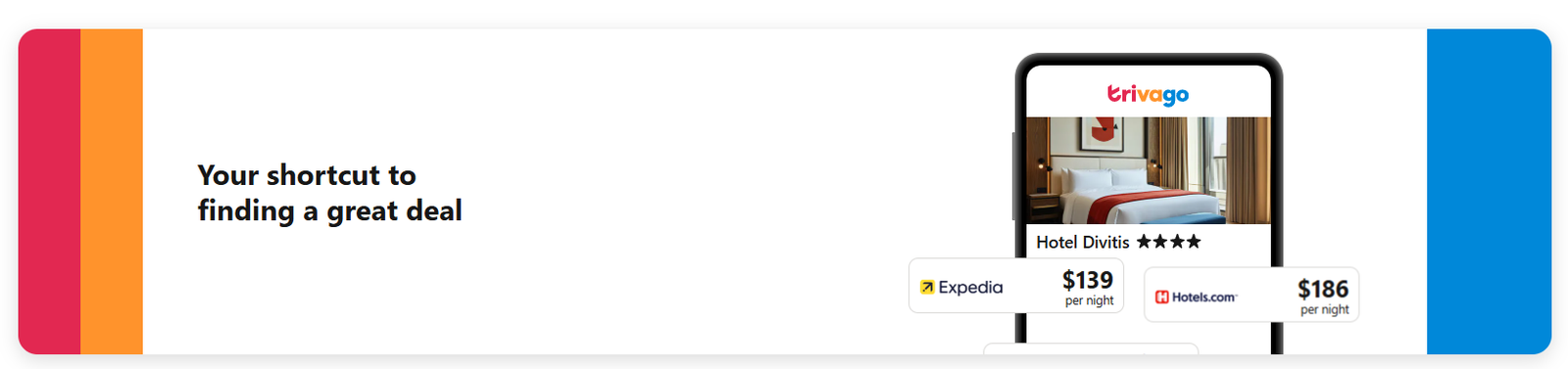
- Its U.S. site compares hotel prices from hundreds of booking sites, giving travellers a single place to check rates from online travel agencies, hotel chains and other accommodation providers.
- Trivago says its global network covers more than 2.5 million hotels and other accommodations across roughly 190 countries.
For a conventional hotel stay in New York, Las Vegas, Chicago or San Diego, this makes Trivago the more natural starting point. The platform lets users filter by price, rating, location and amenities rather than scrolling through individual booking websites.
There is an important catch, though.
- Trivago is primarily a metasearch engine, not the company selling the hotel room.
- Clicking an offer generally sends the traveller to the booking site handling the reservation and payment.
That means the price shown during the search is not necessarily the final amount. Rates and availability can change, and Trivago itself acknowledges that the price on the booking site can occasionally differ from the price initially displayed.
Holidu: Stronger for Vacation Homes
Source: Holidu
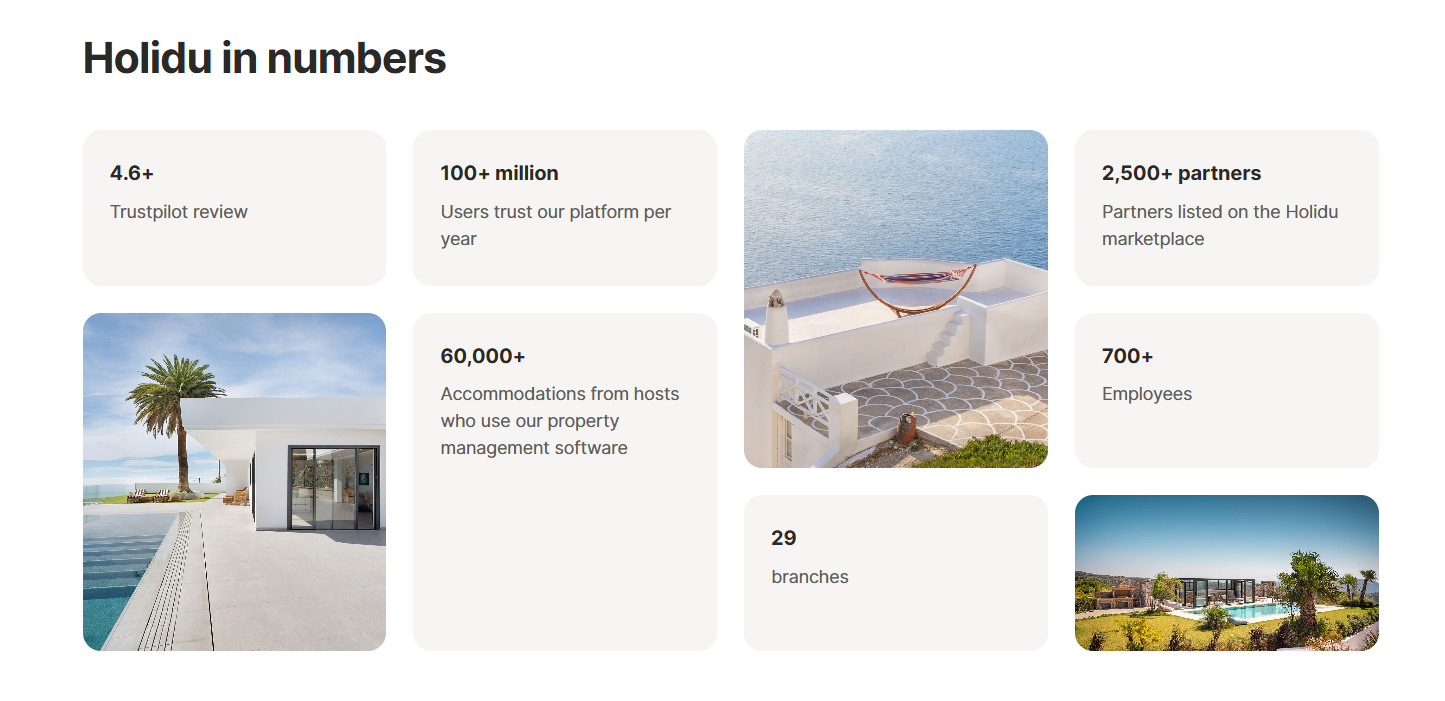
Holidu takes a different route. Its core focus is vacation rentals rather than traditional hotel inventory.
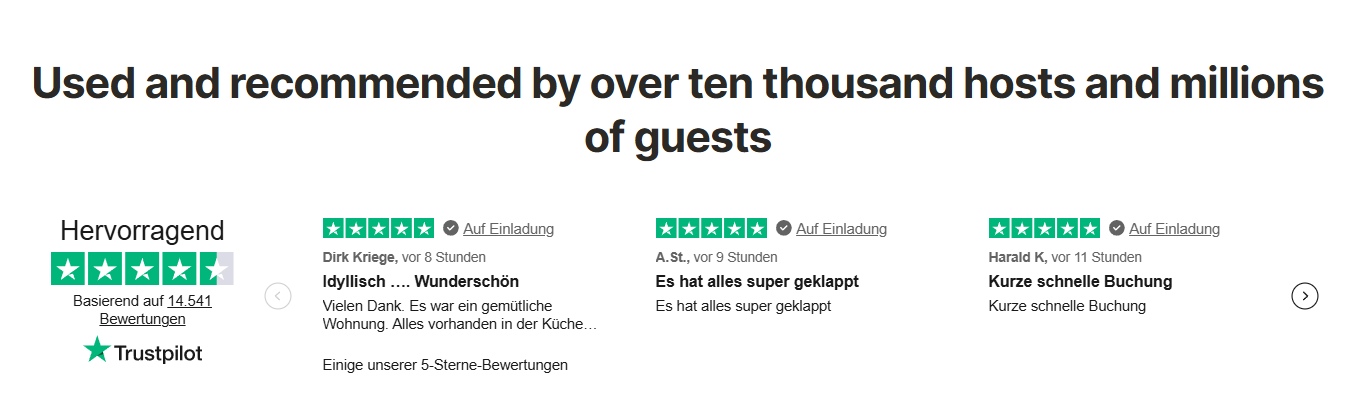
- For the U.S., Holidu currently lists hundreds of thousands of vacation rentals and works with more than 100 providers.
- Its U.S. data also gives travellers an indication of seasonal pricing: Holidu reports an average vacation-rental price of around $391 per night in the U.S., with July historically among the more expensive months.
- That makes Holidu particularly useful for families, groups and travellers looking for houses, apartments, condos or larger properties where a hotel room would require multiple bookings.
- Holidu also says its system can identify the same rental across different websites and compare those offers.
- Its wider network includes millions of vacation-rental offers from more than 2,500 partners.
For a week-long beach rental, ski property or family house, that specialization can be more valuable than a general hotel comparison engine.
So, Where Are Prices Actually Lowest?
This is where the Trivago vs Holidu comparison gets more interesting.
There is no permanent winner because neither platform controls the underlying rates. Prices change according to dates, inventory, demand, cancellation policies and booking partners.
For hotels, Trivago generally has the stronger starting position because its search is built around comparing hotel rates across a broad collection of booking sites.
For vacation rentals, Holidu has the advantage because its search is specifically designed around that market and compares the same or similar rental offers across multiple providers.
The most important point is to compare the final payable price, not just the first nightly rate displayed.
| Category |
Trivago |
Holidu |
| Main strength |
Hotels |
Vacation rentals |
| U.S. inventory |
Millions of hotel/accommodation listings globally |
300,000+ U.S. rentals listed on its U.S. site |
| Best for |
Hotel rooms and city stays |
Homes, apartments and group stays |
| Price comparison |
Hundreds of booking sites |
100+ U.S. providers |
| Large families/groups |
Good, but hotel rooms may add up |
Excellent |
| Short city breaks |
Excellent |
Good |
| Weekly stays |
Good |
Excellent |
| Price transparency |
Good, but verify final checkout |
Good, but check fees and rental terms |
| Best overall use |
Finding competitive hotel rates |
Finding competitive rental rates |
Where Trivago Can Save More
Source: Trivago
A hotel rate that looks identical across several websites can change once discounts, member pricing or cancellation conditions are considered.
Trivago’s filters make it easier to see those differences quickly. It also has different sorting options, including price-focused and rating-focused results.
However, its “lowest price” label should not be interpreted as a guarantee that no cheaper rate exists anywhere. Trivago explicitly says some lower offers may not appear if they do not meet its criteria for qualifying offers.
That is a useful detail for anyone hunting for the absolute lowest price.
Where Holidu Can Win
Source: Holidu
The Trivago vs Holidu decision shifts toward Holidu when the trip involves a vacation home rather than a hotel.
Consider a family of six visiting Orlando for a week. Comparing six hotel-room combinations is one approach, but a three-bedroom rental with a kitchen, living area and laundry facilities may provide considerably better value.
Holidu’s model is designed around exactly this kind of search. Its U.S. inventory includes city apartments, beachfront homes and larger vacation properties.
There is another advantage: comparing the same rental across providers can reveal price differences that are easy to miss when searching one booking site at a time.
The Extra Fees Matter More Than the Headline Price
A $150 nightly rental is not necessarily cheaper than a $175 hotel room.
Vacation rentals can have cleaning fees, service charges, deposits, pet fees and local taxes. Holidu itself advises travellers to check additional costs and payment requirements before booking.
Hotels have their own complications, including resort fees, parking charges and different cancellation rules.
For that reason, the smartest approach in the Trivago vs Holidu comparison is to use the platforms for discovery, then follow the offer through to the actual booking page before making the decision.
The Verdict
For a standard hotel stay, Trivago gets the edge. Its large hotel comparison network makes it a useful first stop when the goal is finding competing room rates quickly.
For vacation homes, apartments and larger properties, Holidu is the better fit. Its specialization gives it an advantage when the accommodation itself is part of the travel experience.
Neither platform should be treated as a guarantee of the absolute lowest final price. The winning strategy is to compare the same property, same dates, same room or rental type and most importantly, the same cancellation terms.
FAQs
- Is Trivago cheaper than Holidu?
Not consistently. Trivago is generally more useful for comparing hotel prices, while Holidu is stronger for vacation rentals. The cheapest option depends on the property, dates and booking terms.
- Is Holidu good for U.S. vacation rentals?
Yes. Holidu currently lists hundreds of thousands of U.S. vacation rentals and compares offers from numerous providers.
- Should the price shown on Trivago or Holidu be trusted?
Use it as a comparison point, but always check the final booking page. Rates, availability, taxes and additional fees can change before checkout.
Also Read: Saily eSIM Review: Cheap Data Abroad Without Swapping SIM Cards
