
by parth@bidkinetic.com | Nov 18, 2026 | Homestyle
Refreshing your home for fall and the holiday season does not have to mean buying a new collection of decorations every few months. A few well-chosen changes to textiles, lighting, table settings and natural accents can make a familiar room feel completely different without stretching your budget. In fact, a 2026 Thumbtack survey of more than 1,000 homeowners found that one in five planned to spend $250-$499 specifically on holiday decorating or hosting. Meanwhile, the 2026 Houzz and Home Study reported that rugs and pillows or throws were among the most frequently purchased interior decor items in 2025, at 48% and 47%, respectively. These figures point to a practical decorating strategy: invest in pieces that change the atmosphere rather than replace the furniture. The best holiday home decor ideas build on what you already own, introduce seasonal colours and textures, and use a few statement details to make the space feel inviting. Here are five decorating styles that can help you achieve that look on a budget.
Warm Rustic: Natural Materials and Autumn Colours
Home decorating style using natural materials and earthy finishes works particularly well for fall because it relies on materials and colours that already feel seasonal. Think terracotta, burnt orange, olive green, mustard, warm brown and cream.
You do not need to buy rustic furniture to achieve the look. Start with a wooden tray, woven basket or ceramic vase you already have. Add dried leaves, pinecones, branches or seasonal flowers. A chunky knitted throw and two textured cushion covers can make a neutral sofa feel warmer immediately.
For a dining table, use a simple linen runner, wooden serving boards and a small arrangement of dried foliage. These elements can remain in place throughout autumn and work just as well when holiday decorations arrive.
Budget-friendly purchases: Dried stems, cushion covers, woven baskets, linen runners and ceramic vases.
Modern Minimalist: Less Decoration, Better Placement
If you prefer uncluttered interiors, modern minimalist decorating offers an affordable way to refresh your home. Rather than filling every shelf with seasonal objects, select a small number of pieces that complement your existing furniture.
A neutral base of white, beige, grey or soft taupe works well with seasonal accents such as burgundy, forest green and muted gold. Replace a few cushion covers, introduce a textured throw and add one statement centrepiece to the coffee table.
Lighting is particularly important in this style. Use warm-white bulbs, table lamps and subtle LED string lights to create a softer evening atmosphere. The aim is to make the room feel welcoming without introducing too many decorative objects.
Budget-friendly purchases: Warm LED bulbs, simple candle holders, neutral throws, one statement vase and removable cushion covers.
Traditional Holiday Style: Familiar Details That Last
Classic holiday decorating does not need to be expensive or complicated. Evergreen garlands, wreaths, stockings, candles, ribbons and traditional ornaments can create a festive atmosphere without requiring a complete room makeover.
One effective approach is to choose a consistent colour combination. Red and green create a traditional Christmas look, while champagne, cream and gold offer a softer alternative. Reuse ornaments from previous years and refresh their appearance with new ribbons or a different arrangement.
Focus on a few visible areas: the entrance, mantel, Christmas tree and dining table. A wreath on the front door and a garland around a shelf can create a stronger impression than spreading small decorations throughout the house.
Budget-friendly purchases: Reusable ornaments, ribbon, faux greenery, wreaths and battery-operated candles.
Scandinavian Cozy: Soft Textures and Warm Lighting
Scandinavian-inspired interiors are built around comfort, simplicity and natural materials. This makes the style particularly suitable for colder months when people spend more time indoors.
Use cream, warm white, pale wood and soft grey as the foundation. Layer a wool-look throw over the sofa, add textured cushions and place a soft rug near the seating area. Wooden accessories and simple ceramic pieces provide warmth without making the room feel crowded.
Lighting should come from several sources rather than one harsh overhead fixture. A floor lamp beside the sofa, a small table lamp and warm fairy lights can create different levels of illumination.
This style also makes holiday home decor easier to maintain because most of its elements are suitable for everyday use after the festive season ends.
Budget-friendly purchases: Knitted throws, textured cushion covers, wooden trays, warm lamps and simple ceramic accessories.
Vintage and Eclectic: Decorate with What You Already Own
Vintage-inspired decorating is an excellent option when you want a distinctive home without buying matching seasonal collections. The idea is to combine objects with different textures, finishes and histories while maintaining a reasonably consistent colour palette.
Look through existing storage for old frames, brass candle holders, decorative bowls, books, glass bottles and fabric pieces. Thrift shops and second-hand marketplaces can also be useful places to find affordable decorative accessories.
For autumn, combine dark wood, amber glass, dried flowers and patterned textiles. For the holidays, introduce metallic ornaments, velvet ribbons and nostalgic decorations. A little variation makes the room feel collected rather than showroom-perfect.
Budget-friendly purchases: Second-hand frames, vintage-style glassware, brass accessories, patterned cushions and decorative trays.
A Style-by-Style Budget Comparison

| Decorating style |
Key colours |
Affordable decor items |
Best area to decorate |
| Warm Rustic |
Terracotta, brown, olive |
Dried stems, baskets, wooden trays |
Living room and dining area |
| Modern Minimalist |
Beige, white, burgundy |
Candles, lamps, cushion covers |
Living room |
| Traditional Holiday |
Red, green, gold |
Garlands, wreaths, ornaments |
Entrance and mantel |
| Scandinavian Cozy |
Cream, grey, natural wood |
Throws, rugs, warm lighting |
Bedroom and living room |
| Vintage Eclectic |
Amber, bronze, deep green |
Second-hand frames, glassware, brass |
Shelves and dining table |
How to Decorate Without Overspending
Before shopping, decide how much you want to spend and which rooms need attention. Start by checking what you already own. Reusing last year’s decorations is often more effective than buying new pieces simply because they are trending.
Prioritise items that have a visible impact. Cushion covers, throws, lighting and table linens can change the appearance of a room without requiring major purchases. Choose decorations that can work across multiple occasions rather than items designed for a single holiday.
You can also bring nature indoors. Fallen leaves, pinecones, branches and seasonal flowers can become inexpensive centrepieces. If collecting natural materials, make sure they are clean, dry and suitable for indoor use.
When planning holiday home decor, consider storage as well. Choose reusable ornaments that can be packed away safely, and avoid buying large decorations that will be difficult to store after the season.
Final Thoughts
A beautifully decorated home is not necessarily one filled with expensive seasonal purchases. It is a space where colours, textures, lighting and personal details work together. Whether you prefer rustic warmth, minimalist styling, traditional festive decorations or vintage character, the best results come from choosing a clear direction and making a few thoughtful changes.
The most practical holiday home decor approach is to buy less, reuse more and prioritise pieces that remain useful beyond the season. With a little planning, your home can feel ready for fall gatherings and holiday celebrations without an unnecessarily large decorating bill.
Frequently Asked Questions
1. How can I decorate my home for fall on a small budget?
Start with cushion covers, a warm throw, dried flowers and a simple table arrangement. Reusing existing furniture and accessories keeps costs down.
2. What colours work best for fall and holiday decorating?
Terracotta, burnt orange, olive, burgundy, forest green, cream and warm gold are versatile choices. Combine two or three rather than using every seasonal colour together.
3. How can I make holiday decorations look expensive?
Use a consistent colour palette, vary the height of decorative objects and focus on a few well-styled areas. Warm lighting and natural materials also help create a polished appearance.
Also Read: How Often Should You Replace Your Mattress, Pillows, and Bedding?
by parth@bidkinetic.com | Nov 18, 2026 | LifeStyle
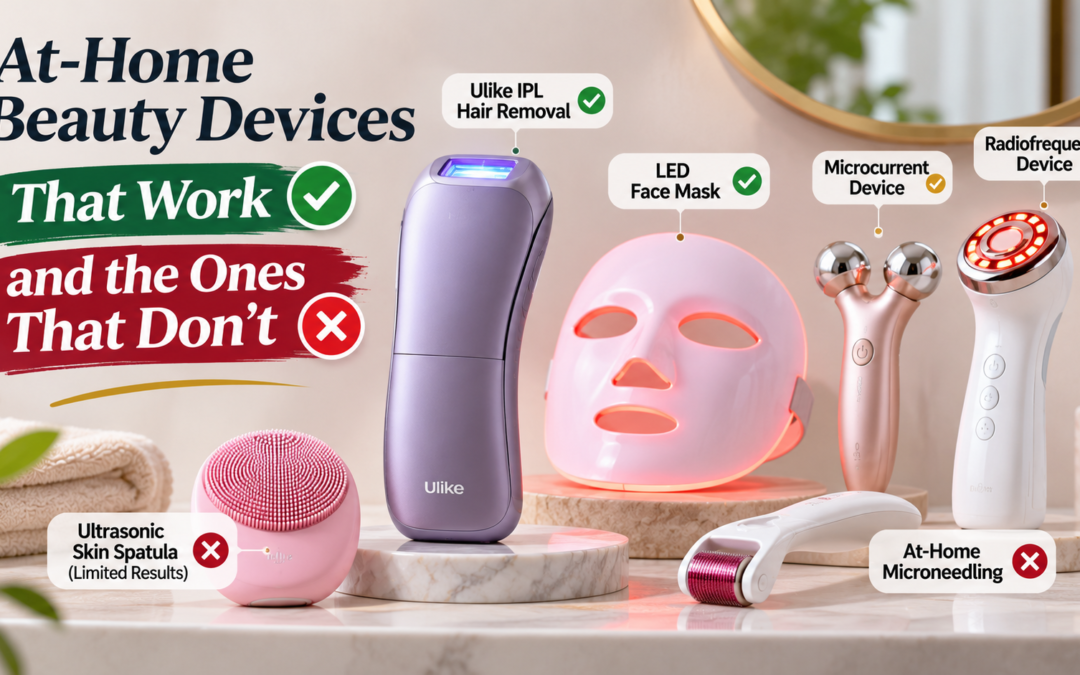
Beauty technology has moved well beyond facial cleansing brushes and basic hair-removal tools. Today’s consumers can buy IPL hair-removal handsets, LED face masks, microcurrent devices, radiofrequency tools and ultrasonic skin-care gadgets for use at home. But do these products deliver meaningful results, or are they expensive additions to an already crowded beauty routine? The evidence suggests that some beauty devices are worth considering, provided expectations are realistic.
A systematic review published in 2021 examined 37 clinical studies of home-based dermatological devices. It found support for IPL hair removal, LED treatment for acne, low-power radiofrequency for wrinkles and certain laser devices for hair loss, although researchers also highlighted limitations in study size and long-term evidence. A newer 2026 review found moderate evidence for blue and blue-red LED acne devices, while evidence for several other home treatments remained limited. The important distinction is that a device’s technology, energy level and intended use matter more than its marketing claims.
1. IPL Hair-Removal Devices: One of the More Practical Investments
Intense Pulsed Light (IPL) devices are among the better-established categories of consumer beauty technology. They deliver controlled light pulses that target pigment in hair follicles. The resulting heat helps reduce future hair growth over repeated sessions.
Unlike professional laser treatments, consumer IPL devices generally operate at lower energy levels and are designed for home use. They require consistency, and results are usually gradual rather than immediate.
Ulike is a prominent brand in this category. Its Sapphire Air 10, for example, combines IPL technology with a sapphire cooling surface, skin-contact sensors and adjustable treatment modes. Ulike advertises hair-density reduction results from its own testing, including a 28-day study involving 32 women. These are manufacturer-reported results, not a guarantee that every user will experience the same outcome.
IPL is not suitable for everyone. It generally works best on darker hair and lighter skin, while blonde, grey, white and red hair respond poorly. People with darker skin tones may face a greater risk of burns or pigmentation changes with unsuitable devices. Always check the specific model’s skin-tone chart and contraindications before use.
2. LED Face Masks: Useful for Specific Skin Concerns
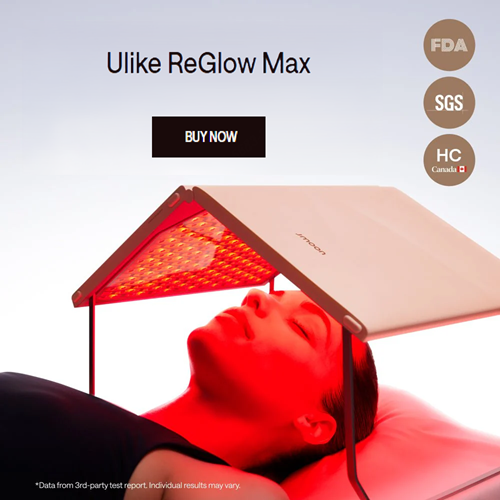
LED masks use different wavelengths of light to target particular skin concerns. Blue light is used to address acne-causing bacteria, while red light is commonly marketed for inflammation and visible signs of ageing.
The American Academy of Dermatology notes that certain FDA-cleared home LED devices can treat pimples, but they do not address every form of acne. Blackheads, whiteheads, cysts and nodules require different treatment approaches.
LED masks are worth considering for people seeking gradual improvement in mild concerns. However, they should complement rather than replace established skin-care treatments. Consistent use is important, and protective eyewear should be used whenever the manufacturer recommends it.
3. Microcurrent Devices: Temporary Firming, Not a Facelift
Microcurrent devices deliver low-level electrical currents to facial muscles and surrounding tissue. They are marketed to improve facial definition, tone and the appearance of firmness.
Some users may notice a temporary lifting or tightened appearance, but the evidence for lasting structural changes is limited. These devices should not be confused with medical procedures that produce deeper tissue changes.
If you are considering one, check the manufacturer’s contraindications. People with implanted electronic devices, certain medical conditions or pregnancy-related restrictions should seek professional advice before use.
4. Radiofrequency Devices: Promising, but Expectations Matter
At-home radiofrequency devices use controlled energy to heat tissue and are marketed for improving skin firmness and fine lines. Research suggests that low-power radiofrequency may offer modest improvements in wrinkles, but home devices are less powerful than professional equipment.
The main concern is using heat-based technology incorrectly. Excessive exposure or unsuitable settings can cause irritation and burns. Avoid using these devices over areas with impaired sensation or where the manufacturer prohibits treatment. A dermatologist can help determine whether the technology is appropriate for your skin.
Beauty Devices That May Not Be Worth the Money
Not every product with an electronic display or multiple treatment modes has convincing evidence behind it. Some devices promise dramatic transformations without explaining how their technology works.
Be particularly cautious with:
- Ultrasonic skin spatulas: They may help with superficial cleansing, but claims of deep pore extraction or permanent blackhead removal are exaggerated.
- Home microneedling pens: Incorrect depth, poor hygiene and repeated skin injury can lead to infection, scarring and pigmentation problems.
- Cheap skin-tightening gadgets: Devices without clear technical specifications or credible safety information should be avoided.
- Multi-function beauty tools: Combining several technologies in one product does not automatically make it more effective.
The latest evidence also reinforces the need to evaluate each technology separately. A 2026 review found that home-use microneedling had weak supporting evidence and potential infection concerns. More features do not necessarily mean better results.
Which At-Home Beauty Devices Are Worth Considering?
| Device type |
Main purpose |
Evidence and realistic expectations |
Verdict |
| IPL hair removal |
Long-term hair reduction |
Supported by clinical research; results depend on skin and hair type |
Worth considering |
| Blue LED mask |
Mild acne and pimples |
Moderate evidence for certain home devices |
Worth considering |
| Red LED mask |
Skin appearance and ageing concerns |
Some evidence, but results are generally modest |
Promising |
| Microcurrent |
Temporary facial toning |
Limited evidence for lasting results |
Approach cautiously |
| Radiofrequency |
Fine lines and skin firmness |
Some clinical support; device strength matters |
Promising with precautions |
| Home microneedling |
Texture and skin rejuvenation |
Limited evidence and infection risks |
Generally avoid |
| Ultrasonic spatula |
Surface cleansing |
Limited evidence for major skin changes |
Optional, not essential |
What to Check Before Buying

Before purchasing at-home beauty devices, look beyond influencer demonstrations and product ratings. Check the exact technology, wavelength or energy specifications, safety sensors, treatment schedule and independent evidence. Verify whether the specific model has relevant regulatory clearance in your country. FDA clearance, for example, applies to a particular device and intended use; it is not proof that every product from a brand is effective for every skin concern.
For IPL, check skin-tone compatibility and hair-colour restrictions. For LED masks, look for clearly stated wavelengths and intended uses. For heat-based tools, understand the temperature controls and safety instructions.
Stop treatment if you experience blistering, significant pain, persistent redness or unusual pigmentation, and seek medical advice when necessary.
At-Home Beauty Devices: Final Thoughts
The best beauty device is not the one with the most treatment modes or the biggest advertising claims. It is the one designed for a specific concern, supported by credible evidence and safe for your skin type. IPL devices such as Ulike can be useful for suitable users, while LED technology offers another reasonable option for selected skin concerns. For everything else, check the research before spending money. A thoughtful purchase will usually deliver more value than collecting gadgets that promise results they cannot reliably provide.`
Beauty Devices: Frequently Asked Questions
1. Do at-home beauty devices really work?
Some do. IPL hair removal and certain LED devices have supporting clinical evidence. Results are generally gradual and less dramatic than professional treatments.
2. Is Ulike a good option for home hair removal?
Ulike offers IPL devices with cooling features and skin sensors. It may suit users whose skin tone and hair colour fall within the model’s recommended range. Check the specific product instructions before buying.
3. Are LED face masks worth buying?
They may help with mild acne or selected skin concerns, but results depend on the device and regular use. They are not a replacement for medical acne treatment.
Also Read: How Far in Advance Should You Book Flights? Data-Backed Answer by Route

by parth@bidkinetic.com | Nov 17, 2026 | Entertainment
Choosing video-editing software is no longer just about trimming clips and adding transitions. Today’s creators need tools for subtitles, audio cleanup, background removal, social-media formats and increasingly, AI-assisted video generation. This Wondershare Filmora review is useful for people trying to decide whether they need a professional editing suite or a simpler tool that can still produce polished results.
Filmora’s latest major release, Version 16, announced in September 2026, expands its AI and editing capabilities with features such as AI Media Analysis, Camera Tracking, 360° Video Reframing and multi-source recording. It also offers AI video enhancement with upscaling up to 4K. These additions make Filmora more capable than a basic beginner editor, but its pricing structure, AI-credit requirements and depth of advanced controls deserve a closer look before purchasing.
Wondershare Filmora is a video-editing application for creators who want a practical balance between ease of use and creative control. It is available for desktop and mobile platforms, with editing tools for personal videos, YouTube content, social-media campaigns, tutorials, presentations and promotional material.
Its main attraction is the timeline-based editing workflow. Users can import video, audio and image files, arrange them on tracks, trim clips, add transitions, adjust colours and export the finished project. Beginners can start with straightforward edits, while more experienced users can work with keyframes, tracking, masking and other advanced features.
Key Features That Make Filmora Useful
Filmora’s feature set covers much more than basic cutting and joining. Here are the capabilities worth understanding.
AI-Powered Video Editing
AI is a major part of Filmora’s current development. Its AI tools help reduce repetitive editing work and support creative tasks that would otherwise require separate applications.
Some notable features include:
- AI Video Enhancer: Improves video clarity, reduces blur and can upscale footage up to 4K.
- AI Speech-to-Text: Converts spoken audio into subtitles and provides tools to refine transcription.
- AI Smart Cutout: Helps isolate subjects and remove unwanted objects or change backgrounds.
- AI Video Translation: Supports translating video content into multiple languages, with voice cloning and lip-sync features.
- Smart Short Clips: Identifies useful moments in longer footage and turns them into shorter social-media-ready videos.
- AI Media Analysis: Analyses media files to generate descriptions, keywords, scene recognition and editing suggestions.
These tools can save time, particularly for creators producing content regularly. However, AI features may have separate usage limits or credit requirements depending on the plan.
Timeline Editing and Creative Controls
Filmora’s timeline editor is designed to make editing accessible without removing control over the final result. Users can arrange multiple video and audio tracks, adjust clip timing, add transitions and refine movement using keyframes.
Camera Tracking helps follow a subject within a shot, while colour masks allow adjustments to selected areas of footage. The 360° Video Reframing feature also makes it possible to convert 360-degree footage into conventional shots.
Audio Editing and Screen Recording
Clear audio can make a noticeable difference to the quality of a video. Filmora includes audio tools for noise reduction, voice enhancement, text-to-speech and vocal removal. These are useful for tutorials, interviews, product demonstrations and talking-head videos.
Its multi-source recording feature can capture screen, camera and audio sources together, making it practical for software demonstrations, online lessons and gaming content.
Benefits and Limitations at a Glance
| Area |
Benefits |
Limitations |
| Ease of use |
Accessible timeline and beginner-friendly workflow |
Advanced tools still require practice |
| AI tools |
Automation for subtitles, enhancement and content creation |
Some features use AI credits or have plan restrictions |
| Creative effects |
Built-in transitions, titles, filters and templates |
Premium assets may require additional payment |
| Audio |
Voice enhancement, noise reduction and text-to-speech |
Not a replacement for specialist audio software |
| Export |
Supports high-resolution output, including 4K |
Export options depend on device and project settings |
| Professional editing |
Tracking, keyframes, masks and colour controls |
Less suited to complex VFX and advanced post-production workflows |
What Are the Main Benefits of Using Filmora?

Source: Wondershare Filmora
The biggest advantage is the amount of work users can complete in one application. A creator can edit footage, add subtitles, improve audio, apply effects and prepare different formats without constantly switching between tools.
Filmora is particularly useful for:
- YouTubers and content creators: Editing talking-head videos, tutorials, gaming footage, Shorts and regular channel content.
- Small businesses: Producing product demonstrations, advertisements, customer testimonials and social media videos without maintaining a large editing setup.
- Educators and trainers: Recording lessons, editing screen captures and adding subtitles to make instructional content easier to follow.
- Social media managers: Creating multiple versions of a video for different platforms and aspect ratios.
Another advantage is the availability of a free version. It gives users an opportunity to explore the interface and test the editing workflow before committing to a paid plan. However, free exports include a watermark, so it is not ideal for publishing professional client work.
Where Does Filmora Fall Short?
A balanced Wondershare Filmora review must consider the limitations as well as the feature list.
First, the free version’s watermark is an important restriction. Users planning to publish branded or commercial videos will generally need a paid licence.
Second, the overall cost can extend beyond the editor itself. Subscription plans, premium creative assets, add-ons and AI credits may affect the final expense. Before purchasing, check exactly which features and downloads are included in the selected plan.
Third, Filmora is not designed to replace every professional editing application. Editors working on complex visual effects, detailed colour grading, advanced compositing or large collaborative productions may find its controls less extensive than specialist software.
Performance also depends on the computer. Wondershare lists 8 GB RAM as the Windows minimum, while 16 GB RAM and 4 GB VRAM are recommended for HD and 4K editing. More demanding 8K workflows require considerably stronger hardware.
Is Wondershare Filmora Worth Using?
For beginners, YouTubers, educators and small marketing teams, Filmora offers a useful combination of accessible editing and modern AI-assisted features. It can handle a wide range of everyday video projects without requiring users to master a complicated professional workflow.
However, experienced editors working on high-end productions may prefer software with deeper colour, audio, compositing and collaboration capabilities. The best choice depends on the type of videos you produce, your editing experience and how frequently you will use the premium features.
Ultimately, a Wondershare Filmora review points to a capable editing platform with a clear audience: creators who want to produce polished content efficiently. Try the free version, test it with your own footage and compare the paid-plan inclusions before making a purchase.
Wondershare Filmora Review: Frequently Asked Questions
1. Is Wondershare Filmora good for beginners?
Yes. Its timeline interface, ready-made effects and guided editing workflow make it approachable for people learning video editing.
2. Does Filmora support 4K video editing?
Yes. Filmora supports 4K workflows. However, smooth editing depends on your computer’s processor, memory, graphics hardware and storage.
3. Does the free version of Filmora add a watermark?
Yes. The free version generally adds a watermark to exported videos. A suitable paid licence is required for watermark-free exports.
Also Read: How to Make a Rental Feel Like Home Without Losing Your Deposit
by parth@bidkinetic.com | Nov 17, 2026 | Homestyle
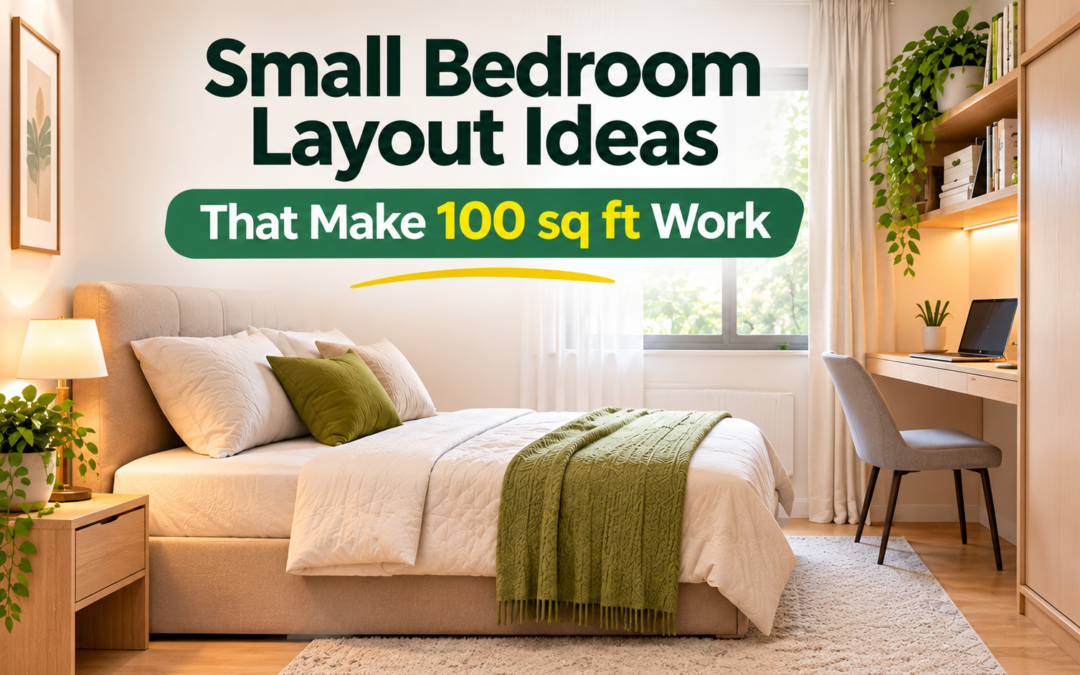
A 100 sq ft bedroom sounds simple to furnish until you try fitting a bed, wardrobe, bedside storage and perhaps a study desk into it. In a typical 10 × 10 ft room, the floor area is just 9.3 square metres. A standard queen mattress measuring approximately 60 × 80 inches already occupies around 33 sq ft, or one-third of the entire floor. Add a bed frame, wardrobe and furniture clearances, and the available walking space can disappear quickly. The solution is not simply to buy smaller furniture. It is to plan the room around how you move, sleep, dress and store everyday belongings. The most effective small bedroom layout ideas start with the bed’s position, preserve a clear route to the door and use walls for storage wherever possible. A 100 sq ft room can be comfortable and attractive, but every piece needs to justify the floor space it occupies.
Choose the Bed Position Before Anything Else
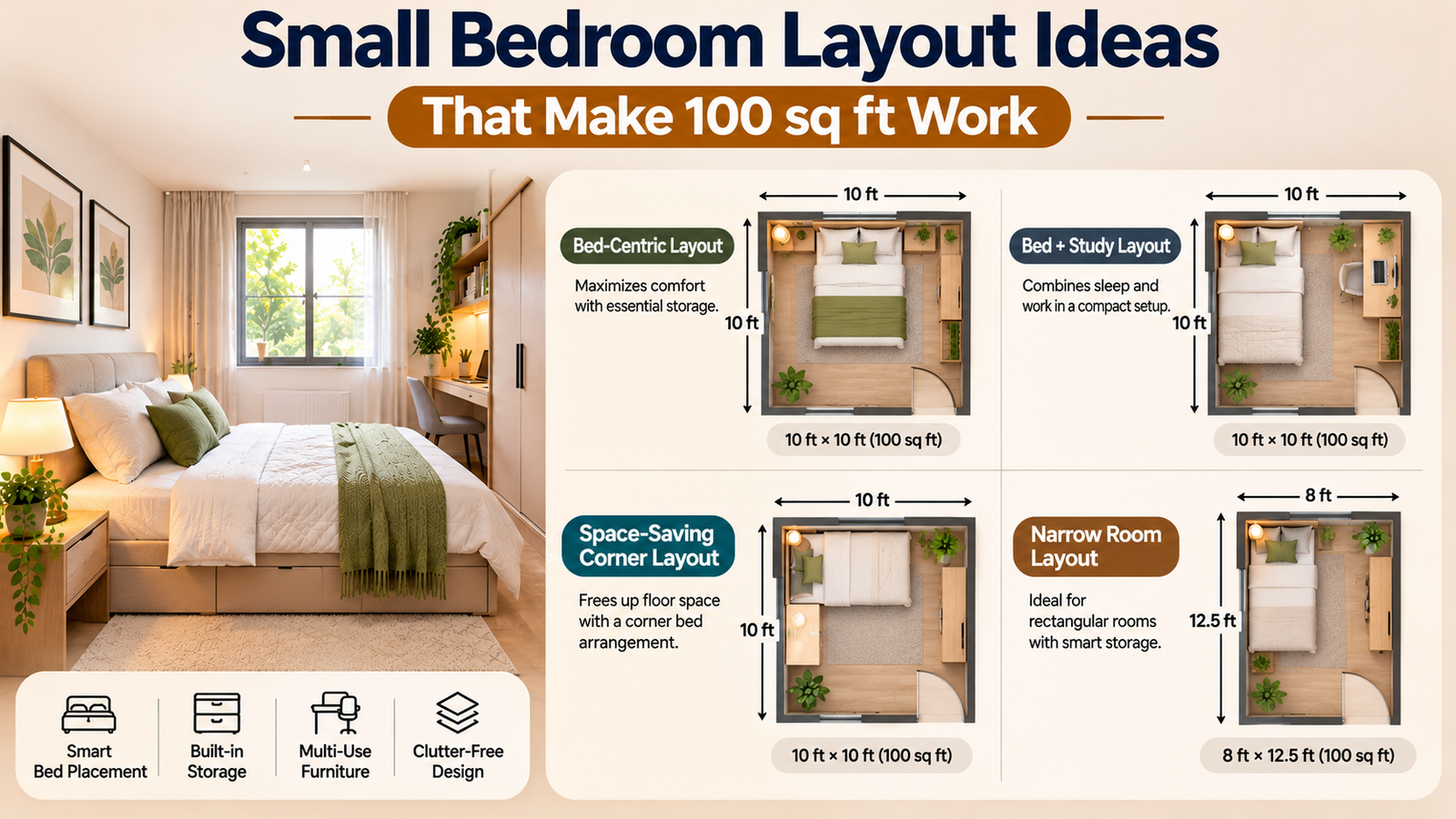
The bed is usually the largest object in a bedroom, so its position determines what else can fit. In a square 10 × 10 ft room, placing a double or queen bed against the longest uninterrupted wall may work, depending on the door, windows and wardrobe location.
For a single occupant, positioning the bed against a corner can free up valuable walking space. This arrangement reduces access to one side, but it can make room for a compact desk or additional storage. Couples may prefer access from both sides, in which case a smaller mattress could be a better compromise.
Before buying, compare the actual bed-frame dimensions rather than relying only on mattress measurements. Upholstered frames and large headboards can add several inches to the footprint.
Use a Storage Bed Instead of Adding Another Cabinet
One of the most useful investments in a compact bedroom is a bed with built-in storage. Hydraulic lift-up beds provide access to the space beneath the mattress, while drawer-style beds offer separate compartments for everyday items.
This can eliminate the need for a separate chest of drawers. Store spare bedsheets, blankets, seasonal clothing, luggage, and less frequently used belongings under the bed.
There is one practical detail to consider: drawer-style beds need enough clearance to open fully. If the bed is close to a wall or wardrobe, a hydraulic model may be more convenient. Also check the lifting mechanism, platform construction and mattress weight limits before purchasing.
Replace Bulky Wardrobes with Smarter Storage
A conventional wardrobe can consume a surprising amount of floor area. Standard wardrobes are often around 24 inches deep, and hinged doors require additional clearance when opened.
For a 100 sq ft bedroom, consider these alternatives:
- Sliding-door wardrobes: Avoid the extra floor space needed for hinged shutters.
- Floor-to-ceiling storage: Use the upper section for suitcases, seasonal clothing and spare bedding.
- Built-in wardrobes: Fit storage into an existing recess rather than leaving unused gaps.
- Open shelving: Use wall-mounted shelves for frequently accessed items, keeping the floor clear.
If you need hanging space but cannot accommodate a standard-depth wardrobe, check whether a shallower design suits your clothing. Do not sacrifice practical hanging space simply to make the furniture look compact.
Make the Walls Work Harder
Floor space is limited, but the walls offer opportunities that are often overlooked. Replace conventional bedside tables with floating shelves, install wall-mounted reading lights and use vertical shelving above a desk or dressing area.
A narrow shelf beside the bed can hold a phone, book and water glass without taking up the space needed for a full nightstand. Wall hooks behind the door can accommodate bags, jackets and everyday accessories.
Mirrors are another useful addition. A full-length mirror positioned to reflect natural light can make the room appear brighter and more open. Avoid covering every wall with shelves, though. Too many visible objects can make a small room feel cluttered.
Create a Study Corner Without Losing the Walking Area
A bedroom sometimes needs to function as a study, particularly in apartments where a separate home office is not available. A full-size desk and chair may be difficult to accommodate, but a compact workstation can fit if planned carefully.
A wall-mounted desk approximately 18-22 inches deep can provide enough space for a laptop and basic stationery. Place it near a window if possible, so you can benefit from natural daylight. A fold-down desk is another option if the workspace is only needed occasionally.
Choose a chair that can slide completely under the desk. Before finalising the arrangement, check the space required when the chair is pulled out. A layout that works only when the chair is pushed in will quickly become frustrating.
Select Furniture That Matches the Room’s Shape
The same furniture arrangement will not work in every 100 sq ft bedroom. A square room offers different possibilities from a narrow rectangular one.
| Room Layout |
Small Bedroom Layout Ideas |
Furniture Priorities |
| 10 × 10 ft square |
Bed against one wall, wardrobe on the opposite or side wall |
Storage bed, sliding wardrobe, floating shelves |
| 8 × 12.5 ft narrow |
Bed against the shorter wall, storage along the longer wall |
Compact bed frame, shallow storage, wall lights |
| Bedroom with a window on the long wall |
Keep the window accessible and position the bed on an uninterrupted wall |
Low furniture, compact desk |
| Bedroom with a built-in wardrobe |
Position the bed to preserve wardrobe access |
Under-bed storage, small bedside shelf |
These are starting points, not fixed floor plans. Door swings, window placement, columns and existing wardrobes can change what is practical.
Use Lighting and Colours to Make the Room Feel Larger
Furniture arrangement solves the functional problem, but lighting and finishes influence how spacious the room feels. Light shades such as warm white, beige, pale grey and soft green help create a calmer visual environment.
Use curtains mounted close to the ceiling rather than directly above the window frame. This draws the eye upwards and makes the walls appear taller. Choose one larger rug rather than several small mats, which can visually break up the floor.
Instead of relying on a single bright ceiling light, combine general lighting with bedside wall lights and a desk lamp. Lighting the corners of the room helps reduce dark patches that can make the space feel enclosed.
What to Avoid in a 100 sq ft Bedroom
The biggest mistake is buying furniture before measuring the room. A large bed, two bedside tables, a deep wardrobe and a separate dresser may all look appropriate individually, but together they can block movement.
Avoid oversized headboards, wide decorative cabinets and unnecessary accent chairs. Do not place storage in front of windows or block access to electrical points. Most importantly, do not fill every available corner simply because there is room for another shelf.
A successful bedroom needs some empty space. Keep the route between the door, bed and wardrobe usable, and test whether drawers and doors can open without hitting other furniture.
Small Bedroom Layout Ideas: FAQs
1. Can a queen bed fit in a 100 sq ft bedroom?
Yes, depending on the room’s dimensions and furniture arrangement. A queen bed may work in a 10 × 10 ft room, but it will leave limited space for additional furniture. A double bed may provide more comfortable circulation.
2. What is the best bed for a small bedroom?
A storage bed with a simple frame is often a practical choice. Hydraulic storage is particularly useful when there is little room for side drawers.
3. How can I fit a wardrobe and study table in a small bedroom?
Consider a sliding-door wardrobe and a wall-mounted desk. Using vertical shelving above the desk can provide additional storage without occupying more floor space.
The most effective small bedroom layout ideas are not about squeezing in as much furniture as possible. They create enough room for everyday activities while keeping the bedroom comfortable, organised and easy to maintain.
Also Read: How Far in Advance Should You Book Flights? Data-Backed Answer by Route

by parth@bidkinetic.com | Nov 17, 2026 | LifeStyle
A mattress can look perfectly fine from the outside while its internal layers have gradually lost their support. Pillows can flatten without you noticing, and sheets accumulate sweat, body oils and dust through everyday use. Knowing how often should you replace your mattress and other bedding is therefore only one part of maintaining a comfortable sleeping environment. Pillows, mattress protectors, sheets, duvets and blankets all have different lifespans and care requirements.
As a general guide, most mattresses last around 7-10 years, although some may need replacing sooner. Sleep Foundation estimates that innerspring mattresses typically last about 5.5-6.5 years, foam mattresses 6-7 years, latex mattresses 7.5-8.5 years and hybrids 6.5-7.5 years. Pillows usually need replacing every 1-2 years, depending on their filling and condition. These are useful starting points, not strict expiry dates. The quality of materials, frequency of use, humidity, cleaning habits and the weight placed on the bed all influence how quickly bedding wears out.
When Should You Replace Your Mattress?
For most households, replacing a mattress after approximately 7-10 years is a reasonable guideline. However, waiting for that milestone when the mattress is already uncomfortable makes little sense. A mattress is responsible for supporting your body night after night, and its performance can decline long before the outer fabric looks worn.
Watch for these warning signs:
- Visible sagging: Dips, permanent body impressions or uneven areas can indicate that the support layers have deteriorated.
- Waking up with aches: Regular back, shoulder or hip discomfort may suggest that the mattress is no longer supporting you comfortably.
- Disturbed sleep: If you frequently change positions or feel your partner’s movements more than before, the mattress may have lost some of its stability.
- Unusual noises: Squeaking or clicking from an innerspring mattress can indicate worn components.
- Persistent odours or damage: Moisture, mould, stains and structural damage may make replacement necessary, particularly when cleaning cannot resolve the problem.
Material matters too. Latex mattresses often last longer than many entry-level foam or innerspring models, while inexpensive materials may soften or sag earlier. If you are wondering how often should you replace your mattress, consider its actual condition rather than relying entirely on its purchase date.
How Often Should You Replace Your Pillows?
Pillows generally need attention much sooner than mattresses. Most standard pillows should be replaced every 1-2 years, although the filling makes a difference. Polyester pillows tend to lose their shape relatively quickly, while good-quality latex and some memory foam pillows can last longer.
A pillow should be replaced when it no longer supports your head and neck properly. Look for flattened areas, lumps, persistent yellowing, unpleasant odours or filling that stays compressed after use. Waking up with neck stiffness or repeatedly adjusting the pillow to find a comfortable position can also indicate that it is time for a new one.
| Pillow type |
Approximate replacement interval |
| Polyester or down alternative |
1-2 years |
| Memory foam |
2-3 years |
| Down or feather |
1-3 years |
| Latex |
2-4 years |
These ranges are indicative. Follow the manufacturer’s care instructions, and replace a pillow earlier if it becomes damaged, develops mould or cannot be cleaned adequately.
When Should Sheets, Pillowcases and Other Bedding Be Replaced?
Unlike mattresses and pillows, sheets and duvet covers do not have a single universal replacement schedule. Their lifespan depends heavily on fabric quality, washing frequency and how carefully they are maintained.
Cotton sheets can last several years with appropriate care, while lower-quality fabrics may thin, pill or tear sooner. Replace them when the fabric becomes rough, develops holes, loses its shape or no longer feels comfortable against the skin. Pillowcases should be assessed in the same way, with particular attention to worn seams and persistent stains.
Duvets and comforters can last longer if they retain their loft and remain clean. However, clumping filling, persistent odours, damaged stitching or uneven insulation are reasons to consider a replacement. A washable duvet cover can help protect the insert and reduce how frequently it needs deep cleaning.
Replacement and Cleaning Schedule at a Glance
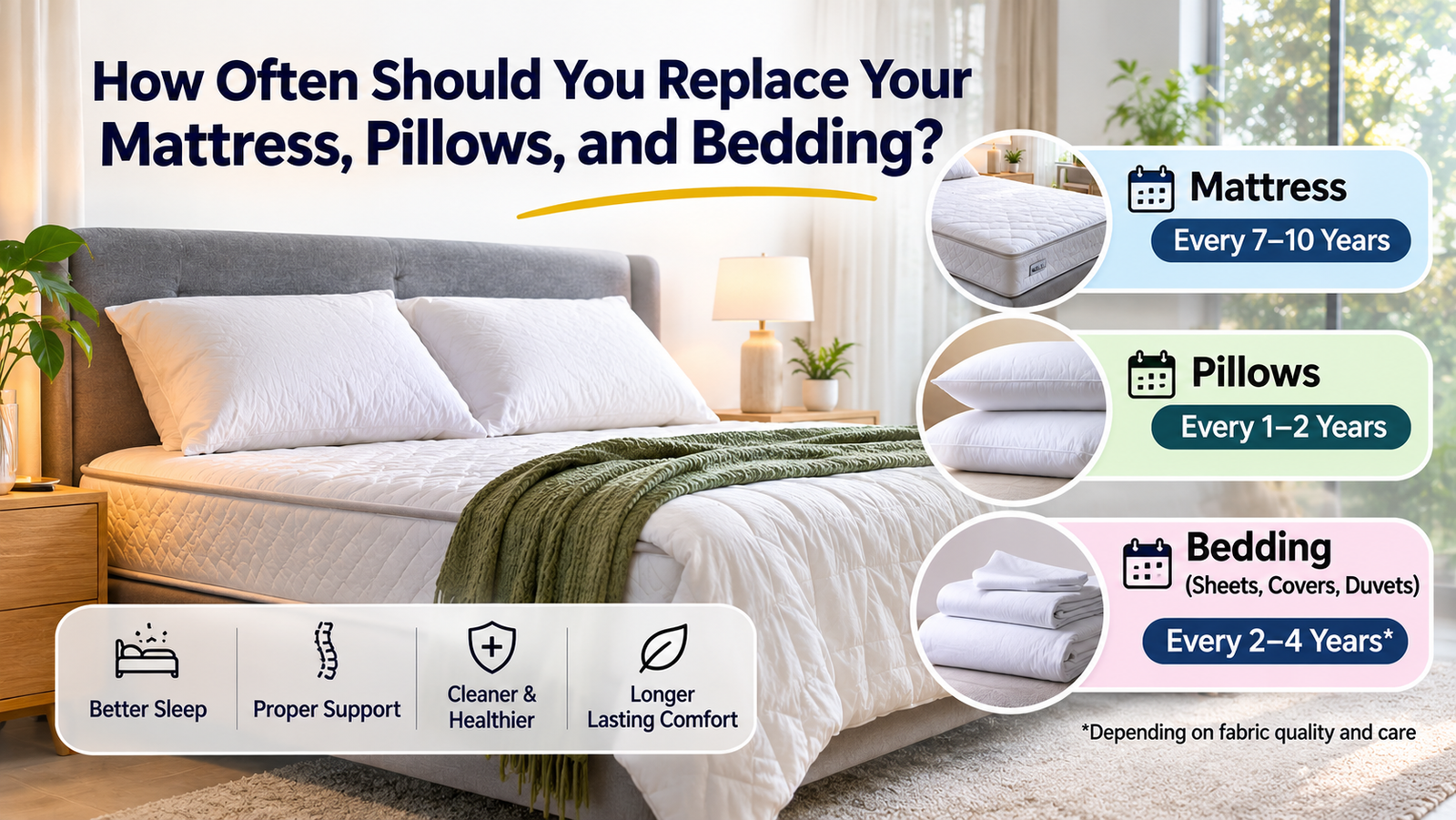
| Bedding item |
Suggested replacement interval |
Cleaning or care routine |
| Mattress |
7-10 years |
Clean approximately every 6 months; use a protector |
| Standard pillows |
1-2 years |
Wash according to filling and care label |
| Memory foam pillows |
2-3 years |
Spot-clean; avoid soaking |
| Latex pillows |
2-4 years |
Spot-clean and air regularly |
| Bedsheets |
Replace when worn, often after several years |
Wash weekly |
| Pillowcases |
Replace when worn |
Wash weekly |
| Duvet covers |
Replace when worn |
Wash every 2-4 weeks |
| Blankets and comforters |
Replace when damaged or no longer insulating |
Wash every 2-3 months, where care instructions permit |
| Mattress protector |
Replace when damaged or no longer waterproof |
Wash according to label |
The intervals are practical estimates rather than mandatory deadlines. Always check the manufacturer’s washing and maintenance instructions.
How to Make Your Mattress and Bedding Last Longer
Replacing bedding on time matters, but good maintenance can prevent premature wear.
- Start with a mattress protector. It helps reduce the amount of sweat, body oils and accidental spills reaching the mattress surface.
- Wash it according to its label and replace it when its waterproof layer or fabric becomes damaged.
Rotate your mattress if the manufacturer recommends it.
- Many modern mattresses are designed to be used on one side only, so flipping them can affect their comfort layers.
- Keep the mattress on a suitable, supportive base and allow it to air occasionally when changing the sheets.
Wash sheets and pillowcases at least once a week.
- In hot, humid conditions, or if you sweat heavily, have pets sleeping on the bed or experience allergies, more frequent washing may be useful.
- Duvet covers and blankets can generally be washed less often, depending on how directly they contact your body.
Avoid storing damp bedding or leaving mattresses in poorly ventilated spaces.
- Moisture can contribute to musty smells and mould, particularly in humid climates.
- Make sure washed pillows and bedding are completely dry before putting them back on the bed.
Don’t Replace Everything at the Same Time
Mattresses, pillows and bedding age at different rates. A mattress purchased eight years ago may still provide comfortable support, while a pillow bought last year may already be flattened. Replacing everything together can lead to unnecessary spending.
Instead, keep a simple record of purchase dates and inspect each item periodically. If you are still unsure how often should you replace your mattress, check for sagging, discomfort and changes in sleep quality first. A mattress that remains supportive may not need immediate replacement, while one with significant damage should not be kept simply because it is relatively new.
Final Thoughts
A comfortable bed is not just about buying a good mattress. It also depends on pillows that provide adequate support and bedding that is clean, intact and suitable for the climate. Follow sensible replacement intervals, pay attention to visible wear and maintain each item according to its material. That way, you can avoid replacing perfectly usable bedding while recognising when an old mattress or pillow is no longer doing its job.
Frequently Asked Questions
1. Can a mattress last longer than 10 years?
Yes. A well-made latex mattress, for example, may last longer than many standard mattresses. However, age alone does not prove that it is still supportive. Check its condition and comfort.
2. How often should pillows be washed?
It depends on the filling. Some washable pillows can be cleaned every 3-6 months, while memory foam and latex generally require spot cleaning. Always follow the care label.
3. Should I replace my mattress if it causes back pain?
A worn or unsuitable mattress may contribute to discomfort, but back pain can have several causes. If discomfort persists, seek medical advice rather than assuming the mattress is responsible.
Also Read: How to Plan a Japan Trip in 2027: Costs, Rail Passes, and Bookings
